

Company/Organization Profile
Founded in 1972, Guangdong Dongpeng Holdings Co., Ltd. (SZSE: 003012) is a leading enterprise in China's architectural ceramics and sanitary ware industry. With ceramic tiles and sintered stone at its core, complemented by integrated bathroom solutions and eco-friendly new materials, the company has developed a diversified “1+N” business portfolio.
DONGPENG integrates green manufacturing, circular economy, responsible supply chain management, and community engagement into its sustainability strategy, advancing green transformation across the value chain. The company has been recognized by China's Ministry of Industry and Information Technology as a Green Supply Chain Management Enterprise, and five of its manufacturing bases have been designated National Green Factories.
DP LAB (Dongpeng Innovation Lab) connects industry, design, and the public. Through T2M, it promotes the adaptive reuse of existing industrial spaces, sustainable materials research and exhibitions, climate education, and public co-creation, extending green development from manufacturing to everyday urban life.
1.机构简介
广东东鹏控股股份有限公司(股票代码:003012)始创于1972年,是中国建筑陶瓷及卫浴行业领军企业,构建了以瓷砖/岩板为核心,整装卫浴、生态新材协同发展的“1+N”产业格局。公司将绿色制造、循环经济、责任供应链与社会共融纳入可持续发展战略,持续推动全价值链绿色转型,获工信部“绿色供应链管理企业”认定,旗下五家生产基地获评国家级绿色工厂。
旗下DP LAB东鹏创新实验室致力于连接产业、设计与公众,依托T2M贰场开展既有工业空间活化、可持续材料研究展示、气候教育和公共共创,让绿色发展由生产端延伸至城市生活场景。
Project Overview
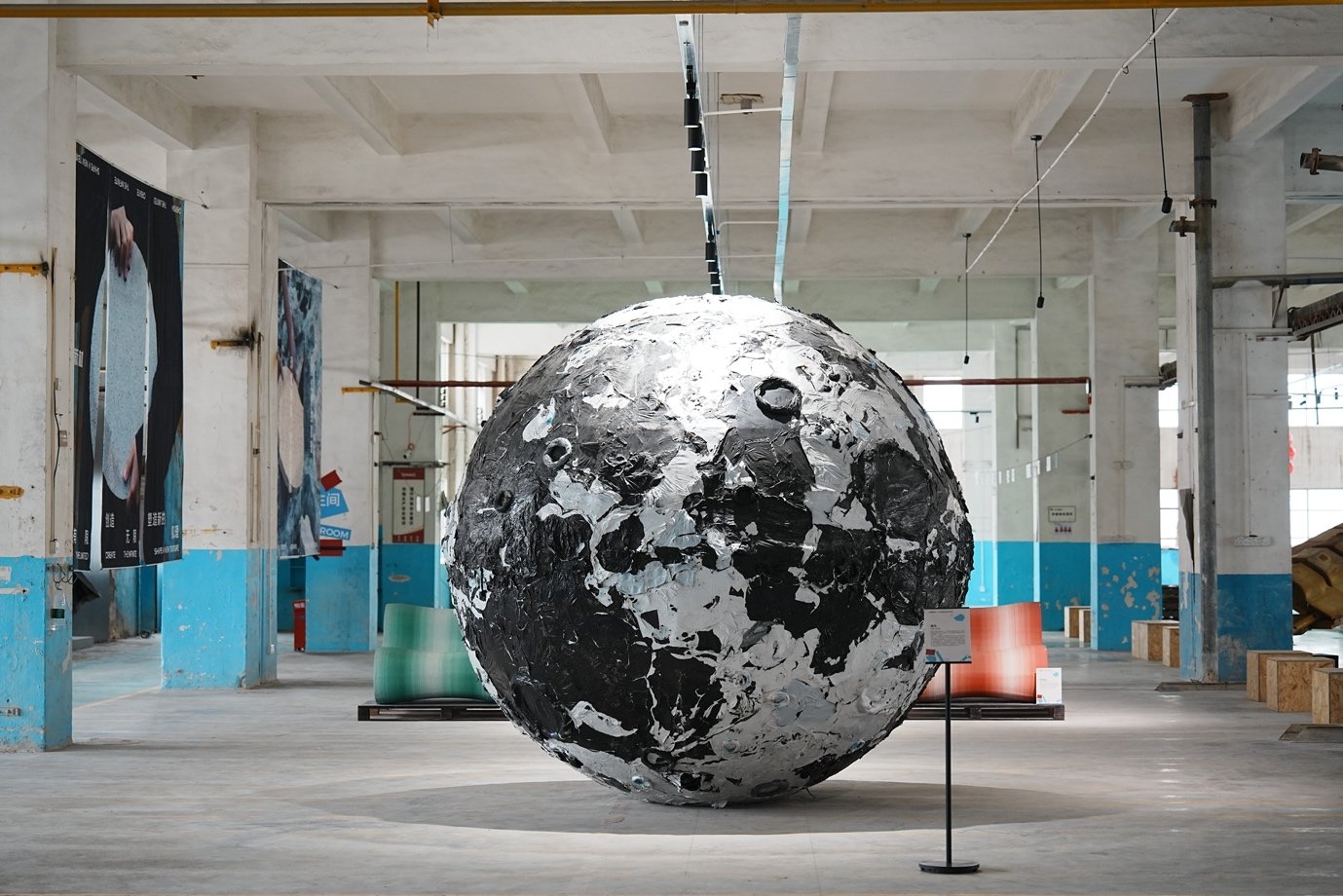
The project is located at the former Dongpeng Sanitary Ware No. 2 Factory in Chancheng District, Foshan, Guangdong Province. Following the phase-out of original manufacturing operations, the existing facility faced spatial underutilization and the potential fading of its industrial heritage. Conventional demolition and rebuild would generate substantial material consumption and waste, while converting the site merely into a closed corporate showroom would fail to build ongoing public and operational value.
Meanwhile, corporate advancements in green material R&D, solid waste recycling, and circular economy practices often remained confined to production lines and technical reports, lacking an everyday spatial touchpoint for public engagement.
In response, Dongpeng launched the T2M Initiative under DP LAB (Dongpeng Innovation Lab) in October 2023, introducing the core concept of "The Second Mine / The Second Mind": the former focuses on recovering value from existing industrial infrastructure and waste streams, while the latter advocates innovative thinking to redefine the relationship between resources, spaces, and sustainable living. Through structural retention, adaptive reuse, and multi-stakeholder co-creation, the disused factory was transformed into an open green co-creation platform, officially opening to the public in April 2025
2.项目背景
项目位于广东省佛山市禅城区原东鹏洁具二厂。随着原生产功能退出,既有厂房面临空间利用效率下降、工业记忆难以延续等挑战。若采取传统拆除重建方式,将带来巨大的建筑材料消耗与废弃物压力;但若仅改造为封闭的企业展示空间,又难以建立持续的公共使用与运营价值。
与此同时,企业在绿色材料研发、固废再生及循环经济领域积累的专业成果,往往局限于生产线与专业报告,公众缺乏理解与参与的日常场景。
基于此,东鹏于2023年10月依托DP LAB东鹏创新实验室启动T2M贰场计划,提出“第二座矿山(The Second Mine)/第二种思维(The Second Mind)”的核心理念:前者倡导从既有工业空间与废弃资源中发掘潜在价值;后者主张以创新思维重新定义资源、空间与可持续生活的关系。项目通过保留既有结构、修复再利用与多方共创,将旧厂房转化为融合材料创新、公众教育和社区参与的绿色共创空间,并于2025年4月正式向公众开放。
Project Implementation
Dongpeng Holdings provided venue and industrial resources, while DP LAB oversaw overall planning and operations. Dongpeng Eco-Materials supplied recycled materials and technical support. The initiative progressed through collaborative phases with local ecological and environmental authorities, domestic and international universities, social organizations, material brands, designers, and artists, establishing an implementation pathway of "Spatial Reuse – Material Translation – Public Action – Sustained Operation."
First: Preserving existing industrial spaces and reusing built assets
Addressing the resource pressures of idle factory space and large-scale demolition, the project avoided complete teardowns. Instead, it preserved the original structure, industrial marks, and reusable components, carrying out adaptive reuse through restoration, recycling, and modest architectural interventions for exhibitions and public events. Original elements, industrial materials, and spatial memories were transformed into new design assets, systematically activating core areas based on functional and operational needs. On April 25, 2025, the Season 1 exhibition "WonderFac" officially opened to the public, introducing art, design, workshops, and community events into the industrial space.
Second: Translating sustainable materials into tangible public content
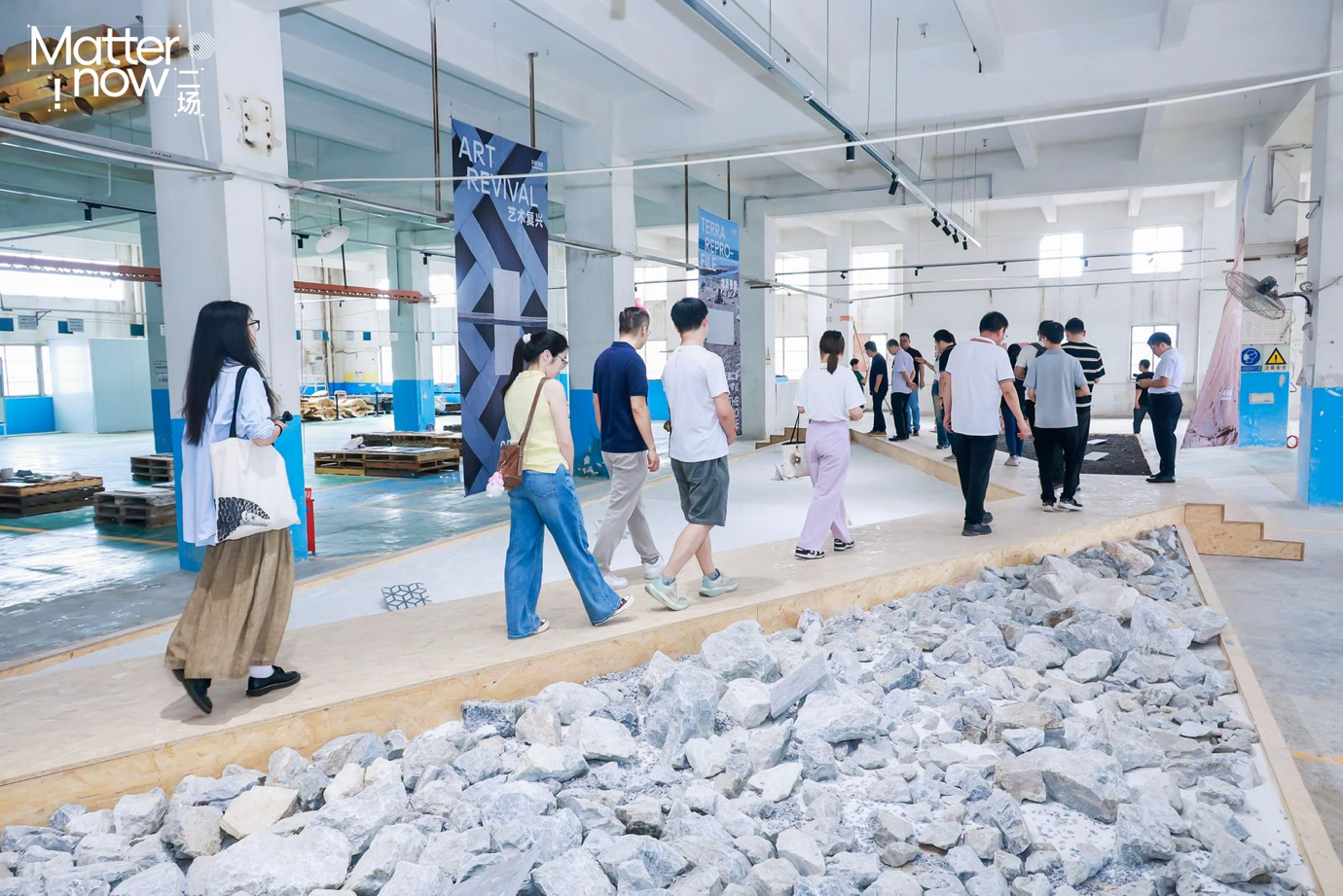
To bridge the gap between abstract ESG/circular economy knowledge and the public, sustainable material displays were designed as interactive experiences that are "readable, touchable, and applicable." Launched in August 2025, Season 2 exhibition "MATTER NOW!" featured a Sustainable Material Library, the "New Mine Initiative 2.0," and a Material Aesthetics Lab. Partnering with over 30 material brands and organizations, the site archived more than 300 types of sustainable materials and presented over 500 recycled material samples and solid waste conversion achievements. Through physical samples, media, process specifications, and guided interactive tours, the project demonstrated resource recycling pathways for waste ceramics, steel slag, fly ash, and mining tailings. Integrating public education content on ESG, SDGs, circular economy, and green manufacturing, abstract low-carbon topics were brought into tangible real-world settings.
Third: Driving public transition from observation to engagement through co-creationTo address the low engagement typical of traditional showrooms, the project combined curated exhibitions with active public participation. Through artist residencies, T2M lectures, professional forums, lifestyle activities, creative workshops, and study tour courses, visitors were guided to transition from "passive viewers" to "low-carbon action-takers." The project continuously carried out artist residencies and cross-disciplinary creations, engaging with over 20 academic and educational institutions—including Guangzhou Academy of Fine Arts, The Hong Kong Polytechnic University, Hong Kong Baptist University, and Beijing University of Chemical Technology. Through material experiments, design discussions, and green living practices, it fostered knowledge sharing and collaborative innovation between industry resources and the public.
Fourth: Ensuring long-term sustainability through collaborative mechanisms
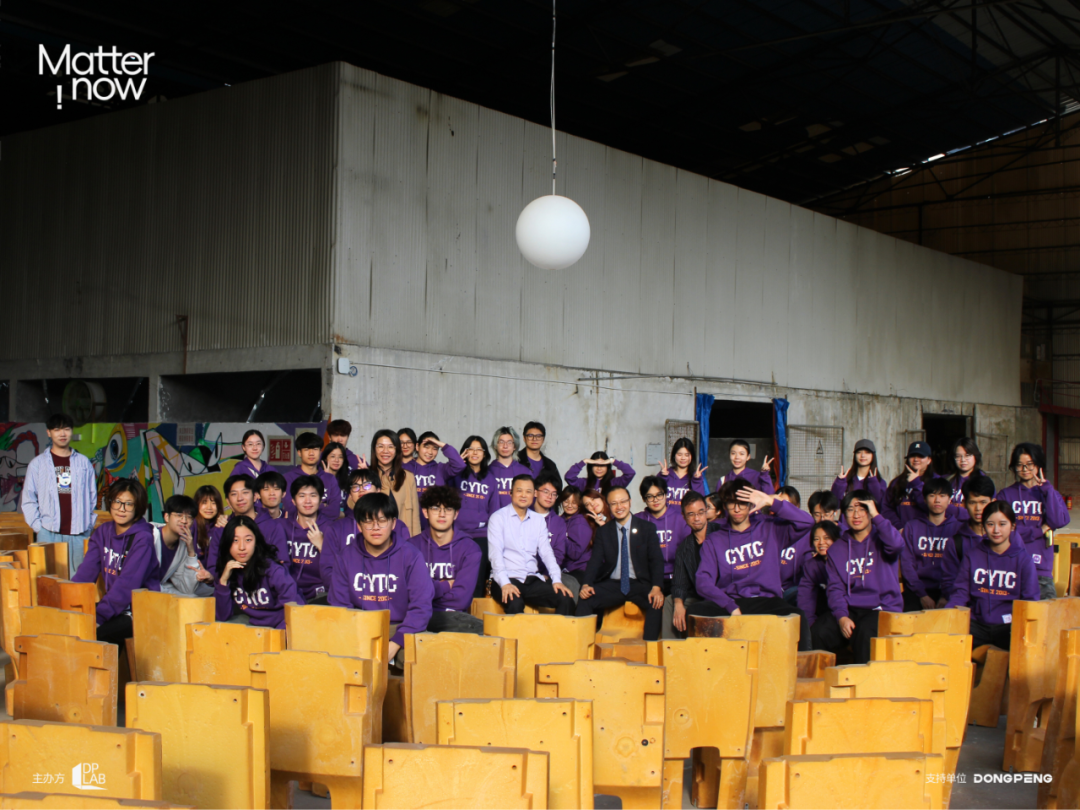
To address the challenge of post-event engagement, the project—under the guidance of the Chancheng Branch of Foshan Ecology and Environment Bureau and in collaboration with Greeners Low Carbon Promotion Center—co-established Foshan's first Climate Change Education Volunteer Service Station. Forty-five college student volunteers were organized to deliver public low-carbon education via climate workshops and interactive challenges. Concurrently, DP LAB managed daily operations through regular curation, open courses, community building, and partner co-creation, continuing themed activities into 2026 under the theme "Cycle Fun." Under the guidance of ecological and environmental authorities and leveraging the volunteer service station, the initiative mobilized young students, community members, and designers to practice low-carbon living. This achieved a five-in-one ("Government-Enterprise-Academia-Community-Public") eco-civilization co-construction action, evolving T2M from a stage-based spatial renewal into a continuously operating open platform for sustainable innovation.
3.项目实施
项目由东鹏控股提供场地与产业资源支持,DP LAB东鹏创新实验室负责整体策划与运营,东鹏新材提供循环材料及相关技术支持,联合属地生态环境部门、海内外高校、社会组织、材料品牌、设计师与艺术家分阶段推进,形成“空间再用—材料转译—公众行动—持续运营”的路径实施。
第一,保留既有工业空间,实现存量资源再利用。
针对旧厂房闲置与大拆大建的资源压力,项目不采取整体推倒重建,而是保留原有厂房结构、工业痕迹及可利用构件,以修复、再利用和适度介入完成展陈及公共活动空间改造。更新中让原有物件、工业材料和空间记忆成为新的设计资源,根据功能与运营需求逐步激活核心区域。2025年4月25日,“玩厰WonderFac”第一季主题展览正式向公众开放,为工业空间导入艺术、设计、工坊和社区活动等新功能。
第二,将可持续材料转化为公众可感知的内容。
针对循环材料及ESG知识难以被普通公众理解的问题,项目把可持续材料展示设计为“可阅读、可触摸、可应用”的公众体验。2025年8月启动的第二季展览“MATTER NOW!此刻‘材’未来”,以可持续材料图书馆、“新矿山计划2.0”和材料美学实验室为核心展区,联动30余家材料品牌与机构,收录300余种可持续材料,呈现500余项再生材料样板及固废转化技术成果。通过实体样本、影像、工艺说明与互动导览,展示废瓷、钢渣、粉煤灰、矿山余料等资源循环路径,并结合ESG、SDGs、循环经济与绿色制造等公众教育内容,让抽象的低碳议题进入可感知的空间场景。
第三,以多元共创推动公众从观看走向参与。
针对传统展示空间互动不足的问题,项目将主题策展与公众参深度相结合。通过艺术驻地、T2M大讲堂、专业论坛、生活方式活动、创意工坊与研学课程,引导访客从“参观者”转变为“低碳行动者”。项目持续开展艺术驻地及跨界创作,并与广州美术学院、香港理工大学、香港浸会大学、北京化工大学等20余家教育及公教机构开展研学与交流,通过材料实验、设计讨论和绿色生活实践,促进产业资源与社会公众之间的知识共享及创新共创。
第四,以协同机制保障可持续行动长期开展。
针对活动结束后难以持续动员的问题,项目在佛山市生态环境局禅城分局指导下,与绿行者低碳促进中心共建佛山全市首个气候变化教育志愿服务站,组织45名大学生志愿者以气候课堂、互动挑战等形式面向公众开展低碳教育。同时,DP LAB通过定期策展、开放课程、社群运营和合作伙伴共创推进日常管理,并于2026年以“Cycle Fun料趣厂生”延续主题活动。在生态环境部门指导下,依托全市首个气候变化教育志愿服务站,带动青年学子、社区居民与设计师共同践行低碳生活,实现“政-企-校-社-众”五位一体的生态文明共建行动,使T2M贰场从阶段性空间更新发展为持续运营的开放式可持续创新平台。
Project Outcome
Prior to implementation, the former Dongpeng Sanitary Ware No. 2 Factory faced severe spatial underutilization due to production relocation. Concurrently, the company's cumulative R&D in green materials, circular economy, and sustainable practices lacked a continuous physical platform to connect with the public's daily life.
Post-implementation, the project prioritized structural preservation and incremental adaptive reuse over demolition. Across an industrial site exceeding 35,000 m², approximately 10,000 m² of core space was activated, turning the former factory into an open platform integrating material research, cultural display, public education, and community networking.
The core innovation lies in establishing a composite model: "Spatial Activation – Material Translation – Collaborative Co-creation – Sustained Operation." Through the Sustainable Material Library, New Mine Initiative, and Material Aesthetics Lab, the venue brought together 30+ brands/institutions, 300+ sustainable materials, and 500+ recycled samples and waste conversion results, transforming complex technologies into tangible, comparable, and participatory spatial experiences. Meanwhile, themed curation, art workshops, professional forums, study tours, and community activities allowed the public to shift from passive viewing to active learning, experiencing, and co-creating.
In terms of social engagement, the project has welcomed over 10,000 visitors, connected with 20+ universities and public education organizations, and mobilized 45 student volunteers for climate education. Driven by DP LAB's continuous curation and partner alignment, the space maintains ongoing vitality through revolving exhibitions and public programs. Its replicable value lies in a modular methodology: "Lightweight Renewal of Built Space + Sustainable Content Operation + Public Education + Industrial Co-creation," providing a scalable blueprint for green updates of manufacturing plants, industrial park public spaces, and corporate showrooms.
4.项目成果
项目实施前,原东鹏洁具二厂因生产功能退出而面临既有空间利用不足的问题。同时,企业长期积累的绿色材料研发、循环经济与可持续发展实践,与公众日常生活之间缺少持续互动的空间载体。实施后,项目坚持保留厂房结构与基础设施,以修复再利用、渐进式更新替代整体拆建,在超过3.5万平方米的工业场地内,累计活化约1万平方米核心空间,将旧生产场所转化为集材料研究、文化展示、公众教育与社群交流于一体的开放平台。
项目的核心创新在于形成“存量活化—材料转译—协同共创—持续运营”的复合模式。通过可持续材料图书馆、新矿山计划及材料美学实验室,联动30余家品牌与机构,汇集300余种可持续材料、500余项再生材料样板及固废转化成果,将专业技术转化为可触摸、可比较、可参与的空间体验。同时,通过主题策展、艺术工坊、专业论坛、研学课程和社区活动,让公众从被动参观转向主动学习、体验和共创。
在社会参与与协同机制方面,项目累计接待逾1万人次,连接20余家高校及公教机构,并依托佛山首个气候变化教育志愿服务站,组织45名大学生志愿者参与低碳教育,逐步形成企业提供资源、专业机构共创内容、高校与社区共同参与的协同网络。
项目由DP LAB持续开展内容策划、伙伴链接及空间运营,通过不同主题展览和公共活动保持空间活力。其可复制价值不在于复制一座同样的厂房,而在于形成“既有空间轻量更新+可持续内容运营+公众教育+产业共创”的模块化方法,为制造企业旧厂房、园区公共空间及品牌展厅的绿色更新提供可借鉴的实践路径。
Project Highlights
The tracking period covers spatial renewal, material exhibitions, study tours, and community activities conducted at T2M since October 2023.
Ecological & Environmental: Out of a total industrial footprint exceeding 35,000 m², approximately 10,000 m² of core space was revitalized as of April 2026. Retaining original structures and refurbishing existing components significantly minimized demolition and construction resource consumption. The display of 500+ recycled material samples and solid waste technologies actively promoted circular material literacy in public settings.
Social Impact: According to the 2026 project manual, T2M has hosted over 10,000 visitor visits, partnered with 20+ higher education and public institutions, and trained 45 college volunteers for climate change education. It has successfully formed a collaborative network spanning enterprise, government, academia, civil society, and the general public, serving as a benchmark for industrial heritage renewal and sustainable lifestyle education.
5.成果影响力
统计范围为2023年10月以来T2M贰场的空间更新、材料展示、研学公教及社群活动。
生态环境方面,项目所在工业场地总面积超过3.5万平方米,截至2026年4月累计建设更新约1万平方米核心空间,优先保留原有工业结构并修复利用既有构件,减少整体拆建需求。可持续材料图书馆集中展示500余项再生材料样板及固废转化技术成果,推动循环材料知识进入公众场景。
社会影响方面,据2026年项目手册,T2M累计接待逾1万人次,连接20余家高校及公教机构,并组织45名大学生志愿者参与气候变化教育,逐步形成企业、政府、高校、社会组织与公众协同参与的实践网络,为工业空间更新与可持续生活教育提供示范。
Reviews & Honors
Through its industrial renewal, sustainable material curation, and public education efforts, T2M has gained widespread attention from government delegations, university faculties, design institutions, artists, and industry associations.
According to Dongpeng Holdings' 2025 ESG Report, the T2M Project won the Responsibility 100 2025 CSR Impact Award for Responsible Innovation. It was selected into the first batch of "Foshan Industrial Heritage Sites" and "Chancheng District Art Spaces," listed in the "Guangdong Industrial Tourism Cultivation Resource Repository," and recognized as a "Guangdong Ecological & Environmental Volunteer Service Base," becoming a flagship achievement of the group's cultural sustainability and community inclusion efforts. The ESG report was reviewed by the Board of Directors and independently assured by SGS.
Internationally, under the title “T2M—The 2nd Mine: Regenerative Urban Factory,” the project was featured in the United Nations Global Compact (UNGC) 2025 SDG Innovation Accelerator for Young Professionals Global "Solutions Report". Aligned with UN SDGs 8, 9, 13, and 17, it demonstrates Chinese manufacturing enterprises' practical experience in spatial adaptive reuse, circular material innovation, and social co-creation.
6.评价与荣誉
T2M贰场以工业遗存更新、可持续材料展示和公众教育实践,受到政府参访团队、高校师生、设计机构、艺术家及行业组织关注。
根据东鹏控股2025年ESG报告,T2M贰场项目获得责任100 2025CSR影响力责任创新奖,并入选“佛山市首批工业遗产”“禅城区艺术空间”,纳入“广东省工业旅游培育资源库”,并被认定为“广东省生态环境志愿服务场地”,成为集团文化可持续与社区共融的代表成果。该报告经董事会审议,并由SGS提供独立鉴证(鉴证对象为集团ESG报告)。
国际层面,T2M贰场以“T2M—The 2nd Mine: Regenerative Urban Factory”为题,被收录于联合国全球契约组织2025年度SDG Innovation Accelerator for Young Professionals全球《Solutions Report》,对应SDG目标 8、9、13及17,展示了中国制造企业在空间再利用、循环材料创新与社会共创方面的实践经验。
评论:从美丽中国指引到全球储能协作:一周企业绿色智能行动绘就碳中和新图景
2天前 · 来源:企业碳中和行动 · 作者:企业碳中和行动
建设美丽中国!这套指引让企业绿色转型的作为“看得见”
6天前 · 来源:人民日报 · 作者:石一帆
评论:从安全底线到智能基石:一周企业碳中和与智慧行动展现协同新范式
10-26 · 来源:企业碳中和行动 · 作者:企业碳中和行动
