

Company/Organization Profile
Linfen Road Sub-district is a residential community. Guided by Party building, it carries out micro-renewal of green spaces across the whole area and establishes a digital low-carbon incentive system.
It has renovated rain gardens, rooftop photovoltaic ecological spaces and community biodiversity pocket parks. Full-scenario ecological popularization is integrated into daily life, and low-carbon volunteer teams have been set up to encourage residents, merchants and government staff to fully participate in waste sorting, green travel and resource recycling.
The sub-district has built a model of community low-carbon governance featuring "space renovation + digital incentives + universal participation". In recent years, it has been awarded honors including the Pilot Low-Carbon Community of Shanghai, Zero-Waste Government Office and Model Energy-Saving Public Institution. It serves as a benchmark for the construction of green spaces and low-carbon eco-friendly communities in Jing’an District.
机构简介
临汾路街道为居住型社区,以党建引领全域绿色空间微更新,搭建数字碳普惠激励体系,改造雨水花园、楼顶光伏生态空间、社区生境口袋公园;植入全场景生态科普,组建低碳志愿队伍,推动居民、商户、机关职工全员参与垃圾分类、绿色出行、资源循环。打造“空间改造+数字激励+全民参与”的社区低碳治理样板,近年来获评上海市低碳社区试点、无废机关、节约型公共机构示范单位等荣誉,是静安区绿色空间、低碳环保社区建设的标杆。
Project Overview
Current Situation: The sub-district covers an area of 2.12 square kilometers with a resident population of 73,000, among which 47% are elderly residents. It features aging residential communities with inadequate infrastructure, insufficient public green space, and a fragmented resource recycling system.
Cause Analysis: As a typical clustered old residential area in a megacity, the sub-district was constructed in early years under urban planning standards that did not incorporate low-carbon development, sponge city construction and ecological operation concepts, resulting in inherent deficiencies in supporting infrastructure.
Traditional community governance has long focused on basic livelihood services, lacking systematic green space renovation, standardized energy conservation management and targeted low-carbon incentive mechanisms for residents. This leads to low ecological efficiency of public spaces, low resource utilization efficiency and insufficient penetration of environmental and low-carbon popularization.
Implementation Foundation: Since the sub-district fully launched the comprehensive improvement project for green and low-carbon space governance within its jurisdiction, it has targeted the pain points of green transformation in old communities and steadily pushed forward implementation. All construction tasks have been carried out in an orderly manner with mature and stable operational mechanisms.
At present, a three-in-one practical system covering quantifiable, demonstrable and traceable carbon reduction effects, space upgrading and public participation has been established. Complete work ledgers, records of regular activities and on-site image materials have been compiled. The project delivers solid practical outcomes with sufficient supporting documents, boasting prominent demonstration and promotion value.
项目背景
问题现状:辖区2.12平方公里,7.3万居民,47%为老年群体,老旧小区硬件薄弱、绿化不足、资源回收体系零散;
原因分析:街道辖区属于典型的超大城市老旧成片居住区,早期城市建设标准未匹配低碳、海绵、生态运维理念,基础设施先天配套不足。原有社区治理多侧重基础民生保障,缺少系统化的绿色空间改造、节能降耗管控与居民低碳激励机制,导致公共空间生态效能低、资源利用效率不高、环保科普渗透不足;
实施基础:街道全面启动辖区绿色低碳空间综合治理提升项目以来,聚焦老旧社区绿色转型痛点持续深耕落地。各项建设工作有序推进、运行机制成熟稳定。目前已构建起可量化、可展示、可溯源的减碳成效、空间提质、全民参与三位一体实践成果,配套形成完整的工作台账、常态化活动纪实、实景影像资料,项目落地成效扎实、佐证材料完备,具备典型示范推广价值。
Project Implementation
I.Practice of Green Space Renovation and Operation (Space Operation Optimization & Eco-friendly Facilities)
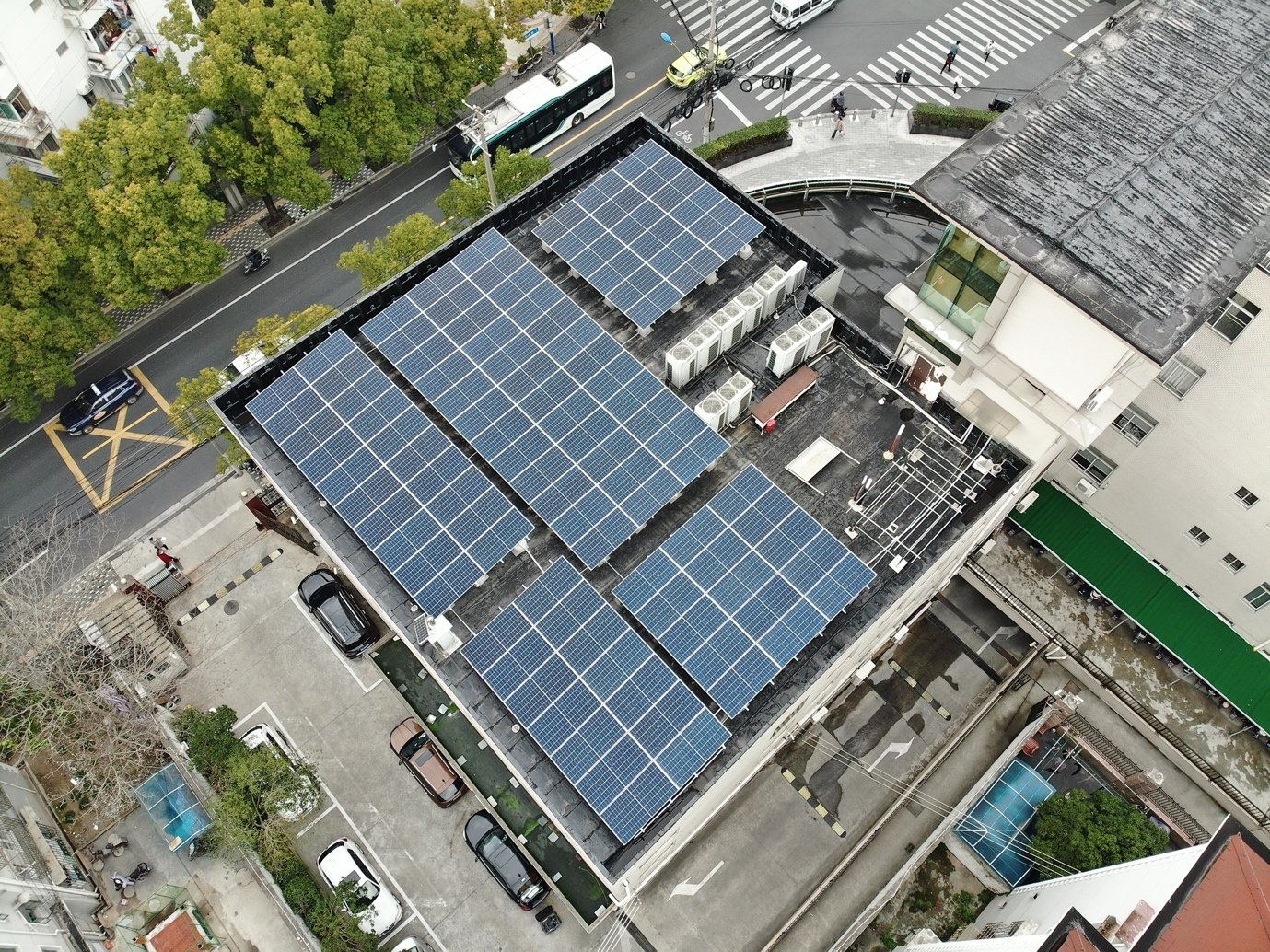
Low-carbon renovation of sub-district office premises Rooftop micro-ecological garden: Equipped with a rainwater collection system to supply irrigation for plants and cut down tap water consumption from municipal supply. Distributed photovoltaic panels are installed to power public lighting areas, saving around 12,000 kWh of electricity each year.
Zero-waste office renovation Energy-saving doors, windows and LED sensor lights have been replaced throughout the premises. Paperless office work and the "Clear Your Plate" campaign in the staff canteen are promoted. A dedicated recyclable waste station for office staff is set up. The sub-district has been awarded the titles of Municipal and District-level Zero-Waste Government Office and National Energy-Saving Model Public Institution.
II.Micro-renewal of Community Public Spaces (Habitat Construction & Low-carbon Scenarios)
Community pocket gardens and habitat stations: Idle plots in old residential compounds including Lane 99 Linfen Road and Lane 261 Fenxi Road are renovated. Drought-tolerant native plants are adopted, together with waste-sorting themed murals and low-carbon guide signs. Neglected dead corners are transformed into visible and accessible green living spaces.
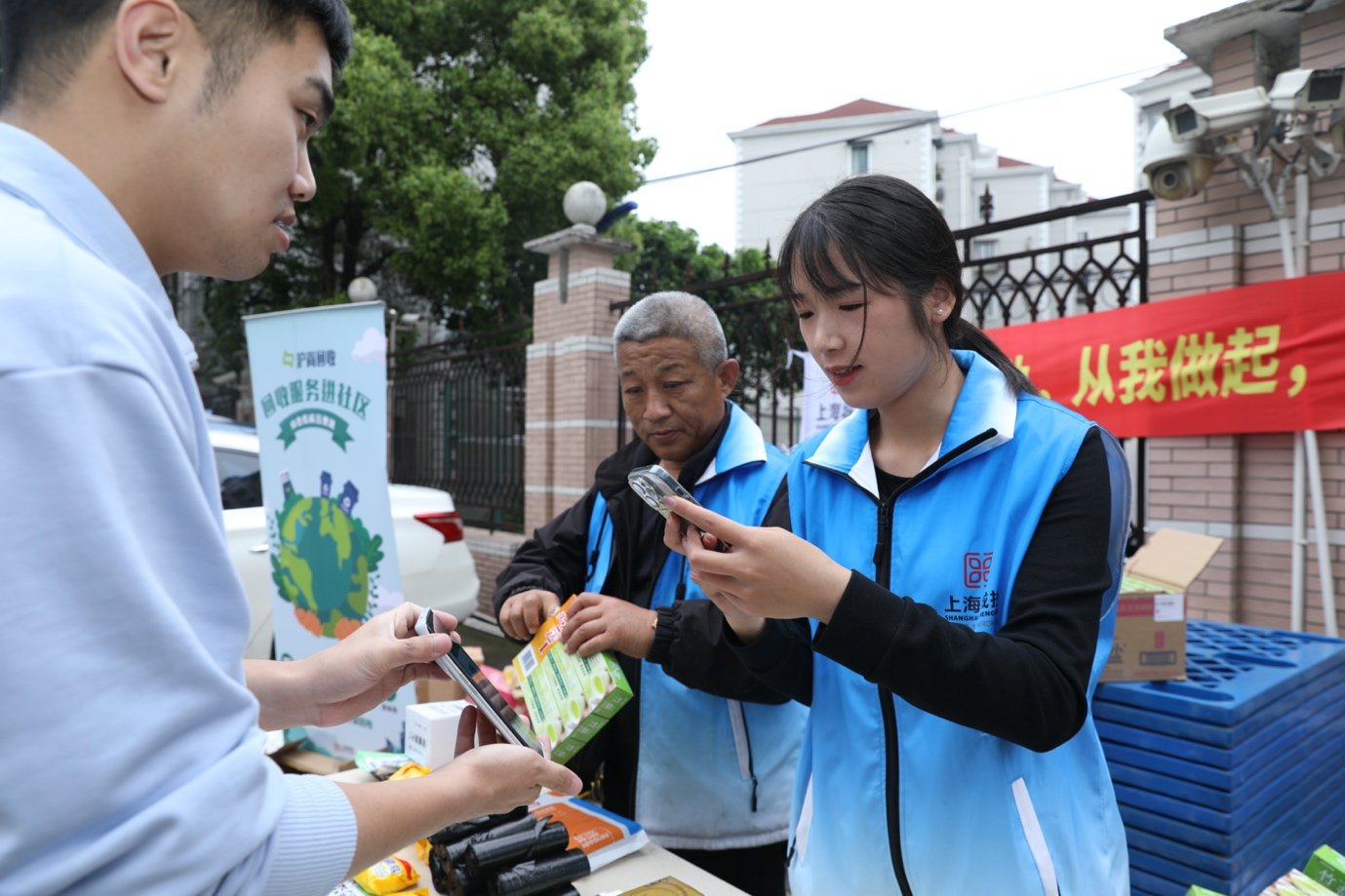
Full coverage of standardized waste sorting stations: All 38 residential compounds are equipped with waste sorting stations fitted with recycling bins and appointment service points for bulky waste. The stations are connected to the online recycling platform "Hu Shang Hui Shou", addressing the long-standing difficulty of waste recycling in old communities.
III.Long-term Digital Carbon Incentive Mechanism and Public Participation (Behavior Advocacy + Full Population Coverage)
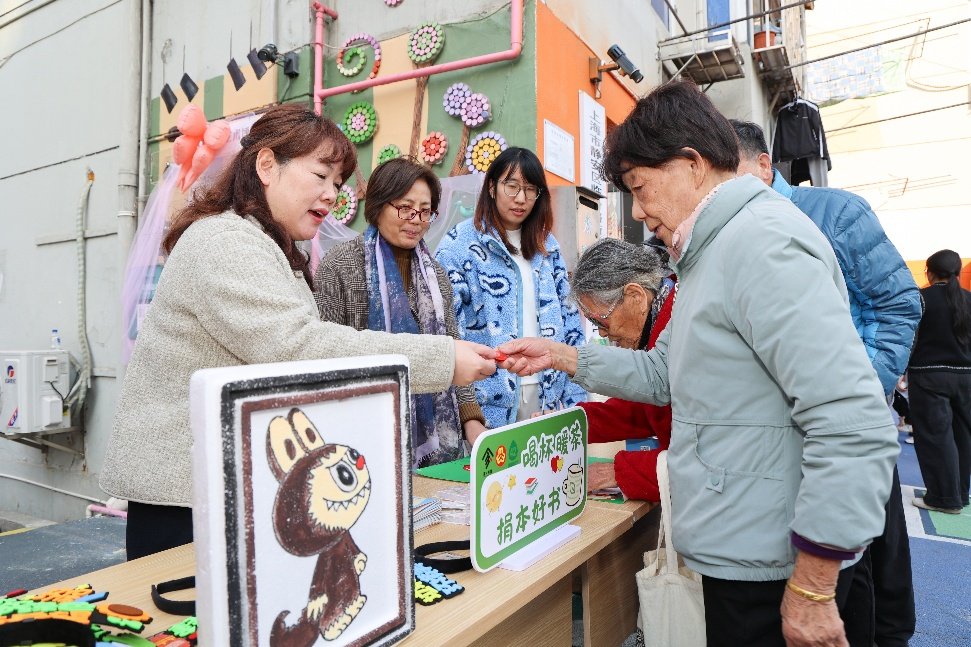
Tiered and categorized all-resident low-carbon action system For residents: Regular activities including low-carbon garden fairs, waste-sorting challenge games, second-hand markets, tree-planting campaigns and Party members’"Clean Hiking" litter picking events cover seniors, teenagers and children of all ages.
Field trips to waste recycling and ecological bases are organized to deliver immersive popular science on resource circulation.
For merchants: Shops along streets are encouraged to use eco-friendly packaging and cut single-use plastic products. They are incorporated into the community carbon point merchant alliance to offer exclusive low-carbon discounts.
For staff of government offices: A low-carbon commuting policy is implemented to encourage walking, public transport and shared bicycles, with rewards offered for green commuting check-ins.
项目实施
一、绿色空间改造运营实践(空间运营优化+生态友好设施)
1.街道机关办公低碳空间改造。楼顶微生态花园:配套雨水收集系统,收集雨水用于绿植灌溉,减少市政自来水消耗;铺设分布式光伏,供给公共区域照明,年均节电约1.2万度。
2.无废机关改造:全域更换节能门窗、LED 感应灯具,推行无纸化办公、绿色食堂光盘行动,设置机关可回收物专属驿站,获评市、区两级“无废机关”、国家节约型机关。
二、社区公共空间微更新(生境营造+低碳场景)
居民区口袋花园/生境驿站:对临汾路99弄、汾西路261弄等老旧小区闲置空地改造,选用本土耐旱绿植,设置垃圾分类主题墙绘、低碳提示导览牌,把闲置死角转化为可视可感的绿色生活场景。
标准化垃圾分类驿站全覆盖:38个小区全部建设分类投放驿站,配套再生资源回收箱、大件垃圾预约点,接入“沪尚回收”线上回收平台,解决老旧小区回收难痛点。
三、数字碳普惠长效机制与公众参与(行为倡导+全员覆盖)
分层分类全民低碳行动体系。居民端:常态化开展低碳游园会、垃圾分类闯关、二手市集、植树节种植、党员“捡约徒步”净家园行动,覆盖全龄老人、青少年、儿童;组织居民参观垃圾资源化生态基地,沉浸式科普资源循环利用知识;
商户共建端:联动沿街商铺推行绿色包装、减少一次性用品,纳入社区碳积分商户联盟,优先提供低碳优惠;机关职工端:推行“低碳出行”制度,鼓励步行、公交、共享单车通勤,设置绿色通勤打卡奖励。
Project Outcome
Focusing on the deficiencies in low-carbon governance of old communities in megacities, the project deeply integrates space upgrading, digital empowerment and public co-governance, shifting local green development from sporadic renovations to systematic and regular operation with remarkable overall results and strong replicability.
Prior to implementation, the sub-district’s old residential compounds suffered from inadequate facilities, fragmented green landscapes and disjointed waste recycling systems. Public spaces lacked low-carbon science popularization facilities, residents showed low willingness to participate, office energy consumption remained high, and there was no long-term low-carbon governance mechanism in place.
The sub-district has achieved comprehensive improvements in the quality and efficiency of low-carbon governance, with marked upgrades to spatial environment, management capacity and residents’ living experience.
The project features multi-dimensional and innovative practices.
First, model innovation: it explores an old community low-carbon governance path of “space micro-renewal + digital carbon incentive + public co-construction”. Adopting low-cost and refined renovation to revitalize idle space without large-scale reconstruction, the model is highly adaptable to the actual conditions of old communities.
Second, mechanism innovation: the “Low-Carbon Linfen Renewal” carbon incentive system has been established to launch categorized low-carbon initiatives for residents, merchants and government staff, effectively solving the problem of insufficient and unsustained public participation due to the lack of incentive measures.
Third, collaborative innovation: guided by Party building, the project unites multiple stakeholders to form a full-chain governance system covering space operation, ecological popularization and resource recycling, and build an all-region co-governance pattern.
With mature operational mechanisms, the project boasts outstanding sustainability and promotional value. At present, the sub-district saves 12,000 kWh of electricity and 800 tons of water annually.
The community waste sorting accuracy rate remains above 92%, and the volume of recyclables has increased by 45%, with more than 10,000 residents participating in the carbon incentive program. Featuring low investment, rapid implementation and wide adaptability, this standardized and normalized model can be widely replicated for the low-carbon transformation of old communities across major cities.
成果亮点
聚焦超大城市老旧社区低碳治理短板,通过空间提质、数字赋能与全民共治深度融合,推动辖区绿色建设从零散整治转向系统化、常态化运维,综合成效突出、可复制性强。实施前,辖区老旧小区设施薄弱、绿化碎片化、回收体系松散,公共空间低碳科普缺失,居民参与积极性不足,机关能耗偏高,整体缺乏长效低碳治理机制。街道实现低碳治理质效全面提升,空间环境、管理水平与群众体验显著优化。
项目创新维度丰富,形成多项突破性做法。一是模式创新,探索出“空间微更新+数字碳普惠+全民共建”的老旧社区低碳治理路径,坚持低成本精细化改造,盘活闲置空间,规避大拆大建,适配老旧社区发展实际。
二是机制创新,搭建“临碳新生”碳普惠激励体系,针对居民、沿街商户、机关职工建立分层分类低碳行动机制,有效破解群众低碳行为无激励、参与持续性弱的难题。
三是协同创新,以党建为引领,凝聚多方主体力量,打通空间运维、生态科普、资源循环全链条,构建全域共建共治格局。
项目运行机制成熟、可持续性强、推广价值高。目前街道机关年均节电1.2万度、节水800吨,社区垃圾分类准确率稳定在92%以上,可回收物年回收量提升45%,超万名居民参与碳普惠行动。整套模式投入低、落地快、适配性广,形成标准化运维台账与常态化活动体系,可广泛复制应用于各大城市老旧社区低碳转型。
Project Highlights
1. Ecological and Economic Benefits
The sub-district has achieved remarkable quantifiable results in energy conservation, emission reduction and waste reduction. The rooftop photovoltaic power generation and rainwater recycling systems save 12,000 kWh of electricity and 800 tons of water every year, cutting carbon emissions by around 9.6 tons annually. Thanks to the construction of standardized waste sorting stations across the whole area, the community’s waste sorting accuracy rate has stayed above 92%, and the volume of recyclables has risen by 45% compared with the pre-renovation period.
The project greatly eases the pressure of domestic waste collection and disposal, improves the efficiency of resource recycling, and effectively lowers the environmental operation and maintenance costs of the community, delivering dual gains of ecological improvement and cost reduction & efficiency enhancement.
2. Social Demonstration Impacts
The project has mobilized over 10,000 residents to take part in regular low-carbon activities, fostering an atmosphere of inclusive, incentivized and sustainable community low-carbon governance. It has built a multi-stakeholder collaborative governance model covering communities, merchants and government offices, and smoothed the linkage chain of grassroots ecological governance.
As a pilot low-carbon community and a zero-waste government office demonstration case in Shanghai, the project offers a replicable and promotable practical model for low-cost green space renewal, resident low-carbon behavior guidance and grassroots ecological governance system construction in old communities of megacities, and generates sound exemplary and driving effects for the green transformation of similar communities in the region.
成果影响力
一、生态与经济效益 辖区生态节能减废成效量化显著。街道楼顶光伏与雨水回收系统年均节电1.2万度、节水800吨,年减少碳排放约9.6吨。通过全域标准化垃圾分类驿站建设,社区垃圾分类准确率稳定保持92%以上,可回收物回收量较改造前提升45%,大幅减少生活垃圾清运与处置压力,提升资源循环利用率,有效降低社区环境运维成本,实现生态提质与降本增效双向收益。
二、社会示范影响 累计带动超1万名居民常态化参与低碳行动,形成全民可参与、可激励、可持续的社区低碳治理氛围。项目构建社区、商户、机关多方协同共治模式,打通基层生态治理联动链条。作为上海市低碳社区试点、无废机关示范案例,为超大城市老旧社区低成本绿色空间更新、居民低碳行为引导、基层生态治理体系建设提供可复制、可推广的实践样板,对区域同类社区绿色转型形成良好示范带动效应。
Reviews & Honors
1. Favorable Feedback from Multiple Parties. Since the project was launched, the environmental quality of green spaces and the level of low-carbon public services in the sub-district have been greatly improved. Resident participation enthusiasm and satisfaction with ecological livability have continued to rise.
Regular activities including low-carbon volunteering, idle item recycling exchanges, and environmental popularization events have won widespread public recognition. Competent ecological and environmental authorities at municipal and district levels have conducted on-site inspections and highly affirmed the sub-district’s innovative low-carbon governance model of “space micro-renewal + digital carbon incentive + public co-construction”.
The model effectively solves key difficulties in the green transformation of old communities in megacities, demonstrating solid practical effects and high promotion value.
2. High Recognition from Media and Industry. The sub-district’s featured practices in low-carbon community construction, zero-waste government building and green space co-construction have been reported by official mainstream media including the Shanghai Municipal Government official website and Jiemian News.
The innovative grassroots green governance experience has attracted wide industrial attention, providing practical and replicable experience for the low-carbon transformation and ecological culture development of old communities in Shanghai.
3. Fruitful Honors and Certifications. The project has obtained a series of authoritative honors and certifications. The sub-district has been awarded the National Model Energy-Saving Public Institution, Municipal and District-level Zero-Waste Government Office, Shanghai Water Efficiency Leader for Public Institutions, and Shanghai Pilot Low-Carbon Community.
Local residential compounds have been selected into the first batch of Complete Community Construction Pilots and typical community renewal cases issued by the Ministry of Housing and Urban-Rural Development, strongly supporting the project’s demonstration and leading value.
评价与荣誉
一是多方评价反馈良好。项目实施以来,街道绿色空间环境品质、低碳服务水平显著提升,居民参与积极性与生态宜居满意度持续走高,常态化低碳志愿、闲置交换、科普游园等活动收获辖区群众广泛好评。市区两级生态环境主管部门实地调研指导,高度认可街道“空间微更新+数字碳普惠+全民共建”的老旧社区低碳治理模式,认为其精准破解超大城市老旧社区绿色转型痛点,基层生态治理成效突出、落地性强、极具推广价值。
二是媒体与行业认可度高。街道低碳社区、无废机关、绿色空间共建等特色实践,先后被上海市人民政府官网、上观新闻等官方主流媒体宣传报道,基层绿色治理创新做法获得行业广泛关注与肯定,为上海老旧社区低碳转型、生态文化建设提供鲜活实践样本。
三是示范荣誉成果丰硕。项目落地期间,街道斩获多项权威认证与荣誉资质,先后获评国家节约型公共机构示范单位、上海市及静安区首批无废机关、上海市公共机构水效领跑者、上海市低碳社区试点;辖区小区入选住建部第一批完整社区建设试点及社区更新典型案例,多项成果为项目示范引领性提供权威背书。

近零碳社区的美育升级---- 长寿苑社区 “低碳实践 + 影像科普” 共建项目
4天前 · 来源:成都市武侯区火车南站街道长寿苑社区居民委员会 · 作者:成都市武侯区火车南站街道长寿苑社区居民委员会

以绿色金融之力推动中国新质生产力!
4天前 · 来源:国泰海通证券研究所ESG及美丽中国研究组 · 作者:国泰海通证券研究所ESG及美丽中国研究组
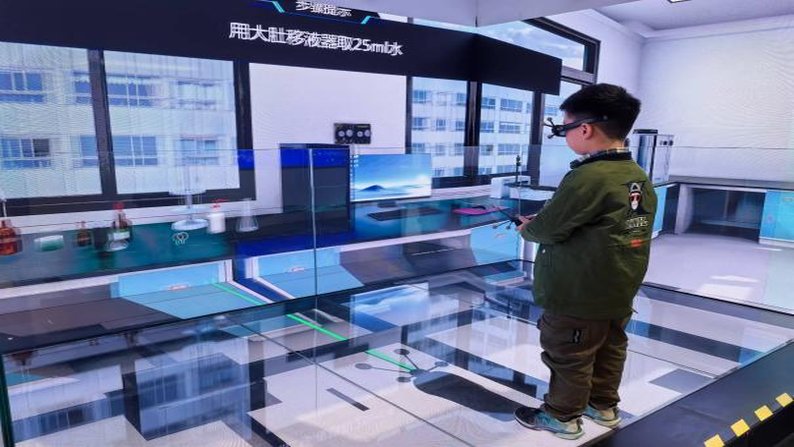
不择知行细流,蕴蓄蓝绿成深:雄安新区生态环境共享中心科普宣传空间营造雄安新区生态环境共享中心VR虚拟实验室(数字化仿真替代实体化学实验,实现科普零危废、低能耗)
6天前 · 来源:雄安新区生态环境监控中心 · 作者:雄安新区生态环境监控中心
