

Company/Organization Profile
SUS ENVIRONMENT is the global leading comprehensive environment provider. *As of December 2025, SUS ENVIRONMENT has established 11 management centers worldwide, providing environmental and energy services to over 100 million people.
It has invested in and constructed over 90 waste-to-energy plants (low-carbon Eco-industrial parks), with a daily processing capacity nearly 120,000 tonnes of municipal solid waste.
The annual green power generation is approximately 20,000 GWh, enough to meet the annual electricity needs of about 8 million households.
*The company is committed to promoting ecological transformation and creating a cleaner and more friendly living environment through innovative and effective scientific solid waste management and low-carbon, clean energy solutions.
*Sources: Environmental Sanitation Net of China and public data; total design capacity as of Dec. 31, 2025.
机构简介
康恒环境是全球最大的垃圾焚烧设备与技术提供者及全球前三的垃圾焚烧发电项目(低碳静脉产业园)投资运营商。
*截至2025年12月,康恒环境已在全球设立11个管理中心,为超1亿人口提供环境与能源服务,投资建设垃圾焚烧发电项目超90座,日处理生活垃圾约12万吨,年绿色发电约200亿千瓦时,可满足约800万户居民一年用电需求。
*公司致力于通过富有创新性且切实有效的科学固废管理与低碳清洁能源解决方案,推动生态转型,创造更洁净更友好的生活环境。
*数据来源环卫科技网及公开数据,口径为设计总规模,截至2025年12月31日
Project Overview
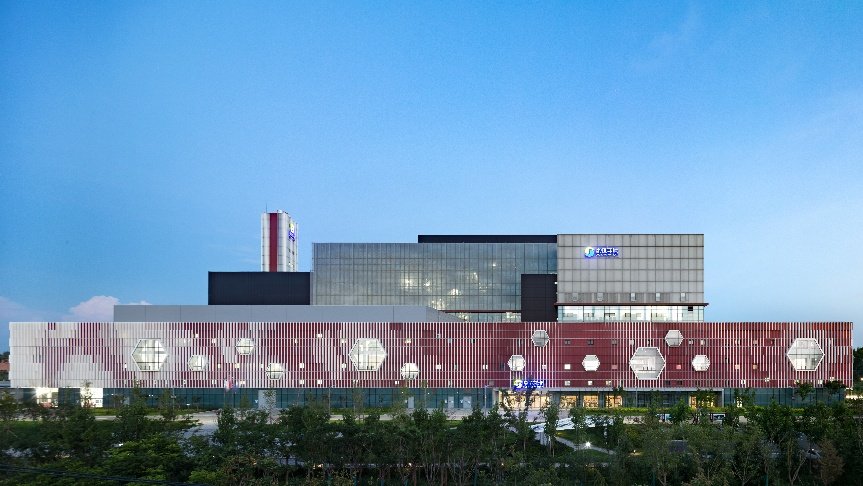
The Xi’an Gaoling Municipal Solid Waste Harmless Treatment and Waste-to-Energy Cogeneration Project is a key piece of urban environmental infrastructure in Xi’an. With a daily treatment capacity of 2,250 tonnes of municipal solid waste, it serves approximately 2.62 million people across Gaoling, Weiyang, Chanba International Port, Lintong and Yanliang. The plant commenced operations in 2020, providing a mature and stable foundation of existing space and facilities for this practice.
As the development of “Zero-Waste Cities”, clean urban heating and refined environmental governance continues to advance, the traditional “waste treatment + power generation” model still has room for improvement in areas such as cascading energy utilisation, multi-source waste synergy, smart operations and community sharing. Since November 2024, SUS ENVIRONMENT has launched a “City-Benefiting” green space upgrade practice based on the existing environmental infrastructure.
Through waste-heat heating, synergistic treatment of multiple waste streams, AI-powered digital twins, and public access and sharing, the initiative improves the efficiency of existing resource use and transforms the waste treatment facility from a single-purpose end-of-pipe treatment site into a shared urban green facility integrating environmental governance, clean energy, resource circulation and community services.
项目背景
西安高陵生活垃圾无害化处理焚烧热电联产项目是西安市重要的城市环境基础设施,日处理生活垃圾2,250吨,服务高陵、未央、浐灞国际港、临潼、阎良等区域约262万人。项目主体于2020年投入运营,为本次实践提供了成熟稳定的既有空间和设施基础。
随着“无废城市”建设、城市清洁供暖及精细化环境治理持续推进,传统“垃圾处理+发电”模式在能源梯级利用、多源废弃物协同、智慧运营和社区共享等方面仍存在进一步提升空间。
自2024年11月起,康恒环境依托既有环保设施启动“城市受益型”绿色空间升级实践,通过余热供暖、多源协同处置、AI数字孪生及公众开放共享等措施,提高既有资源使用效率,推动垃圾处理设施由单一末端治理场所向兼具环境治理、清洁能源、资源循环和社区服务功能的城市绿色共享节点转型。
Project Implementation
With the goal of “improving the efficiency of existing spaces and resources while enabling environmental infrastructure to better serve the city and the public”, SUS ENVIRONMENT has carried out a systematic upgrade of the Gaoling Project since late 2024 across four dimensions: energy, resources, digitalisation and community sharing.
First, restructuring energy utilisation by extending waste-incineration heat from on-site power generation to urban heating.
Previously, the thermal energy generated from waste incineration was mainly used for power generation, resulting in a relatively limited form of energy utilisation, while Gaoling District continued to require natural gas and other energy sources for central heating in winter.
To address this issue, the project upgraded its combined heat and power system and further integrated waste heat from incineration into the district heating network.
While ensuring stable waste treatment and electricity generation, measures including waste-heat utilisation, exhaust-steam recovery and heating-system optimisation have created a cascading energy pathway of “waste treatment — green power generation — residential heating”.
The heating service currently covers 3.9 million square metres and benefits approximately 35,000 households, enabling the existing waste treatment facility to also function as part of the city’s clean energy infrastructure.
Second, optimising resource synergy by expanding from single-stream municipal waste treatment to the circular utilisation of multiple solid waste streams.
To address duplicated facility investment, transportation and energy consumption associated with the separate treatment of sludge, food-waste digestate and other waste streams, the project makes full use of its existing incineration system, environmental facilities and energy resources to co-treat sludge, food-waste digestate, leachate and other wastes.
Heat generated from municipal solid waste incineration provides energy for related treatment processes, while combustible residues are returned to the incineration system for energy recovery. Bottom ash is further processed for resource recovery.
By sharing facilities and energy and integrating waste treatment processes, the project improves the carrying capacity of existing spaces and resource-circulation efficiency, while reducing the additional resource consumption associated with constructing standalone treatment facilities.
Third, upgrading space operations through AI-powered digital twins to improve facility utilisation and management efficiency.
Large-scale waste-to-energy facilities involve long process chains, numerous pieces of equipment and complex operating parameters. To improve operational efficiency, the project has continued to deepen the application of AI-powered digital twins.
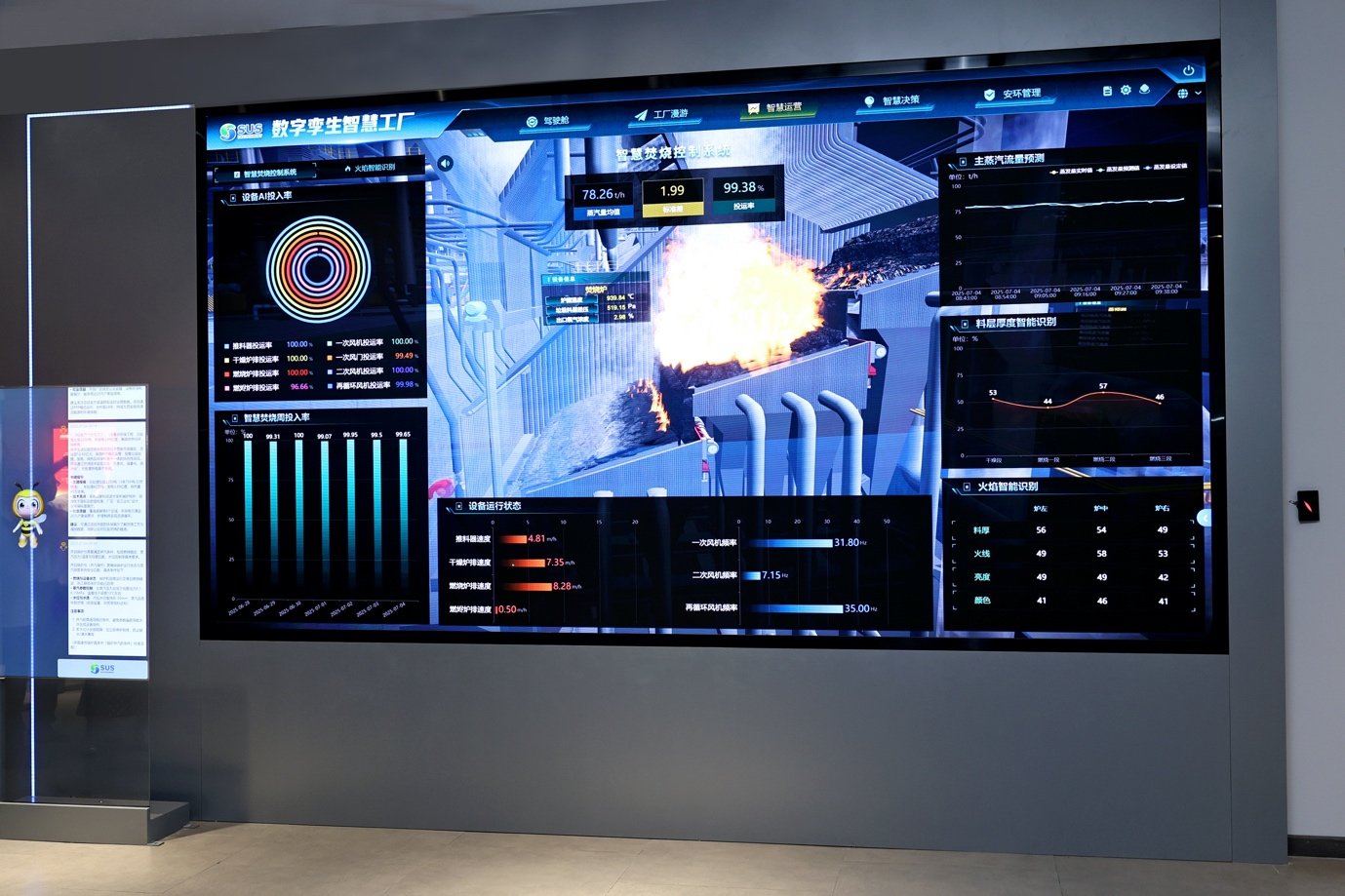
Based on an LOD300 detailed model, a real-time digital representation of the physical plant has been established, covering waste reception, material management, incineration, power generation, flue-gas treatment, water treatment and other production processes. The system enables real-time equipment monitoring, anomaly identification, predictive maintenance, simulation-based training and decision support.
Digital technologies have not only improved the precision of facility management, but also changed the way employees interact with the production space, gradually shifting operations from frequent manual inspections and experience-based judgement to data-driven precision management.
Fourth, reshaping the relationship between people and environmental infrastructure by making the production facility a green space that the public can access, learn from and share.
Building on the existing de-industrialised, garden-style plant, the project has continued to promote facility opening and community sharing. Operational and pollutant-emission data are monitored online and subject to regulatory oversight, while the environmental education centre is open to schools, communities and the wider public.
The site also includes an open-access basketball court and a “Caring Station” providing rest facilities for sanitation workers, waste collection drivers and other outdoor workers.
Environmental education programmes, industry exchanges and international visits further turn real waste treatment processes into learning opportunities, enabling members of the public to evolve from observers of environmental infrastructure into visitors, learners, space users and direct beneficiaries.
Through these measures, the Gaoling Project has gradually established a “City-Benefiting” green space operating mechanism founded on safe and environmentally sound waste treatment, centred on cascading energy utilisation and resource synergy, enhanced by digital technologies for efficient operations, and creating social value through openness and sharing.
项目实施
围绕“提高既有空间和资源使用效率,让环保设施更好服务城市与公众”的目标,康恒环境自2024年底起,在高陵项目原有稳定运行基础上,从能源、资源、数字化和社会共享四个维度实施系统升级。
一是重构能源利用方式,让垃圾焚烧余热从厂内发电走向城市供暖。针对垃圾焚烧热能过去主要用于发电、能源利用形式相对单一,而高陵城区冬季集中供暖存在天然气等能源需求的问题,项目实施热电联产升级,将垃圾焚烧产生的余热进一步接入区域集中供热系统。
在保障垃圾无害化处理和稳定发电的基础上,通过余热利用、乏汽回收及供热系统优化,形成“垃圾处理—绿色发电—居民供暖”的能源梯级利用路径。目前供暖覆盖面积达390万平方米、惠及约3.5万户居民,使既有垃圾处理设施同时成为城市清洁能源基础设施。
二是优化资源协同方式,从单一生活垃圾处理向多源固废循环利用延伸。针对污泥、餐厨沼渣等不同废弃物分散处理过程中存在的设施重复投入、运输和能源消耗问题,项目充分利用既有焚烧系统、环保设施及能源条件,协同处置污泥、餐厨沼渣、渗滤液等废弃物。
生活垃圾焚烧产生的热能为相关处理环节提供能源,可燃残余物进入焚烧系统实现能源回收;炉渣经处理后进一步资源化利用。通过共享设施、共享能源和协同处置,提高既有空间承载能力和资源循环效率,减少单独建设处置设施带来的新增资源消耗。
三是升级空间运营方式,以AI数字孪生提高设施使用和管理效率。面对大型垃圾焚烧设施流程长、设备多、运行参数复杂等特点,项目持续深化AI数字孪生应用,基于LOD300精细化模型建立实体工厂与数字空间的实时映射,对垃圾入厂、物料管理、焚烧、发电、烟气净化、水处理等生产环节进行数字化管理,实现设备状态实时监测、异常识别、预测性维护、仿真培训和辅助决策。
数字技术的引入不仅提高设施管理精度,也改变了员工对生产空间的使用方式,使运行管理由高频人工巡检和经验判断逐步转向数据驱动的精准管理。
四是重塑人与环保设施的关系,让生产空间成为公众可进入、可学习、可共享的绿色空间。依托原有“去工业化”花园式厂区,项目持续推进设施开放和社区共享。生产运行和污染物排放信息在线监测并接受监管,环保科普基地面向学校、社区及社会公众开放;厂区设置开放式篮球场,并通过“爱心驿站”为环卫工人、垃圾运输司机等户外劳动者提供休息服务。
同时开展环保教育、行业交流和国际参访,将真实垃圾处理流程转化为环境教育场景,让公众从环保设施的旁观者进一步成为参观者、学习者、空间使用者和实际受益者。
通过上述行动,高陵项目逐步形成以垃圾无害化处理为基础,以能源梯级利用和资源协同为核心,以数字技术提高运营效率,以开放共享创造社会价值的“城市受益型”绿色空间运行机制。
Project Outcome
First, existing environmental infrastructure has been further upgraded in function.
Rather than relying on large-scale new construction to expand its functions, the project fully taps into the energy, equipment and spatial potential of the existing waste-to-energy facility. Its original “waste treatment + power generation” functions have been extended to district heating, multi-source waste synergy and public services, enabling more efficient reuse of existing resources.
The combined heat and power system currently covers 3.9 million square metres and benefits approximately 35,000 households, transforming the waste treatment facility from an urban energy “consumer” into a clean energy “provider”.
Second, a synergistic material and energy circulation model has been established.
Through the synergistic treatment of municipal solid waste, sludge, food-waste digestate and leachate, together with the resource utilisation of bottom ash, previously dispersed waste treatment processes are connected to enable facility sharing, energy sharing and resource circulation. This upgrades the facility from an end-of-pipe treatment site into part of the city’s circular resource utilisation system.
Third, digital technologies have changed the way traditional production spaces are used.
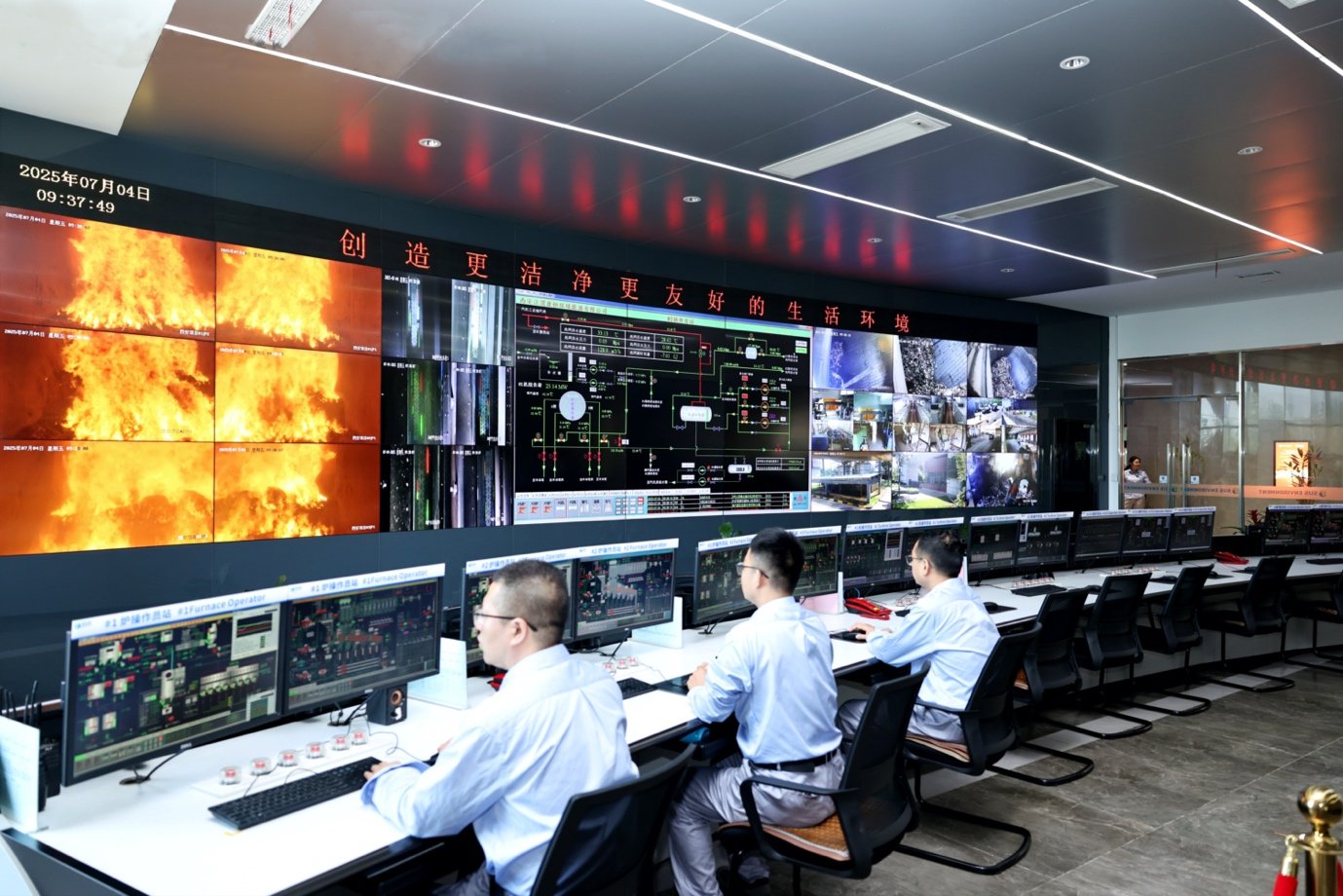
The AI-powered digital twin creates a synchronized digital representation of the physical plant and integrates real-time monitoring, predictive maintenance, simulation-based training and intelligent decision-making into daily operations.
Employees are gradually shifting from repetitive inspections and experience-based judgement to data-supported, refined management, providing a replicable pathway for the smart operation of large-scale environmental facilities.
Fourth, the project is helping transform a “NIMBY facility” into a “community-benefiting space”.
Through garden-style open spaces, environmental education, transparent emission information, a basketball court and the “Caring Station”, the facility goes beyond its production function to provide residents, students, sanitation workers and industry visitors with spaces for learning, exchange and shared use.
A long-term operating mechanism integrating “waste treatment + green power generation + urban heating + synergistic treatment + smart operations + public access” has now been established, providing a basis for replication at other waste-to-energy facilities and in cities with district heating demand.
成果亮点
一是既有环保设施实现功能再升级。
项目没有通过大规模新增建设拓展功能,而是充分挖掘既有垃圾焚烧设施的能源、设备和空间潜力,将原本以“垃圾处理+发电”为主的设施进一步延伸至区域供暖、多源固废协同和公共服务,实现对既有资源的高效再利用。热电联产目前覆盖390万平方米,惠及约3.5万户居民,使垃圾处理设施由城市能源“消费者”进一步转变为清洁能源“提供者”。
二是形成物质与能源协同循环模式。
通过生活垃圾、污泥、餐厨沼渣、渗滤液等多源协同处理,以及炉渣资源化利用,将原本相对分散的废弃物处理环节连接起来,实现设施共享、能源共享和资源循环,推动末端处置向城市循环利用节点升级。
三是数字技术改变传统生产空间的使用方式。
AI数字孪生将实体工厂同步映射至数字空间,将实时监控、预测性维护、仿真培训和智能决策融入日常运营,使员工从重复巡检和经验判断逐步转向数据辅助的精细化管理,为大型环保设施智慧运营提供可复制路径。
四是推动“邻避设施”向“邻利空间”转变。
通过花园式开放空间、环保科普、排放信息公开、篮球场和爱心驿站等举措,让环保设施不仅承担生产功能,也为居民、学生、环卫工人和行业访客提供学习、交流与共享空间。
目前,“垃圾处置+绿色发电+城市供热+协同处置+智慧运营+公众开放”的运行机制已形成长期实践,并具备向其他垃圾焚烧设施及具有集中供暖需求的城市复制推广的基础。
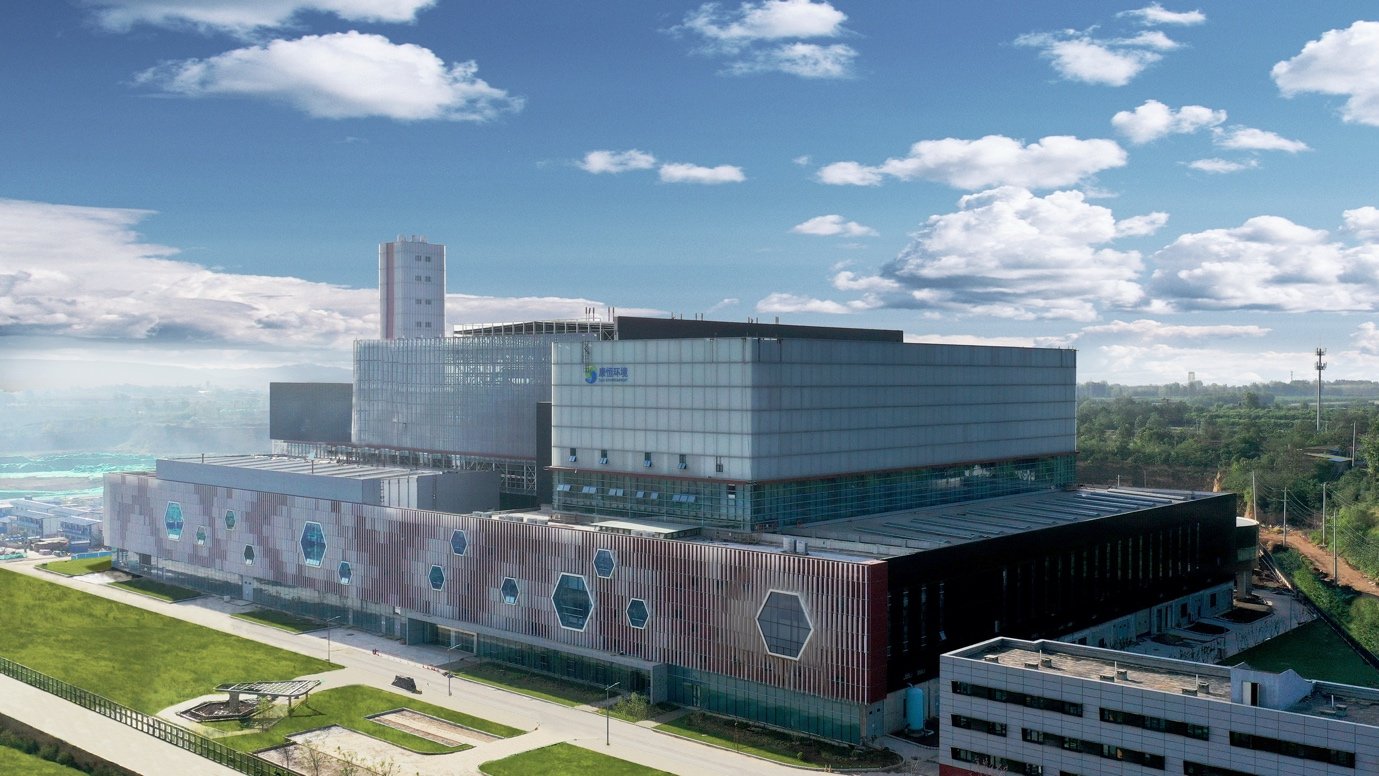
Project Highlights
From November 2024 to July 2026, this practice cumulatively supplied 1.863 million gigajoules of heat to external users, providing heating coverage for an area of 3.9 million square meters and benefiting approximately 35,000 households;
it cumulatively saved 44 million cubic meters of natural gas, equivalent to 52,800 metric tonnes of standard coal, and reduced carbon dioxide emissions by 87,000 metric tonnes, effectively substituting traditional fossil fuels with energy derived from municipal solid waste.
During the same period, the project cumulatively co-processed 16,600 metric tonnes of sludge and 2,000 metric tonnes of food waste digestate, while recycling 328,700 metric tonnes of furnace slag.
By sharing facilities and energy resources, the project reduced resource consumption associated with decentralized processing. Additionally, it organized a total of 147 public open house events, environmental education sessions, and industry exchange activities, welcoming 2,064 participants, thereby further expanding the social value of green spaces.
成果影响力
2024年11月至2026年7月,本实践累计对外供热186.3万吉焦,供暖覆盖面积达390万平方米,惠及约3.5万户居民;累计节约天然气4400万立方米,折合节约标准煤5.28万吨,减少二氧化碳排放8.7万吨,实现城市废弃物能源与传统化石能源的有效替代。同期累计协同处置污泥1.66万吨、餐厨沼渣0.2万吨,炉渣资源化利用32.87万吨,通过共用设施和能源降低分散处理产生的资源消耗;累计开展公众开放、环保教育及行业交流147场/次,接待2064人次,进一步扩大绿色空间的社会使用价值。
Reviews & Honors
The Gaoling Project has gradually evolved from a conventional waste treatment facility into an open environmental infrastructure asset serving both the city and local communities.
Residents directly benefit from district heating supplied by waste-incineration heat, while schools, communities and members of the public can enter the facility for environmental education and study visits. The open-access basketball court and “Caring Station” have further expanded the public and community functions of the space.
The project has been recognised as a National AAA-Rated Municipal Solid Waste Incineration Plant, China’s first “Six Dimensions, Five Stars” Operational Service Leader, a Green Factory of Shaanxi Province, and a Zero-Waste Factory of Xi’an. It was also selected for the National Energy Administration’s National Collection of Typical Renewable Energy Heating and Cooling Cases (2024).
The project has been designated as a Training and Teaching Practice Base of the Center for Environmental Education and Communications of the Ministry of Ecology and Environment and a Science Education Base of Xi’an. Its intelligent optimisation control practice for waste incineration was also recognised as an “AI+ Industry Excellence Case”.
In 2025, the international industry publication Waste Management World featured the project in an article titled “Breaking the Mould: How Xi’an’s Waste-to-Energy Plant Rewrote the Rulebook”, highlighting its practices in energy utilisation, digital operations and community relations.
The project has also received government, industry and community delegations from more than 20 countries and regions, attracting domestic and international attention for its transformation from a traditional “NIMBY” facility into a community-benefiting asset.
评价与荣誉
高陵项目已由传统垃圾处理设施逐步转变为面向城市和社区的开放型环境基础设施,居民直接受益于垃圾焚烧余热供暖,学校、社区及社会公众可进入厂区开展环保科普和参观交流,开放式篮球场、“爱心驿站”等设施进一步拓展了空间的公共属性。
项目先后获评国家AAA级生活垃圾焚烧厂、全国首家“六化五星”运营服务领跑者、陕西省绿色工厂、西安市无废工厂,并入选国家能源局《全国可再生能源供暖(制冷)典型案例汇编(2024)》;获生态环境部宣传教育中心培训教学实践基地、西安市科普教育基地等认定。垃圾焚烧智能优化控制相关实践获得“AI+行业优秀案例”认可。
2025年,国际行业期刊《Waste Management World》以“Breaking the Mould: How Xi’an’s Waste-to-Energy Plant Rewrote the Rulebook”为题专题报道项目在能源利用、数字化运营及社区关系方面的实践。项目还先后接待来自20余个国家和地区的政府、行业及社区代表考察交流,其“从邻避到邻利”的实践获得国内外行业关注。

近零碳社区的美育升级---- 长寿苑社区 “低碳实践 + 影像科普” 共建项目
4天前 · 来源:成都市武侯区火车南站街道长寿苑社区居民委员会 · 作者:成都市武侯区火车南站街道长寿苑社区居民委员会
以绿色金融之力推动中国新质生产力!
4天前 · 来源:国泰海通证券研究所ESG及美丽中国研究组 · 作者:国泰海通证券研究所ESG及美丽中国研究组
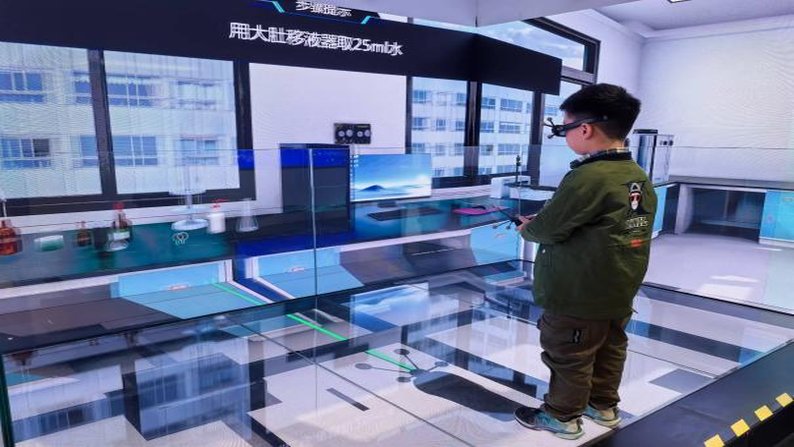
不择知行细流,蕴蓄蓝绿成深:雄安新区生态环境共享中心科普宣传空间营造雄安新区生态环境共享中心VR虚拟实验室(数字化仿真替代实体化学实验,实现科普零危废、低能耗)
6天前 · 来源:雄安新区生态环境监控中心 · 作者:雄安新区生态环境监控中心
