

Company/Organization Profile
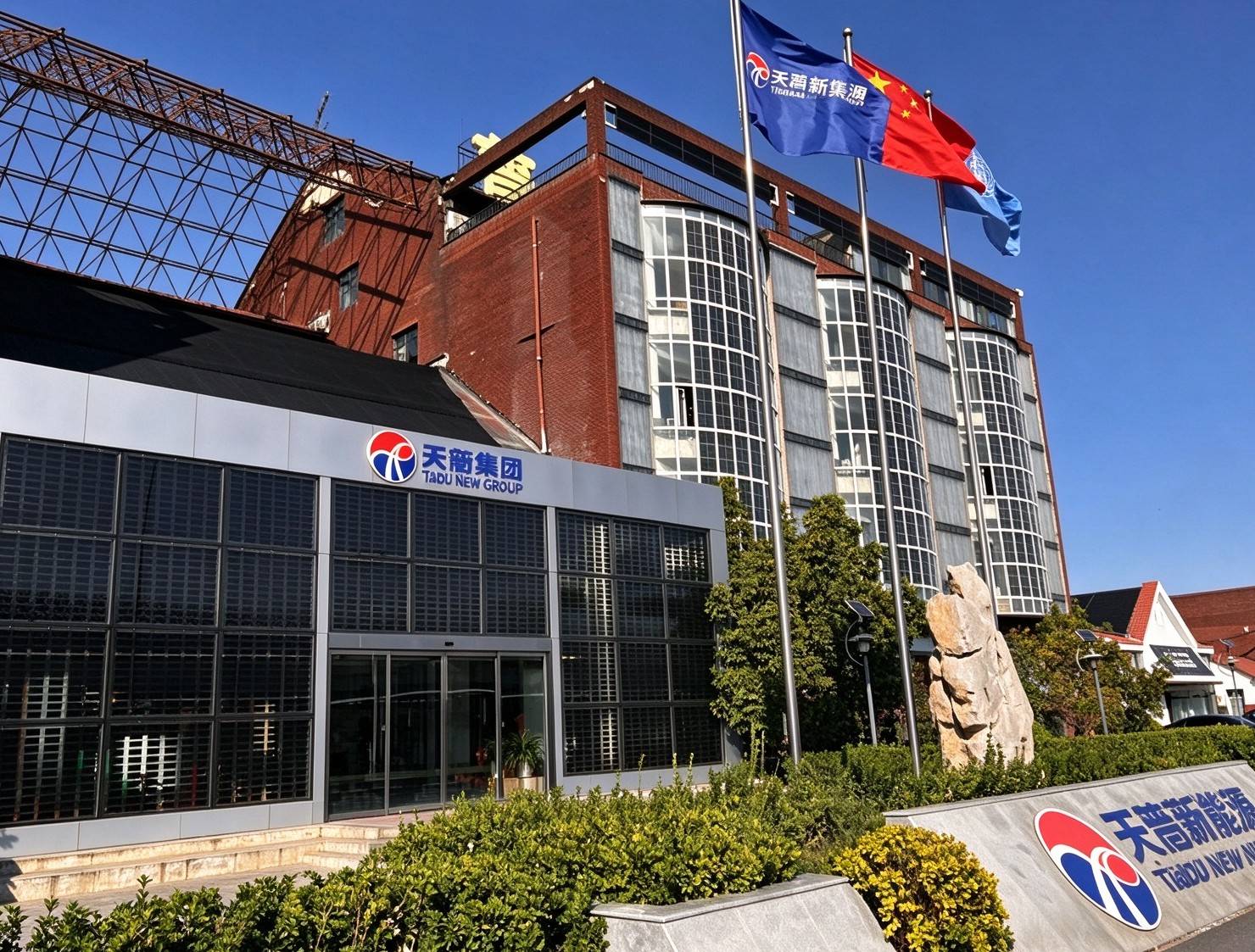
Tianpu New Energy Technology Co., Ltd., founded in 1989, is a new energy enterprise integrating R&D, manufacturing, sales, and services. It has developed a green energy portfolio centered on solar thermal, heat pump, and photovoltaic technologies, providing clean, smart, and efficient integrated new energy solutions for buildings and industrial parks. Committed to clean and low-carbon development, the company has participated in the formulation of more than 40 national standards and holds over 100 technology patents. Leveraging its Olympic New Energy Demonstration Building, Carbon Neutrality Science Education Base, Carbon Neutrality Science and Technology Classroom, and Ding Haibing Master Craftsman Studio, Tianpu continues to carry out green-space practices, public science education, skilled-talent development, and industry-academia-research collaboration.
机构简介
天普新能源科技有限公司创立于1989年,是一家集研发、制造、销售、服务于一体的新能源企业,形成以太阳能光热、热泵、光伏为核心的绿色能源体系,为建筑及园区提供清洁、智慧、高效的新能源综合解决方案。公司长期坚持清洁低碳导向,参与40余项国家标准编制,拥有100余项技术专利,并依托奥运新能源示范大楼、碳中和科普教育基地、碳中和科技教室及丁海兵技能大师工作室,持续开展绿色空间实践、公众科普、技能人才培养和产学研协同。
Project Overview
The project centers on Tianpu New Energy's Olympic New Energy Demonstration Building, carbon-neutrality exhibition hall/science park, and related teaching and practice spaces. Tianpu has long possessed technical and science-education resources in solar thermal, heat pump, photovoltaic and other technologies. However, earlier technology displays, public visits, course activities, and low-carbon behavior advocacy were relatively fragmented, and the space had yet to form a complete closed loop of "technology demonstration - behavioral participation - public education - outcome transformation."
In response to China's carbon peaking and carbon neutrality goals, the project upgrades the company's own premises from a single-purpose office and product-display venue into a green and low-carbon practice setting that can be seen, learned from, experienced, and replicated. On the one hand, integrated new-energy technologies, space operations, and green-culture communication strengthen the company's own demonstration role; on the other hand, carbon-neutrality education, hands-on courses, and skills training are offered to employees, students, visitors, and partners, while mature practices are extended to external settings such as schools, creating an ongoing low-carbon action mechanism.
项目背景
项目以天普新能源奥运新能源示范大楼、碳中和展厅/科普园及相关教学实践空间为核心场景。企业长期具备太阳能光热、热泵、光伏等技术和科普资源,但早期的技术展示、公众参观、课程活动和低碳行为倡导相对分散,空间的“技术示范—行为参与—公众教育—成果转化”价值尚未形成完整闭环。
围绕国家“双碳”战略,项目将企业自有空间园区从单一办公和产品展示载体升级为可看、可学、可体验、可复制的绿色低碳实践场景:一方面通过新能源技术集成、空间运营和绿色文化传播强化企业自身示范;另一方面面向员工、学生、访客和合作伙伴开展碳中和科普、实践课程和技能培训,并将成熟做法向校园等外部场景转化,形成持续运行的低碳行动机制。
Project Implementation
The project is advanced along the pathway of "green-space demonstration - curriculum-based participation - professional talent support - replication and promotion of application scenarios."
First, the company’s own premises serve as a demonstration platform for green technologies. The physical building of Tianpu New Energy’s Beijing headquarters was once designated as the “Olympic New Energy Demonstration Building.” Integrating eight advanced new energy technologies, the building successfully achieved a combined supply system for heating, air conditioning, and hot water, while also meeting part of its electricity demand through on-site generation.The science education base uses this building as a tangible demonstration platform to showcase the integrated application of various new energy technologies, including solar thermal systems, heat pumps, and photovoltaic modules. It also presents content on the background and concepts of carbon neutrality, carbon footprints, and the application of carbon-neutral products. Through exhibitions, physical equipment, and interactive experiences, professional technologies are transformed into green-space experiences that employees and visitors can directly observe, understand, and engage with.
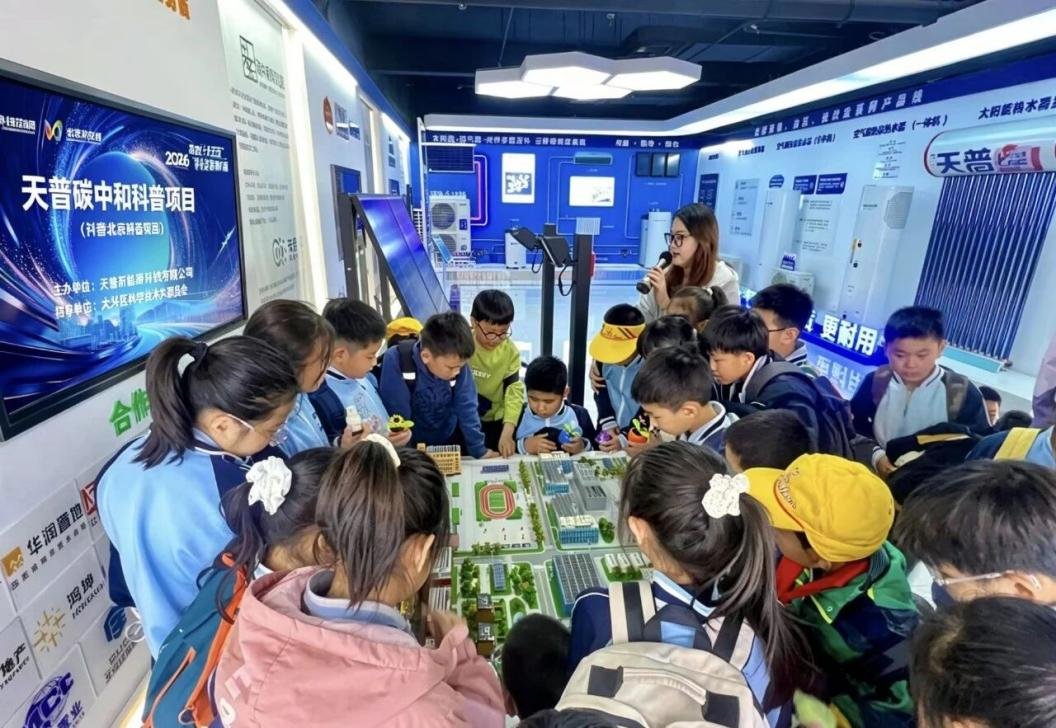
Second, a public participation mechanism combining seeing, listening, hands-on practice, and experience has been established. Relying on the science education base, Tianpu has developed four categories of content: off-campus practice, the Carbon Neutrality Science and Technology Classroom, school-based carbon-neutrality courses, and new-energy science and technology course packages. The classroom includes solar thermal models, a heat-pump operation test bench, photovoltaic power-generation models, a wind-power test bench, water-circulation and conservation modules, paper recycling, waste degradation, and other sections. The curriculum emphasizes interdisciplinary learning and hands-on practice, with 13 types of new-energy experiential courses for primary and junior-secondary students, including solar-powered vehicles, photoelectric conversion, solar charging stations, and wind-energy applications. Participants move from simply "visiting" to "doing, understanding the principles, and developing low-carbon awareness."
Third, low-carbon concepts are translated into participatory rules of behavior. The project developed a campus carbon-neutrality simulation application that connects an integrated energy-management platform with classes and individuals. Carbon savings generated through teaching activities and daily behaviors are converted into class-level carbon accounts and incentive mechanisms. Concrete actions such as waste sorting, resource recycling, and energy conservation reinforce participation, shifting low-carbon advocacy from one-way communication to sustained interaction.
Fourth, skilled professionals provide long-term operational support. The Ding Haibing Master Craftsman Studio has been incorporated into the project's professional support system. Drawing on Tianpu's technology R&D center and vocational-training resources, the studio carries out technology development, process improvement, skills transfer, and talent development. Frontline practical experience is integrated into new-energy science education, hands-on training, and industry-education collaboration, providing professional support for the continuous renewal of green-space content. In the 2024 Beijing Master Craftsman Studio performance assessment, the studio received an "Excellent" rating.
Fifth, mature models are replicated in external settings. Tianpu's science-education content has reached more than 100 schools. In 2023, relevant educational concepts were further applied at Daxing District No. 8 Primary School, where eight major installations were developed, including photovoltaic multifunctional seating, an intelligent waste-sorting station, a photovoltaic power-generation system, a micro-wind turbine, a photovoltaic fountain, a smart management platform, and a carbon-neutrality classroom. This created Beijing's first carbon-neutrality pilot school and extended the model from a corporate demonstration space to a low-carbon campus setting.
项目实施
项目按照“绿色空间示范—课程化参与—专业人才支撑—场景复制推广”的路径推进。
一是以企业自有空间承载绿色技术示范。天普北京总部实体建筑曾被称为“奥运新能源示范专项大楼”,大楼集成了八大新能源尖端技术,成功实现了采暖、空调、热水三联供和部分电力自给。科普基地以此为有形载体,集中展示太阳能光热、热泵、光伏组件等多种新能源技术的集成应用,并设置碳中和背景、碳中和理念、碳足迹、碳中和产品应用等内容。通过展陈、实物设备、互动体验等方式,将专业技术转化为员工和访客可直接感知的绿色空间体验。
二是建立“看、听、实践、体验”相结合的公众参与机制。依托科普教育基地,形成校外实践、碳中和科技教室、碳中和校本课程和新能源科技课程包四类内容。科技教室设置太阳能光热模型、热泵运行实验台、光伏发电模型、风电实验台、水循环节约、纸张循环利用和垃圾降解等板块;课程体系突出跨学科和动手实践,面向小学及初中阶段开展太阳能电动车、光电转换、太阳能充电桩、风能应用等13类新能源体验课程,让参与者从“参观”转向“动手做、理解原理、形成低碳意识”。
三是把低碳理念转化为可参与的行为规则。项目开发校园碳中和模拟应用,将综合能源管理平台与班级、个人相连接,把教学及日常行为中的节碳量转化为班级碳账户和激励机制,以垃圾分类、资源循环、节能行动等具体行为强化参与感,使低碳倡导从单向宣传转为持续互动。
四是以专业技能人才保障长期运行。将“丁海兵技能大师工作室”纳入项目专业支撑体系。工作室依托天普技术研发中心和职业培训资源,围绕技术研发、工艺改进、技能传承和人才培养开展工作,将一线技能经验融入新能源科普、实训和产教融合,为绿色空间内容持续更新提供专业力量。2024年度北京市技能大师工作室绩效考核中,该工作室获评“优秀”等次。
五是推动成熟模式向外部场景复制。天普科普内容已走进100多所学校。2023年,相关科普场景进一步转化至大兴区第八小学,建设光伏多功能座椅、智能垃圾分类站、光伏发电系统、微风发电机、光伏喷泉、智能管理平台、碳中和教室等“八大景观”,形成北京市首所碳中和试点院校,实现从企业示范空间到校园低碳场景的复制推广。
Project Outcome
Following implementation, Tianpu New Energy has gradually established a low-carbon practice model characterized by “demonstration in corporate spaces, participation through science education courses, strong support from master technicians, and replication in school settings.” Compared with the previous approach, which focused mainly on equipment displays and one-time visits, the current spaces transform solar thermal energy, heat pumps, photovoltaics, green electricity, and other low-carbon technologies into visual, interactive, and hands-on experiences. A relatively comprehensive public participation system has also been developed through off-campus practical activities, carbon neutrality science and technology classrooms, school-based curricula, and new energy course packages.
In terms of measurable outcomes, materials from the base show that in recent years it has received more than 150,000 students participating in open science practice courses, more than 30,000 general science-outreach visitors, and over 8,000 international students for visits and study. Its science-education content has reached more than 100 schools, and 13 types of new-energy experiential courses have been developed. In 2023, Tianpu further translated its corporate experience into the "eight major installations" and a carbon-neutrality classroom at Beijing's first carbon-neutrality pilot school, extending the practice from corporate spaces to campus spaces.
In terms of mechanism innovation, the project connects the scenario-transformation capabilities of the Future Carbon Neutrality Research Institute, Tianpu's technology R&D team, the science education base, and the Ding Haibing Master Craftsman Studio, creating a continuously updated mechanism of "R&D - demonstration - teaching - training - replication." The model mainly relies on existing corporate spaces, accumulated technologies, and professional talent, giving it long-term viability and strong potential for replication and wider adoption.
成果亮点
项目实施后,天普新能源逐步形成了“企业空间做示范、科普课程促参与、技能大师强支撑、校园场景再复制”的低碳实践模式。与过去以设备展示和单次参观为主相比,现有空间将太阳能光热、热泵、光伏、绿色电力等内容转化为可视化、可互动、可操作的体验,并以校外实践、碳中和科技教室、校本课程和新能源课程包构成较完整的公众参与体系。
量化成果方面,基地材料显示,近年来累计接待15万余名学生参加开放性科学实践课、3万余名科普散团、8000余名国外学生参观学习,科普内容已走进100多所学校;新能源体验课程形成13类实践课程。2023年进一步把企业积累转化为北京市首所碳中和试点院校的“八大景观”与碳中和教室,实现由企业空间向校园空间延伸。
机制创新方面,项目把未来碳中和研究院的场景转化能力、企业技术研发团队、科普教育基地和丁海兵技能大师工作室连接起来,形成“研发—展示—教学—实训—复制”的持续更新机制。该模式主要依托现有企业空间、技术积累和专业人才运行,具备长期性和较强复制推广价值。
Project Highlights
The ecological and environmental value of the project lies in integrating solar thermal energy, heat pumps, photovoltaics, green electricity, and other low-carbon technologies into real-world spaces and public engagement activities, enabling green technologies and resource-saving behaviors to be continuously promoted through tangible and interactive scenarios. As the available materials do not separately disclose the annual electricity savings or emission reductions of the company’s headquarters, this application does not equate the emission reductions generated by the company’s business projects with the direct emission reductions achieved within the project space.
In terms of social impact, the base has in recent years served more than 150,000 students through open science practice courses, more than 30,000 general science-outreach visitors, and over 8,000 international students, while its science-education content has reached more than 100 schools. Through 13 types of new-energy experiential courses, the Carbon Neutrality Science and Technology Classroom, and the replication of campus scenarios, Tianpu has developed a multi-level communication network for green and low-carbon concepts covering young people, the general public, educational institutions, and industry partners.
成果影响力
项目的生态环境价值体现在把太阳能光热、热泵、光伏、绿色电力等内容融入真实空间及公众实践,使绿色技术和节约行为在可体验场景中持续传播。现有材料未单独披露企业总部年度节电、减排量,因此本申报不将业务项目减排量等同于本空间直接减排量。
社会影响方面,基地近年来累计服务15万余名开放性科学实践课学生、3万余名科普散团和8000余名国外学生,科普内容走进100多所学校;同时通过13类新能源体验课程、碳中和科技教室和校园场景复制,形成面向青少年、公众、院校及行业伙伴的多层次绿色低碳传播网络。
Reviews & Honors
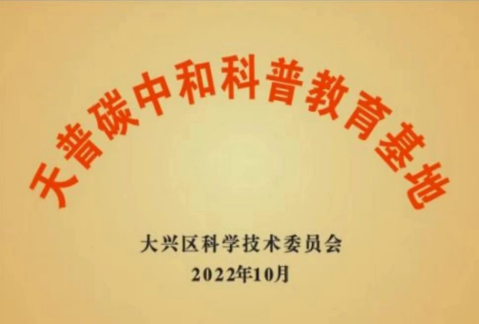
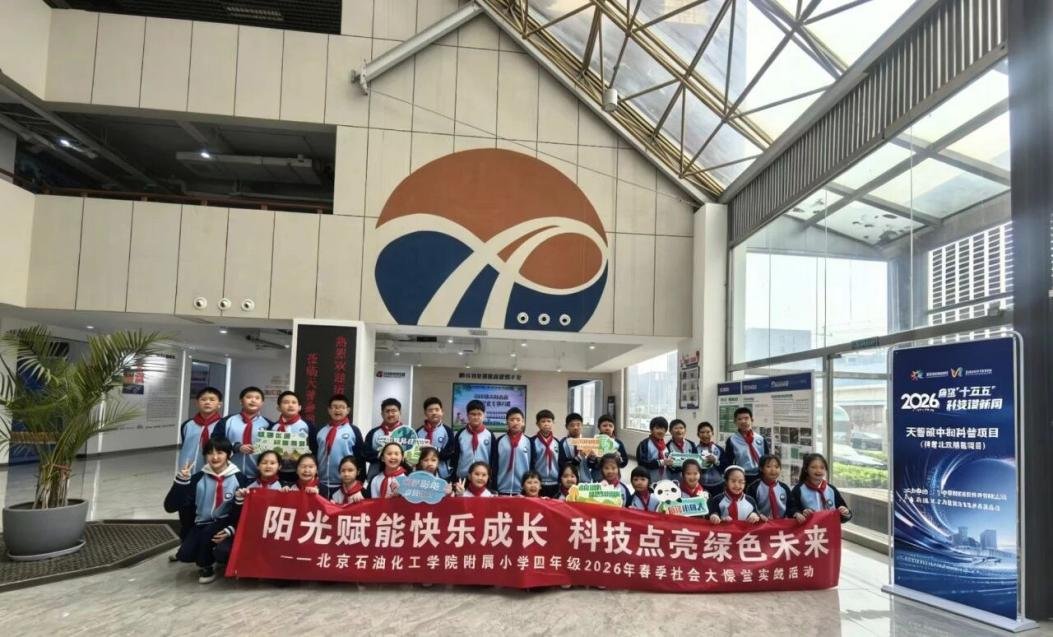
The project and its supporting system have received a number of verifiable forms of social and industry recognition. In 2009, Tianpu's new-energy demonstration building was designated a Beijing Science Education Base. In 2017, the base was recognized as a municipal-level resource unit of Beijing's Social Classroom for Primary and Secondary School Students, and in 2019 it was selected for Beijing's Open Science Practice Program for junior-secondary schools. In 2022, it was included among the first district-level science education bases and recognized as a Daxing District Science Education Base. In 2023, the Tianpu Carbon Neutrality Science Park was completed and opened to the public and received an Organizational Contribution Award for science outreach. In 2024, the base was recognized as a popular check-in destination in Daxing and joined the "Carbon Neutrality Integrated Education Alliance" as a corporate member.
In terms of talent and skills support, Ding Haibing has long used the Master Craftsman Studio to carry out technology R&D, skills transfer, and talent development. In the 2024 Beijing Master Craftsman Studio performance assessment published by the Beijing Municipal Human Resources and Social Security Bureau, the studio received an "Excellent" rating, providing professional support for the project's continued technology demonstrations, skills training, and industry-education integration.
评价与荣誉
项目及其支撑体系已获得多项可核实的社会与行业认可。天普新能源示范建筑于2009年被命名为北京市科普教育基地;2017年基地被评为中小学生社会大课堂市级资源单位,2019年中标北京市初中开放性科学实践项目;2022年入选首批区级科普基地、大兴区科普教育基地;2023年天普碳中和科普园建成并对外开放,并获科普工作组织贡献奖;2024年基地被评为大兴网红打卡地,并作为企业成员加入“碳中和大中小幼一体化联盟”。
人才与技能支撑方面,丁海兵利用技能大师工作室长期开展技术研发、技能传承和人才培养。北京市人力资源和社会保障局公布的2024年度北京市技能大师工作室绩效考核结果中,该工作室获评“优秀”等次,为项目持续开展技术示范、技能培训和产教融合提供了专业保障。
近零碳社区的美育升级---- 长寿苑社区 “低碳实践 + 影像科普” 共建项目
4天前 · 来源:成都市武侯区火车南站街道长寿苑社区居民委员会 · 作者:成都市武侯区火车南站街道长寿苑社区居民委员会
以绿色金融之力推动中国新质生产力!
4天前 · 来源:国泰海通证券研究所ESG及美丽中国研究组 · 作者:国泰海通证券研究所ESG及美丽中国研究组
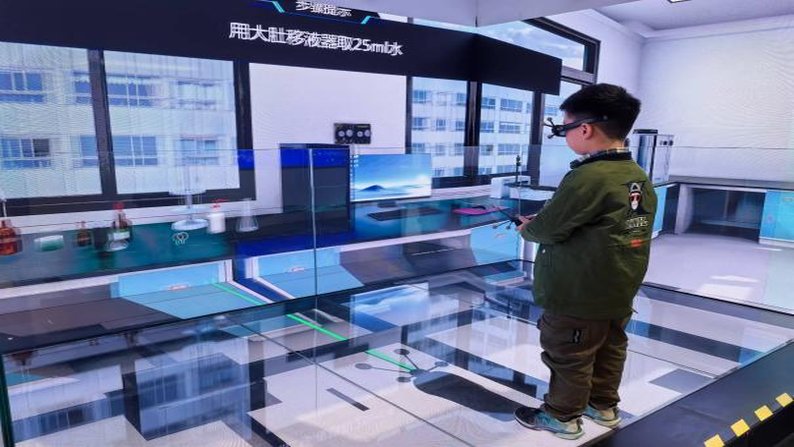
不择知行细流,蕴蓄蓝绿成深:雄安新区生态环境共享中心科普宣传空间营造雄安新区生态环境共享中心VR虚拟实验室(数字化仿真替代实体化学实验,实现科普零危废、低能耗)
6天前 · 来源:雄安新区生态环境监控中心 · 作者:雄安新区生态环境监控中心
