

Company/Organization Profile
Charity Community, Daguanlou Street, Cuiping District, Yibin City, Sichuan Province, is situated in the core of Yibin’s old town. It covers an area of 0.36 km² with a permanent population of about 1,0150, making it a typical densely populated and spaceconstrained old urban community.
The Community Party Committee has 8 grid Party branches with 186 Party members, and adheres to the governance philosophy of “Party building leadership, multiparticipation cogovernance, and green benefits for the people.”
In recent years, focusing on the degradation of public space functions and low resident participation in environmental protection, the community has actively explored a green governance path for old towns that integrates “microrenewal + carbon inclusion + allage participation.” It has been awarded honors such as Yibin Green Demonstration Community and Cuiping District Advanced Unit for Grassroots Governance.
The community is committed to embedding lowcarbon concepts into daily life, building a green living community where everyone has responsibility, contributes, and shares, providing a replicable grassroots model for the sustainable development of old communities.
机构简介
四川省宜宾市翠屏区大观楼街道慈善社区地处宜宾老城区核心,辖区面积0.36平方公里,常住人口约10150人,是典型的人口密集、空间紧促的老旧城市社区。社区党委下设8个网格党支部,现有党员186名,始终坚持“党建引领、多元共治、绿色惠民”的治理理念。
近年来,社区聚焦公共空间功能退化、居民环保参与度低等痛点,积极探索“微更新+碳普惠+全龄参与”的老城绿色治理路径,先后获评宜宾市绿色示范社区、翠屏区基层治理先进单位等荣誉。社区致力于将低碳理念融入日常生活场景,构建人人有责、人人尽责、人人享有的绿色生活共同体,为老旧社区可持续发展提供可复制的基层样本。
Project Overview
Charity Community is a typical old urban community in central Yibin, with high building density and fragmented public spaces. About 12% of the area consists of vacant corners and degraded green spaces. Three major problems have long existed:
1. Low spatial efficiency – many idle plots have become debris dumping sites or sanitary dead corners, with bare soil and messy vegetation. Lowcarbon facilities such as rainwater storage and waste sorting are lacking, and ecological service functions are nearly lost.
2. Weak lowcarbon education – traditional publicity relies on posters and lectures, which are monotonous and have low reach. Residents’ awareness of “dual carbon” goals and waste sorting is below 40%, and green behavioral habits have not yet formed.
3. Absence of governance mechanisms – green affairs are mostly driven by administrative forces, with insufficient channels for resident participation and a lack of regular incentives and cogovernance platforms. This results in repeated environmental degradation and poor longterm effectiveness.
In addition, the community is adjacent to the upper reaches of the Yangtze River in Yibin, bearing the special responsibility of protecting the “Three Rivers and Six Banks” water ecology.
However, residents’ understanding of the link between watershed protection and community waste reduction is weak; risks such as landbased waste entering the river and domestic sewage overflow still exist.
There is an urgent need to organically integrate green space governance with river ecological protection to form a systematic governance synergy of “green banks + clear water.”
In response to the call of “Beautiful China · Green Space User Action” and closely following the requirements of the “Public and Community Living Space Coconstruction and Sharing” group, this project revitalizes idle public resources through spatial microrenovation, scenariobased science popularization, and multiparty public participation, creating lowcarbon, visible, ecofriendly, and shared community living spaces.
项目背景
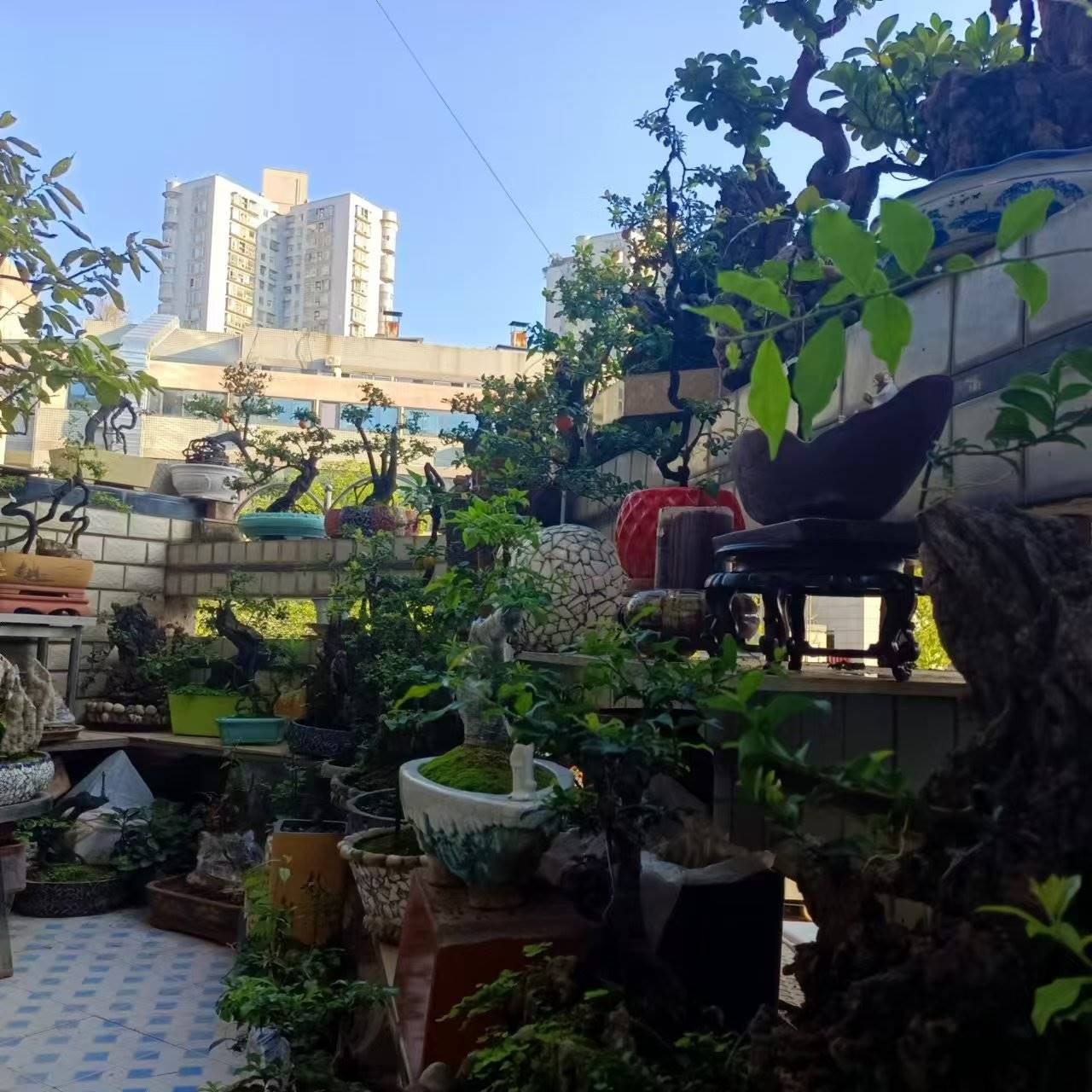
宜宾市翠屏区大观楼街道慈善社区属于宜宾市中心城区典型老旧社区,建筑密度高、公共空间零散,边角空地及退化绿地占比约12%,长期存在三大突出问题:
一是空间效能低下,多处闲置地块沦为杂物堆放点或卫生死角,土壤裸露、绿植杂乱,缺乏雨水调蓄、垃圾分类等低碳设施,生态服务功能基本丧失;
二是低碳科普薄弱,传统宣教依赖海报张贴和集中讲座,形式单一、触达率低,居民对“双碳”目标、垃圾分类等认知度不足40%,绿色行为习惯尚未形成;
三是治理机制缺位,社区绿色事务多由行政力量推动,居民参与渠道不畅,缺乏常态化激励与共治平台,导致环境整治“反复回潮”,长效性差。
同时,社区毗邻长江上游宜宾段,肩负着守护“三江六岸”水生态的特殊责任。然而,居民对流域保护与社区减废之间的关联认知薄弱,岸上垃圾入河、生活污水溢流等隐患仍存,亟需将绿色空间治理与江河生态保护有机联动,形成“岸绿+水清”的系统治理合力。
为响应“美丽中国·绿色空间使用者行动”号召,紧扣公共与社区生活空间共建共享组征集要点,通过空间微改造、场景化科普、多元公众参与,盘活社区闲置公共资源,打造低碳可视、生态友好、全民共享的社区生活空间。
总体目标:
1.空间提质目标:完成社区闲置边角空间、老旧绿地轻量化微改造5处,建成口袋花园、科普休闲空间、标准化垃圾分类驿站3个,全面提升社区生态服务功能。
2.科普浸润目标:构建“场景式、沉浸式、日常化”低碳科普体系,将气候变化、生态环保、双碳知识植入居民日常休闲场景,实现“润物无声”的全民生态教育,实现知识普及率提升至80%以上。
3.治理长效目标:建立“志愿运维+绿色积分+居民议事”三位一体机制,培育共建共享的绿色社区文化,形成可复制、可推广的老旧社区绿色空间治理模式。
Project Implementation
I. Spatial MicroRenovation Actions – Creating Visible LowCarbon Ecological Community Scenes
1. Turning Residents’ Balconies into MiniGardens.
With technical support from Yibin University, we introduced onsite kitchen waste composting technology.
The community organizes centralized treatment of household kitchen waste, converting it into safe organic fertilizer through fermentation, which is then provided free to residents for home planting. After planting training, residents actively used the selfmade fertilizer to beautify their homes, clearing clutter and renovating idle balconies. Once messy balconies have gradually turned into lush, fragrant minigardens – a transformation from “debris piles” to “home landscape spots.”
The subdistrict has established a regular incentive mechanism, holding “Most Beautiful Balcony” competitions to encourage more families to upgrade their home environment, using “small balcony beautification” to drive “large living environment improvement,” and promoting green, lowcarbon, coconstructed governance concepts.
2. Pocket Garden Renewal Plan.
We surveyed 5 idle corners and degraded green spaces, clearing debris, leveling ground, and rehabilitating soil. Native Yibin plants with high carbonsequestration and easy maintenance were selected, combined with ecological flower boxes, seasonal flowers, and native vegetation, to create small leisure green landscapes – turning “dirty dead corners” into “ecological microviews,” enhancing carbon sequestration, oxygen release, and beautification.
3. Standardized WasteSorting Stations.
We optimized waste disposal points and built standardized, clean, and convenient sorting stations with fourcategory areas, rain shelters, handwashing facilities, and classification signage.
This eliminated littering and regulated the waste collection system, supporting waste reduction and carbon reduction. Carbonreduction data boards were installed nearby, dynamically displaying kitchen waste separation and recyclable recovery rates, allowing residents to see the results firsthand.
II. ScenarioBased Science Infiltration – “Silent” LowCarbon Education for All
1. Fullarea lowcarbon science guidance system.
We installed science signs, interactive boards, and explanation panels in pocket gardens and sorting stations, covering climate change, dualcarbon knowledge, waste sorting, water/electricity conservation, green travel, and household lowcarbon tips.
Residents learn immersively during daily walks. “Lowcarbon checkin points” were set up – collecting 5 stamps earns a small gift, adding fun.
2. Regular seasonal lowcarbon activities.
We hold four seasonal events: Spring “Plant Adoption · Home Greening,” Summer “LowCarbon Science Challenge,” Autumn “Waste Sorting Practice Class,” and Winter “EnergySaving Family Action.”
Interactive formats – parentchild crafts, quizzes, handson practice, and volunteer talks – cover all age groups: elderly, youth, families, and merchants.
3. Resident lowcarbon story sharing sessions.
We regularly invite residents to share their experiences in lowcarbon living, green travel, and waste sorting, using neighbor role models to drive participation and embed lowcarbon concepts into daily life.
III. MultiParty Cogovernance and Coconstruction – Establishing a Longterm Carbon Inclusion Operation Mechanism
1. Community Green Space Volunteer Service Team. We recruited Party members, retired residents, youth, and merchant volunteers, forming three groups: space maintenance, science promotion, and lowcarbon supervision.
They regularly carry out plant care, cleaning, publicity, and behavioral guidance, ensuring public spaces are managed, protected, and promoted.
2. Community Carbon Inclusion · Green Points Incentive System. We established a points ledger covering behaviors such as plant maintenance, volunteer services, waste sorting, green travel, home energy saving, and event participation.
Points can be redeemed for daily necessities, convenience services, and honorary recognition, motivating residents to participate voluntarily and creating a localized grassroots carbon inclusion model.
3. Resident deliberation cogovernance mechanism.
Quarterly “Green Space Coconstruction Deliberation Meetings” are held to solicit resident opinions on space renovation, activity planning, facility maintenance, and science content updates, transforming residents from “space users” into “designers, managers, and guardians,” forming a closedloop governance model.
4. “Jiangshang Xun” (River Sturgeon) Yiman Veterans Volunteer Service Team – WaterLand Collaborative Protection Action.
The community collaborates with the “Jiangshang Xun” Yiman Veterans Volunteer Service Team, fully leveraging their “veterans never fade” dedication and professional experience in river patrol and fish protection, to deeply integrate Yangtze River ecological protection with community green governance.
The veteran team regularly conducts patrols along the “Three Rivers and Six Banks,” focusing on illegal fishing, illegal sewage discharge, and shoreline waste accumulation.
A “patrolfeedbackcoordinated disposal” mechanism has been established, notifying the community green space operation team of shoreline environmental issues in a timely manner, enabling source control of waterland pollution.
Meanwhile, the veterans visit community pocket gardens and wastesorting stations to give talks on “Protect the Yangtze – Start from My Home,” sharing their personal stories of changes in fish resources and the close relationship between community waste reduction, water conservation, and pollution prevention, encouraging residents to reduce plastic use, sort waste properly, and save water.
The veteran team is also linked to the “green points” system – points earned through patrols, talks, and supervision can be exchanged for community services or daily necessities, further motivating sustained participation.
Through the twoway linkage of “onshore community microrenewal + offshore veteran patrol line,” we build a “camouflage defense line” protecting the upper Yangtze, forming a new pattern of militarycivilian collaboration and waterland cogovernance.
项目实施
空间微改造行动——打造低碳可视生态社区场景
1.居民阳台巧变微花园。依托宜宾学院专业技术人才智力支持,引入厨余垃圾就地堆肥技术,面向辖区居民开展厨余垃圾就地资源化处置实践。由社区统筹组织,对居民日常生活产生的厨余垃圾进行集中规范化处理,通过堆肥发酵技术实现厨余垃圾变废为宝,转化为安全可用的园艺有机肥料,免费供给辖区居民用于家庭绿植花卉栽种。
前期进行花苗种植培训,广大居民积极参与,充分利用自制有机肥料开展居家环境美化,主动清理整治阳台乱堆乱放杂物、私搭乱堆等问题,对闲置杂乱的阳台空间进行改造提升。曾经杂物堆积、环境杂乱的居民阳台,陆续蜕变为绿植繁茂、花香四溢的居家微花园,实现从“杂物堆放点”向“家庭小景园”的华丽转变。
街道建立常态化激励机制,定期组织开展“最美阳台”评选评比活动,以评促改、以评促美,引导更多居民主动参与家庭环境提质,以阳台“小美化”带动人居环境“大提升”,推动绿色低碳、共建共享的社区治理理念落地见效。
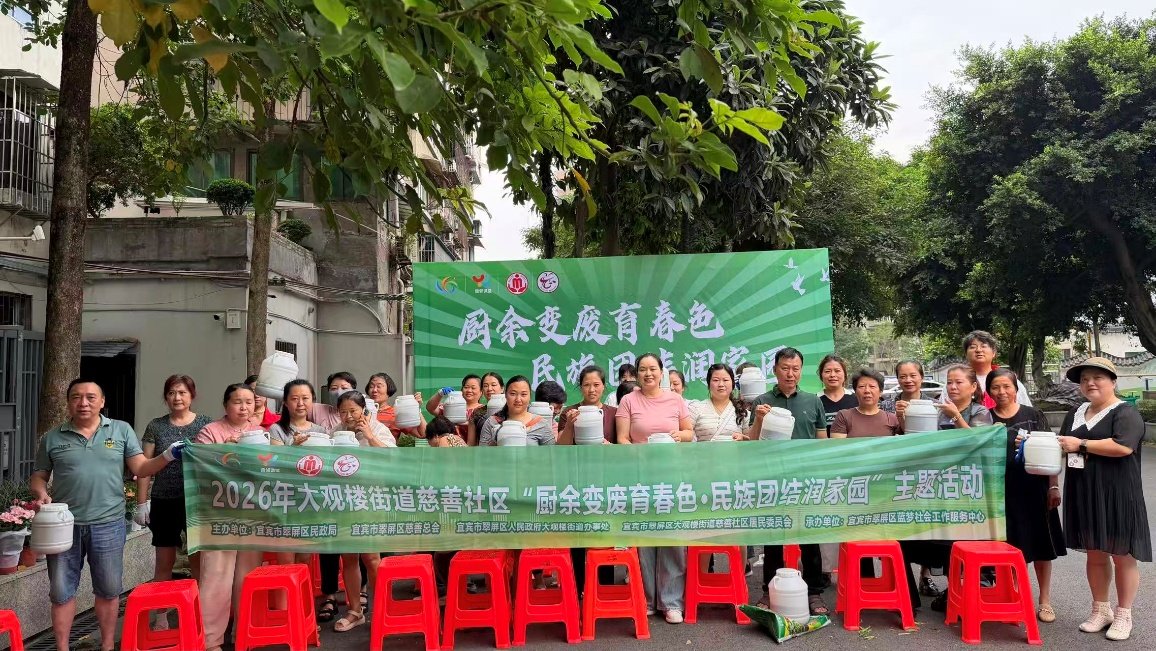
2.社区口袋花园焕新计划。摸排梳理社区5处闲置边角空地、退化绿地,清理杂物、平整土地、修复土壤,选用宜宾本土易养护、高固碳绿植,搭配生态花箱、四季花卉、原生植被,打造小型社区休闲绿景,实现闲置空间“从脏乱死角到生态微景”的转变,提升社区固碳释氧、美化亮化功能。
3.标准化垃圾分类驿站建设。优化社区垃圾投放点位,建设规范、整洁、便民的垃圾分类驿站,统一设置四分类投放区域、防雨围挡、洗手设施、分类科普标识,杜绝垃圾乱堆乱放,规范社区垃圾收运体系,从硬件上助力社区减废降碳,驿站周边设置减碳数据公示牌,动态显示厨余垃圾分出量、可回收物回收率,让居民直观感受分类成效。
二、场景化科普浸润行动——实现“润物无声”全民低碳教育
1.全域低碳科普导览体系搭建。在口袋花园、垃圾分类驿站布设系列科普标识、趣味互动展板、知识解说牌,内容涵盖气候变化、双碳科普、垃圾分类、节水节电、绿色出行、家庭低碳小技巧等生活化内容,居民日常散步、休憩即可沉浸式学习,同时设置“低碳打卡点”,居民集齐5处打卡可兑换小礼品,增加趣味性。
2.四季主题低碳科普活动常态化开展。结合四季节点,固定开展系列特色活动:春季“绿植认养·家园焕绿”、夏季“低碳科普闯关”、秋季“垃圾分类实操课堂”、冬季“节能降碳家庭行动”。通过亲子手工、知识问答、现场实操、志愿宣讲等互动形式,覆盖老人、青少年、家庭、商户全群体。
3.居民低碳故事分享会。定期邀请居民分享家庭低碳生活、绿色出行、垃圾分类经验,以邻里榜样力量带动全员参与,让低碳理念融入日常生活。
三、多元共治共建行动——建立长效碳普惠运行机制
1.组建社区绿色空间志愿服务队。吸纳社区党员、退休居民、青少年、商户志愿者,组建专项志愿服务队伍,分为空间管护组、科普宣讲组、低碳督导组,常态化开展绿植养护、空间清扫、科普宣传、行为督导工作,实现公共空间有人管、有人护、有人宣。
2.落地社区碳普惠·绿色积分激励机制。建立居民低碳行为积分台账,将空间绿植养护、志愿科普服务、规范垃圾分类、低碳出行、家庭节能、绿色活动参与等行为纳入积分体系。积分可兑换生活用品、便民服务、社区荣誉表彰,通过正向激励激发居民自主参与动力,打造本土化基层碳普惠实践样板。
3.建立居民议事共治机制。每季度召开绿色空间共建议事会,面向居民征集空间改造、活动策划、设施运维、科普内容更新意见,让居民从“空间使用者”转变为“设计者、管理者、守护者”,形成闭环治理模式。
4.“江上鲟”一曼老兵志愿服务队·水岸协同守护行动。社区联动“江上鲟”一曼老兵退役军人志愿服务队,充分发挥其“退役不褪色”的奉献精神与巡河护鱼专业经验,将长江上游生态保护与社区绿色治理深度融合。
老兵志愿服务队定期开展“三江六岸”巡河护鱼行动,重点巡查非法捕捞、违规排污、岸线垃圾堆积等问题,并建立“巡河—反馈—联动处置”机制,将河岸环境问题及时通报社区绿色空间运维团队,实现水岸污染源头管控。
同时,老兵们走进社区口袋花园、垃圾分类驿站,面向居民开展“保护长江·从我家做起”主题宣讲,以亲身经历讲述长江鱼类资源变化与社区减废、节水、防污的密切关系,引导居民自觉减少塑料使用、规范垃圾分类、节约水资源。
此外,老兵服务队与社区“绿色积分”体系对接,参与巡河、宣讲、督导等志愿服务可获得积分,积分可兑换社区便民服务或生活用品,进一步激发老兵持续参与热情。通过“岸上社区微更新+水上老兵巡护线”的双向联动,筑起守护长江上游的“迷彩防线”,形成军民共建、水岸共治的绿色治理新格局。
Project Outcome
The project is centered on “lightweight renovation, immersive education, and longterm cogovernance,” forming five innovative highlights with strong sustainability and replicability:
1. Model innovation:
Lightweight microrenovations suitable for old communities. Abandoning largescale engineering, we focus on revitalizing existing spaces with low investment, high effectiveness, and easy implementation – perfectly fitting the limited space, budget, and site constraints of old urban areas.
2. Science popularization innovation:
Scenariobased immersive education that works silently. Breaking away from traditional didactic publicity, we turn public spaces into open lowcarbon classrooms, where residents absorb ecological knowledge unconsciously during daily leisure – sustainable, penetrative, and wideranging.
3. Mechanism innovation:
Grassroots localized carbon inclusion cogovernance. By deeply integrating green points, volunteer maintenance, and resident deliberation, we build a quantifiable, incentivized, and longlasting lowcarbon governance system, solving the common problem of “shortlived” green initiatives at the grassroots level.
4. High replicability:
Standardized, lightweight, and universally applicable. The entire approach is simple to operate, lowcost, and clearly structured, and can be quickly replicated in various public living scenarios such as old urban communities, alley public spaces, and street convenience areas.
5. Collaborative innovation:
The "JiangshangXun" Yiman Veterans Volunteer Service Team joins forces to advance integrated watershore ecological governance.
Breaking the limitation of conventional community governance that focuses merely on landbased spaces, it combines the professional capacity of Yiman veterans in river patrolling and fish protection with the microrenewal of community green spaces, forming a collaborative governance chain of “waste reduction and carbon mitigation on land + fishing ban and fish conservation on water”.
This model featuring “communityresident integration and coordinated landwater management” offers a replicable linkage solution for ecological protection and community coconstruction for riverside urban communities. It has effectively expanded the connotation and boundary of the concept of “green space”.
成果亮点
项目以“轻量改造、沉浸教育、长效共治”为核心,形成四大创新亮点,具备显著可持续性与可复制性:
1.模式创新:微改造轻量化落地,适配老旧社区特质。摒弃传统大工程改造模式,以存量空间盘活为主,小投入、高成效、易落地,完美适配老城老旧社区空间有限、经费有限、场地受限的现实条件。
2.科普创新:场景浸润式教育,实现润物无声。打破传统说教式宣传,把公共空间变成开放式低碳课堂,居民在日常休闲中潜移默化接受生态科普,教育效果可持续、可渗透、可覆盖。
3.机制创新:基层本土化碳普惠共治模式。将绿色积分、志愿运维、居民议事深度融合,构建可量化、可激励、可长效的社区低碳治理体系,解决基层绿色建设“一阵风、无延续”的行业痛点。
4.可复制性强:标准化、轻量化、普适性高。整套方案操作简单、成本低、机制清晰,可快速复制到城市老旧社区、街巷公共空间、街道便民空间等各类公共生活场景。
5.协同创新:“江上鲟”一曼老兵退役不褪绿志愿服务队参与联动,水岸生态一体化治理。打破传统社区治理仅聚焦陆域空间的局限,将一曼老兵巡河护鱼的专业力量与社区绿色空间微更新相结合,形成“岸上减废降碳+水上禁渔护鱼”的协同治理链条。
这种“社民融合、水陆统筹”的模式,为沿江、沿河城市社区提供了可复用的生态保护与社区共建联动方案,有效拓展了“绿色空间”的内涵边界。
Project Highlights
Ecological Benefits
Using compost from kitchen waste, we absorb household organic waste onsite, reducing the amount sent for external treatment and lowering energy consumption and carbon emissions during transport and processing.
A closedloop cycle of “kitchen waste → organic fertilizer → balcony plants” has been achieved, reducing chemical fertilizer use and its environmental burden.
In the landscarce urban area, utilizing residents’ balconies for vertical greening increases urban green coverage without occupying public ground space, extending greenery into homes, expanding fragmented green spaces, enriching plant communities, and improving the overall urban ecological pattern.
The visible and participatory balcony minigardens let residents witness the entire process from waste to fertilizer and plant growth, subtly promoting knowledge of waste sorting, recycling, and green planting, encouraging lowcarbon lifestyle habits and achieving fullparticipation ecological governance.
Waste reduction & recycling:
Compost has processed about 1.8 tons of kitchen waste, producing 0.6 tons of organic fertilizer, all used for community greening and balcony planting.
Onsite kitchen waste reduction rate is approximately 100% (compared to external transport), reducing transport carbon emissions by about 0.45 tons CO₂ (calculated according to the Provincial Greenhouse Gas Inventory Compilation Guide).
Water conservation & efficiency:
Rainwater harvesting saves about 50 tons of water annually, also reducing energy consumption for municipal water supply.
Greening & carbon sequestration:
Added 420 m² of vertical greening and 280 m² of ground greening, estimated annual carbon sequestration of about 0.3 tons (based on 0.3 kg CO₂ per m² of green space per year), while reducing chemical fertilizer use by about 20 kg, lowering nonpoint source pollution risks.
Watershed synergy benefits:
The veteran team has conducted over 80 patrols, identified and assisted in handling 5 shoreline sewage hazards, removed about 0.3 tons of riverbank waste, and deterred more than 20 illegal anglers, effectively supporting the Yangtze “10year fishing ban.”
Through communityshoreline linkage, landbased plastic waste entering the river has been reduced by about 60%, indirectly protecting water quality for fish habitats in the upper Yangtze.
Social Impact
The project has significantly enhanced residents’ lowcarbon awareness and civility, cultivated a green neighborhood culture, activated grassroots selfgovernance vitality, and built a new pattern of community cogovernance by all.
It serves as a demonstration model for oldcommunity green space coconstruction at the subdistrict and regional levels, with strong radiating effects.
Public participation:
Over 300 households directly involved, covering 45% of the permanent population;
Total volunteer service hours exceed 1,200; resident satisfaction survey (sample of 80) reached 96.3%.
Demonstration & driving force:
The project was awarded “Green Space Demonstration Community” by the Yibin Ecological Environment Bureau and is promoted as a typical case of oldcommunity governance in Cuiping District, with visits from other brother subdistricts.
Collaborative governance:
It brings together multiple stakeholders – Yibin University, local property management, and street merchants – forming a “universitycommunitybusinessresident” coconstruction network, providing a crosssector collaboration model for grassroots green governance.
Militarycivilian collaboration:
With the participation of the "JiangshangXun" Yiman Veterans Volunteer Service Team — whose members stay true to their military spirit after discharge — the project has become the first pilot of Yibin’s "CommunityResident CoBuilt Green Community" initiative.
It has drawn attention from the Yibin Municipal Bureau of Ecology and Environment, which plans to promote it as a model practice for communitybased ecological governance across the city.
成果影响力
1.生态效益:
依托厨余垃圾堆肥产出的有机肥料,就地消纳居民生活厨余废弃物,减少厨余垃圾外运处置量,降低垃圾转运、处理过程产生的能耗与碳排放。实现“厨余垃圾—有机肥料—阳台绿植”本地闭环循环,减少化肥使用,降低化学肥料带来的环境负担。
在土地资源紧张的城区,利用居民阳台开展立体绿化,不占用地面公共绿地,有效增加城市绿化覆盖面积。把绿化延伸至居民家庭,拓展城市碎片化绿色空间,丰富城区植物群落,改善城市整体生态格局。以看得见、可参与的阳台微花园为实践载体,让居民直观感受垃圾变肥料、植物生长的全过程,潜移默化普及垃圾分类、循环利用、绿色种植知识,带动家庭形成低碳绿色的生活行为习惯,实现生态治理全民参与。
2.社会效益:
全面提升居民低碳环保意识与文明素养,培育绿色邻里文化;激活基层群众自治活力,构建全民共建共享的社区治理新格局;打造街道、区域老旧社区绿色空间共建示范样板,具备良好的辐射带动作用。
3.社会效益:
“江上鲟”一曼老兵退役不褪绿志愿服务队的加入,使项目成为宜宾市“社民共建绿色社区”的首个试点,受到宜宾市生态环境局关注,拟作为全市社区绿色生态治理的典型经验进行推广。
Reviews & Honors
Since implementation, residents have reported a significant improvement in their sense of gain. Many say that the previously messy corners have become exquisite pocket gardens, offering pleasant leisure spots just outside their doors.
The immersive lowcarbon signage is easy to understand, allowing them to learn environmental knowledge right at home. Volunteers note that the green points incentive has motivated everyone, transforming them from bystanders into caretakers of community green spaces. Neighborly interactions around plant care and lowcarbon activities have increased, fostering a more harmonious community atmosphere.
Many families have actively participated in balcony beautification and waste sorting, giving strong approval to the microrenovation and green cogovernance model.
Charity Community was named a “Green Space Demonstration Community” by the Yibin Ecological Environment Bureau.
Ecological Benefits:
Waste reduction & recycling: As above – 1.8 tons processed, 0.6 tons fertilizer, 100% onsite reduction, 0.45 tons CO₂ saved.
Water saving: 50 tons/year.
Greening & carbon sequestration: 420 m² vertical + 280 m² ground, 0.3 tons CO₂/year, 20 kg less fertilizer.
Social Impact:
Participation: 300+ households, 45% coverage, 1,200+ volunteer hours, 96.3% satisfaction.
Demonstration: Awarded “Green Space Demonstration Community” and promoted districtwide; received visits from other subdistricts.
Collaboration: “Universitycommunitybusinessresident” network formed.
Additional Recognition:Members of the "JiangshangXun" Yiman Veterans Volunteer Service Team, who remain committed to their military ethos postdischarge, have repeatedly shared their riverpatrolling and fishprotection stories at community greengovernance forums.
Deeply inspired, local residents have shown a markedly greater enthusiasm for taking part in environmental maintenance along riverbanks.
The volunteer team has been honored as an Outstanding Ecological and Environmental Volunteer Service Team by the Yibin Municipal Bureau of Ecology and Environment. Its "WaterShore Linkage" model, jointly developed with the Charitable Community, has received recognition from the bureau, which proposes incorporating it into the regional collaborative mechanism for ecological governance.
评价与荣誉
项目实施以来,社区居民获得感显著提升。不少居民表示,曾经杂乱的边角空地变身精致口袋花园,出门就有休闲观景的好去处,沉浸式的低碳科普标识通俗易懂,在家门口就能学习环保知识。
参与志愿服务的居民谈到,绿色积分激励机制调动了大家的积极性,自己从旁观者变成社区绿色空间的管护者,邻里之间围绕绿植养护、低碳活动交流变多,社区氛围更加和睦。不少家庭主动参与阳台美化、垃圾分类实践,对社区微改造、绿色共治模式给予充分肯定。慈善社区被宜宾市生态环境局评为宜宾市绿色空间示范社区
生态环境效益:
减废循环:厨余堆肥累计处理厨余垃圾约1.8吨,产出有机肥0.6吨,全部用于社区绿化和阳台种植,实现厨余垃圾就地减量率约100%(相对于外运处理),减少运输碳排放约0.45吨CO₂(参照《省级温室气体清单编制指南》计算)。
节水增效:雨水收集系统年节水约50吨,同步减少市政供水能耗。
增绿固碳:新增立体绿化面积420㎡、地面绿化280㎡,预估年固碳量约0.3吨(按每平方米绿地年固碳0.3kg计算),同时减少化肥使用量约20kg,降低面源污染风险。
社会影响效果:
公众参与:直接参与居民超300户,覆盖社区常住人口的45%;志愿服务累计时长1200余小时,居民满意度调查(抽样80份)达96.3%。
示范带动:项目获宜宾市生态环境局授牌“绿色空间示范社区”,并作为翠屏区老旧社区治理典型案例在全区推广,已接待其它兄弟街道参观学习。
协同治理:联动宜宾学院、辖区物业、沿街商户等多元主体,形成“校-社-商-居”共建网络,为基层绿色治理提供了跨部门协作范本。
相关认可与评价:
“江上鲟”一曼老兵退役不褪绿志愿服务队多次在社区绿色议事会上分享巡河护鱼故事,居民深受感动,主动参与河道周边环境维护的热情显著提升。该服务队被宜宾市生态环境局评为“优秀生态环境志愿服务队”,其与慈善社区共建的“水岸联动”模式获宜宾市生态环境局肯定,并建议纳入区域生态治理协作机制。

近零碳社区的美育升级---- 长寿苑社区 “低碳实践 + 影像科普” 共建项目
4天前 · 来源:成都市武侯区火车南站街道长寿苑社区居民委员会 · 作者:成都市武侯区火车南站街道长寿苑社区居民委员会

以绿色金融之力推动中国新质生产力!
4天前 · 来源:国泰海通证券研究所ESG及美丽中国研究组 · 作者:国泰海通证券研究所ESG及美丽中国研究组
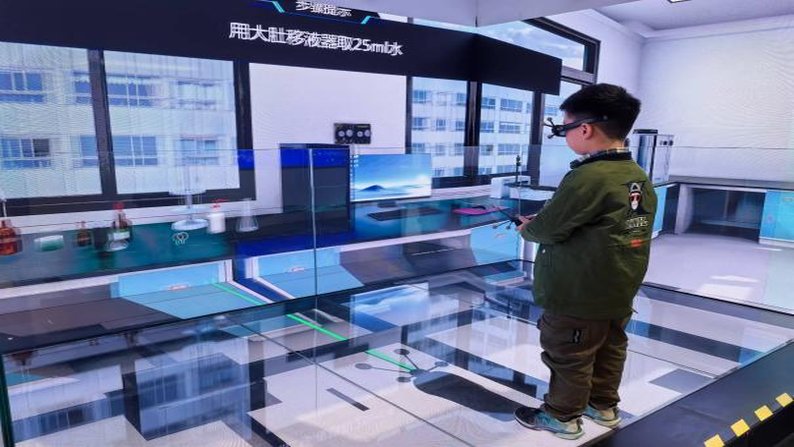
不择知行细流,蕴蓄蓝绿成深:雄安新区生态环境共享中心科普宣传空间营造雄安新区生态环境共享中心VR虚拟实验室(数字化仿真替代实体化学实验,实现科普零危废、低能耗)
6天前 · 来源:雄安新区生态环境监控中心 · 作者:雄安新区生态环境监控中心
