

Company/Organization Profile
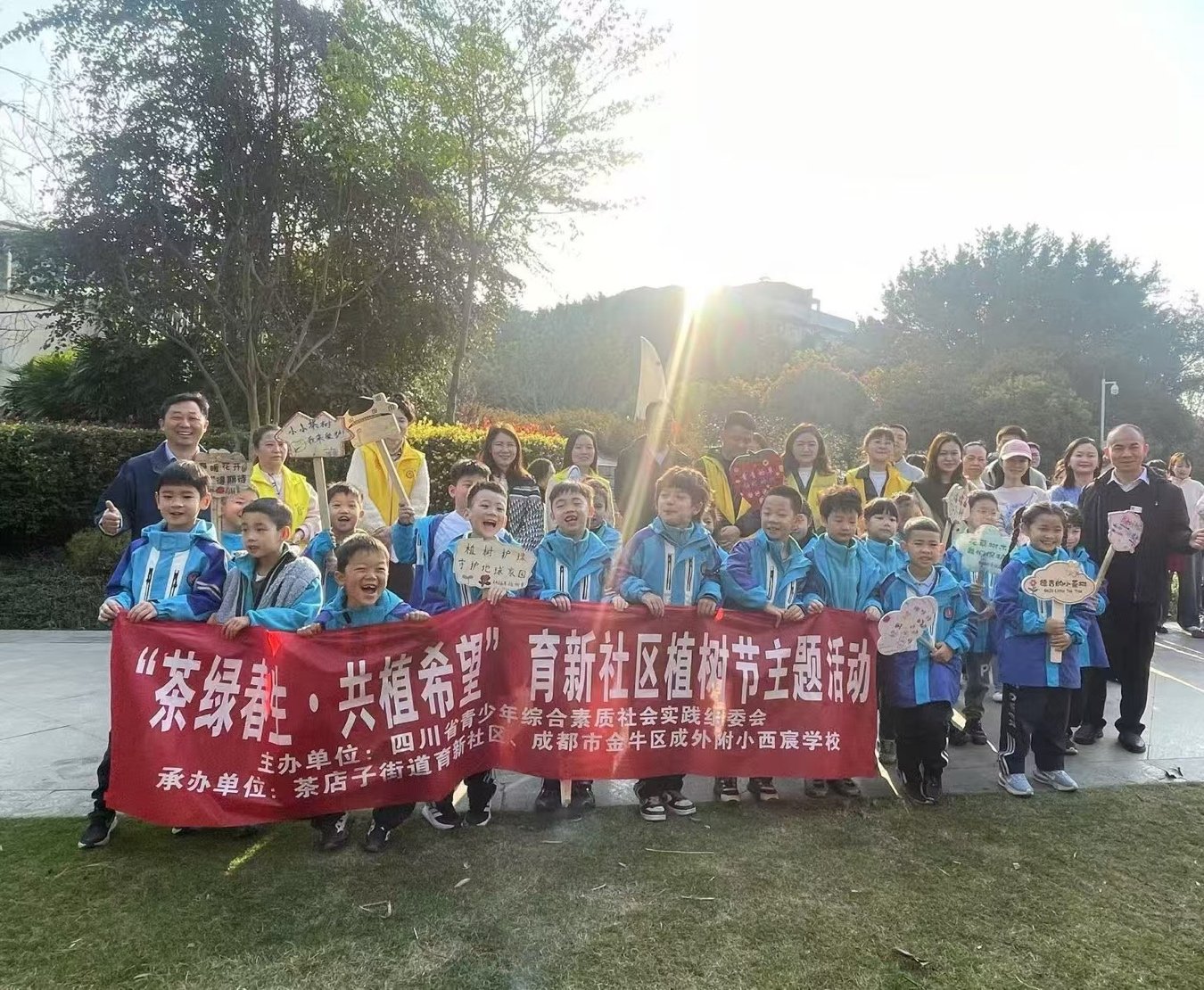
Yuxin Community was officially established in June 2020, covering an area of 0.97 square kilometers with a permanent population of over 30,000. The community has a diverse resident composition and a wide range of service demands. Its Party-masses Service Center is located within the Tea Culture Park. With Party building as the core, the community consolidates the foundation of grassroots governance.
It has developed the brand "Nurturing Virtue, Nurturing People – Thriving Yuxin" and established three major work systems: Cohesion, Tea Fragrance, and Smart Governance. These integrate low-carbon, traditional cultural, convenience-oriented, and smart governance models, carving out a distinctive path toward modern governance.
The community has received numerous honors at the provincial, municipal, and district levels, including the Chengdu Top 100 Model Communities, Sichuan Province Smoke-Free Unit, Chengdu Smart Community, and Beautiful Town Community, among others, with its governance achievements widely recognized.
机构简介
育新社区2020年6月挂牌成立,占地0.97平方公里,常住人口超3万。辖区居民构成复杂,服务诉求多元。社区党群服务中心设在茶文化公园内。社区以党建为核心,夯实基层治理基础。打造“育仁育德·乐享育新”品牌,搭建凝心、茶香、智慧三大工作体系,融合低碳、传统文化、便民与智慧治理模式,走出特色现代化治理路子。社区斩获多项省、市、区级荣誉,包括成都市百佳示范社区、四川省无烟单位、成都市智慧社区、美丽城镇社区等,治理成果广受肯定。
Project Overview
Yuxin Community has a permanent population of over 30,000, with diverse residential formats, a complex resident composition, and widely varying service demands. The project is implemented through the community's Tea Culture Park and the Party-Mass Service Center, serving residents of all ages within the jurisdiction, with a particular focus on elderly individuals living alone, disadvantaged groups, and adolescents.
In the earlier stage, the community's grassroots governance was relatively traditional. Resident participation in waste sorting was uneven, and elderly and special-needs groups faced difficulties in daily living and accessing services. Low-carbon participation channels were limited, and public enthusiasm was insufficient. Local cultural enrichment took simplistic forms, and spiritual and cultural supply was weak. Supporting facilities for convenience services, science education, aesthetic cultivation, and psychological counseling were inadequate. Safety risks for elderly individuals living alone in older residential compounds were prominent, and targeted care services had notable deficiencies.
The application of smart and digital governance tools was insufficient, and the service system lacked systematic integration. Incentive mechanisms and activity formats were relatively uniform, resulting in weak resident engagement and retention. The integration and utilization of public spatial resources were inadequate, and the mechanism for tiered and categorized precision services was not well-developed.
Leveraging the community's existing facilities and Party-building governance foundation, the project integrates social resources, improves the work systems for low-carbon governance, cultural cultivation, convenience services, and smart care, innovates service vehicles and incentive models, addresses gaps in precision services, enhances resident participation and sense of fulfillment, and continuously improves the quality and efficiency of modernized and refined community governance.
项目背景
育新社区常住人口3万余人,居住业态多元、居民结构复杂、服务需求差异大。项目依托社区茶文化公园、党群服务中心开展建设,服务辖区全龄居民,重点覆盖高龄独居老人、困难群体及青少年等重点人群。
社区前期基层治理较为传统,居民垃圾分类参差不齐,高龄、特殊群体生活办事不便;低碳参与渠道单一、群众积极性不足;本土文化浸润形式简单,精神文化供给薄弱;便民服务场景、科普美育、心理疏导等配套不足;老旧院落独居老人居家安全风险突出,精准关爱服务存在短板。
智慧化、数字化治理应用不充分,服务体系不够系统;激励机制、活动载体较为单一,群众参与黏性不强;公共空间资源整合利用不足,分层分类精准服务机制不完善。
依托社区现有阵地与党建治理基础,整合社会资源,健全低碳治理、文化培育、便民服务、智慧关爱工作体系,创新服务载体与激励模式,补齐精准服务短板,提升群众参与度、获得感,持续提升社区现代化精细化治理质效。
Project Implementation
This project is collectively coordinated by the Party Committee of Yuxin Community, with the Community Two Committees and various Party branches serving as the core implementing entities, and is advanced in collaboration with third-party professional institutions, social organizations, and market operation entities. It integrates resources in funding, venues, talent, and technology, and is systematically promoted in modular and phased manners, focusing on four major areas: low-carbon governance, cultural empowerment, convenience services, and smart care, with the aim of precisely addressing shortcomings in grassroots governance and steadily enhancing the level of refined community governance.
To address the issues of uneven waste sorting habits among residents, mobility difficulties faced by special-needs groups, limited low-carbon participation channels, and insufficient public enthusiasm, the community has innovatively implemented digital low-carbon governance measures. Community staff carry out routine implementation on an ongoing basis, fully promoting the "two bins, one bag" household waste sorting model and standardizing the configuration of sorting equipment for households.
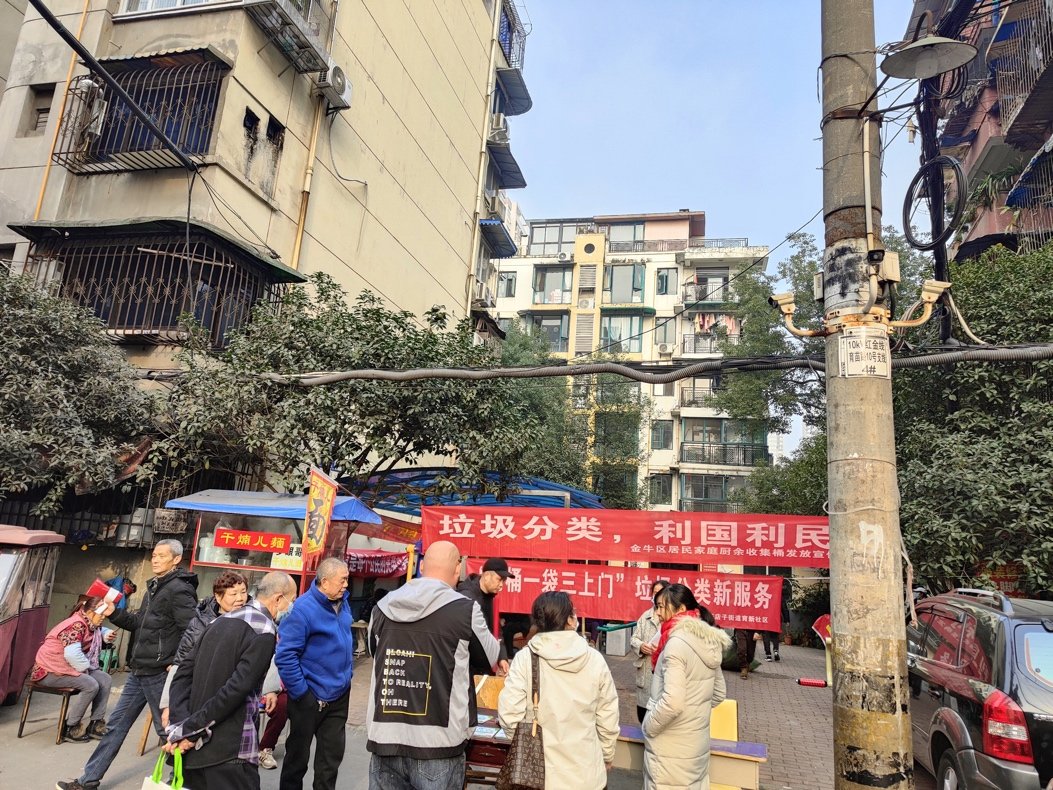
To address the pain points faced by elderly and disadvantaged groups, such as inability to operate smart devices and travel difficulties, the community has established three door-to-door service mechanisms: scheduled collection via QR code booking, online door-to-door recycling, and exclusive bulky waste removal.
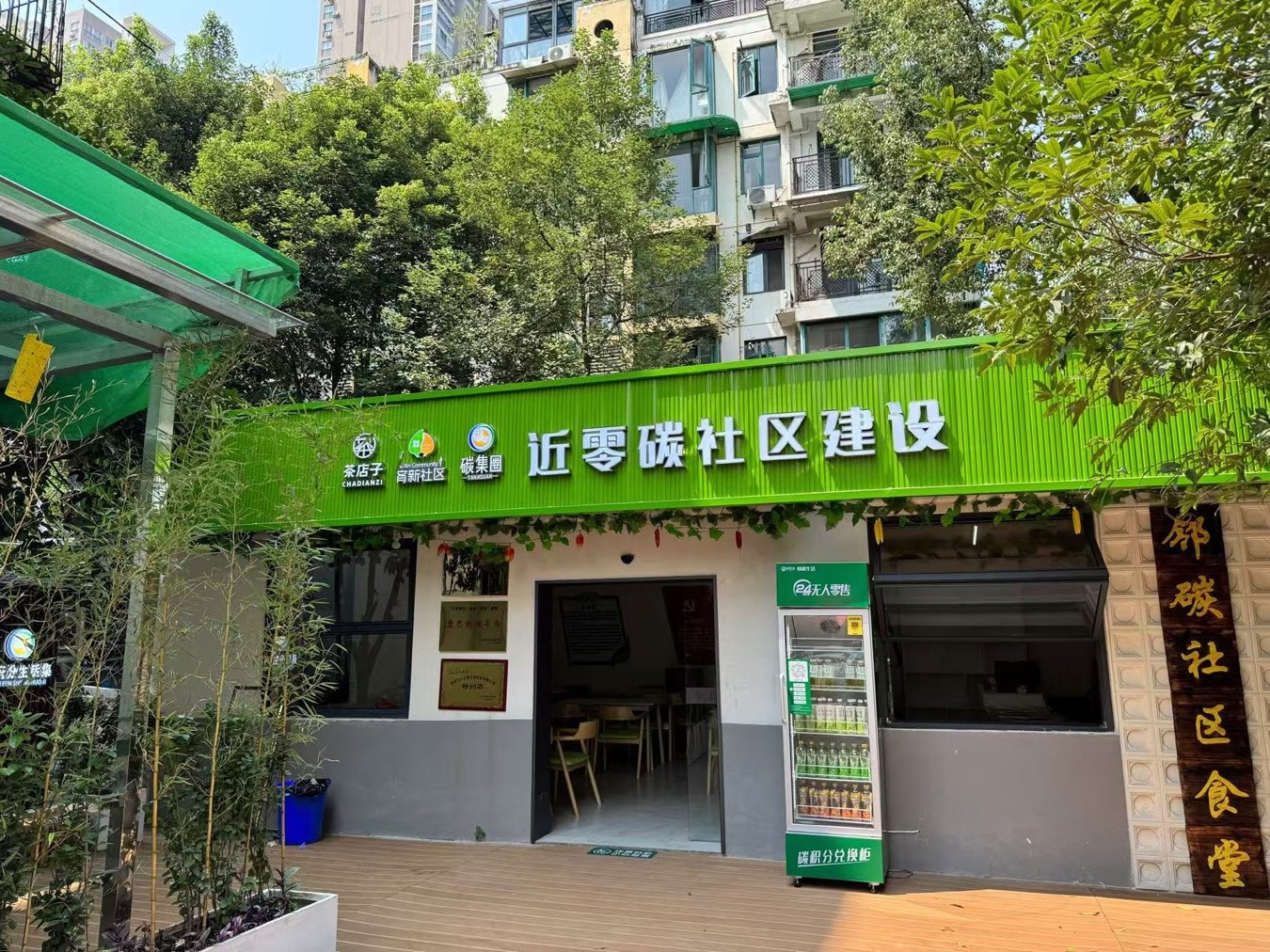
Meanwhile, leveraging the "Carbon Circle" digital platform and the Carbon Hub physical sites, the community has equipped professional metering devices and implemented incentive systems including transparent pricing settlement and green point redemption. Regular science popularization and awareness activities are conducted, with digital means continuously driving residents to actively participate in low-carbon governance.
To address the issues of insufficient exploration of local culture, monotonous activity formats, and a lack of cultural atmosphere in public spaces, the community has upgraded its cultural service system using the Tea Culture Park as a carrier. The Community Party Committee coordinates spatial renovation and activity planning, working in conjunction with cultural tourism and study tour teams to create an immersive tea culture experience zone, and regularly hosts distinctive activities such as tea appreciation sessions and themed study tours.
Additionally, based at the Party-Mass Service Center, the community regularly organizes calligraphy gatherings, blessing-giving events for residents, youth public welfare classes, and traditional cultural practice activities. These efforts address both residents' leisure needs and spiritual and cultural needs, achieving the revitalized transmission of local cultural heritage.
To address the issues of fragmented convenience services, insufficient all-age service facilities, low utilization of Party-Mass venues, and weak sustainability of public welfare services, the community has improved its resident-benefit service system through a community-enterprise collaboration model. The community's wholly-owned service company is responsible for daily operations, with the Community Two Committees providing full-process supervision and management.
An investment of 1.1 million yuan has been made to upgrade the Party-Mass Service Center's hardware, establishing multi-functional all-age areas such as science lecture halls and reading spaces. Professional institutions have been introduced to revitalize idle time slots at the venues, offering diverse services including lifestyle convenience services, horticulture and aesthetic cultivation, psychological counseling, and labor practice. All operating revenue and cooperative public welfare funds are channeled back into livelihood governance, ensuring long-term sustainable convenience services.
To address the prominent issues of a large number of elderly individuals living alone in older residential compounds and significant home safety risks, the community has advanced smart elderly care development with funding from municipal livelihood projects. The community has implemented this in collaboration with third-party technical institutions. In the initial phase, Xishu Ruiyuan was selected as a pilot site, where smart devices including smart bracelets, sensor door magnets, and emergency alarm systems were deployed, a cloud-based monitoring platform was established, and a 24-hour closed-loop mechanism for monitoring, alerting, and response was put in place.
In 2023, the system was upgraded to version 2.0, achieving full coverage of all older residential compounds within the jurisdiction. Regular door-to-door assessments are conducted to identify the needs of special-needs groups, with continuous optimization of hardware and software configurations. Through technology-enabled solutions, the community has achieved round-the-clock, refined safety care for special-needs groups, firmly securing the bottom line of people's livelihood safety.
项目实施
本项目由育新社区党委统筹牵头,以社区两委、各党支部为核心实施主体,联动第三方专业机构、社会组织、市场运营主体协同推进,统筹资金、场地、人才、技术等资源,分模块、分节点系统推进低碳治理、文化赋能、便民服务、智慧关爱四大建设,靶向破解基层治理短板,稳步提升社区精细化治理水平。
针对居民垃圾分类习惯参差不齐、特殊群体行动不便、低碳参与渠道单一、群众积极性不足的问题,社区创新实施数字化低碳治理举措。由社区工作人员常态化落地推进,全面推行“两桶一袋”居家分类模式,统一规范居民居家分类器具配置,针对高龄老人、困难群体不会操作智能设备、出行不便等痛点,建立扫码预约收运、线上上门回收、专属大件清运的三项上门服务机制。同时依托“碳集圈”数字化平台与碳小屋实体阵地,配置专业计量设备,实行明码标价结算、绿色积分兑换等激励制度,常态化开展科普宣讲,数字化手段持续带动居民主动参与低碳治理。
针对本土文化挖掘不深、活动形式单一、公共空间文化氛围不足等问题,社区依托茶文化公园载体提档升级文化服务体系。由社区党委统筹空间改造与活动策划,联合文旅、研学团队共同实施,打造沉浸式茶文化体验区,常态化开展茶艺品鉴、主题研学等特色活动。同时依托党群服务中心,常态化开展书法雅集、送福惠民、青少年公益课堂与传统文化实践活动,兼顾群众休闲需求与精神文化需求,实现本土文脉活化传承。
针对便民服务碎片化、全龄服务配套不足、党群阵地利用率不高、公益服务持续性弱的问题,社区通过社企联动模式完善惠民服务体系。由社区全资服务公司负责日常运营,社区两委全程监督管理,投入110万元升级党群服务中心硬件,建成科普讲堂、阅读空间等全龄功能区域。引入专业机构盘活阵地闲置时段,开设便民生活服务、园艺美育、心理疏导、劳动实践等多元服务,将经营收益与合作公益基金全部反哺民生治理,实现便民服务长效可持续。
针对老旧院落独居高龄老人多、居家安全隐患突出等问题,社区依托市级民生项目资金推进智慧养老建设。社区联合第三方技术机构落地实施,先期以西蜀瑞苑为试点,投放智能手环、感应门磁、紧急报警装置等智能设备,搭建云端监测平台,建立24小时监测、预警、处置闭环机制。2023年完成系统2.0迭代升级,全面覆盖辖区老旧院落,常态化入户摸排特殊群体需求,持续优化软硬件配置,以科技赋能实现特殊群体全天候、精细化安全关爱,筑牢社区民生安全底线。
Project Outcome
Since the implementation of the project, Yuxin Community has adhered to Party-building leadership and innovation-driven empowerment, effectively addressing persistent issues such as fragmented traditional services, insufficient resident participation, and weak targeted care. It has facilitated the transformation of community governance from passive management to proactive service delivery, and from fragmented implementation to systematic quality improvement, forming a sustainable grassroots governance model.
First, an innovative low-carbon closed-loop governance mechanism has been established, quantifying outcomes and improving quality. The community has moved beyond traditional awareness-raising and persuasion approaches by constructing an operational system integrating digital platforms, physical sites, and point-based incentives. It has implemented standardized waste sorting under the "two bins, one bag" model along with door-to-door care services, precisely addressing the challenges faced by special groups in waste classification. Through the "Carbon Circle" platform, the community has integrated resource recycling and point-based rewards, significantly boosting resident enthusiasm for low-carbon participation.
Second, public cultural spaces have been reshaped to enrich the supply of spiritual and cultural services. The community has upgraded the Tea Culture Park into an immersive tea culture experience and integrated educational and aesthetic cultivation venue, establishing a distinctive park-style Party-Mass Service Center. By tapping into local Tea-Horse Road cultural resources and organizing regular cultural, sports, and public welfare activities, the community has addressed gaps in cultural services and effectively strengthened residents' sense of belonging and well-being.
Third, an innovative community-enterprise collaboration model has been developed to build a long-term resident-benefit system. Through the "community self-operation plus community-enterprise co-construction" model, an investment of 1.1 million yuan has been made to upgrade all-age accessible service facilities, expanding diverse business formats including lifestyle services, science education, and labor practice. This has effectively revitalized idle resources and resolved the issues of narrow coverage and insufficient sustainability in public welfare services.
Fourth, technology-enabled targeted care has been implemented, making safety net provisions more refined. The smart care system has been iteratively upgraded to cover multiple older residential compounds, establishing a 24-hour cloud-based monitoring and response closed-loop mechanism. This replaces traditional labor-intensive and extensive inspection methods, achieving intelligent and refined safety protection for elderly and solitary residents.
The project has now developed a mature operational system characterized by Party-building leadership, digital empowerment, community-enterprise collaboration, and universal resident participation. The model is well-standardized, highly practical, and possesses strong sustainability and replicability for broader application.
成果亮点
项目实施以来,育新社区坚持党建引领、创新赋能,有效破解传统服务零散、群众参与不足、精准关爱薄弱等问题,推动社区治理从被动管理向主动服务、从零散推进向系统提质转变,形成可持续的基层治理新模式。
一是创新低碳闭环治理机制,成效量化提质。社区打破传统宣传劝导模式,构建“数字平台+实体阵地+积分激励”运行体系,推行“两桶一袋”标准化分类及上门暖心服务,精准解决特殊群体垃圾分类难题。依托“碳集圈”实现资源回收、积分兑惠一体化,群众低碳参与积极性显著提升。
二是重塑公共文化空间,丰富精神文明供给。社区提档升级茶文化公园,打造沉浸式茶文化体验、研学美育综合性阵地,建成特色公园式党群服务中心。挖掘本土茶马古道文化资源,常态化开展文体公益活动,补齐文化服务短板,切实增强居民归属感与幸福感。
三是创新社企协同模式,筑牢长效惠民体系。通过“社区自营+社企共建”模式,投入110万元升级全龄便民服务阵地,拓展生活服务、科普教育、劳动实践等多元业态,有效盘活闲置资源,解决公益服务覆盖面窄、持续性不足的问题。
四是科技赋能精准关爱,兜底保障更加精细。迭代升级智慧关爱系统,服务覆盖多个老旧院落,搭建24小时云端监测处置闭环,替代传统人工粗放巡查模式,实现高龄、独居群体安全守护智能化、精细化。
项目现已形成党建引领、数字赋能、社企联动、全民参与的成熟运行体系,模式规范、实操性强,具备良好的可持续性与推广价值。
Project Highlights
This project has achieved dual empowerment and quality improvement in both ecological and social benefits.Ecological Benefits (statistical scope: the entire Yuxin Community area of 0.97 square kilometers, under regular operational cycles): Through digitalized waste sorting, resource recycling at Carbon Hubs, and energy-efficient operations at green canteens, the project has effectively reduced landfill pollution and continuously consolidated the achievements of near-zero carbon community development.
Social Benefits: The project has consistently driven an average of 1,750 resident participations per month in governance activities, significantly enhancing public engagement in self-governance. Leveraging the government-enterprise-community collaborative model, all-age accessible service facilities, and smart elderly care services, the project has precisely addressed shortcomings in grassroots governance. The project has developed a standardized and replicable model for smart low-carbon governance, providing an exemplary benchmark for refined governance in urban communities.
成果影响力
本项目实现生态效益与社会效益双向赋能、提质增效。生态效益(统计口径:育新社区全域0.97平方公里,常态化运营周期):通过数字化垃圾分类、碳小屋资源回收及绿色食堂节能运营,有效减少垃圾填埋污染,持续夯实近零碳社区建设成效。
社会效益:项目常态化带动居民月均参与治理1750人次,显著提升群众自治参与度。依托政企社协同模式、全龄便民阵地及智慧养老服务,精准补齐基层治理短板。项目形成标准化、可复制的智慧低碳治理范式,为城市社区精细化治理提供优质示范。
Reviews & Honors
Since the implementation of the project, the quality and efficiency of community governance services have significantly improved, receiving widespread praise from residents within the jurisdiction. All-age accessible services, smart elderly care protection, and low-carbon door-to-door care services have precisely addressed the urgent needs of the public, effectively resolving daily living difficulties faced by elderly residents and disadvantaged groups. Regular cultural, sports, educational, and labor practice activities have enriched residents' spiritual and cultural life, with public satisfaction and sense of belonging continuously rising, fostering a strong atmosphere of neighborhood co-governance.
As one of the city's first pilot near-zero carbon communities, the community has innovatively developed a digital low-carbon governance system, a park-style cultural empowerment framework, and a smart precision care system. The governance model is novel and the implementation outcomes are outstanding, receiving phased recognition and affirmation from the subdistrict and competent industry authorities, providing a practical pathway for smart grassroots governance and green governance.
Furthermore, the community's governance achievements have been recognized with multiple honors: in 2020, it was awarded the Chengdu Top 100 Demonstration Community; in 2022, it received the titles of Sichuan Smoke-Free Unit, Chengdu Smart Community, and Jinniu District Advanced Grassroots Party Organization; and in 2023, it was successfully named a Beautiful Town Community. These multiple honors fully attest to the standardization, innovativeness, and demonstrative value of the community's modern governance work.
评价与荣誉
项目实施以来,社区治理服务质效显著提升,获得辖区居民广泛好评。全龄便民服务、智慧养老守护、低碳暖心上门服务精准对接群众刚需,有效解决高龄老人、困难群体生活难题,常态化文体研学、劳动实践等服务丰富了居民精神生活,群众满意度、归属感持续提升,邻里共治氛围浓厚。
作为全市首批近零碳社区试点,社区创新打造数字化低碳治理、公园式文化赋能、智慧化精准关爱体系,治理模式新颖、落地成效突出,得到街道、行业主管部门的阶段性认可与肯定,为基层智慧治理、绿色治理提供实践路径。
同时,社区治理成果2020年获评成都市百佳示范社区;2022年荣获四川省无烟单位、成都市智慧社区、金牛区先进基层党组织等称号;2023年成功获评美丽城镇社区,多项荣誉充分印证了社区现代化治理工作的规范性、创新性与示范性。

近零碳社区的美育升级---- 长寿苑社区 “低碳实践 + 影像科普” 共建项目
4天前 · 来源:成都市武侯区火车南站街道长寿苑社区居民委员会 · 作者:成都市武侯区火车南站街道长寿苑社区居民委员会

以绿色金融之力推动中国新质生产力!
4天前 · 来源:国泰海通证券研究所ESG及美丽中国研究组 · 作者:国泰海通证券研究所ESG及美丽中国研究组
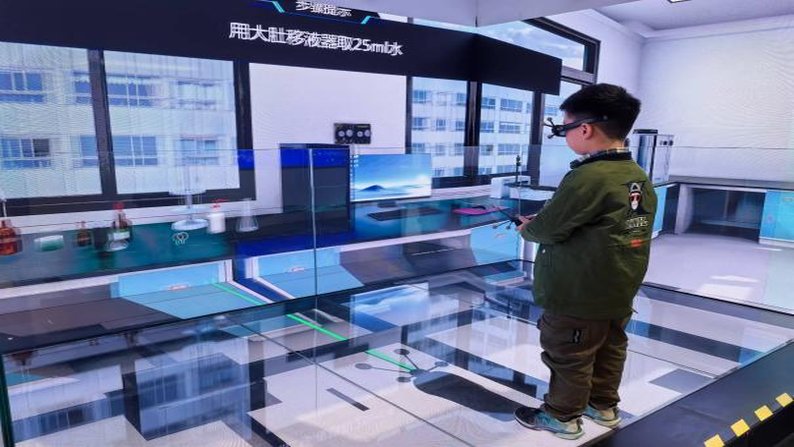
不择知行细流,蕴蓄蓝绿成深:雄安新区生态环境共享中心科普宣传空间营造雄安新区生态环境共享中心VR虚拟实验室(数字化仿真替代实体化学实验,实现科普零危废、低能耗)
6天前 · 来源:雄安新区生态环境监控中心 · 作者:雄安新区生态环境监控中心
