

Company/Organization Profile
Located in the central Shangdoumen area, Lüyuan Community is administered by Puxieshi Subdistrict and is recognized as one of Wenzhou’s first 30 Model Communities. The jurisdiction covers 0.55 square kilometers, with its boundaries defined by Fu’dong Road to the east, Huimin Road to the west, Jinxiu Road to the south, and Xueyuan Middle Road to the north. The community comprises 4,786 households, with a total population of 15,433 residents.Lüyuan Community has achieved remarkable results in its development initiatives, earning consistent recognition from national, provincial, municipal, and district authorities. Its honors include National Green Community, Provincial Civilized Community, Provincial Five-Star Democratic and Law-Based Governance Community, Municipal Best Learning-Oriented Community, Top 10 Charming Communities, Harmonious Community, Municipal Three-Star Civilized Community, Three-Star Happy Community, and Zero-Waste Community.
Project Overview
Lvyuan Community is dominated by old residential compounds with a large proportion of elderly residents, many of whom retain a passion for farming life. Prior to this project, the community faced multiple governance bottlenecks.
First, the public green spaces suffered from inadequate maintenance and lacked distinctive landscaping features. Vacant lots and neglected green belts were overgrown with weeds all year round, resulting in a monotonous, unattractive residential landscape.
Second, waste sorting initiatives hit a snag: residents disposed of kitchen waste haphazardly, and resource recovery rates remained low, making long-term waste reduction unachievable.
Third, unauthorized vegetable plots carved out of communal greenery became a persistent nuisance. Repeated clean-up campaigns only led to recurring conflicts between staff and residents, as well as neighborhood disputes, with illegal farming quickly resurfacing after each clearance.
Further investigation revealed root causes. The old community lacked leisure and wellness spaces tailored to residents’ needs, leaving the elderly with no outlet for their deep-rooted farming nostalgia. Additionally, the community relied solely on rigid, top-down environmental management methods with minimal resident participation. Waste sorting existed merely as a mandatory rule without practical local recycling channels, hindering progress in environmental and grassroots governance.
To address these interrelated pain points, the community shifted from a purely restrictive approach to a balanced model of regulation and inclusive participation centered on shared governance. Utilizing underused green spaces within the compound, we launched a zero-waste ecological program featuring one-square-meter community gardens, compost bins, earthworm towers, and brown sugar enzyme fermentation facilities. Planting regulations were finalized through resident deliberation committees to establish an on-site recycling system for kitchen waste, which also revitalized public green spaces. This eco-renovation initiative mobilizes residents to participate in community self-governance, creating a multi-functional venue for elderly leisure, neighborhood communication, and youth labor education. It ultimately elevates the community’s refined governance capacity and improves overall living environment quality.
项目背景
绿园社区以老旧小区为主,老年居民占比高,群众农耕需求浓厚。实施前社区存在多重治理瓶颈:
一是绿化管护薄弱,小区闲置空地、废弃绿化带长期无人养护,植被杂乱荒芜,整体环境单调无亮点,老旧小区风貌短板突出。
二是垃圾分类推进遇阻,居民厨余垃圾投放随意、资源化利用率低,垃圾减量工作难以长效落地。
三是私垦种菜乱象频发,居民随意破坏公共绿化开垦菜地,社区多次清理整治,仍出现“清理、反弹、冲突”的治理难题,邻里纠纷、干群矛盾突出。
深入分析根源,老旧小区缺乏适配居民需求的休闲康养与生态场景,老年居民农耕情怀无处寄托;同时社区环境治理方式单一、群众参与度低,垃圾分类仅靠硬性劝导,缺少可落地的资源化实践载体,导致环境治理、基层治理工作难以提质增效。
为破解多重治理痛点,社区转变“单一整治”治理思路,坚持堵疏结合、共治共享。依托小区闲置绿化空间,启动“一米菜园+生态堆肥+蚯蚓塔+红糖酵素”无废生态项目,通过居民议事协商规范种植管理,搭建厨余垃圾就地资源化循环体系,美化小区公共环境。以生态微改造激活居民自治力量,打造兼具老年康养、邻里共治、青少年劳动教育的特色场景,全面提升社区精细化治理水平与人居环境品质。
Project Implementation
This project addresses five persistent challenges in mature residential communities: unauthorized gardening on public green spaces, frequent neighborhood conflicts, underused vacant land, poor ecological conditions, and weak resident selfgovernance. Guided by the principles of “balancing regulation with accommodation, cogovernance and shared benefits, and ecologydriven empowerment,” the community rolled out a phased upgrade of its “OneMeter Garden” initiative and supporting ecoprojects. By mobilizing community staff, resident representatives, volunteers, and local schools, Lüyuan has systematically tackled deeprooted governance issues.
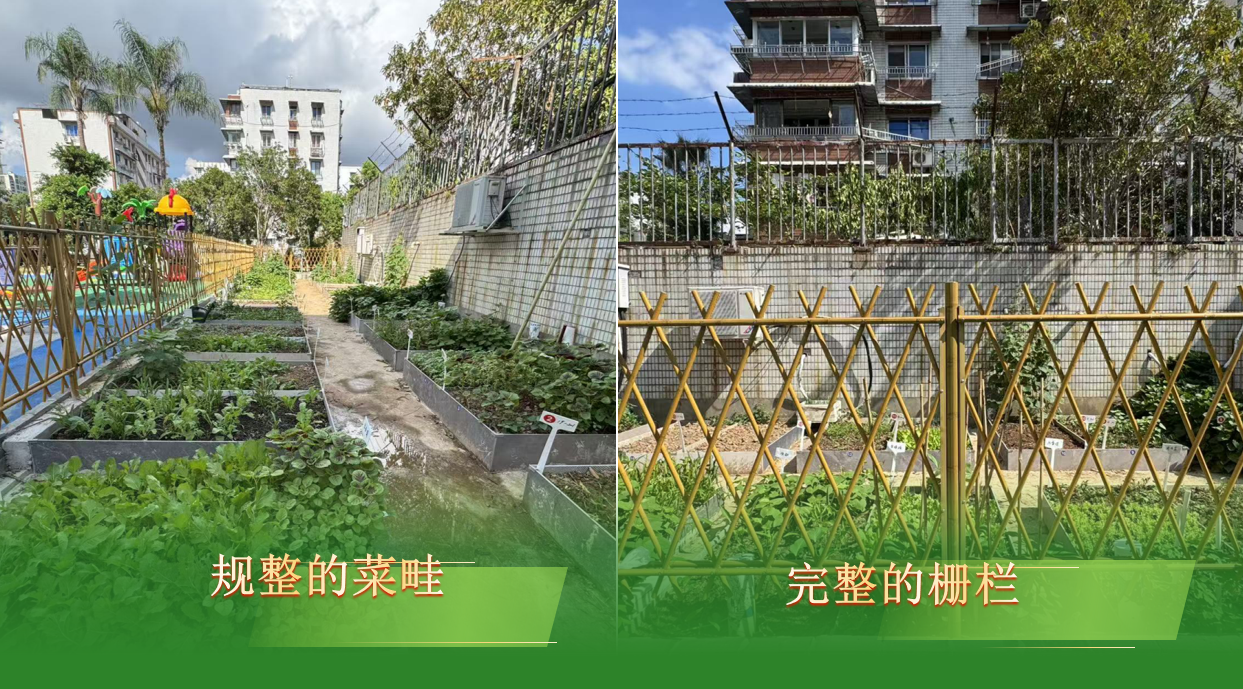
Rather than imposing blanket cleanup campaigns—which often triggered resistance and strained relations between residents and community workers—the community took a peoplefirst approach. Led by the Community Party Branch and Committee, grid managers conducted doortodoor visits to residents previously involved in unauthorized gardening. Through informal conversations, they listened to residents’ stories and needs, uncovering a shared farming nostalgia and a lack of seniorfriendly recreational spaces. A series of resident consultation meetings followed, bringing together gardeners, building representatives, and resident delegates to codesign a renovation plan. The final “OneMeter Garden” proposal was approved by consensus. The community repurposed neglected green belts and vacant lots, investing manpower and resources to level land, create standardized planting beds, install accessible pathways, and erect protective fencing. Clear boundaries were drawn between public planting areas and shared maintenance zones, transforming chaotic private plots into orderly, communitymanaged gardens. This structural upgrade eliminated unauthorized gardening at its source.
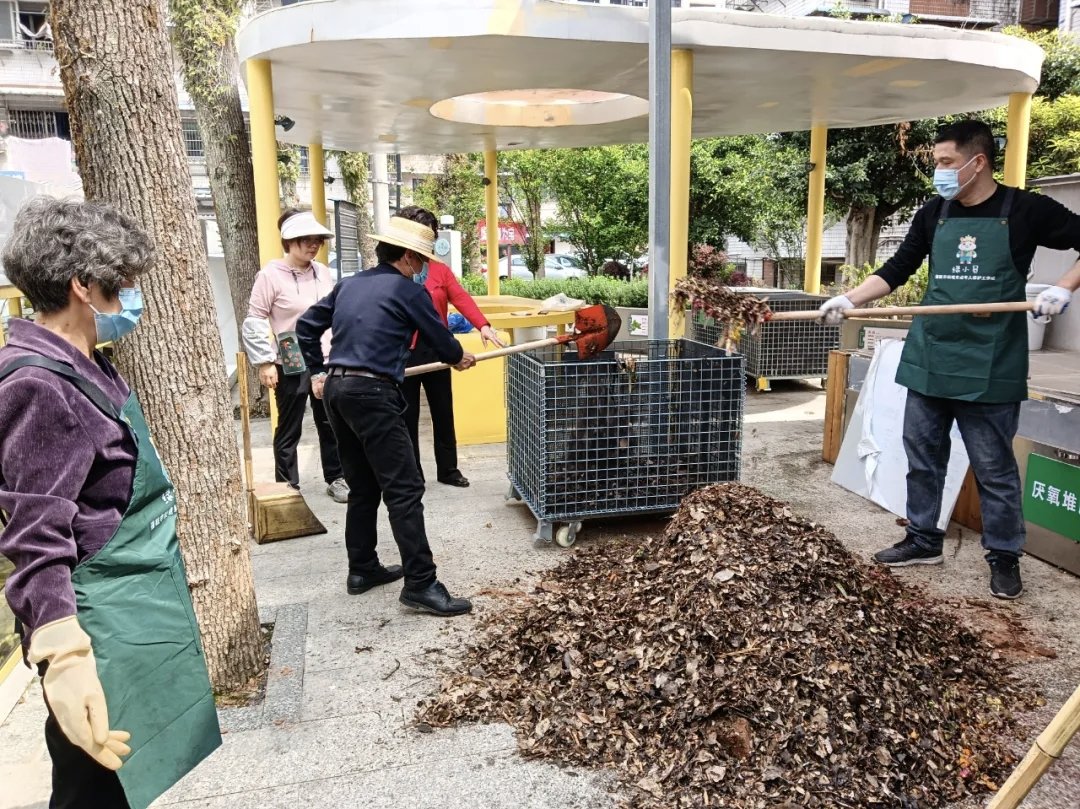
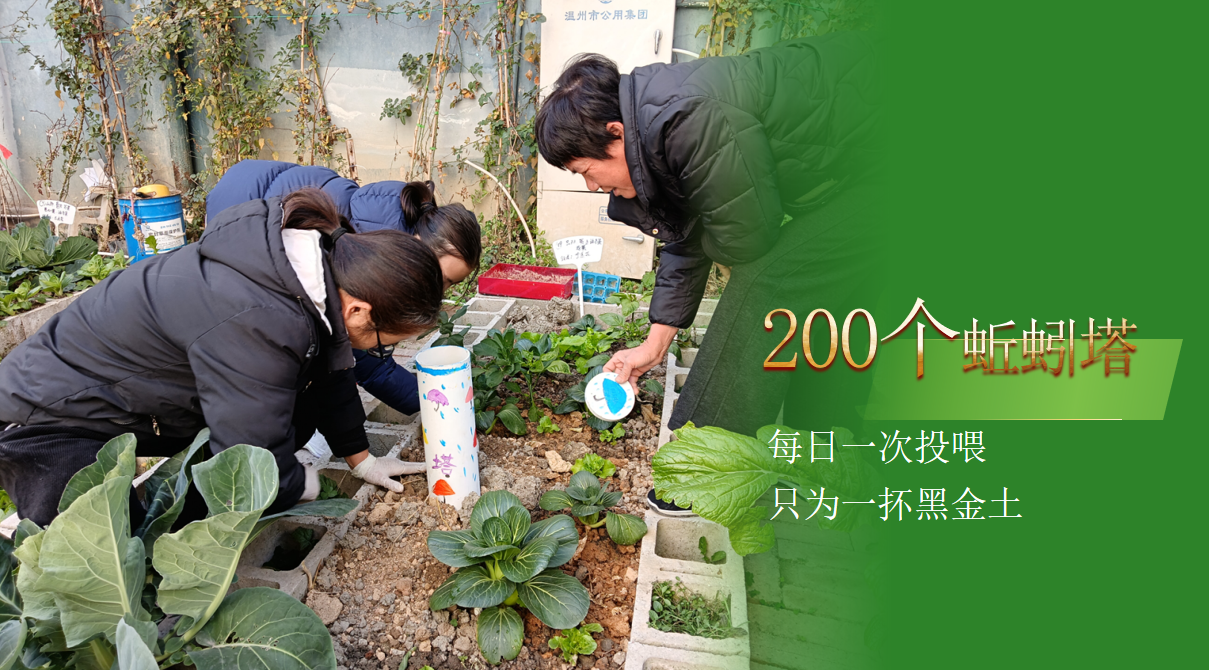
To address longstanding complaints about odors from traditional manure and related neighborhood disputes, the community introduced an innovative ecogovernance model. Party member volunteers and wastesorting instructors led the transition away from dirty, odorprone fertilization methods. Residents were encouraged to recycle fruit and vegetable scraps and kitchen waste into natural organic fertilizer through ecoenzyme production and “lasagna” composting. Additionally, 200 vermicomposting towers were installed across the gardens and public areas. Through a resident “adoption” scheme, senior gardeners and volunteers take daily responsibility for adding kitchen waste to the towers, improving soil quality and purifying the environment. This closedloop system has effectively eliminated odors, reduced pests, and minimized earlymorning disturbances.
To tackle the lack of rules and weak selfmanagement awareness, the community organized “bench meetings” at a neighborhood pavilion, where all participating gardeners jointly drafted and adopted the OneMeter Garden Management Convention. The convention sets clear rules for planting schedules, fertilization methods, and plot hygiene, promoting “selfplanting, selfmaintenance, and shared stewardship.” Community supervision and resident selfgovernance ensure compliance and discourage uncivilized practices. A neighborhood sharing platform was also established: surplus vegetables and fruits are placed in “shared baskets” for donation to seniors living alone and lowincome households, fostering mutual aid and softening tensions.
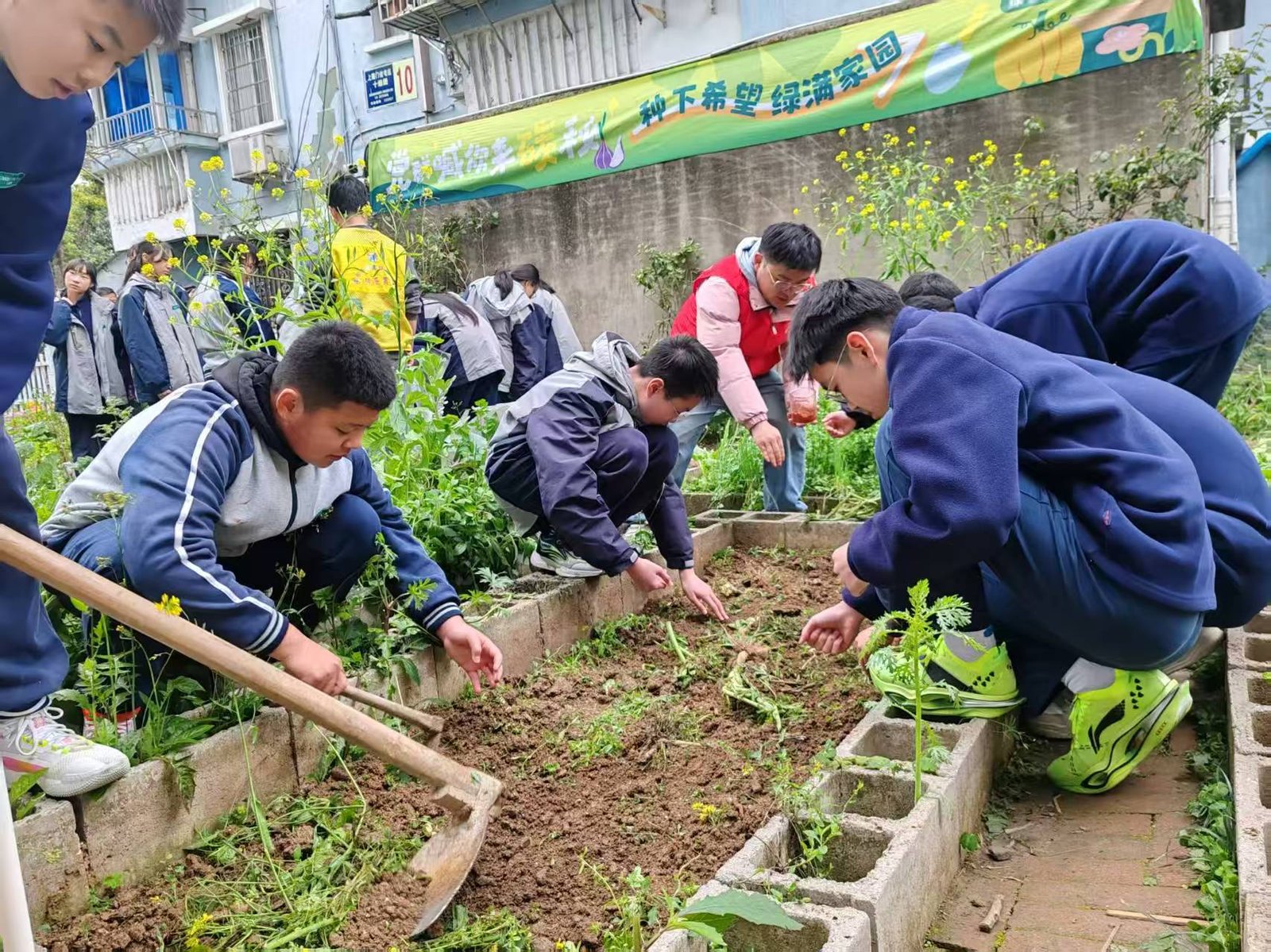
To diversify governance and address the lack of youth ecological education, the community partnered with local primary and secondary schools. Leveraging the OneMeter Garden as a living classroom, it regularly organizes farming experiences, ecostudy tours, and wastesorting workshops. Teachers and community volunteers guide students in planting, composting, and vermicomposting tower maintenance, helping young people connect with nature, understand ecological cycles, and inherit farming culture.
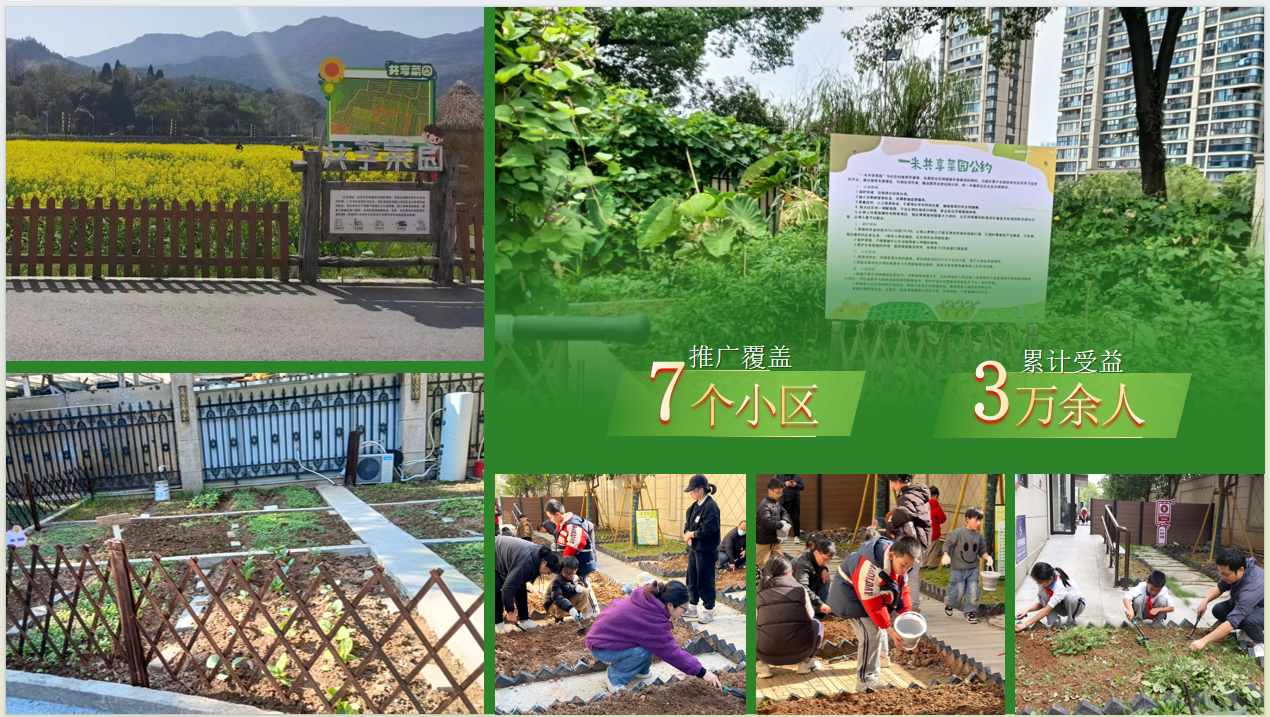
To date, the project has been rolled out across seven residential compounds, forming a closedloop model that integrates vegetable gardening, ecological composting, volunteer stewardship, youth education, and neighborhood cogovernance. The initiative has revitalized resident participation, improved the living environment, strengthened community cohesion, and enhanced overall governance sophistication—delivering tangible benefits in environmental quality, social harmony, and civic culture.
项目实施
本项目聚焦老旧小区毁绿种菜、邻里矛盾突出、闲置资源浪费、生态环境不佳、居民自治薄弱五大痛点,坚持“堵疏结合、共治共享、生态赋能”理念,分步推进“一米菜园”提质改造及配套生态项目建设,联动社区工作人员、居民代表、志愿者、辖区学校多方主体,系统化破解基层治理难题。
针对老旧小区私垦菜地乱象、刚性整治易引发干群矛盾的问题,社区摒弃一刀切清理模式,由社区两委牵头、网格员入户摸排,全面走访过往违规种菜居民,以唠家常、听诉求的方式,摸清群众农耕情怀与休闲需求。随后组织居民议事协商会,邀请种菜居民、楼栋长、居民代表共同研讨改造方案,全员表决通过一米菜园建设方案。社区统筹盘活小区废弃绿化带、闲置空地资源,投入人力物力平整土地、划分标准化菜畦、铺设便民步道、搭建防护围挡,划分公共种植区与共享管护区,将无序私垦菜地改造为规范化、标准化的公共菜园,从根源杜绝毁绿种菜、反复反弹问题。
针对传统农家肥异味扰民、邻里纠纷频发的问题,社区创新生态治理模式,由社区党员志愿者、垃圾分类劝导员专项推进整改。摒弃传统脏乱的施肥方式,推广环保红糖酵素制作、三明治堆肥法,引导居民将果蔬残叶、厨余垃圾集中回收处理,就地发酵制成天然有机肥,实现垃圾减量、变废为宝。同时在小区菜园及公共区域投放200个生态蚯蚓塔,建立居民认领管护机制,鼓励老年菜农、热心居民主动认领,每日投放厨余垃圾养护蚯蚓塔,通过生态循环改良土壤、净化环境,彻底解决施肥异味、蚊虫滋生、晨间劳作扰民等邻里矛盾。
针对菜园无规可依、居民自主管护意识薄弱的问题,社区依托凉亭“板凳会”,组织全体种菜居民共同商议,制定落地《一米菜园管理公约》,明确“自主种植、自我管护、共享共建”准则。由社区监督、居民自治落实公约内容,规范种植时间、施肥方式、菜地卫生,杜绝不文明种植行为。同时搭建邻里共享平台,引导居民将富余蔬果放入共享菜篮,无偿赠予社区独居老人、低保困难家庭,化解邻里隔阂,营造互助友善的社区氛围。
针对社区治理形式单一、青少年劳动教育缺失的问题,社区联动辖区中小学,依托一米菜园生态阵地,常态化开展农耕体验、生态研学、垃圾分类科普活动。由学校教师、社区志愿者联合带队,组织青少年参与种菜养护、堆肥实操、蚯蚓塔管护,让青少年近距离感受生态循环魅力,传承农耕文化。
截至目前,项目已在7个小区全面落地,形成“菜园种植+生态堆肥+志愿管护+劳动教育+邻里共治”的闭环运营模式,有效激活居民自治活力,实现老旧小区环境提质、邻里和谐、文明赋能的多重治理成效。
Project Outcome
This project adopts a refined governance model of "combining guidance with restriction, empowering through ecology, and promoting resident self-governance," achieving comprehensive upgrades in the environment, neighborhood relations, and the quality and effectiveness of grassroots governance in old residential communities. It has established a replicable and sustainable new model for community micro-governance.
First, innovation in governance model has fundamentally resolved long-standing conflicts. Before implementation, unauthorized green-space conversion for vegetable planting was a chronic problem that kept recurring, frequently triggering conflicts between community workers and residents as well as neighborhood complaints—a persistent governance headache. After implementation, the community shifted from "forced clearance" to "co-construction and sharing." Through resident deliberation and consultation, planting areas were designated and regulated, thoroughly ending the vicious cycle of "clearance—recurrence—conflict." Residents who were once at odds have transformed into active participants in community governance. Neighborhood disputes and nuisance complaints have dropped to zero, and a long-standing governance difficulty in old residential communities has been turned into a highlight of civilised development.
Second, ecological technology innovation has achieved green, circular self-governance. The community introduced innovative, everyday ecological governance measures—deploying 200 vermicompost towers community-wide and establishing a resident adoption and stewardship mechanism. Techniques such as "lasagna" composting and homemade brown-sugar enzyme fermentation were promoted, enabling the on-site conversion of daily kitchen waste into organic fertiliser. This thoroughly eliminated problems associated with traditional farmyard manure, such as unpleasant odours and environmental pollution. It not only improved the soil quality of the community's green spaces but also achieved waste reduction at source, creating a low-cost, practical community ecological circular system.Third, multi-stakeholder collaboration has multiplied the value of a single garden for multiple purposes. The pocket vegetable gardens have gone beyond a single greening function to build an integrated system serving "elderly wellness, neighbourhood co-governance, and youth labour education." Elderly residents now have a legitimate space for gardening, where their nostalgia and sense of belonging are fulfilled. Through sharing produce and taking turns in garden maintenance, neighbours have fostered a new culture of mutual assistance. In partnership with local schools, regular eco-study tours and farming practice activities have been organised, serving 3 residential communities and benefiting over 15,000 residents in total.
Fourth, the mechanism is mature, replicable, and sustainable. The project has established a long-term self-governance system through the One-Metre Garden Management Charter, forming a regular operational mechanism of "resident self-management, volunteer oversight, community empowerment, and school-community collaboration." It requires no high operational costs and is adaptable to various old residential community settings. The model is simple, easy to implement, and can be rapidly promoted and replicated, providing an excellent practical example for the refined micro-governance of urban old residential communities.
成果亮点
本项目通过“疏堵结合、生态赋能、居民自治”的精细化治理模式,实现老旧小区环境、邻里关系、基层治理质效全方位升级,形成可复制、可持续的社区微治理新模式。一是治理模式创新,矛盾实现根本性化解。项目实施前,社区私自毁绿种菜现象常年反弹,干群冲突、邻里投诉频发,是小区长期治理顽疾。
项目实施后,社区变“强制清理”为“共建共享”,通过居民议事协商规范种植区域,彻底杜绝“清理—反弹—冲突”的恶性循环。原本对立的居民转变为社区治理参与者,邻里纠纷、扰民投诉清零,老旧小区治理难点转化为文明建设亮点。
二是生态技术创新,实现绿色循环自治。社区创新引入生活化生态治理手段,全域投放200个蚯蚓塔并建立居民认领管护机制,推广三明治堆肥法、红糖酵素自制技术,将居民日常厨余垃圾就地资源化转化为生态有机肥,彻底解决传统农家肥异味扰民、污染环境等问题。既改良了小区绿化土壤,又实现垃圾源头减量,打造了低成本、接地气的社区生态循环体系。
三是多元协同创新,实现一园多效价值倍增。方寸菜园突破单一绿化功能,构建“老年康养、邻里共治、青少年劳动教育”三位一体功能体系。老年居民有了合规农耕场地,乡愁情怀得到安放;邻里通过蔬果共享、轮流管护形成互助新风;联动学校常态化开展生态研学、农耕实践,累计服务覆盖3个小区、惠及群众1.5万余人次。
四是机制成熟可复制、可持续。项目建立《一米菜园管理公约》长效自治制度,形成“居民自管、志愿监督、社区赋能、校社联动”的常态化运行机制,无需高额运维成本、适配各类老旧小区场景,模式简单易落地、可快速推广复制,为城市老旧小区精细化微治理提供优秀实践样本。
Project Highlights
Relying on the One-Metre Garden initiative—with its system of 200 vermicompost towers, kitchen waste composting, and brown-sugar enzyme recycling—the project has achieved waste reduction at source. It processes and reuses over 12 tonnes of community fruit, vegetable, and kitchen waste annually on-site, effectively cutting carbon emissions from waste collection and landfill disposal. Through ecological soil improvement and vegetation restoration, approximately 800 square metres of abandoned and idle green space have been rehabilitated. This has thoroughly eliminated environmental problems associated with traditional fertilisation, such as unpleasant odours, mosquito breeding, and soil compaction. The project has realised a self-sustaining micro-ecological cycle and long-term green, low-carbon maintenance within the community, while substantially reducing the cost of green-space management and upkeep.
The project has mobilised over 120 residents and volunteers to participate in regular community self-governance and maintenance, with neighbourhood conflicts and environmental nuisance complaints dropping to zero year-on-year. It has successfully established a new model of school-community collaborative governance, with regular eco-study programmes reaching and benefiting over 15,000 people. By resolving the long-standing governance challenge of unauthorised green-space conversion for planting in old residential communities, this project has created a low-cost, practical, and scalable micro-governance model. It serves as an excellent demonstration case for environmental renovation and grassroots co-governance in the jurisdiction and similar old residential communities alike.
成果影响力
覆盖社区3个老旧小区全域范围生态环境效益显著。项目一米菜园依托200个蚯蚓塔管护、厨余堆肥、红糖酵素循环利用体系,实现生活垃圾源头减量,年均就地消纳小区果蔬、厨余垃圾超12吨,有效减少垃圾清运、填埋产生的碳排放。通过生态改良土壤、植被复绿,修复近800平方米废弃闲置绿地,彻底解决传统施肥异味、蚊虫滋生、土壤板结等环境问题,实现社区微生态自我循环、绿色低碳长效运维,大幅降低小区绿化养护治理成本。社会示范影响力广泛。
项目累计带动120余名居民、志愿者常态化参与社区自治管护,邻里矛盾、环境扰民投诉同比清零。成功构建校社联动共治新模式,常态化开展生态研学活动,辐射受益群众1.5万余人。本项目破解老旧小区毁绿种菜治理顽疾,形成低成本、可落地、可推广的微治理样板,为辖区乃至同类老旧小区环境改造与基层共治提供优秀示范案例。
Reviews & Honors
Since the launch and operation of the One-Metre Garden Ecological Governance Project, its outcomes have resonated deeply with the public and earned high praise from residents, the sub-district office, and competent authorities at all levels.
From the perspective of public feedback, through measures such as standardised garden development, ecological composting, and vermicompost tower stewardship, the project has thoroughly resolved long-standing governance challenges in old residential communities—including unauthorised green-space conversion for planting, unpleasant odours affecting neighbours, and neighbourhood conflicts. It not only meets the needs of elderly residents for gardening and wellness but also beautifies the community environment, greatly enhancing residents' sense of belonging and happiness. The project enjoys strong grassroots support and a high level of public recognition.
At the industry and grassroots governance level, the project's innovative micro-governance model—integrating "ecological circularity, resident self-governance, and school-community collaboration"—aligns with the principles of Zero-Waste Communities, green and low-carbon development, and Zero-Carbon Community initiatives. It has become a flagship demonstration of refined governance in old residential communities and the resource-based utilisation of sorted waste within the jurisdiction. It has been featured multiple times as an exemplary grassroots governance practice and shared and promoted across the region.
Building on the sustained development of such distinctive governance projects, Green Garden Community has achieved remarkable outcomes in community building, securing successive official honours at every level over the years. It has been awarded the following major titles:
•National Green Community
•Provincial Civilised Community
•Provincial Five-Star Democracy and Rule-of-Law Community
•Municipal Best Learning-Oriented Community
•Top Ten Charming Communities
•Harmonious Community
•Municipal Three-Star Civilised Community
•Three-Star Happy Community
•Zero-Waste Community
…among other prestigious designations. These accolades fully attest to the project's practicality, innovation, and demonstration value.
评价与荣誉
一米菜园生态治理项目落地运行以来,治理成效深入人心,获得居民、街道及各级主管部门的高度认可。从群众反馈来看,项目通过规范化菜园建设、生态堆肥、蚯蚓塔管护等举措,彻底化解老旧小区毁绿种菜、异味扰民、邻里矛盾等治理难题,既满足老年居民农耕康养需求,又美化小区人居环境,大幅提升了居民的归属感与幸福感,群众口碑扎实、认可度高。
在行业与基层治理层面,项目创新的“生态循环+居民自治+校社联动”微治理模式,契合无废社区、绿色低碳、零碳社区建设理念,成为辖区老旧小区精细化治理、垃圾分类资源化利用的典型示范,多次作为优秀基层治理经验在区域内交流推广。托该类特色治理项目的持续深耕,绿园社区创建成果丰硕,连年斩获各级官方荣誉,先后获评国家级绿色社区、省级文明社区、省级五星级民主法治社区、市级最佳学习型社区、十大魅力社区、和谐社区、市三星级文明社区、三星级幸福社区、无废社区等多项重磅称号,充分印证了项目的实用性、创新性与示范价值。

近零碳社区的美育升级---- 长寿苑社区 “低碳实践 + 影像科普” 共建项目
4天前 · 来源:成都市武侯区火车南站街道长寿苑社区居民委员会 · 作者:成都市武侯区火车南站街道长寿苑社区居民委员会

以绿色金融之力推动中国新质生产力!
4天前 · 来源:国泰海通证券研究所ESG及美丽中国研究组 · 作者:国泰海通证券研究所ESG及美丽中国研究组
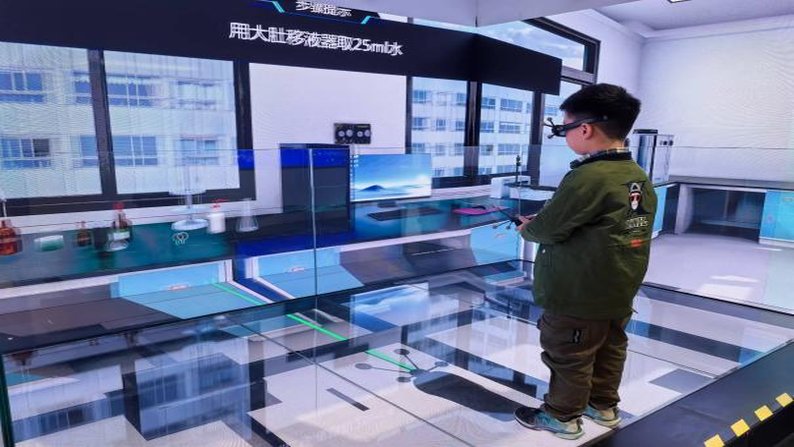
不择知行细流,蕴蓄蓝绿成深:雄安新区生态环境共享中心科普宣传空间营造雄安新区生态环境共享中心VR虚拟实验室(数字化仿真替代实体化学实验,实现科普零危废、低能耗)
6天前 · 来源:雄安新区生态环境监控中心 · 作者:雄安新区生态环境监控中心
