

Company/Organization Profile
The Chongqing Ecological Environment Publicity and Education Center was established in 1993. It is a public welfare Category I fully statefunded institution directly under the Chongqing Municipal Ecological Environment Bureau. The Center has seven internal departments: General Administration Office, Publicity Section, Public Participation Section, Ecological Culture Section, Audiovisual Section, New Media Technology Section, and News Section (which operates in an integrated office with the Publicity, Education and International Cooperation Division).
Its main responsibilities include: organizing public outreach on ecological environment, carrying out ecological cultural activities, conducting volunteer services for ecological environment, hosting comprehensive ecological environment training, operating the ecological environment government new media accounts, and providing audiovisual services, among others.
Chongqing Liangjiang New Area Ruoshui Youth Volunteer Service Center was established in September 2020 and is under the supervision of the Communist Youth League Chongqing Liangjiang New Area Working Committee. The organization adopts a strategy of “making ecology part of daily life and making daily life ecological” to carry out ecological conservation work and practice the concept of ecological civilization.
It has received various awards, including the first prize in the “Liangjiang New Area Social Organization Entrepreneurship Competition” and recognition as a “Green Pioneer” team by the SEE Foundation.
In 2022, it was selected as a volunteer service team for the “Guardian of Green Mountains” initiative by the Chongqing Forestry Bureau. It has received project support from a range of entities and groups, including the Chongqing Forestry Bureau, the Chongqing Ecological Environment Publicity and Education Center, the Chongqing Jinyun Mountain National Nature Reserve, the Social Security Bureau of Liangjiang New Area, the SEE Foundation, and the Chongqing LandSea International Public Welfare Foundation.
机构简介
重庆市生态环境宣教中心成立于1993年,为重庆市生态环境局直属公益一类全额拨款事业单位。中心内设办公室、宣传科、公众参与科、生态文化科、声像科、新媒体技术科、新闻科(在宣教国合处融合办公)等7个科室。主要职责有:组织实施生态环境社会宣传,开展生态文化活动,开展生态环境志愿服务,承办生态环境综合类培训,承担生态环境政务新媒体运营的具体工作,提供声像服务等。
重庆两江新区若水青少年志愿服务中心,成立于2020年9月,主管单位为共青团重庆两江新区工作委员会。机构是以生态生活化、生活生态化的为策略开展生态保护工作,实践生态文明理念。机构曾荣获“两江新区社会组织创业大赛”一等奖,SEE基金会创绿家团队等各类奖项。2022年,入选重庆市林业局“守护青山”志愿者服务队。得到包括重庆市林业局、重庆生态环境宣传教育中心、重庆缙云山国家级自然保护区、两江新区社会保障局、SEE基金会、重庆市陆海国际传播公益基金会等各类单位团体的项目支持。
Project Overview
Jiahe Community, located in Lijia Subdistrict, Liangjiang New Area, Chongqing, is a resettlement community for ruraltourban residents. Its public spaces are primarily composed of scattered green spaces and idle corner plots. In the past, the community suffered from weak public awareness of ecological environmental protection, severe occupation of public spaces, and a lack of green resource recycling systems. At the same time, residents have increasingly strong demands for a highquality living environment and spaces for neighborhood interaction.
By connecting with surrounding schools, medical institutions, local enterprises, social organizations, and other multistakeholder forces, the community officially launched the Jiahe Community “EcoGarden” Coconstruction Plan in early 2026.
With the community garden as a bonding platform, the project calls on all residents to transform from “bystanders” in environmental governance into “builders” of their community home, jointly creating an ecofriendly, visually appealing, and warm shared leisure space.
Residents generally have weak awareness of ecological environmental protection. Phenomena such as littering, destroying green spaces for vegetable planting, and piling up debris in public areas are repeatedly observed despite prohibitions, leading to persistently high maintenance costs for greening and repeated relapses.
At the same time, the community lacks a green resource recycling system: organic matter such as kitchen waste and fallen leaves cannot be utilized onsite, and infrastructure for composting and rainwater harvesting is almost entirely absent, resulting in severely insufficient ecological selfpurification capacity.
Moreover, most existing green spaces are “ornamental” enclosed lawns, lacking accessible and participatory functional spaces. Residents have no adequate places for daily rest, parentchild interaction, or neighborhood socializing, and the sense of community belonging continues to decline.
However, residents' demands for highquality environments and social scenarios—such as beautiful courtyards, children's play areas, elderly wellness spaces, and horticultural therapy—are becoming increasingly strong. This misalignment between demand and supply has made the contradiction between community ecology and living conditions increasingly prominent.
Upon analysis, the root causes are as follows: the original management model of this resettlement community emphasized administrative maintenance, with residents long excluded from environmental decisionmaking and daily upkeep.
Over time, this fostered a passive mindset of “waiting, relying, and demanding,” making it difficult for a sense of ownership to take root. Within the community, there is no chain for sorting, treating, and recycling waste; meanwhile, external environmental technologies, educational resources, and professional expertise have not been effectively introduced, leaving green initiatives without both tools and sustained momentum.
In addition, earlier public space planning focused more on “meeting landscape standards” while neglecting residents' actual usage habits and willingness to participate. The spaces looked good but were not userfriendly, naturally losing vitality.
Furthermore, although schools, hospitals, enterprises, and social organizations are geographically nearby, they have not formed regularized coconstruction linkages, making it difficult for a single governance force to address such complex ecological and social challenges.
Based on the above problems and their causes, and with the support of the Chongqing Ecological Environment Publicity and Education Center, the “EcoGarden” Coconstruction Plan was officially launched in early 2026.
The plan aims to use the community garden as a tangible bond to systematically address these pain points. The improvement objectives are clear and specific:
First, to achieve a shift in mindset—through participatory design, adoption and maintenance, composting practices, and other actions, transform residents from “bystanders” in environmental governance into “builders,” internalizing environmental habits.
Second, to establish a communitylevel green resource recycling system, building facilities for kitchen waste composting, rainwater harvesting, and plant waste reuse, so as to effectively enhance the community's ecological resilience.
Third, to convert idle and underutilized green spaces into shared leisure gardens integrating horticulture, recreation and social interaction, nature education, and wellness and horticultural therapy, thereby revitalizing daily activity in public spaces.
Fourth, to reshape a multistakeholder governance structure, linking schools, medical institutions, local enterprises, and social organizations to form a regularized cogovernance network, ultimately achieving an ecofriendly, visually appealing, and warm community where every resident can gain a sense of belonging and happiness through joint contribution and shared benefits.
In addition, the project will make good use of the Jiahe Community “EcoGarden” platform to connect existing community resources and explore communitybased educational activities (studytour/fieldlearning programs).
项目背景
重庆市两江新区礼嘉街道嘉和社区属于农转非安置型社区,其公共空间主要由零散分布的绿地、闲置边角地块构成。曾存在居民生态环境保护意识薄弱、公共空间占用严重、绿色资源循环体系缺失等问题。与此同时,社区居民对优质人居环境、邻里互动空间的需求愈发强烈。
社区联动周边学校、医疗机构、辖区企业、社会组织等多方力量,于2026年初正式启动嘉和社区“生态花园”共建计划。项目以社区花园建设为纽带,号召全体居民从环境治理的“旁观者”转变为社区家园的“建设者”,携手打造生态宜居、颜值在线、充满温情的共享休闲空间。
居民生态环境保护意识普遍薄弱,随手丢弃垃圾、毁绿种菜、在公共区域堆放杂物的现象屡禁不止,导致绿化维护成本居高不下且反复“回潮”;同时,社区内缺乏绿色资源循环体系,厨余垃圾、枯枝落叶等有机质得不到就地资源化利用,堆肥、雨水收集等基础设施几乎空白,生态自净能力严重不足;而既有绿地多为“观赏性”封闭草坪,缺乏可进入、可参与的功能性空间,居民日常休憩、亲子互动、邻里交往无处承载,社区归属感持续走低。
居民对优美庭院、儿童游乐、老年康养、园艺疗愈等优质环境与社交场景的诉求却日益强烈,这种需求与供给之间的错位,使得社区生态与人居矛盾愈发突出。
究其原因,安置型社区原有的管理模式偏重行政管护,居民长期被排除在环境决策和日常维护之外,逐渐形成“等靠要”的旁观心态,主人翁意识难以萌生;社区内部缺乏废弃物的分类处理和循环利用链条,而外部的环保技术、教育资源及专业力量又未能有效导入,导致绿色行动既无工具方法,也无持续动力。此外,前期公共空间规划更多着眼于“景观达标”,忽略了居民实际使用习惯和动手参与意愿,空间好看却不好用,自然丧失活力;学校、医院、企业、社会组织等虽在地理上邻近,却未形成常态化的共建联动,单一治理力量难以应对如此复杂的生态与人文难题。
基于上述问题与原因,在重庆市生态环境宣传教育中心的支持下,于2026年初正式启动“生态花园”共建计划,旨在以社区花园建设为实体纽带,系统性地回应痛点。改进目标清晰而具体:一是实现意识转变,通过参与式设计、认养维护、堆肥实践等行动,将居民从环境治理的“旁观者”培育为“建设者”,将环保习惯内化于心;二是构建社区级绿色资源循环体系,建成厨余堆肥、雨水收集、植物废弃物再利用等设施,切实提升社区生态韧性;三是将闲置及低效绿地改造为集园艺种植、休憩交往、自然教育、康养疗愈于一体的共享休闲花园,激发公共空间日常活力;四是重塑多方共治格局,联动学校、医疗机构、辖区企业和社会组织,形成常态化共治网络,最终实现生态宜居、颜值在线、充满温情的社区共同体,让每一位居民都能在共建共享中收获归属与幸福。利用好嘉和社区“生态花园”的平台,链接社区现有资源,探索开展社区研学活动。
Project Implementation
The Chongqing Ecological Environment Publicity and Education Center is responsible for overall project coordination; Ruoshui Public Welfare is in charge of activity planning, resident collaboration, material procurement, and activity promotion; and Jiahe Community is responsible for resource linkage, venue coordination, and resident organization.
To address the issues of scattered resident demands and a lack of participatory foundations in planning, the project team conducted multiple rounds of onsite visits from January to March 2026, extensively listening to the genuine needs of community residents. Suggestions regarding garden site planning, functional layout, supporting facilities, and other aspects were incorporated into the overall construction plan.
To address the unclear issues concerning garden site selection, functional positioning, and multiparty rights and responsibilities, a special seminar on the “EcoGarden” project was held in Jiahe Community on March 13. Community workers, resident representatives, local enterprise representatives, and social organization representatives gathered to engage in indepth discussions on garden site selection, functional positioning, design schemes, and multiparty coconstruction and operation models.
Professional designers provided technical solutions, while residents and volunteers expressed their views on details such as zoning, plant selection, placement of leisure seating, setup of children's activity areas, and later maintenance conventions—each detail being determined through collective deliberation.
At the same meeting, the “EcoGarden Volunteer Service Team” was formally established, effectively resolving the issues of “who will manage it and how.” The enthusiasm for collective participation was thus fully ignited.
To address the issues of dispersed construction efforts and a lack of systematic progress in implementation, the construction phase commenced from March to May, with the community carrying out phased practical activities including flowerbed pouring, plant cultivation, and creative beautification.
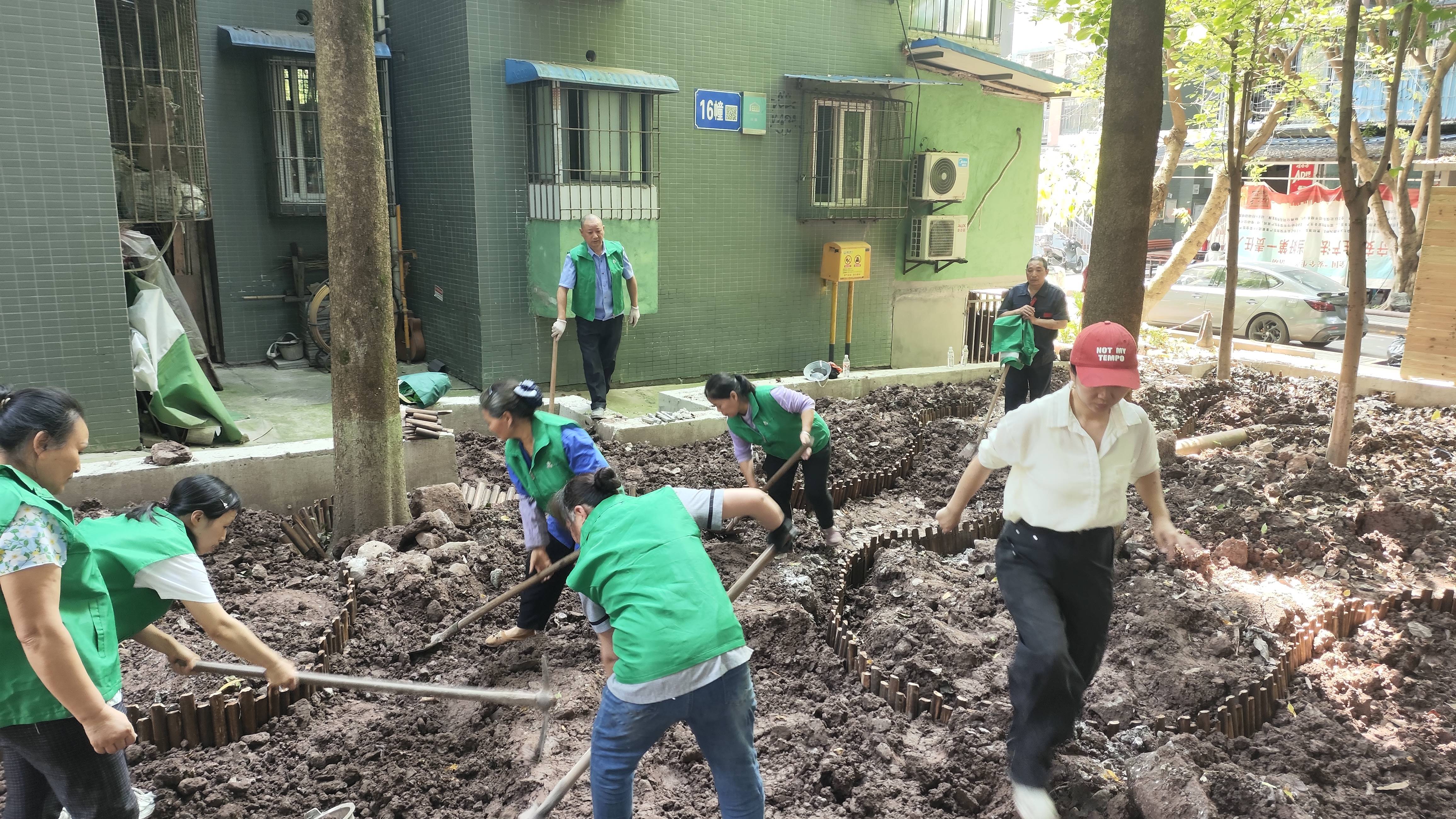
During the garden framework construction stage, the volunteer service team divided labor and cooperated to complete functional zoning, framework erection, themed cultural wall production, and planting soil stacking. Community workers were responsible for overall coordination, university student volunteers undertook technical operations, and residents assisted with transportation and onsite order maintenance.
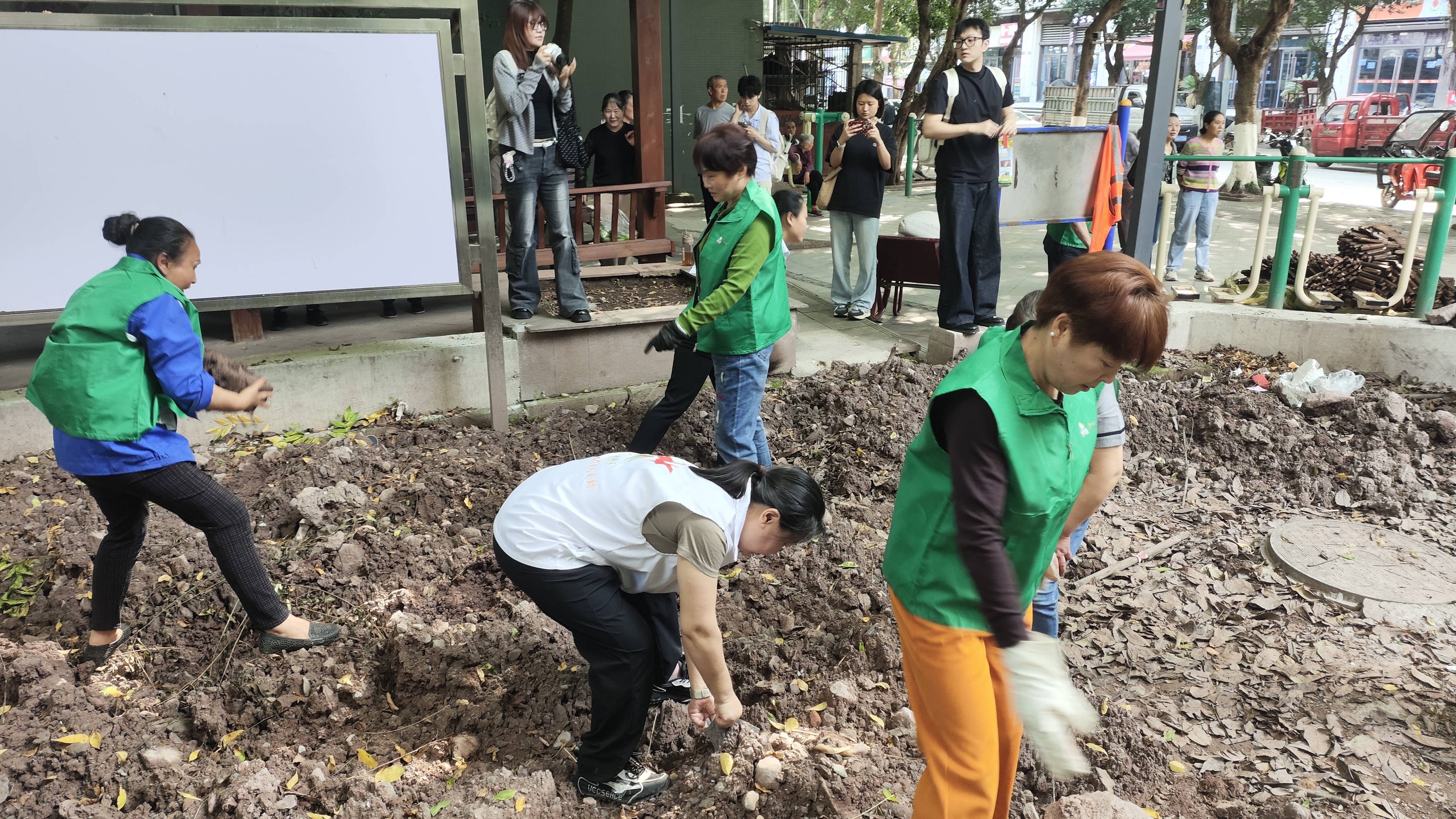
This multiparty collaboration laid a solid foundation for the overall garden layout. During the plant cultivation phase, volunteers worked together to complete tasks such as tilling, seedling supporting, soil covering, and watering. Elderly community members proactively shared their traditional planting experience, while young people learned about field labor through handson practice. Intergenerational collaboration not only improved planting efficiency but also subtly strengthened neighborhood emotional bonds.
To address the technical shortcomings of lacking green resource recycling and the inability to utilize waste onsite, the project simultaneously advanced ecological education and facility upgrades. The project leader provided volunteers with systematic explanations on green waste treatment and ecological composting, with particular emphasis on the scientific principles of the “worm tower” ecodevice for soil improvement and nutrient cycling.
Volunteers were then guided to collaboratively produce and install worm towers onsite. This technical approach converts fallen leaves and kitchen waste into organic fertilizer, which is then returned to the garden soil onsite, effectively solving the community's longstanding lack of recycling facilities.
The Chongqing Ecological Environment Publicity and Education Center provided technical guidance and educational materials for this component; the community organized residents and university student volunteers for handson production; and local enterprises assisted by providing raw materials and tools.
To address the lack of aesthetic appeal in public spaces and the need to increase participation among young people and parentchild families, the project adopted a combined approach of artistic beautification and public engagement.
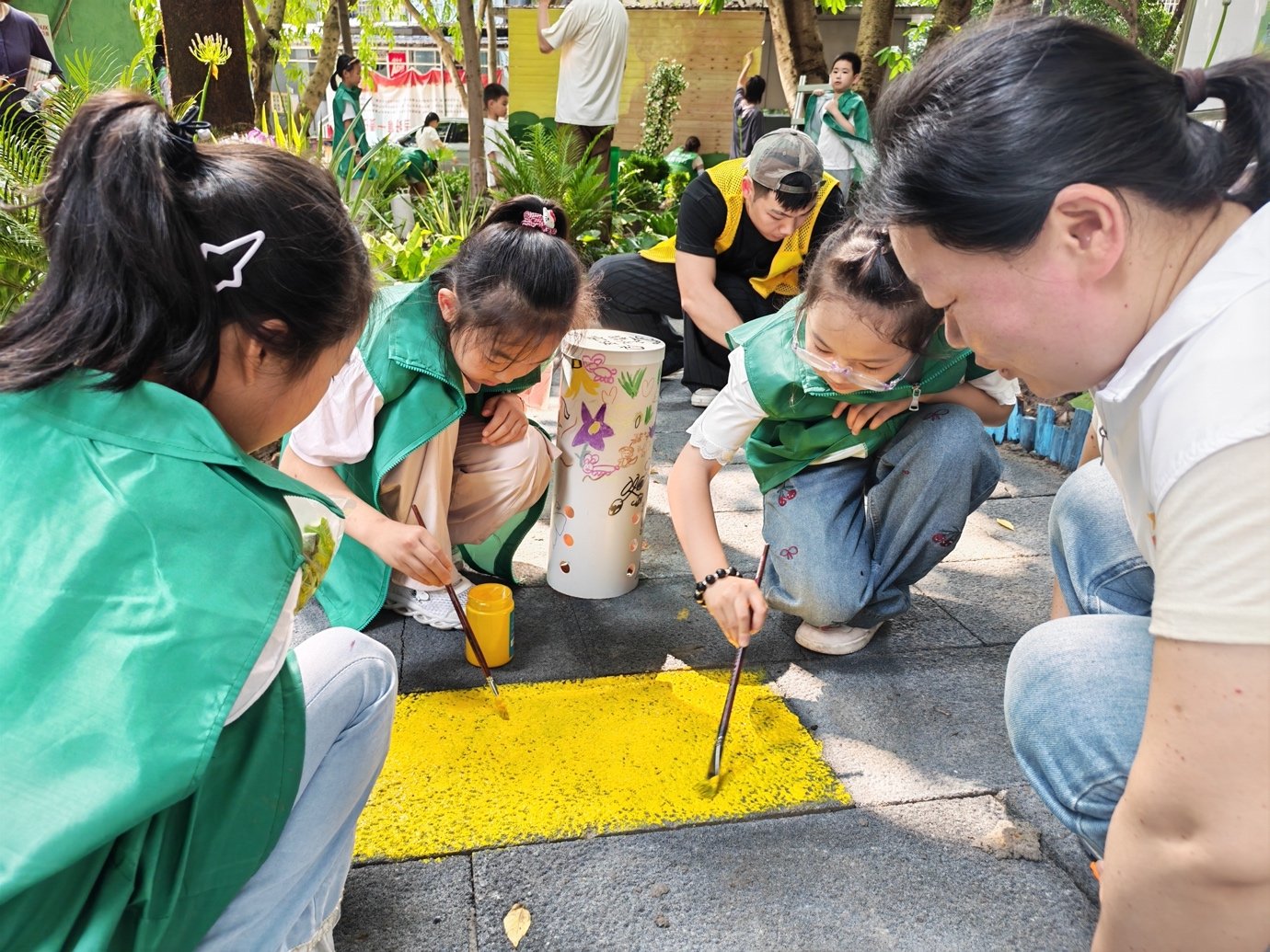
University student volunteers, together with parentchild families, created creative graffiti on walls and fences, adding childlike charm and vitality to the garden through vibrant colors. University volunteer teams were responsible for design and painting guidance, while parentchild families participated in coloring and creation. This lowered the participation threshold while strengthening children and young parents' sense of belonging and guardianship over the garden.
Through comprehensive measures such as organizational mechanism building (volunteer service team establishment), technical introduction (worm tower composting), facility upgrades (flowerbeds, fences, cultural walls), deepened public participation (resident consultations, intergenerational planting, parentchild graffiti), and multiresource coordination (community coordination, university technical support, enterprise materials, and professional guidance from the Environmental Protection Center), the EcoGarden was gradually transformed from a blueprint into a tangible shared space cobuilt and coenjoyed by residents.
项目实施
重庆市生态环境宣传教育中心负责项目统筹协调,若水公益负责活动策划、居民协作、物料购买和活动传播等工作,嘉和社区负责资源链接、场地协调和居民组织等内容。
针对居民诉求分散、规划缺乏参与基础的问题,项目工作组于2026年1月至3月开展多轮实地走访,广泛倾听社区居民真实需求,将花园的场地规划、功能布局、配套设施等各类建议纳入整体建设方案。
针对花园选址、功能定位和多方权责不清的问题,3月13日,在嘉和社区召开“生态花园”项目专题研讨会。社区工作者、居民代表、辖区企业及社会组织代表齐聚一堂,就花园选址、功能定位、设计方案及多方共建运营模式等内容展开深度讨论。
专业设计师提供技术方案,居民和志愿者就区域划分、绿植搭配、休闲座椅摆放、儿童活动区设置及花园后期管护公约等细节各抒己见,每一处细节都经集体商议后确定。会上同步成立“生态花园志愿服务队”,有效解决了“谁来管、怎么管”的问题,全民共建的热情由此全面点燃。
针对建设力量分散、施工缺乏系统性推进的问题,3月至5月进入全面建设阶段,社区分阶段开展花台浇筑、绿植栽种、创意美化等实践活动。在花园框架建设环节,志愿服务队分工协作,完成功能区域划分、搭建框架、主题文化墙制作及种植土堆放等工作,由社区工作者统筹调度,大学生志愿者承担技术性操作,居民负责辅助搬运和现场秩序维护,多方协作夯实了花园整体布局的根基。
在植物种植行动中,志愿者合力完成翻土、扶苗、培土、浇水等工序,社区老人主动分享传统种植经验,青少年在体验中学习田间劳作,代际协作不仅提升了种植效率,也无形中加深了邻里情感纽带。
 ‘
‘
社区居民进行花园基础建设
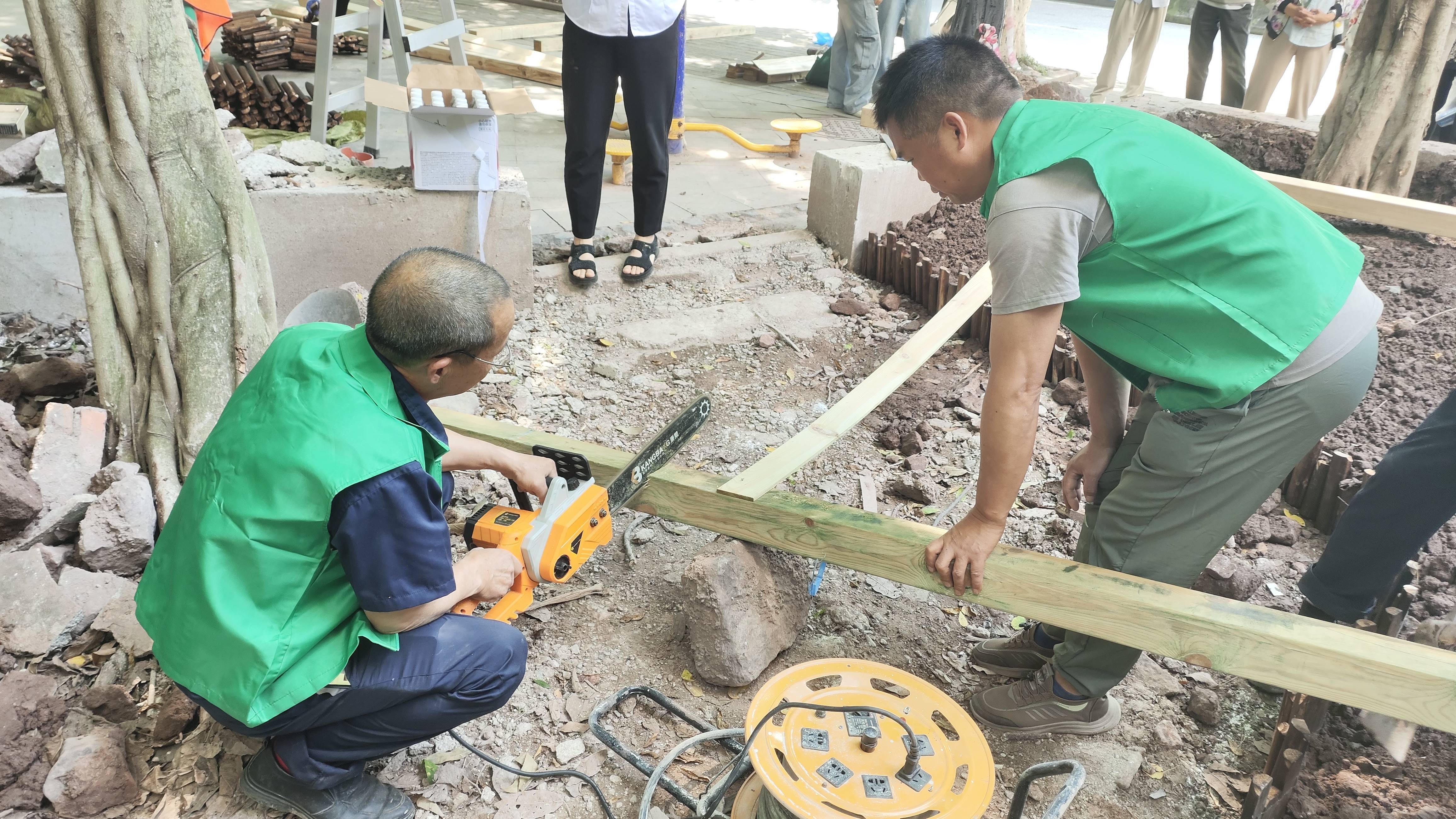
社区居民制作花园背景墙 社区老人指导青少年进行植物种植
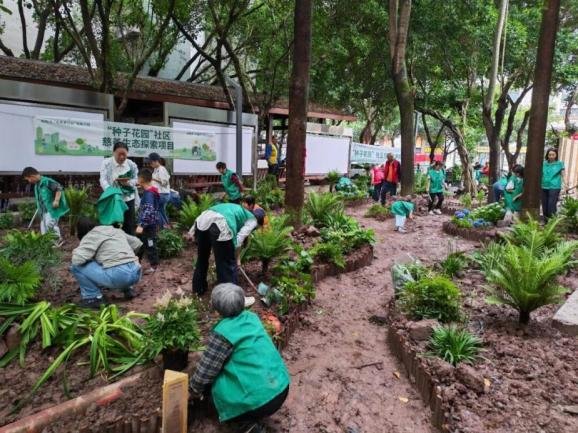
社区居民进行花园种植
针对绿色资源循环缺失、废弃物无法就地利用的技术短板,项目将生态科普与设施更新同步推进。项目负责人向志愿者系统讲解绿色废弃物处理和生态堆肥相关知识,重点普及“蚯蚓塔”环保装置改良土壤、实现养分循环的科学原理,随后引导志愿者共同制作并现场安放“蚯蚓塔”。
这一技术手段将枯枝落叶和厨余垃圾转化为有机肥料,就地回补花园土壤,切实解决了社区长期缺乏循环利用设施的痛点。该环节由重庆市生态环境宣传教育中心提供技术指导和科普资料,社区组织居民和大学生志愿者实操制作,辖区企业协助提供原材料和工具支持。
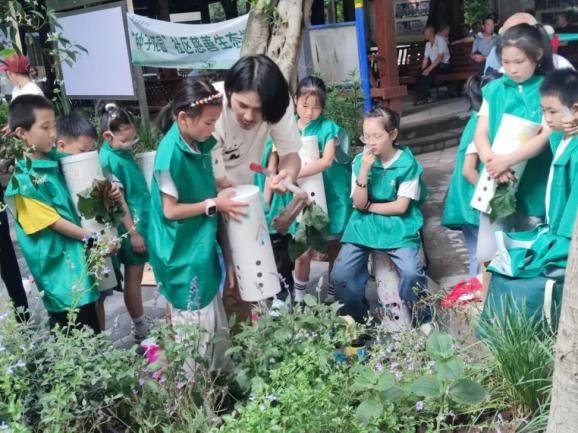
社区青少年制作“蚯蚓塔”环保装置
针对公共空间美感不足、青少年及亲子家庭参与度有待提升的问题,项目采用艺术美化与公众参与相结合的方式,由大学生志愿者携手亲子家庭在墙面和围挡上完成创意涂鸦,缤纷色彩为花园增添童趣与生机。
该行动由高校志愿者团队负责方案设计和绘画指导,亲子家庭共同参与填色创作,既降低了参与门槛,又增强了儿童和年轻家长对花园的归属感与守护意识。
通过组织机制搭建(志愿服务队)、技术手段引入(“蚯蚓塔”堆肥)、设施更新升级(花台、围挡、文化墙)、公众参与深化(走访议事、代际种植、亲子涂鸦)以及多方资源协同(社区协调、高校技术、企业物资、环保中心专业指导)等综合举措,将生态花园从蓝图一步步变为居民共建共享的现实空间。
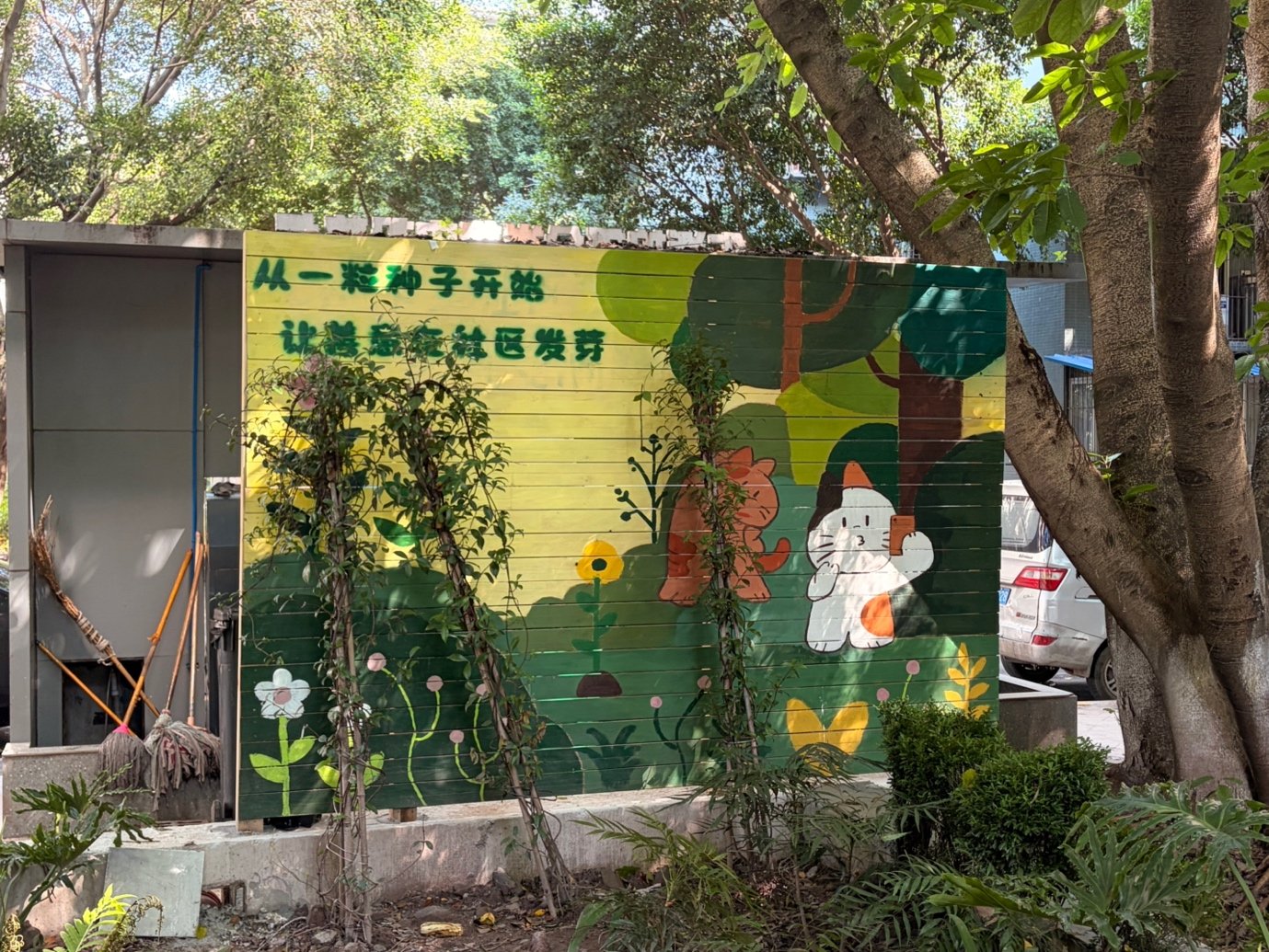
“生态花园”全景照片
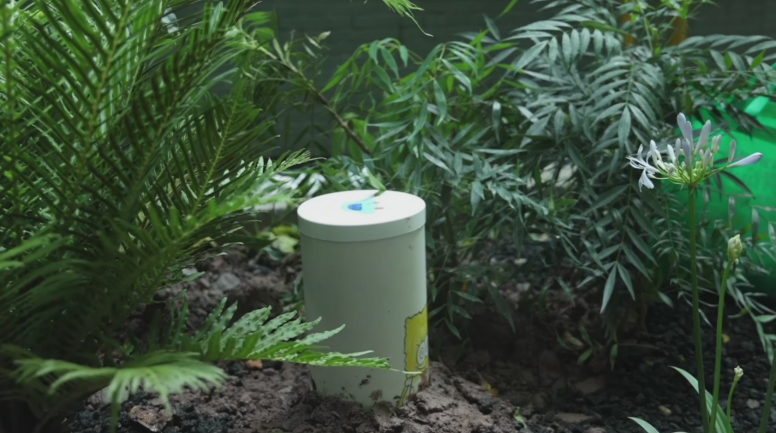
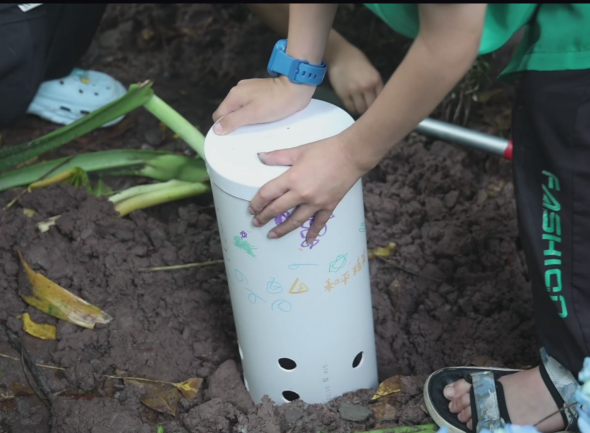
“蚯蚓塔”堆肥
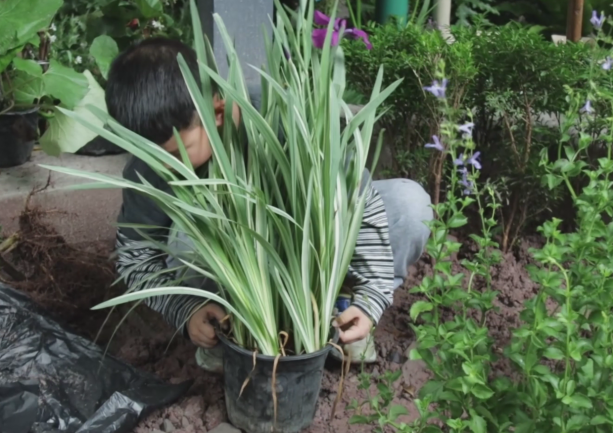
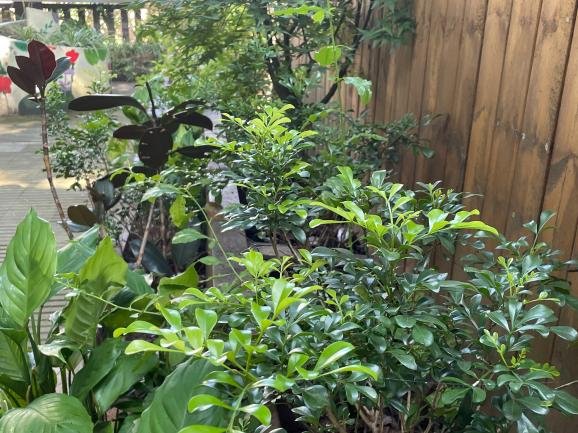
植物种植
Project Outcome
Before the project was launched, the idle open spaces in Jiahe Community were overgrown with weeds and cluttered with debris. Green waste was mixed with household garbage and transported offsite for disposal. Residents looked out of their windows to see debris rather than greenery.
In terms of governance, the approach was primarily administrative management, with enterprises, schools, and social organizations operating in silos, and residents long acting as mere "bystanders." Neighbors lacked public spaces for interaction, and residents of the same building remained strangers to one another. Environmental publicity was limited to banners and slogans, with no tangible carrier for handson engagement.
After the systematic implementation of the "EcoGarden" project, remarkable changes have taken place.
In terms of the environment, idle corner plots have been holistically revitalized into functional zones for horticulture, children's activities, leisure and social interaction, and composting training.
With the establishment of worm towers and centralized composting facilities, a green waste recycling channel has been created, converting fallen leaves and kitchen waste into organic fertilizer onsite. Residents can now "see greenery from their windows and step into a garden as they leave their homes," significantly improving the quality of the living environment.
In terms of governance, a multistakeholder collaboration platform integrating "community + enterprises + schools + social organizations + residents" has been established. The number of volunteers has grown from zero to over 100, with more than 60% being resident core members. A rotation system for maintenance and collective labor has been institutionalized, transforming residents' roles from "service recipients" into "masters of their own community."
In terms of neighborhood relations, 90% of respondents said they "have gotten to know more neighbors" and feel that "the community has become more like a big family." Formerly unfamiliar faces have become partners working side by side, fostering a warmer and more harmonious atmosphere.
In terms of education, the physical garden serves as an outdoor classroom, where science popularization activities such as composting workshops and plant care sessions have been conducted, embedding lowcarbon concepts into people's hearts and minds.
The project demonstrates notable innovations: it has established a selfsustaining operational system of "collective deliberation + shared conventions + volunteerled management."
Technically, the use of "worm towers" enables lowcost onsite recycling that is easy to replicate. In terms of coordination, a fiveparty division of labor has been formed: the Chongqing Ecological Environment Publicity and Education Center sets standards, universities contribute creative designs, enterprises provide materials, social organizations offer planning, the community coordinates efforts, and residents contribute their labor.
As a model, the garden integrates ecological recycling, neighborhood social interaction, nature education, and volunteer cultivation into one, addressing four objectives simultaneously.
In terms of sustainability, funding is raised through multiple channels including "microfunding, corporate donations, and voluntary selffinancing." Hardware costs are kept under control, and operations rely on volunteer labor. A standardized operational manual has also been developed, providing a directly replicable template for similar resettlement communities.
成果亮点
项目启动前,嘉和社区闲置空地杂草丛生、杂物堆积,绿色废弃物混入生活垃圾外运,居民推窗见杂不见绿;治理上行政管护为主,企业、学校、社会组织各自为政,居民长期作为“旁观者”;邻里间缺乏公共交集,同楼住户形同陌路;环保宣传停留在横幅标语,无实体载体可触碰。经过“生态花园”项目系统推进,变化显著。
环境方面,闲置边角地块整体盘活为园艺种植、儿童活动、休憩交流和堆肥实训等功能区,依托蚯蚓塔和集中堆肥装置搭建起绿色废弃物循环利用渠道,将枯枝落叶与厨余垃圾就地转化为有机肥,实现“推窗见绿、出门入园”,人居环境品质显著提升。
治理方面,搭建“社区+企业+学校+社会组织+居民”多元协同平台,志愿者从零增长至100余人,其中居民骨干超六成,轮值养护和集体劳动形成制度,居民角色从“被服务者”转变为“当家人”。
邻里方面,九成受访者表示“认识了更多邻居”“社区更像大家庭”,昔日陌生面孔成为并肩劳作的伙伴,氛围愈加和睦温暖。教育方面,实体花园作为户外实景课堂,已开展堆肥教学、绿植养护等科普活动,低碳理念浸润人心。
创新性亮点突出:建立“议事共决+公约共守+志愿共管”自运转体系;技术上以“蚯蚓塔”实现低成本就地循环,易于推广;协同上形成重庆市生态环境宣传教育中心出标准、高校出创意、企业出物资、社会组织出策划、社区出协调、居民出劳动的五方分工模式;模式上让花园集生态循环、邻里社交、自然教育和志愿培育于一体,一举回应四重目标。可持续方面,资金采用“微资金+企业认捐+志愿自筹”多元渠道,硬件成本可控、运营依赖志愿劳动,且已形成标准化操作手册,可为同类安置型社区提供直接复制的模板。
Project Highlights
In terms of ecological environment, the garden revitalized approximately 200 square meters of idle land. The worm towers and composting devices processed an average of about 20 kilograms of kitchen waste and fallen leaves onsite per month (based on actual input records from March to May 2026), achieving organic matter recycling and reducing the volume of waste sent out for disposal.
In terms of social impact, collective activities have accumulated over 1,000 participant visits. A fiveparty coordination mechanism involving “government, universities, enterprises, social organizations, and the community” has been established. In addition, the activities of the “EcoGarden” have been integrated into the volunteer service section of the “CarbonHuitong” platform, enabling fullprocess digitalization of activity publishing, registration, checkin, and evaluation.
As the smallest governance unit, the communitybased model of “multistakeholder synergy + wholepeople participation” developed through this project is highly replicable and scalable. Different communities can flexibly adapt it according to their own idle spaces, population structures, and local resources, creating richer and more diverse forms of ecological governance practices. This will transform the “EcoGarden” from an individual case exploration in Jiahe into a widely applicable new paradigm for community governance.
成果影响力
生态环境方面,花园盘活闲置空地约200平方米,“蚯蚓塔”及堆肥装置月均处理厨余与枯枝落叶约20公斤(2026年3—5月,按实际投料记录估算),实现有机质循环利用,减少垃圾外运量。
社会影响方面,集体活动累计参与超1000人次;形成“政府+高校+企业+社会组织+社区”五方协同机制。同时,将“生态花园”的活动纳入“碳惠通”平台志愿服务板块,实现活动发布、报名、签到和评价等全流程数字化。
社区作为最小的治理单元,该项目构建的“多元协同+全民参与”模式具有极强的可复制推广,不同社区可结合自身闲置空间、人口结构和在地资源进行灵活适配,形成内容更丰富、形式更多样的生态治理实践,让“生态花园”从个案探索走向可广泛落地的社区治理新范式。
Reviews & Honors
During the garden cobuilding activity, participating children expressed their commitment to “care for the plants and flowers, refrain from littering, and protect nature well.” Residents resting in the pavilion praised the event, saying, “This is what a community should be like—when everyone pitches in, it feels truly warm and connected.”
Zhou Ping, Deputy Secretary of the Party Branch of Jiahe Community, commented that the project popularised ecological concepts through artistic education and parentchild colearning, effectively advancing the community’s shared governance, coconstruction, and collective benefits. The project was featured in special reports by Chongqing Daily under the titles “Teachers and Students from Sichuan Fine Arts Institute Join Hands with the Community to Build a ‘Seed Garden’” and “One Flower, One Painting Nourishes the Homeland.”
It was also covered throughout its process by China National Radio Online and the “Chongqing Environmental Protection” channel of Sohu. The official report from Sichuan Fine Arts Institute noted that its educational model and project outcomes received recognition from mainstream media.
Furthermore, the project was awarded the “Deep Roots Plan” Most Innovative Governance Exploration Project and received financial support. Jiahe Community was designated as a key community for “microrenovation” of public spaces in Liangjiang New Area and is the only pilot community in Liangjiang New Area among the 12 pilot communities in the central urban area of Chongqing.
评价与荣誉
花园共建活动中,参与儿童表示要“爱护花草、不乱扔垃圾,好好保护大自然”,凉亭休憩的居民称赞“社区就该这样,大家一起动手才有人情味”,嘉和社区党支部副书记周萍评价项目以艺术科普、亲子共育形式普及生态理念,真正推动了社区共建共治共享;该项目在《重庆日报》先后以“川美师生与社区携手共建‘种子花园’”“一花一画润家园”为题进行专题报道,央广网、搜狐“重庆环保”频道也跟踪报道了项目全过程,四川美术学院官方报道也指出相关育人模式与活动成效获主流媒体宣传认可;此外,项目获得“深根者计划”最具善治探索项目并获得资金支持,嘉和社区被纳入两江新区公共空间“微改造”重点推进社区,亦是重庆市中心城区12个试点社区中两江新区唯一入选的试点社区。

近零碳社区的美育升级---- 长寿苑社区 “低碳实践 + 影像科普” 共建项目
4天前 · 来源:成都市武侯区火车南站街道长寿苑社区居民委员会 · 作者:成都市武侯区火车南站街道长寿苑社区居民委员会

以绿色金融之力推动中国新质生产力!
4天前 · 来源:国泰海通证券研究所ESG及美丽中国研究组 · 作者:国泰海通证券研究所ESG及美丽中国研究组
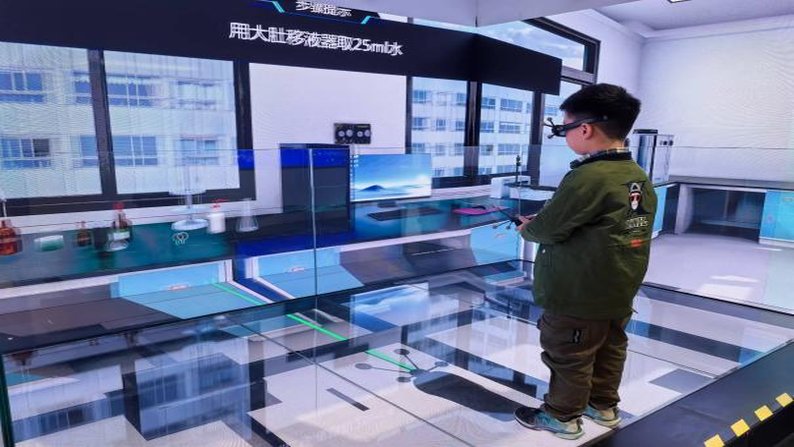
不择知行细流,蕴蓄蓝绿成深:雄安新区生态环境共享中心科普宣传空间营造雄安新区生态环境共享中心VR虚拟实验室(数字化仿真替代实体化学实验,实现科普零危废、低能耗)
6天前 · 来源:雄安新区生态环境监控中心 · 作者:雄安新区生态环境监控中心
