

机构简介
国网江苏省电力有限公司邳州市供电分公司是以电力为核心的能源型企业。邳州电网形成以500千伏岱山变为支撑,以220千伏双环网为核心的主网架结构。境内现有500千伏变电站1座、220千伏变电站6座、110千伏变电站21座、35千伏变电站7座。邳州分布式光伏装机容量提升至163.4万千瓦,户数达3.355万户,容量及户数均为全市第1。近年来,公司成功破解一系列长期制约发展的难题,实施一批支撑高质量发展的关键举措。连续11年保持“全国用户服务满意企业”荣誉称号,先后荣获江苏省文明单位、江苏省五一劳动奖状等荣誉。
机构LOGO

Company/Organization Profile
State Grid Jiangsu Electric Power Co., Ltd. Pizhou Power Supply Branch is an energy enterprise with electricity as its core business. The Pizhou power grid features a main grid framework anchored by the 500 kV Daishan Substation and centered on the 220 kV double-ring network. The region currently operates one 500 kV substation, six 220 kV substations, twenty-one 110 kV substations, and seven 35 kV substations. The installed capacity of distributed photovoltaic (PV) generation in Pizhou has reached 1,634 MW, serving 33,550 households, ranking first citywide in both capacity and number of households. In recent years, the Company has successfully resolved a series of persistent challenges constraining development and implemented a suite of key initiatives underpinning high-quality development. It has maintained the honorary title of "National Customer Service Satisfaction Enterprise" for eleven consecutive years and has been conferred honors including Jiangsu Provincial Civilized Unit and Jiangsu Provincial May 1st Labor Certificate.(AI翻译。以下英文部分由AI翻译)
项目背景
问题现状:为稳步落地“双碳”战略、加快构建以新能源为主体的新型电力系统,农村分布式光伏大规模落地,县域厂区、乡村屋顶等“绿电”空间不断涌现。但衍生全国共性难题:午间光伏发电集中出力,海量绿电涌入县域配网,设备线路极易拥堵过载,光伏并网出现“红区”。 原因分析:2025年邳州市分布式光伏户数近3万户,装机容量累计超140万千瓦,较2024年增长37%。光伏出力具有间歇性、随机性、波动性,发电高峰易造成电网拥堵,传统“一刀切”限发,既造成绿电浪费,也损害农户“阳光收益”,绿色价值难以充分释放。 改进目标:立足乡村光伏应用绿色空间,构建“物理分道疏堵、智慧分级导流、轻量低碳落地”软硬协同治理体系,推行光伏并网“一‘路’一策”差异化管控。实现绿电精细化疏导,兼顾电网安全、农户阳光收益与公众生态认知提升,为高渗透率光伏县域提供可复制实践模式。
Project Overview
Current Situation: To steadily implement the "Dual-Carbon" strategy and accelerate the development of a new‑type power system dominated by new‑energy sources, rural distributed photovoltaic (PV) installations have been deployed on a large scale. "Green-power-oriented spaces" such as county‑level factory premises and rural rooftops keep emerging across the region. Nevertheless, a common nationwide challenge has arisen: massive volumes of green electricity pour into county-level distribution networks due to concentrated mid‑day PV power output, which easily leads to congestion and overload of equipment and power lines, resulting in the emergence of "red zones" for PV grid-connection. Cause Analysis: In 2025, Pizhou City had nearly 30 000 distributed-PV households, with a cumulative installed capacity exceeding 1 400 MW, representing a 37 % increase compared with 2024. PV power output features intermittency, randomness and volatility. Power-generation peaks tend to trigger grid congestion. Conventional "one-size-fits-all" generation curtailment not only gives rise to waste of green electricity, but also undermines rural households’ "sunshine-derived income", making it difficult to fully unlock green-energy value. Improvement Objectives: Based on green spaces for rural PV applications, this project builds a software-hardware integrated governance system of "physical lane‑separation for congestion mitigation, intelligent hierarchical dispatch, and lightweight low-carbon implementation", and carries out differentiated "one-route-one-policy" management for PV grid-connection. It aims to realize refined dispatching of green electricity, strike a balance among grid security, rural households’ sunshine-generated income and improvement of public ecological awareness, and deliver a replicable practical model for counties with high‑penetration distributed PV.
项目实施
标题(请附至少一张题图)
Project Implementation
Faced with the challenge of photovoltaic (PV) grid‑connection, the conventional response adopts a "one-size-fits-all" generation curtailment approach, analogous to imposing a "city-wide traffic lockdown" during grid congestion. While this measure safeguards grid security, it results in insufficient utilization of green-space potential, harms end-user benefits, and further restricts the development scope for rural distributed PV. Some regions have even issued "red-card" restrictions. Multiple obstacles stand in the way of channeling the disordered PV "traffic flow" into the power grid in an orderly and stable manner so as to strike a balance among new‑energy accommodation, grid safety and user returns. Drawing throughout on the logic of refined urban traffic congestion management, this project has established an innovative governance system of "physical lane separation for congestion relief, intelligent hierarchical guidance, and lightweight low-carbon implementation," forming a new paradigm for county-level PV governance characterized by "congestion prevention, refined guidance, low investment, and high accommodation." This approach specifically addresses common nationwide challenges including grid connection congestion in high-penetration counties, crude generation curtailment, insufficient accommodation, and high capacity expansion costs, providing a standardized, replicable, and scalable solution for county-level "red zones" of PV grid connection nationwide. 1. Tiered and Precise Control to Eliminate Crude Curtailment and Enhance PV Accommodation The project has developed a software-hardware integrated solution combining "hardware-based lane separation and software-based traffic guidance." It first establishes a dedicated BRT lane for PV power, achieving physical separation between PV and conventional power flows to initially alleviate grid connection congestion. It has innovatively established a three-tier grid connection coefficient (K-value) coordinated control system, mapping main transformers, transmission lines, and distribution transformers to urban ring roads, arterial roads, and neighborhood streets respectively (implementing differentiated section-based management by grid hierarchy), and applies a "one-route-one-policy" approach with dynamic section-based quota management and precise hierarchical guidance. Problem Solved: This thoroughly overcomes the crude deficiency of traditional grid connection control characterized by "either full release or complete shutdown," eliminates the model of uniform curtailment across entire regions, and achieves differentiated and refined guidance of PV power. Under the premise of ensuring grid security, it minimizes unnecessary curtailment waste to the greatest extent and effectively enhances PV accommodation and utilization rates. 2. Panoramic Prediction and Proactive Control to Eliminate Curtailment Losses and Ensure Full Accommodation By integrating multi-source data spanning meteorology, PV generation, and the power grid, the project has established a panoramic monitoring and prediction platform (the grid's intelligent traffic command center) to monitor the operational status of PV grid-connected "traffic" across the entire network in real time. It achieves minute-level prediction of generation peaks and load congestion trends, driving iterative upgrades in grid control models. Problem Solved: This thoroughly reverses the previous passive pattern of emergency response and temporary curtailment after faults occur, avoiding curtailment losses caused by emergency curtailment due to sudden grid congestion. By predicting generation peaks in advance and pre-balancing loads, it prevents equipment overload and voltage limit violations at the source, firmly securing PV grid connection channels and ensuring full accommodation of PV generation. 3. Lightweight, Low-Carbon Quality Enhancement to Activate Existing Grid Assets and Achieve Sustainable Capacity Expansion Conventional industry approaches to enhancing accommodation typically rely on constructing new lines, adding energy storage, and expanding equipment capacity (analogous to blindly widening roads), which entail high investment, lengthy construction periods, and substantial infrastructure carbon emissions. Moreover, such approaches struggle to keep pace with the growth rate of PV installations, yielding limited accommodation improvement effects. This project is grounded in existing grid assets, leveraging digital dispatch algorithms to optimize operational rules without requiring new hardware or large-scale distribution network infrastructure. It activates surplus grid hosting capacity and continuously taps into PV accommodation potential. Problem Solved: This breaks away from the traditional path of enhancing accommodation through heavy-asset expansion, adopting a lightweight, low-cost, and low-carbon model to deeply exploit grid accommodation margins. Without requiring large-scale infrastructure construction, it continuously enhances county-level PV hosting capacity, effectively resolving the challenges of accommodation saturation and grid connection restrictions in high-penetration counties, and can be rapidly replicated and scaled nationwide.
成果亮点
1.从“一刀切”到“智能控”,首创三级协同精准调控范式 传统方式下,面对光伏“车流”高峰,调控手段粗放如同“全城封路”,对台区、线路以及主变三级设备的实际消纳容量未能充分利用。项目首创“主变—线路—台区”三级“K值”协同调控模式,为每级设备匹配差异化、智能化、精准化调控参数及策略:主变层定总闸、管全局;线路层设区间、控流量;台区层精到户、保收益,实现了分布式光伏的分级联动、精准调控,填补了县域光伏精细化调控的空白。 2.从零和博弈到多方共赢,破解“不可能三角”难题 在传统模式下,保电网安全就必须限制光伏出力,限制光伏出力则影响用户收益,电网安全、光伏消纳、用户收益三者难以动态平衡,各方之间处于博弈状态。项目构建以K值功率系数为核心动态调节体系。在光伏发电高峰、电网即将“拥堵”时,限制进入的光伏发电量,确保电网不瘫痪;在光伏发电平峰、电网畅通时,自动释放通行空间,让更多光伏“畅行上路”。试点数据显示,主变反向重载率下降35.7%,光伏日均发电利用小时数增长25.3%,多消纳电量40.8万千瓦时,把“不可能三角”扭转为“三方共赢”。 3.从“高成本扩硬件”到“轻量级软件升级”,提供绿电空间治理方案 不同于为提高光伏消纳而采取的增容扩线、增设储能等高成本、长周期的改造建设路径,项目充分利用现有光伏消纳容量资源,以智能柔性调控为核心,除软件系统建设成本外,不需要其他额外硬性支出,不仅成本更低,而且适用范围更广,资源投入更小,只需接入本地化数据便能够快速推广至全国其他地区。
Project Outcome
1. From "One-Size-Fits-All" to "Intelligent Control": Pioneering a Three-Tier Coordinated Precision Control Paradigm Under conventional approaches, when facing peaks in PV "traffic," control measures are as crude as imposing a "city-wide lockdown," failing to fully utilize the actual accommodation capacity of three-tier equipment including distribution transformers, lines, and main transformers. This project has pioneered a three-tier "K-value" coordinated control model spanning "main transformers—lines—distribution transformers," matching differentiated, intelligent, and precise control parameters and strategies for each tier: the main transformer tier sets the master gate and manages the overall situation; the line tier defines sections and controls flow; the distribution transformer tier refines to individual households and protects income. This achieves hierarchical linkage and precise control of distributed PV, filling the gap in refined control of county-level PV. 2. From Zero-Sum Game to Multi-Party Win-Win: Resolving the "Impossible Triangle" Under the traditional model, ensuring grid security requires limiting PV output, which in turn affects user returns. It is difficult to dynamically balance grid security, PV accommodation, and user returns, placing the parties in a state of competition. The project has established a dynamic adjustment system centered on the K-value power coefficient. During PV generation peaks when the grid is approaching "congestion," it limits incoming PV generation to prevent grid paralysis; during off-peak periods when the grid is clear, it automatically releases passage capacity to allow more PV to "travel smoothly." Pilot data shows that the reverse overload rate of main transformers decreased by 35.7%, average daily PV generation utilization hours increased by 25.3%, and an additional 408,000 kWh of electricity was accommodated, transforming the "impossible triangle" into a "tripartite win-win." 3. From "High-Cost Hardware Expansion" to "Lightweight Software Upgrade": Providing a governance solution for green-electricity-oriented spaces Unlike the high-cost, long-cycle retrofit and construction paths of capacity expansion, line augmentation, and energy storage addition typically adopted to enhance PV accommodation, this project fully leverages existing PV accommodation capacity resources with intelligent flexible control as the core. Apart from software system construction costs, no additional hardware expenditures are required. Not only are costs lower, but the applicability is broader and resource inputs smaller. It can be rapidly scaled to other regions nationwide simply by integrating localized data.
成果影响力
1.对用户:收益稳定、用电可靠 本项目通过实时精准调控,有效平抑了电压波动,让电网运行更平稳,保障用户的日常用电安全与供电质量。同时提升农户“阳光收入”。 2.对社会:实现环境、民生与发展的三重效益 减少“弃光”浪费,助力“双碳”目标。激发市场活力,带动绿色发展。消纳瓶颈的缓解,为分布式光伏产业打开了可持续发展空间,以稳定的政策预期和充足的消纳能力吸引更多投资进入县域,有力支撑乡村振兴和区域能源结构绿色转型。 3.对政府与行业:提供“轻投入、快见效”的治理样板 邳州市作为先行者,率先出台支持局部电网常态化调节的政策文件。通过“软件”升级释放存量资产价值的模式,为地方提供了一条成本可控、周期短、见效快的治理路径,助力优化新能源投资的营商环境。
Project Highlights
1. For Users: Stable Returns and Reliable Power Supply Through real-time precise control, this project effectively suppresses voltage fluctuations, enabling more stable grid operation and safeguarding users' daily electricity safety and power quality. It simultaneously enhances rural households' "sunshine income." 2. For Society: Achieving Triple Benefits for Environment, Livelihood, and Development By reducing "curtailment" waste, it contributes to the "dual carbon" goals. It stimulates market vitality and drives green development. The alleviation of accommodation bottlenecks opens sustainable development space for the distributed PV industry, attracting greater investment into counties with stable policy expectations and adequate accommodation capacity, strongly supporting rural revitalization and the green transformation of regional energy structures. 3. For Government and Industry: Providing a "Low-Investment, Fast-Results" Governance Model As a pioneer, Pizhou City took the lead in issuing policy documents supporting normalized regulation of local power grids. Through a model that releases value from existing assets through "software" upgrades, it provides localities with a governance path featuring controllable costs, short cycles, and rapid results, helping to optimize the business environment for new energy investment.
评价与荣誉
邳州市经济发展局:该项目创新构建光伏并网动态调节机制,精准破解分布式光伏高效消纳难题,技术路线可行、实施效果显著,具有很强的示范推广价值。 邳州市分布式光伏用户代表:实施智能调节后,光伏上网限电少了,多发电,收益更稳定,用电也更安全放心。 国网徐州供电公司电力调度控制中心:项目有效提升配网设备运行效率与供电可靠性,降低运维压力,对推动分布式光伏规范有序接入、践行企业绿色空间责任具有重要意义。 获得2026江苏“创青春”AI人才专项三等奖。
Reviews & Honors
Pizhou Municipal Economic Development Bureau: The project has innovatively established a dynamic regulation mechanism for PV grid connection, precisely resolving the challenge of efficient accommodation of distributed PV. The technical approach is feasible, implementation results are significant, and it possesses strong demonstrative and scalable value. Representative of Distributed PV Users in Pizhou City: Following the implementation of intelligent regulation, PV grid curtailment has decreased, more electricity is generated, returns are more stable, and electricity usage is safer and more reassuring. State Grid Xuzhou Power Supply Company Power Dispatch Control Center: The project has effectively improved the operational efficiency of distribution-network equipment and power‑supply reliability while alleviating operation-and-maintenance pressure. It is of great significance for promoting the standardized and orderly grid-connection of distributed photovoltaic (PV) power and fulfilling corporate responsibilities for green-space development. Third Prize, 2026 Jiangsu "Chuang Qing Chun" AI Talent Initiative.(Chuang Qing Chun:Create Youth)

海南省海口市绿色低碳校园建设可持续发展实践项目
3小时前 · 来源:海南省蓝丝带海洋环境保护协会 · 作者:海南省蓝丝带海洋环境保护协会
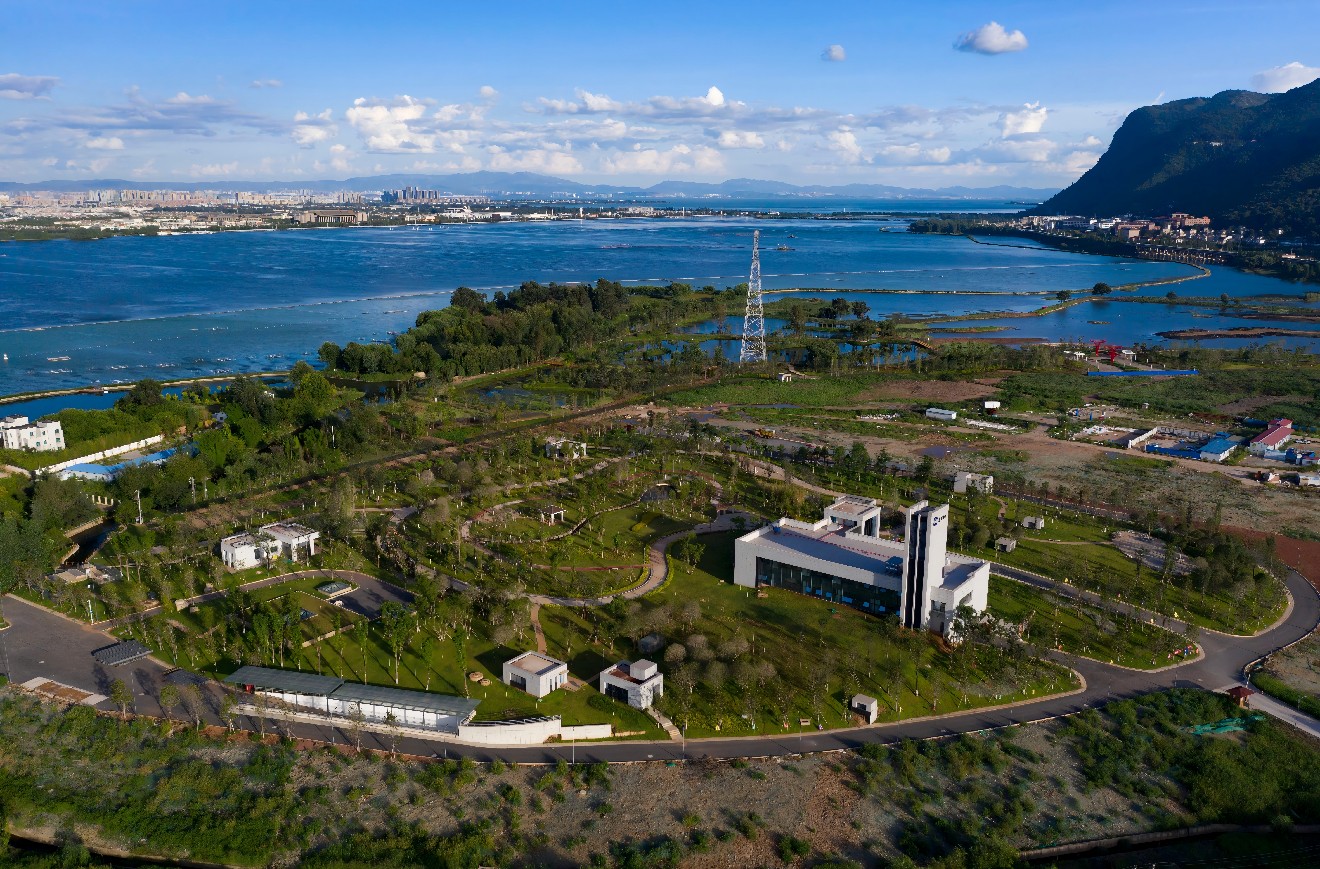
绿意之下,净水流深——探秘地埋式污水厂的“隐形”魔法
3小时前 · 来源:昆明市第十三水质净化厂 · 作者:昆明市第十三水质净化厂
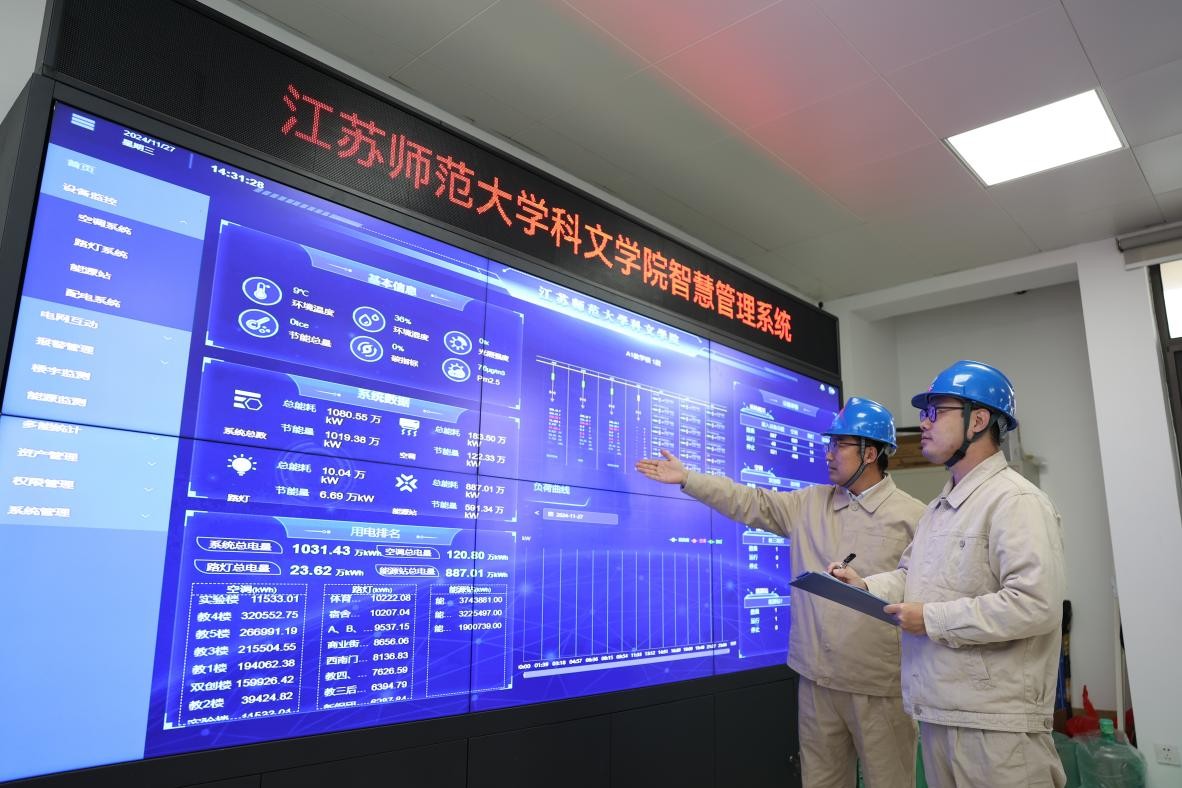
“微改造”里的“大智慧”——以空间焕新构建可复制低碳生活新场景
3小时前 · 来源:国网江苏省电力有限公司徐州市贾汪区供电分公司 · 作者:国网江苏省电力有限公司徐州市贾汪区供电分公司
