

By Zhang Shuo, China Business Journal, Wenzhou
本报记者 张硕 温州报道
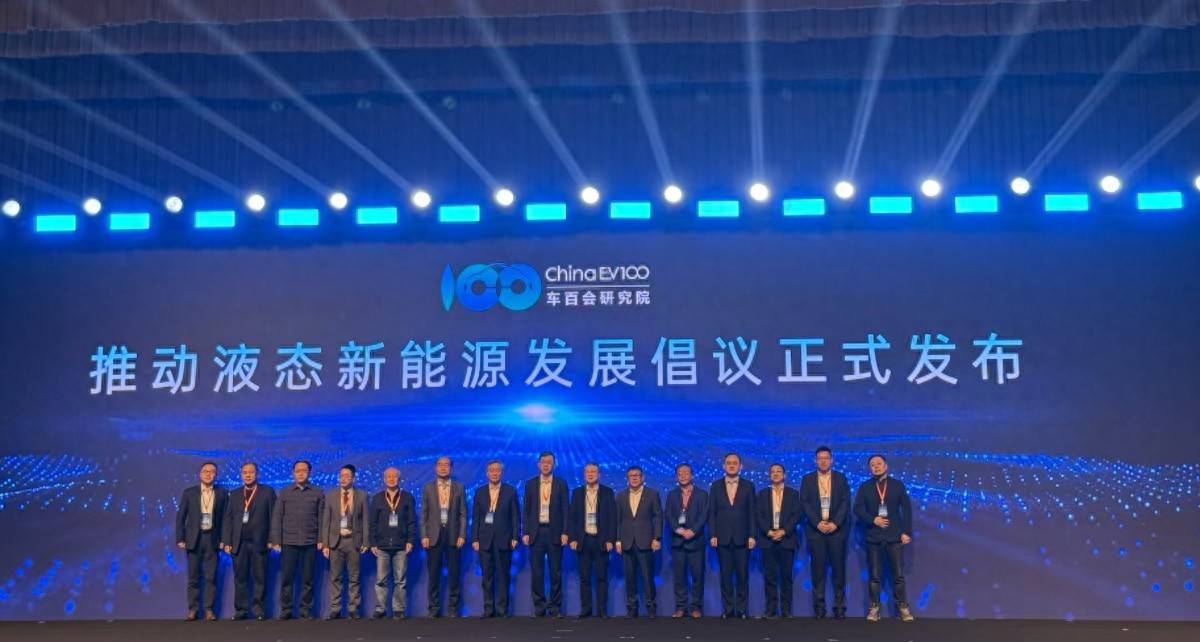
The collaborative development of the liquid new energy industry has entered an accelerated phase. The conference released the Initiative for Promoting Liquid New Energy Development. Photo by Zhang Shuo
液态新能源产业协同发展已迈入加速期,本场大会发布《推动液态新能源发展倡议》 张硕|摄影
On January 7, 2026, the green and low-carbon travel sector hosted an in-depth dialogue focusing on energy transformation. The 2nd Green Methanol Energy Industry Development Conference opened in Wenzhou, gathering representatives from government departments, industry associations, research institutions, and industrial chain enterprises to jointly explore the development path of green methanol, hailed as “liquid sunshine”. Data shows that commercial vehicles account for only 12% of China’s total motor vehicle ownership, yet they contribute to over 50% of carbon emissions, 80% of nitrogen oxide emissions, and 90% of particulate emissions. Moreover, the transportation sector consumes more than 70% of the country’s total petroleum output.
As China enters the late stage of industrialization, coupled with the arrival of the crucial “15th Five-Year Plan” period, the circular economy is poised to transform from quantitative to qualitative growth. The national strategy of building a clean, low-carbon, safe, and efficient new energy system has received enthusiastic responses from the entire industry. The collaborative development of the liquid new energy industry has stepped into an accelerated phase, providing core support for the construction of a Beautiful China.
2026年1月7日,绿色低碳出行赛道迎来了一场聚焦能源变革的深度对话。第二届绿色甲醇能源产业发展大会在温州召开,来自政府部门、行业协会、科研机构及产业链企业的代表齐聚一堂,共同探讨绿色甲醇这一“液态阳光”发展路径。数据显示,我国商用车仅占机动车保有量12%,却占据超50%的碳排放、80%的氮氧化物排放和90%的颗粒排放,而交通领域石油消耗占全国总消耗量的70%以上。
当前我国已步入工业化后期,随着“十五五”关键期的到来,循环经济正迎来由量变到质变的时机。国家建设清洁低碳安全高效的新型能源体系的方向,得到了全行业的积极响应。液态新能源产业协同发展已迈入加速期,为美丽中国建设提供核心支撑。
A field interview by reporters from China Business Journal revealed that under the guidance of the “dual carbon” goals, how to break through the bottlenecks of energy transition and build a diversified and collaborative green energy system has become the focus of participants. Through keynote speeches, roundtable dialogues and other forms, the conference conducted in-depth analysis of technological trends, policy demands, and industrial practices, pooling consensus and clarifying directions for the large-scale application of liquid new energy.
Notably, the conference officially released the Initiative for Promoting Liquid New Energy Development, jointly initiated by competent government departments, industry organizations, experts, scholars, and leading enterprises in the industrial chain. Centering on building a methanol industry community, improving the standard system, clarifying the policy status of methanol-hydrogen electric vehicles, strengthening technological innovation and full-scenario demonstrations, and accelerating the construction of methanol refueling infrastructure, the initiative has pooled industry consensus and pointed out the direction for the healthy development of liquid new energy technologies represented by green methanol and methanol-hydrogen electric power.
《中国经营报》记者现场采访了解到,在“双碳”目标引领下,如何突破能源转型瓶颈、构建多元协同的绿色能源体系,成为与会者关注的焦点。大会通过主题演讲、圆桌对话等形式,深入剖析技术趋势、政策需求与产业实践,为液态新能源的规模化应用凝聚共识、明晰方向。
值得一提的是,此次大会由政府主管部门,行业组织,专家学者及产业链头部企业联合发起的《推动液态新能源发展倡议》正式发布。该倡议围绕共建甲醇产业共同体,完善标准体系,明确醇氢电动汽车政策地位,强化技术创新与全场景示范,加快甲醇加注基础设施建设等方面凝聚行业共识,为绿色甲醇,醇氢电动为代表的液态新能源技术的健康发展指明方向。
Reshaping the Logic: From “Vehicle-Energy Separation” to “Mutual Scenario Integration”
重塑逻辑:从“车能分离”到“互为场景”
“New energy vehicles are not just means of transportation, but also mobile energy storage units.” At the opening of the conference, Zhang Yongwei, Chairman of the China EV 100, kicked off his speech with a “cognitive revolution”. He emphasized that integrating new energy vehicles into the power system can create new space for absorbing renewable energy and provide support for power grid peak shaving and frequency regulation. He believes that the essence of vehicle-energy integration lies in promoting the organic coupling of automotive technology routes and low-carbon energy supply: matching different types of vehicles with the most suitable energy sources, and enabling different energy types to find their optimal application scenarios. “In the past, the automotive and energy sectors developed independently, making systematic collaboration difficult; now, under the framework of vehicle-energy integration, the two sectors have become mutually dependent scenarios and complementary systems, enhancing the flexibility and resilience of the energy system as a whole.”
A set of data helps to better illustrate this point: by 2030, the number of new energy vehicles in China is expected to exceed 100 million. If each vehicle is equipped with a 60 kWh battery, their total energy storage potential will be equivalent to three times the current total scale of pumped storage power stations nationwide. Behind these figures lies a profound transformation of the energy system. In the past, the automotive and energy sectors were two parallel tracks: automakers pursued longer driving ranges, while power grids focused on peak shaving and frequency regulation. Today, under the “vehicle-energy integration” framework, the two sectors have begun to integrate with each other. Zhang Yongwei used a vivid metaphor: “It is like the relationship between mobile phones and the mobile Internet—mobile phones are not just communication tools, but also terminal gateways to the mobile Internet. Similarly, new energy vehicles are becoming ‘mobile nodes’ in the new power system.”
“新能源汽车不仅是交通工具,更是移动的储能单元。”大会伊始,中国电动汽车百人会理事长张永伟的演讲从一场“认知革命”开始。张永伟认为,新能源汽车不仅是交通工具,更是“移动储能单元”。将其纳入电力系统,可为新能源消纳提供新空间,也为电网调峰调频提供支撑。他认为,车能融合的本质在于推动汽车技术路线与低碳能源供给的有机耦合:让不同类型的汽车匹配最适宜的能源,也让不同能源找到最优应用场景。“过去汽车与能源各自发展,难以系统协同;如今在车能融合框架下,二者互为场景、互成体系,从整体上提升了能源系统的灵活性与韧性。”
一组数据帮助我们更好地理解:到2030年,中国新能源汽车保有量预计突破1亿辆,若每辆车配备60度电,其储能潜力将相当于目前全国抽水蓄能电站总规模的3倍。这组数字背后,隐藏着能源系统的深刻变革。过去,汽车与能源是两个平行发展的赛道:车企追求续航里程,电网专注调峰调频。如今,在“车能融合”的框架下,二者开始相互嵌入。张永伟用了一个形象的比喻:“就像手机与移动互联网的关系——手机不仅是通讯工具,更是移动互联网的终端入口。新能源汽车也正在成为新型电力系统的‘移动节点’。”
This view echoes the logic of two-way drive between energy and transportation. Fang Haifeng, Chief Expert at the China Automotive Technology and Research Center, further elaborated: “The green transition of energy exerts a profound impact on automotive technology routes, while carbon reduction in the automotive sector also relies on the clean-up of energy sources.” He believes that methanol can serve as an important option for the low-carbon transition of automobiles, with significant potential especially in the commercial vehicle sector. He suggested guiding coal chemical and other industries to couple green hydrogen and green electricity through policies to produce low-carbon methanol, accelerating the replacement of green fuels in heavy-duty trucks, ships and other fields, and expanding the consumption channels of clean energy such as hydrogen, ammonia, and methanol.
Data analysis shows that in the heavy-duty truck sector, the full-life-cycle carbon emission reduction rate can reach more than 60% by using green methanol fuel. In his speech, he specifically mentioned the pilot project in Jinzhong City, Shanxi Province: 300 methanol-fueled heavy-duty trucks have been operating stably on local coal mine transportation routes for two years, with fuel costs per kilometer reduced by 0.8 yuan compared to diesel, and carbon dioxide emissions reduced by approximately 12,000 tons annually.
这一观点呼应了能源与交通双向驱动的逻辑。中国汽车技术研究中心首席专家方海峰进一步阐释:“能源的绿色转型深刻影响汽车技术路线,而汽车降碳也依赖能源的清洁化。”他认为,甲醇可作为汽车低碳转型的重要选项,尤其在商用车领域潜力显著。建议通过政策引导煤化工等行业耦合绿氢绿电,生产低碳甲醇,并在重卡、船舶等领域加速绿色燃料替代,拓展氢、氨、醇等清洁能源的消纳途径。
数据分析显示,在重型卡车领域,若采用绿色甲醇燃料,全生命周期碳减排幅度可达60%以上。他在演讲中特别提到山西晋中市的试点案例:300辆甲醇重卡在当地煤矿运输线上已稳定运行两年,每公里燃料成本较柴油降低0.8元,每年减少二氧化碳排放约1.2万吨。
Circular Economy: Resource Utilization Path of Green New Energy and China’s Advantages
循环经济:绿色新能源资源化路径与中国优势
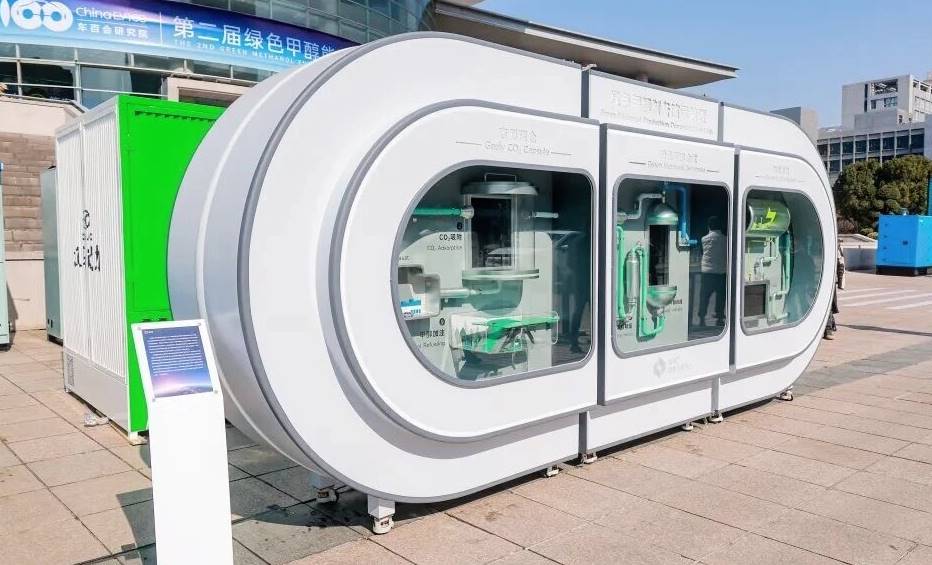
Outside the venue, a green methanol production demonstration device attracted many participants to stop and observe. Green methanol is the optimal energy carrier for storing solar and wind energy, as well as the best carrier for green hydrogen. As a liquid fuel, it features low transportation costs and long-term storage capabilities. With technological progress and large-scale production, green methanol is expected to become an important pillar in the future energy sector, unlocking a trillion-yuan market space.
“At present, China has established a complete industrial chain technology route for green methanol. The green methanol circular economy cluster industry has achieved remarkable results in technological innovation and industrialization. Centering on methanol fuel, methanol power, and methanol vehicles, we have broken through key bottlenecks in the ‘methanol-refueling station-power-vehicle-capture’ integrated industrial chain covering five aspects: green methanol production, methanol fuel refueling, high-efficiency methanol engines, methanol passenger and commercial vehicles, and on-board carbon capture. This has laid a solid foundation for the production of green methanol and the promotion and application of methanol vehicles. This achievement has won the 2025 China Circular Economy Science and Technology Progress Award (First Class).” In his speech, Zhu Liyang, President of the China Circular Economy Association, shared his insights. He led the audience on a traceability journey to explore what makes green methanol “green”: biogas produced by anaerobic fermentation of urban kitchen waste can be used to produce methanol; blast furnace gas from steel plants can be purified and converted into methanol raw materials; and even the curtailed electricity from offshore wind farms in coastal areas in the future can be used to produce hydrogen through water electrolysis, which is then synthesized into methanol. “Every ton of green methanol represents the re-empowerment of waste resources.”
会场外,一台绿色甲醇制备演示装置引发诸多参会者驻足。绿色甲醇是储存太阳能、风能的最佳能源载体,也是绿氢的最好载体,并且作为液体燃料,其运输成本低且可以长期储存。随着技术进步和规模化生产,绿色甲醇有望成为未来能源领域的重要支柱,万亿元级市场空间即将释放。
“目前,我国已打通绿色甲醇全产业链技术路线,绿色甲醇循环经济群产业,技术创新与产业化成果已经与显著成效,以甲醇燃料、甲醇动力、甲醇汽车为核心,突破了涵盖绿色甲醇制备、甲醇燃料加注、高效甲醇发动机、甲醇乘用车和甲醇商用车、车载碳捕集“五位一体”的“醇-站-动-车-捕”全产业链关键瓶颈,为绿色甲醇生产制备及甲醇汽车推广应用奠定了良好的基础,该成果已获2025年度中国循环经济领域科技进步一等奖。”中国循环经济协会会长朱黎阳在演讲中给出了自己的思考。在绿色甲醇的“绿色”究竟体现在哪里?朱黎阳带着听众进行了一次溯源之旅:城市餐厨垃圾经过厌氧发酵产生沼气,沼气制取甲醇;钢铁厂的高炉煤气经过提纯转化,变成甲醇原料;甚至未来沿海地区风电场的弃电,都可以通过电解水制氢再合成甲醇。“每一吨绿色甲醇,都是对废弃资源的重新赋能。”
From the perspective of circular economy, Zhu Liyang’s answer points out a clear path: producing methanol using urban organic waste, industrial by-product hydrogen, coke oven gas, and even captured carbon dioxide is an efficient way to recycle waste resources. This approach not only improves resource efficiency and reduces pollution, but also boasts economic benefits, making it an important component of clean energy. He pointed out that the three major technical routes for green methanol currently are biomass-to-methanol, water electrolysis-to-methanol, and comprehensive utilization of waste-to-methanol. Fan Xianjun emphasized that as a liquid new energy, methanol-hydrogen electric power has prominent advantages in energy autonomy and resource adaptability, making it one of the carbon neutrality paths suitable for China’s national conditions. However, he also noted that the current policy system still needs to be improved. Areas such as refueling station construction standards, national standards for green methanol, and carbon footprint accounting and trading mechanisms require collaborative efforts from all stakeholders in the industrial chain.
Data shows that driven by technology, green methanol projects have sprung up across the country. According to preliminary statistics, there are currently 210 planned, under-construction, and commissioned green methanol projects nationwide, with a total production capacity exceeding 51 million tons per year, of which approximately 500,000 tons have been completed and put into operation.
朱黎阳从循环经济视角给出的这个答案具有明确的路径方向——利用城市有机垃圾、工业副产氢、焦炉煤气乃至捕捉的二氧化碳制备甲醇,是对废弃物的高效资源化。这既提升资源效率、减少污染,又兼具经济性,应被视为清洁能源的重要组成。他指出,生物质制甲醇、电解水制甲醇及废弃物综合利用制甲醇,是当前绿色甲醇的三大技术路线。范现军则强调,醇氢电动作为液态新能源,在能源自主性、资源适配性方面优势突出,是符合中国国情的碳中和路径之一。但他也指出,当前政策体系仍需完善,如加注站建设标准、绿色甲醇国家标准、碳足迹核算与交易机制等,需产业链各方协同推进。
资料显示,技术引领下,绿色甲醇项目在全国各地如雨后春笋般拔地而起。据初步统计,目前全国规划、在建及投产的绿色甲醇项目达到210个,总产能超过5100万吨/年,其中已建成产能约50万吨。
In 2025, China’s green methanol industry delivered an impressive performance, with a number of major projects put into operation one after another, marking the first year of large-scale green methanol production. For example, on July 15, the first electricity-coupled biomass-to-methanol project invested and constructed by Shanghai Electric was officially put into operation in Taonan City, Jilin Province, with an annual output of 50,000 tons of green methanol in Phase I. On October 28, China’s first offshore hydrogen-ammonia-methanol integrated project, invested and constructed by China Energy Investment Corporation and other enterprises, successfully produced the first batch of green methanol in Yantai City, Shandong Province, marking the first time that China has achieved a complete technological path from renewable energy to green methanol on an offshore platform. On December 16, the world’s largest green hydrogen-ammonia-methanol integrated project invested and constructed by China Energy Engineering Corporation was officially put into operation in Songyuan City, Jilin Province, with an annual output of 45,000 tons of green hydrogen, 200,000 tons of green ammonia and green methanol in Phase I. On December 29, the 100,000-ton-per-year green methanol project of Shanghai Huayi, led by China National Chemical Engineering Co., Ltd., was officially put into operation. In addition, the 300,000-ton-per-year agricultural waste biomass-to-methanol project in Yancheng, Jiangsu Province, will be put into operation soon, which is China’s largest project producing biomethane from waste such as wet garbage and further converting it into green methanol.
From an international perspective, Zhao Kai, Chief Representative of the Methanol Institute China, supplemented that China has taken a leading position in the global green methanol sector. Among the approximately 230 green methanol projects worldwide, more than 150 are located in China, giving the country significant advantages in raw material supply, equipment manufacturing, and engineering construction. “The future development of the global methanol industry cannot do without China’s participation.” This judgment highlights China’s pivotal role in the liquid new energy industrial chain.
2025年我国绿色甲醇产业交出了一份亮眼的成绩单,一批重大项目相继投产,可以说迎来了绿色甲醇投产元年。如7月15日上海电气投资建设的首个电耦合生物质制甲醇项目,在吉林省洮南市正式投产,一期将年产5万吨绿色甲醇;10月28日国家能源集团等投资建设的我国首个海洋氢氨醇一体化项目,在山东烟台成功产出首批绿色甲醇,标志着我国首次在海上平台实现了从可再生能源到绿色甲醇的完整技术路径的贯通;12月16日中国能建投资建设的全球最大规模绿色氢氨醇一体化项目在吉林省松原市正式投产,一期可年产4.5万吨绿氢,20万吨绿氨和绿色甲醇。12月29日,中国化学工程牵头的上海华谊10万吨年产绿色甲醇项目正式投产,包括在江苏盐城30万吨农业废弃物生物质制甲醇项目近期也会投产。这是我国规模最大的利用湿垃圾等废弃物生产生物天然气,进而制备绿色甲醇的项目。
全球甲醇行业协会中国区首席代表赵凯从国际视野补充道,中国在绿色甲醇领域已占据先机。全球约230个绿色甲醇项目中,超150个位于中国,在原料供应、装备制造和工程建设方面具备显著优势。“未来全球甲醇产业的发展,离不开中国的参与。”这一判断凸显了中国在液态新能源产业链中的关键地位。
“There is no single optimal route, only the most suitable solution.” Wang Weiliang, President of the Board of Management of Bosch Intelligent Mobility Solutions China, pointed out that the selection of commercial vehicle power routes should be based on specific scenarios: pure electric vehicles have obvious advantages in urban distribution scenarios; while in areas with insufficient power grid coverage and dominated by long-distance trunk transportation, diesel and natural gas will still be in use, and methanol can serve as an important supplement with both economic efficiency and low-carbon properties.
Professor Liu Ke, Foreign Academician of the Australian Academy of Engineering and Dean of the School of Entrepreneurship and Innovation at Southern University of Science and Technology, further expanded the application boundaries of methanol. He said: “UAV delivery is becoming increasingly popular, but lithium batteries only allow UAVs to fly for 30 minutes. If methanol fuel cells are used instead, the flight duration can be extended to 3 hours.” Liu Ke believes, “This is the unique value of liquid energy—high energy density, fast refueling, and easy storage and transportation. These characteristics are irreplaceable in mobile scenarios.” He proposed that combining smart power grids with low-carbon liquid pipeline networks can promote the transformation of the energy system from traditional oil and gas to green electricity and methanol economy. Methanol is not only suitable for automobiles, but also can empower the low-altitude economy (such as extending UAV flight time), ship power, island power generation and other scenarios. “The hybrid power mode of ‘compatible with oil, methanol and electricity’ is a pragmatic choice suitable for China’s national conditions.”
“没有唯一最优的路线,只有最适合的方案。”博世智能出行集团中国区董事会总裁王伟良指出,商用车动力路线的选择需结合具体场景:城市配送场景中,纯电动优势明显;而在电网覆盖不足、长途干线运输为主的区域,柴油、天然气仍将存在,甲醇则可成为兼具经济性与低碳性的重要补充。
澳大利亚工程院外籍院士、南方科技大学创新创业学院院长刘科进一步拓展了甲醇的应用边界。刘科表示:“现在无人机送货越来越普及,但锂电池只能飞行30分钟。如果改用甲醇燃料电池,续航可以延长到3小时。刘科认为,“这就是液态能源的独特价值——高能量密度、快速加注、易于储运。这些特性在移动场景中不可替代。”他提出,通过智能电网与低碳液体管网结合,可推动能源体系从传统油气向绿色电力与甲醇经济转型。甲醇不仅适用于汽车,还能赋能低空经济(如延长无人机续航)、船舶动力、海岛发电等多类场景。“‘可油、可醇、可电’的混合动力模式,是适合中国国情的务实选择。”
Breaking Through Bottlenecks: Industrial Collaboration and Infrastructure Are the Key
突破瓶颈:产业协同与基础设施是关键
During the roundtable dialogue session, many experts directly addressed practical challenges. Yao Chunde, Deputy Director of the Expert Advisory Committee for the Promotion and Application of Methanol Vehicles of the Ministry of Industry and Information Technology, pointed out that the relatively high cost of green methanol restricts its large-scale application. Low-carbon methanol can be prioritized as a transitional option, drawing on the EU’s development approach of combining “grey methanol” with “green methanol”. In addition, standards and management regulations for refueling station construction and park access are urgently needed to be improved. Yao Chunde proposed that two aspects need to be promoted in coordination during the promotion of methanol vehicles: first, the high cost of green methanol restricts large-scale application. Low-carbon methanol can serve as a phased solution, and the EU’s experience can be learned from to promote the integrated development of grey methanol and green methanol; second, methanol faces practical constraints in refueling station construction and park access, which require further improvement of relevant standards and management regulations.
From the perspective of energy enterprises, Wang Wenhui, Chairman of Shenyang Dalongyang Energy Co., Ltd., pointed out that reducing the comprehensive cost of methanol and improving the refueling network are the core of promotion, which requires forming a virtuous cycle through the model of “supporting vehicles with methanol and driving methanol consumption with vehicles”.
圆桌对话环节,多位专家直面现实挑战。工业和信息化部甲醇汽车推广应用专家指导委员会副主任姚春德指出,绿色甲醇成本偏高制约其规模化应用,可优先推广低碳甲醇作为过渡,并借鉴欧盟“灰醇+绿醇”结合的发展思路。此外,加注站建设、园区准入等标准与管理规范也亟待完善。姚春德提出在甲醇汽车推广过程中,有两方面问题需要协同推进:一是绿色甲醇成本偏高,制约大规模应用。低碳甲醇可作为阶段性解决方案,同时可借鉴欧盟思路,推动灰醇与绿醇结合发展;二是甲醇在加注站建设、园区准入等方面存在现实制约,需进一步完善相关标准与管理规范。
沈阳大龙洋董事长王文辉则从能源企业角度指出,降低甲醇综合成本、完善加注网络是推广核心,需通过“以醇养车、以车带醇”的模式形成良性循环。
Shao Yu, Distinguished Senior Research Fellow at the National Institution for Finance & Development, reminded that energy transition is a gradual process, and multiple technical routes will coexist for a long time before the ultimate solution matures. As a cost-effective and economically viable option, the current focus of methanol lies in rapidly building its ecosystem, including policy support, financial empowerment, and market cultivation.
Energy transition is a long and arduous journey. As one participating expert described to reporters: “There is no perfect one-size-fits-all solution for energy transition, only a dynamic balance that is continuously optimized under realistic constraints. And today, we are adding a new weight to this balance.”
(Edited by: Tong Haihua Reviewed by: Li Zhenghao Proofread by: Chen Li)
国家金融与发展实验室特聘高级研究员邵宇提醒,能源转型是渐进过程,在终极方案成熟前,多种技术路线将长期并存。甲醇作为性价比高、经济适用的选项,当前重点在于快速构建其生态系统,包括政策支持、金融赋能与市场培育。
能源转型任重道远。正如一位与会专家向记者所描述的:“能源转型没有完美的单一解,只有在现实约束中不断优化的动态平衡。而今天,我们正为这种平衡增添新的砝码。”
(编辑:童海华 审核:李正豪 校对:陈丽)
(Using AI translation)
(使用AI翻译)
南方电网省域电力系统碳排放可溯源数据库发布
5天前 · 来源:南方电网报 · 作者:南方电网
国家电网公司参加2026上海国际碳中和博览会
5天前 · 来源:国家电网 · 作者:国家电网

锂电行业首张!宁德时代获国家级碳足迹标识认证
06-05 · 来源:宁德时代 · 作者:宁德时代
