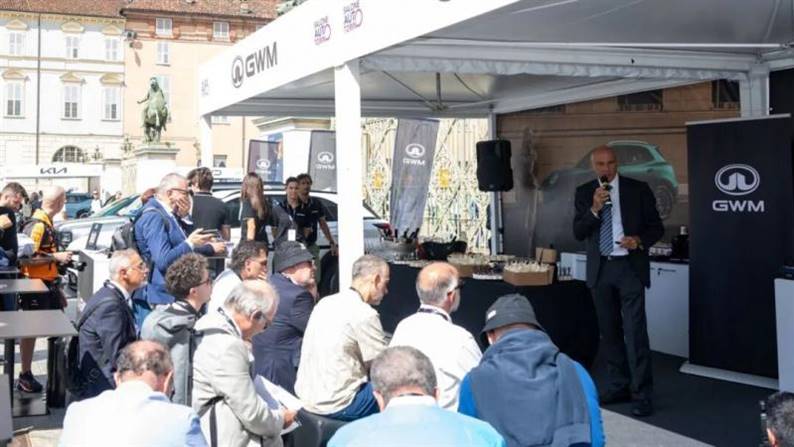
On September 14th local time, NIO founder, chairman, and CEO Li Bin was invited to attend the World Trade and Technology Day held at the WTO headquarters in Geneva and delivered a keynote speech. This conference focuses on AI and Trade: Turning Potential into Progress, with guests from international organizations, governments, and various industries discussing new opportunities and challenges for AI development and global trade.
At this moment, AI is developing at an unprecedented pace, posing a new challenge for global policy makers: how to encourage innovation while ensuring the safe, trustworthy, and responsible deployment and application of AI. The automotive industry provides a representative practical perspective - it is one of the industries with the highest degree of globalization and the strictest regulatory requirements.
Li Bin stated in his speech that with the accelerated integration of electrification, intelligence, and AI, intelligent electric vehicles have become the most widely used physical AI agents. The leading automotive companies in the future will also be leading AI companies.
当地时间9月14日,蔚来创始人、董事长、CEO李斌受邀出席在日内瓦WTO(世界贸易组织)总部举办的World Trade and Tech Day「世界贸易与科技日」,并发表主题演讲。本届大会围绕AI and Trade: Turning Potential into Progress(人工智能与贸易:化潜能为实效)展开,来自国际组织、政府、和各领域产业界的嘉宾一起探讨AI发展与全球贸易的新机遇、新挑战。
此刻,AI正以前所未有的速度发展,也给全球政策制定者带来了新的课题:如何在鼓励创新的同时,确保AI安全、可信、负责任地部署和应用。汽车产业提供了一个具有代表性的实践视角——汽车是全球化程度最高、监管要求最严格的产业之一。
李斌在演讲中表示,随着电动化、智能化与AI的加速融合,智能电动汽车已经成为使用最广泛的物理AI智能体。未来领先的汽车公司,也一定是领先的AI公司。
Intelligent assisted driving is a very representative example. In addition to the car itself, it also integrates AI, software, and hardware. Taking NIO as an example, ten years ago NIO established the goal of intelligent assisted driving to "liberate energy and reduce accidents". Nowadays, NIO's intelligent assisted driving system based on world model architecture and closed-loop reinforcement learning has been deployed on over 950000 intelligent electric vehicles. As of now, NIO's intelligent assisted driving has a safe driving range of over 7.7 billion kilometers and a cumulative usage time of 98 million hours, avoiding or reducing the potential impact of 8.35 million accidents for users. According to internal data, the average safe mileage of human vehicle co driving is eight times that of human driving.
Looking at the world, road safety remains a major social issue. By 2025, approximately 1.16 million people worldwide will die in traffic accidents, and over one billion people will spend an average of 70 minutes commuting each day. Safer and smarter transportation is not just a technical issue, but also a social issue. When technologies such as intelligent driving achieve higher reliability and wider adoption, they can reduce the burden on drivers, lower accident risks, improve the daily travel of billions of people, and generate social value beyond transportation itself.
The globalization of intelligent assisted driving cannot be achieved without the collaboration of the entire industry chain. There are differences in road environment, traffic regulations, data governance, safety standards, and market access rules among different countries and regions, but AI intelligent systems must maintain stable and consistent safety performance in diverse environments. This requires car companies to simultaneously consider global market compliance and local adaptation during product development, complete targeted testing and verification for different regional regulations, and ensure the stable and safe operation of the system.
智能辅助驾驶就是非常具有代表性的一个例子。除了汽车本身以外,它也融合了AI、软件和硬件。以蔚来为例,十年前蔚来就确立了智能辅助驾驶「解放精力、减少事故」的目标。如今,基于世界模型架构和闭环强化学习的蔚来智能辅助驾驶系统,已经被部署在超95万辆智能电动汽车上。截至目前,蔚来智能辅助驾驶的安全行驶里程已经超过77亿公里,累计使用时长9,800万小时,为用户避免或减轻了835万次潜在事故影响。据内部数据显示,人车共驾的平均安全里程是人驾的八倍。
放眼全球,道路安全仍是重大社会课题。2025年全球约116万人死于交通事故,超十亿人群日均通勤耗时达到70分钟。更安全、智能的交通,不只是技术议题,更是社会议题。当智能驾驶这类技术实现更高可信度与更大规模普及,能够减轻驾驶者负担、降低事故风险,改善数十亿人的日常出行,产生超越交通工具本身的社会价值。
智能辅助驾驶的全球化落地离不开全产业链协同。不同国家与地区道路环境、交通法规、数据治理、安全标准、市场准入规则存在差异,但AI智能系统必须在多元环境中维持稳定一致的安全表现。这要求车企在产品开发阶段,就同步考量全球市场合规与本地化适配,针对不同区域法规完成针对性测试验证,保障系统稳健安全运行。
In Li Bin's view, the industry is currently facing an important issue: how to bring new technologies safely, efficiently, and compliantly into various global markets. This requires all parties to promote the standardization of testing methods and mutual recognition of testing results, which can effectively reduce the landing cost of new technologies going global; The core of international dialogue is not to demand complete consistency in regulatory rules across different regions, but to find a consensus basis that allows innovation to flow freely while maintaining safety bottom lines.
The current global trade environment is becoming increasingly complex, and regional regulatory differences have raised the threshold for the large-scale promotion of cutting-edge technologies. High quality regulatory rules should not constrain innovation, but rather enhance cross regional mutual trust, reduce barriers, promote cross-border circulation of technology, talent, and trade, and create greater social value.
We hope that under the framework of the World Trade Organization, all parties can continue to engage in dialogue and build consensus, implement feasible international rules, open up new opportunities for global economic development, and create a sustainable and better future together. Power up together!
在李斌看来,眼下行业面临一个重要课题:如何把新技术安全、高效、合规地带入全球各个市场。这需要各方推进测试方法统一、推动测试结果互认,能够有效降低新技术出海的落地成本;国际对话的核心,并非强求各地监管规则完全一致,而是寻找共识基础,让创新在守住安全底线的前提下自由流动。
当前全球贸易环境日趋复杂,区域监管差异抬高了前沿技术规模化推广的门槛。优质监管规则不应束缚创新,而要增进跨区域互信、减少壁垒,推动技术、人才与贸易跨国流通,创造更大社会价值。
期待在世贸组织框架下,各方能够持续对话凝聚共识,落地可行的国际规则,为全球经济发展开辟新机遇,共创可持续和更美好的未来。一起加电!
(Using AI translation)
(使用AI翻译)