

Company/Organization Profile
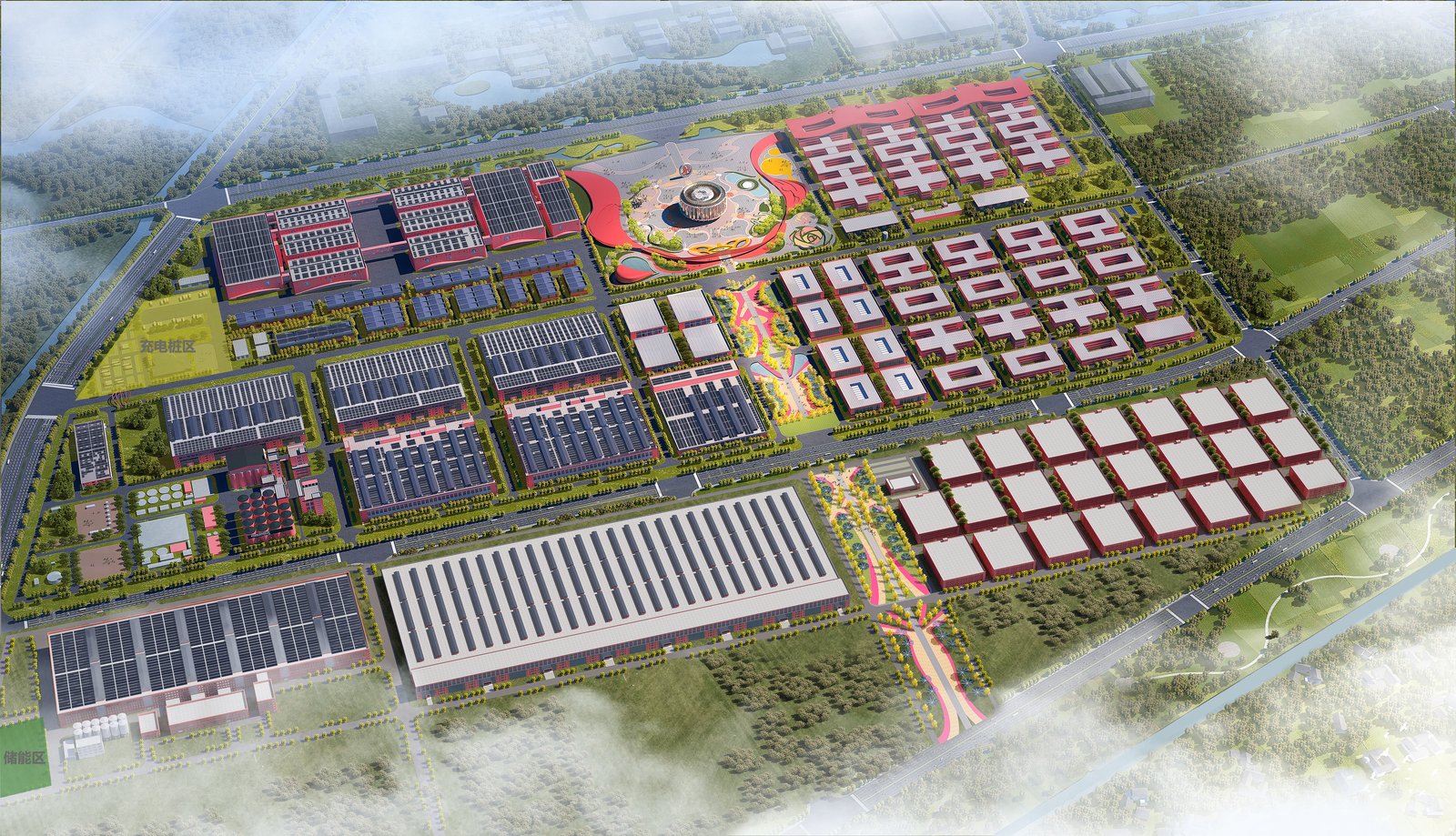
Everbright Greentech Technology Service (Jiangsu) Co., Ltd. is a wholly-owned subsidiary of China Everbright Greentech Limited(“Everbright Greentech”), a Hong Kong-listed company. The Company specializes in environmental technology services, technology development, technology promotion, and technology consulting. It is a national high-tech enterprise, a small and medium-sized technology-based enterprise, and a governing unit of Jiangsu Energy Research Association. It undertakes the functions of technology R&D, technology management, and technology services for Everbright Greentech. The Company integrates ESG concepts into its technological innovation and focuses its R&D efforts on areas such as high-value utilization of biomass, ultra-low emission treatment of flue gas, waste heat and residual energy recovery, energy-saving retrofitting of equipment, solid waste resource utilization, zero-carbon parks, and virtual power plants.
机构简介
光大绿色环保技术服务(江苏)有限公司(“本公司”)是香港上市公司中国光大绿色环保有限公司的全资子公司,专业从事环保技术服务、技术开发、技术推广与技术咨询,系国家高新技术企业、科技型中小企业及江苏省能源研究会理事单位,承担光大绿色环保技术研发、技术管理与技术服务职能。公司将ESG理念融入科技创新,聚焦生物质高值化利用、烟气超低排放治理、余热余能回收、设备节能改造、固废资源化利用、零碳园区与虚拟电厂等领域开展研发工作。

Project Overview
Jiangsu King's Luck Distillery (the "Client") is one of China's "Top Ten" listed baijiu enterprises. In the baijiu producing process, core procedures such as grain steaming and distillation consume substantial amounts of steam—approximately 5 to 15 tonnes of steam per tonne of baijiu produced—making the industry a typical high‑energy‑consumption sector. Over the years, the Client has faced prominent challenges in energy supply and management:
Supply side: Steam production relies primarily on electric boilers or natural‑gas boilers. While electric boilers entail enormous energy consumption, the continuous rise in natural‑gas prices drives up energy costs and results in higher carbon emissions from combustion. Therefore, there is an urgent need for a green, low‑carbon, and cost‑effective energy alternative.
Management side: Energy data are scattered across various workshops and equipment systems. The traditional manual data‑collection model is inefficient, with limited visualisation and unclear delineation of responsibilities for energy consumption and carbon emissions. This leads to complex energy‑consumption structures within workshops, insufficient accuracy in carbon accounting, and a lack of core data to support energy‑efficiency improvements.
In summary, the Client urgently requires a solution that achieves clean‑energy substitution and cost optimisation on the supply side, while establishing fine‑grained management and control capabilities on the management side. The overall objective is to comprehensively coordinate and optimise energy and carbon management, thereby driving a green transformation.
项目背景
江苏今世缘酒业(“客户”)是中国白酒上市公司“十强”企业。白酒酿造过程中,蒸粮、蒸馏等核心工艺需消耗大量蒸汽,每吨白酒耗蒸汽约5-15吨,属典型高耗能行业。长期以来,企业在能源供给与管理方面面临突出问题:
供给端:酿酒过程主要依赖电锅炉或天然气锅炉制取蒸汽。使用电锅炉能耗巨大,而天然气价格持续上涨推高用能成本且燃烧生产蒸汽的碳排放较高,因此绿色低碳、低成本能源替代迫在眉睫。
管理端:企业能源数据分散于各车间、设备系统,传统人工统计模式效率低下,可视化程度不高,能耗与碳排放职责划分不明确,存在车间能源消费结构复杂、碳核算精度不高、能效提升缺乏核心数据支撑等问题。
综上,企业亟需在供给端实现清洁能源替代与成本优化,在管理端建立精细化管控能力,全面统筹优化能碳管理,实现绿色转型。
Project Implementation
In response to the Client's need for clean‑energy substitution and cost optimisation, our company has conducted a comprehensive assessment of the Client's energy consumption structure, equipment efficiency, and management systems, and has developed a trinity zero‑carbon park solution integrating "biomass energy + PV‑storage‑charging + digital empowerment".
Biomass Energy Supply: The Cornerstone of Zero‑Carbon Baseload
In the Everbright Lianshui Biomass and Industrial Solid Waste Incineration Cogeneration Project, agricultural and forestry residues as well as industrial solid waste from surrounding areas are converted into green energy. This supplies 700,000 tonnes of steam annually, meeting the continuous and stable heat demand of the producing process. This approach replaces fossil fuels at the source while simultaneously realising the resource utilisation of waste, thereby building a regional resource circulation loop.
Integrated "PV‑Storage‑Charging": A Smart Microgrid
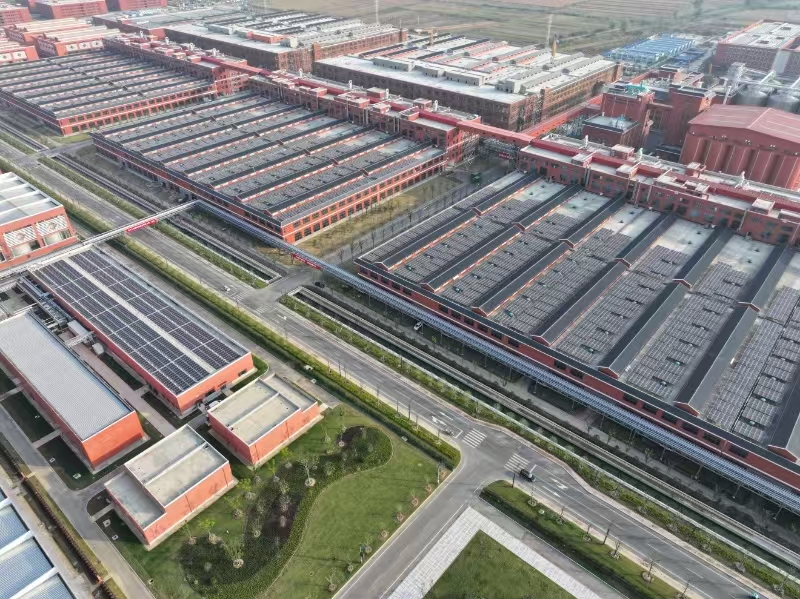
A 20MW distributed photovoltaic system is deployed across the King's Luck Distillery, operating on a "self‑consumption with surplus sold to the grid" model, effectively reducing carbon emissions from purchased electricity. A 10MW/20MWh behind‑the‑meter energy storage system is installed for peak‑shaving, valley‑filling, and demand management. Additionally, 2MW of charging piles are constructed, further unlocking the potential for flexible load regulation. By establishing a park‑level microgrid, a multi‑energy complementary system is achieved.
Smart Hub: Energy‑Carbon Management Platform
A smart energy‑carbon management platform is built to collect, monitor, and analyse energy consumption and carbon emission data across the park in real time. This enables a leap from manual estimation to precise accounting and from static aggregation to dynamic tracking, allowing for scientifically credible product carbon‑footprint calculations and providing reliable data support for zero‑carbon certification and continuous optimisation. The digital platform connects the full information chain spanning "source‑grid‑load‑storage‑carbon", forming a complete closed‑loop system of "low‑carbon supply + intelligent management".
项目实施
针对客户清洁能源替代与成本优化的需求,本公司系统评估客户用能结构、设备能效及管理制度,制定了“生物质能+光储充+数字赋能”三位一体零碳园区整体方案。
生物质供能:零碳基荷基石
依托光大涟水生物质及工业固废焚烧热电联产项目,将周边农林废弃物及工业固废转化为绿色能源,每年供应蒸汽70万吨,满足酿酒工艺的连续稳定用热需求。此举从源头替代化石能源,同时实现废弃物资源化利用,构建区域资源循环。
“光储充”一体化:智能微电网
今世缘厂区规模化铺设20MWp分布式光伏,采用“自发自用、余电上网”模式,有效降低外购电力碳排放;配置10MW/20MWh用户侧储能,用于削峰填谷与需量管理;建设 2MW充电桩,进一步释放柔性负荷调节潜力。通过构建园区级微电网,实现多能互补体系。
智慧中枢:能碳管理平台
搭建智慧能碳管理平台,实时采集、监测、分析园区能耗与碳排放数据,实现从人工估算到精准核算、从静态汇总到动态追踪的跨越,可科学核算产品碳足迹,为零碳认证和持续优化提供可信数据支撑。数字平台打通“源-网-荷-储-碳”信息共享,形成“供给低碳化+管理智能化”完整闭环。
Project Outcome
Demonstrating outstanding system synergy. Unlike most parks that rely solely on PV and storage, this project is tailored to the producing process and energy consumption characteristics, innovatively integrating the trinity of "biomass energy + PV‑storage‑charging + digital empowerment." Biomass ensures baseload, PV provides green power, storage regulates peak loads, and digital manages the entire process. The multi‑energy complementarity makes the system superior to any single‑technology pathway.
Showcasing the core advantages of biomass. As a baseload guarantee, biomass energy offers multiple benefits including stable output, fossil‑fuel substitution, safety and reliability, and waste‑to‑resource conversion. Its precise match to the continuous heat demand of the producing process is irreplaceable by PV or storage alone, constituting the essential feature that distinguishes this project from conventional zero‑carbon parks.
Delivering significant carbon reduction. By replacing natural gas with biomass and increasing the green electricity share through the microgrid, fossil energy consumption is drastically cut at the source, achieving annual CO₂ emission reductions of approximately 16,800 tonnes, while also delivering economic viability and sustainability.
Setting an industry benchmark. It has established a replicable and scalable "zero‑carbon factory" paradigm for the baijiu industry, serving as a model for the green transformation of traditional high‑energy‑consuming baijiu distillery sectors.
The project's model of "biomass for baseload, PV‑storage‑charging for peak regulation, and digital platform for management and control" precisely matches the energy consumption profile of the baijiu industry, with significant economic benefits. It can be directly replicated by similar baijiu producers nationwide, providing a practical and replicable template for the industry and regions to address climate change.
成果亮点
一是系统协同性突出。区别于多数园区单一依赖光伏储能的模式,本项目立足白酒工艺特点与用能特征,创新性融合“生物质能+光储充+数字赋能”三位一体方案。生物质保基荷、光伏供绿电、储能调峰荷、数字管全程,多能互补,系统性优于单一技术路径。
二是生物质核心优势彰显。生物质能作为基荷保障,兼具稳定输出、源头替代、安全可靠、变废为宝等多重优势,其对酿酒工艺连续供能的精准匹配是光伏和储能无法替代的,构成了本项目区别于常规零碳园区的本质特征。
三是减碳成效显著。依托生物质替代天然气、微电网提升绿电比例,从源头大幅削减化石能源消耗,年减排二氧化碳约1.68万吨,兼具经济性与可持续性。
四是行业示范引领。项目为白酒行业打造了可复制、可推广的“零碳工厂”建设范式,在传统高耗能酿造产业绿色转型中树立了标杆。
本项目的“生物质保基荷+光储充调峰+数字平台管控”模式,精准匹配白酒行业用能特征,经济效益显著,可直接推广至全国同类型白酒生产企业,为行业及区域应对气候变化提供可复制的操作样板。
Project Highlights
Environmental Benefits:
The carbon emission accounting and zero‑carbon factory assessment for this project strictly follow the Requirements of the greenhouse gas emission accounting and reporting – Part 25: Food, tobacco, alcohol, beverage and refined tea enterprises(GB/T 32151.25‑2024) and The Assessment Specification For Zero‑carbon Factory (T/CECA‑G 0171‑2022) issued by the China Energy Conservation Association. Upon project commissioning, it is estimated to save 6,216 tonnes of standard coal equivalent annually, reduce CO₂ emissions by approximately 16,792 tonnes, and cut dust emissions by 0.4 tonnes, sulfur dioxide by 1.7 tonnes, and nitrogen oxides by 2.7 tonnes. Thanks to the 700,000 tonnes of green steam supplied annually by the Everbright Lianshui Biomass Project, the Client's fossil energy consumption and pollutant emissions have been significantly reduced.
Economic Benefits:
The PV system operates on a "self‑consumption with surplus sold to the grid" model, with the Client taking priority in consuming the power at a discounted tariff, saving approximately RMB 4 million in electricity costs annually. The energy storage system generates returns through peak‑valley price arbitrage, creating a win‑win for both the investor and the energy user. The carbon emission reductions from biomass can be developed into CCER (China Certified Emission Reduction) credits and traded in the carbon market, generating additional carbon asset revenues.
Social Benefits:
This project represents an exemplary case of synergy between energy‑supplying and energy‑consuming enterprises in jointly promoting pollution reduction and carbon mitigation while fulfilling social responsibilities. It can be directly replicated in other baijiu producing enterprises, creating both demonstration and scale effects.
成果影响力
环境效益:本项目碳排放核算和零碳工厂的评定严格遵循GB/T 32151.25-2024《温室气体排放核算与报告要求 第25部分:食品、烟草及酒、饮料和精制茶企业》以及中国节能协会《零碳工厂评价规范》(T/CECA-G 0171—2022)的要求。项目投运后,每年可节约标准煤6216吨,减排二氧化碳约16792吨,减少烟尘0.4吨、二氧化硫1.7吨及氮氧化物2.7吨。得益于光大涟水生物质项目每年供应绿色蒸汽70万吨,客户企业的化石能源消耗与污染物排放大幅下降。
经济效益:光伏“自发自用、余电上网”,由客户按折扣电价优先消纳,年节约电费约400万元;储能通过峰谷价差获取收益,实现投资方与用能方共赢。生物质碳减排量可开发为CCER参与碳交易,带来额外碳资产收益。
社会效益:该项目是供能企业与用能企业协同推进减污降碳、履行社会责任的优秀案例,可直接推广至其他白酒酿造企业,形成示范效应和规模效应。
Reviews & Honors
Based on industry technical standards, the China Energy Conservation Association conducted a professional review of the project's carbon neutrality management system, clean energy substitution effectiveness, and sustainable development capabilities, and awarded King's Luck the FourStar Certificate for ZeroCarbon Factory (Type I). Concurrently, in line with provincial policy orientation, the Department of Industry and Information Technology of Jiangsu Province recognized King's Luck as a (near)zerocarbon factory. King's Luck has thus become the only baijiu distillery in Jiangsu Province to receive this dual certification, which fully demonstrates the advancement and replicability of the company's solution in the green transformation of the baijiu industry, and paves a sustainable development path that balances both economic and environmental benefits for traditional highenergyconsuming baijiu production.
评价与荣誉
中国节能协会从行业技术标准维度,对项目碳中和管理体系、清洁能源替代成效及可持续发展能力进行专业评审,授予今世缘零碳工厂(Ⅰ型)四星级证书。江苏省工业和信息化厅从省级政策导向维度,认定今世缘为江苏省(近)零碳工厂。今世缘成为江苏省唯一获此双重认证的白酒企业,充分证实了本公司提供的方案在白酒行业绿色转型中的先进性与可推广性,为传统高耗能酿造产业探索出一条兼顾经济效益与环境效益的可持续发展路径。
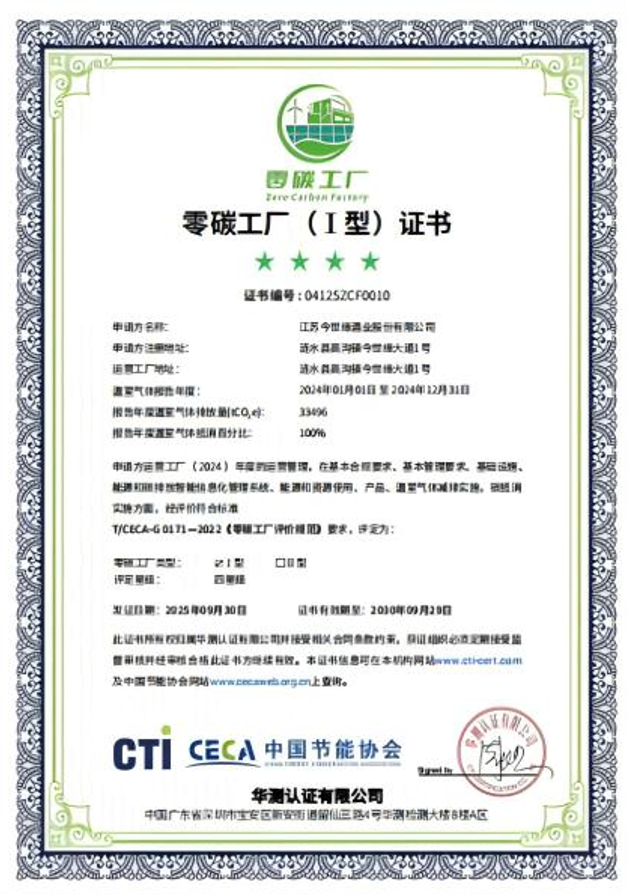
江苏省(近)零碳工厂名单和中国节能协会零碳工厂证书

近零碳社区的美育升级---- 长寿苑社区 “低碳实践 + 影像科普” 共建项目
4天前 · 来源:成都市武侯区火车南站街道长寿苑社区居民委员会 · 作者:成都市武侯区火车南站街道长寿苑社区居民委员会

以绿色金融之力推动中国新质生产力!
4天前 · 来源:国泰海通证券研究所ESG及美丽中国研究组 · 作者:国泰海通证券研究所ESG及美丽中国研究组
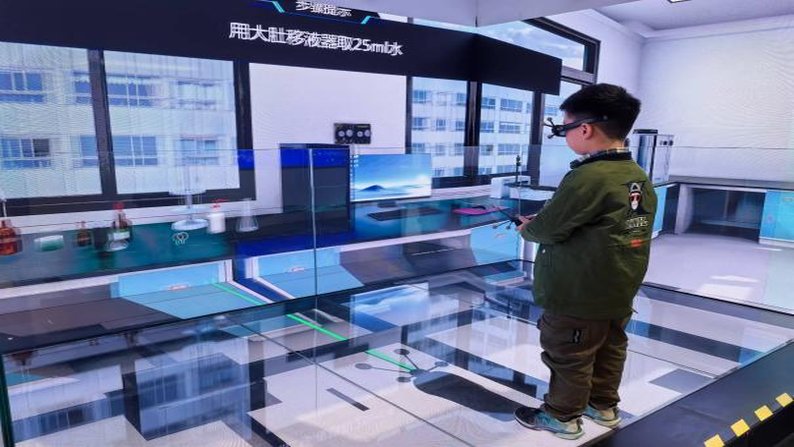
不择知行细流,蕴蓄蓝绿成深:雄安新区生态环境共享中心科普宣传空间营造雄安新区生态环境共享中心VR虚拟实验室(数字化仿真替代实体化学实验,实现科普零危废、低能耗)
6天前 · 来源:雄安新区生态环境监控中心 · 作者:雄安新区生态环境监控中心
