

Company/Organization Profile
Suzhou Mufeng Environmental Protection is rooted along the shores of Yangcheng Lake, operating under the supervision of the Suzhou Industrial Park Ecological Environment Bureau. The organization currently carries out volunteer services in water source protection, community environmental governance, and water culture dissemination, working together to build a green water town with beautiful scenery and clear waters. Since its establishment in 2016, it has reached over 300 residential communities, enterprises, and schools, conducted more than 1,000 green environmental awareness activities, and impacted over 100,000 people, contributing to the development of Suzhou as a green city.
机构简介
苏州沐风环保扎根在阳澄湖畔,业务主管单位为苏州工业园区生态环境局。目前主要开展包括水源地保护,周边社区环境治理及水文化传播等志愿服务,共筑人美水清的绿色水乡。自2016年创立以来,先后走进300多个小区、企业及学校,开展千余场绿色环保宣传活动,影响10万人次,为苏州的绿色城市建设添砖加瓦。
Project Overview
The second-floor terrace of the Times Shangcheng North Community Party-Mass Service Center in Jinji Lake Subdistrict, Suzhou Industrial Park, serves as the main passage for residents to the community activity room. Current Problem: With the increasing frequency of extreme rainfall events, the existing drainage system has become overwhelmed, creating a vicious cycle of “flooding when it rains heavily, and closure when backflow occurs.” Residents have reported that “coming home used to mean just sleeping; community life felt a bit mechanical.” The combination of idle space and social detachment among neighbors has become a persistent challenge for community governance.
Root Cause Analysis: This terrace represents a typical case of aging infrastructure in existing urban spaces—the drainage pipelines are deteriorated and outdated, with low design standards. Against the backdrop of climate change-induced increases in extreme rainfall, the carrying capacity of the original facilities is severely inadequate. Meanwhile, the long-term idleness of the space has been compounded by a lack of effective community participation and co-governance mechanisms. Improvement Goals: Guided by the “sponge city” development concept, and through Party-building-led multi-stakeholder collaboration, this “flooding pain point” is to be transformed into a community “ecological living room” integrating rainwater storage, ecological display, neighborhood interaction, and nature education—exploring a low-cost, climate-adaptive micro-renewal pathway for existing urban spaces.
Project Overview: The second-floor terrace of the Times Shangcheng North Community Party-Mass Service Center in Jinji Lake Subdistrict, SIP, serves as the main passage for residents to the community activity room. With increasing extreme rainfall, the aging drainage system has created a vicious cycle of flooding and backflow. This represents a typical case of aging infrastructure in existing urban spaces—outdated drainage with low design standards, inadequate carrying capacity under climate change, and a lack of effective community participation mechanisms. Guided by the “sponge city” concept and Party-building-led multi-stakeholder collaboration, this flooding pain point is to be transformed into a community “ecological living room” integrating rainwater storage, ecological display, neighborhood interaction, and nature education.
项目背景
苏州工业园区金鸡湖街道时代上城北社区党群服务中心二楼露台,是居民前往社区活动室的必经通道。
问题现状:随着极端降雨天气频次增加,原有排水系统不堪重负,形成“下大雨就积水、雨水倒灌就停用”的恶性循环。居民反馈“以前回家就是睡觉,社区生活有点‘机械’”,空间闲置与邻里疏离相互叠加,成为社区治理的“心病”。
原因分析:该露台为典型的城市存量空间设施老化问题——排水管网年久失修,设计标准偏低;在气候变化导致极端降雨增多的背景下,原有设施的承载能力严重不足;同时,空间长期闲置,缺乏有效的社区参与和共治机制。
改进目标:在“海绵城市”建设理念指引下,通过党建引领下的多方共建,将这一“积水痛点”改造为集雨水调蓄、生态展示、邻里交往、自然教育于一体的社区“生态客厅”,探索低成本的存量空间气候适应型微更新路径。
Project Implementation
Targeting the climate adaptation pain point of waterlogging in community public spaces, the project adopted an implementation approach of “Party-building leadership, multi-party coordination, ecological renovation, and public participation.” After six months of collaborative efforts, it was fully completed and put into operation in June 2026.
(I) Party-Building Leadership: Establishing a Six-Party Co-Building Mechanism
In November 2025, led by the community Party organization, six parties—Wendao Network, BenQ Youda Foundation, SIP Municipal Services Group, Mufeng Environmental Protection, Times Shangcheng North Community, and Shangcheng Kindergarten—formally signed a co-building agreement for the “Wendao Rain Garden” project.
Division of responsibilities and coordination among all parties: Wendao Network: Provided corporate ESG public welfare funding to secure the project’s financial foundation;
BenQ Youda Foundation: Oversaw fund management and ensured process transparency throughout the project;
SIP Municipal Services Group: Provided professional technical guidance to ensure the scientific feasibility of the plan;
Mufeng Environmental Protection: Coordinated the full-process planning, design, and construction implementation;
Times Shangcheng North Community: Conducted in-depth resident mobilization and coordination to solidify the foundation for implementation;
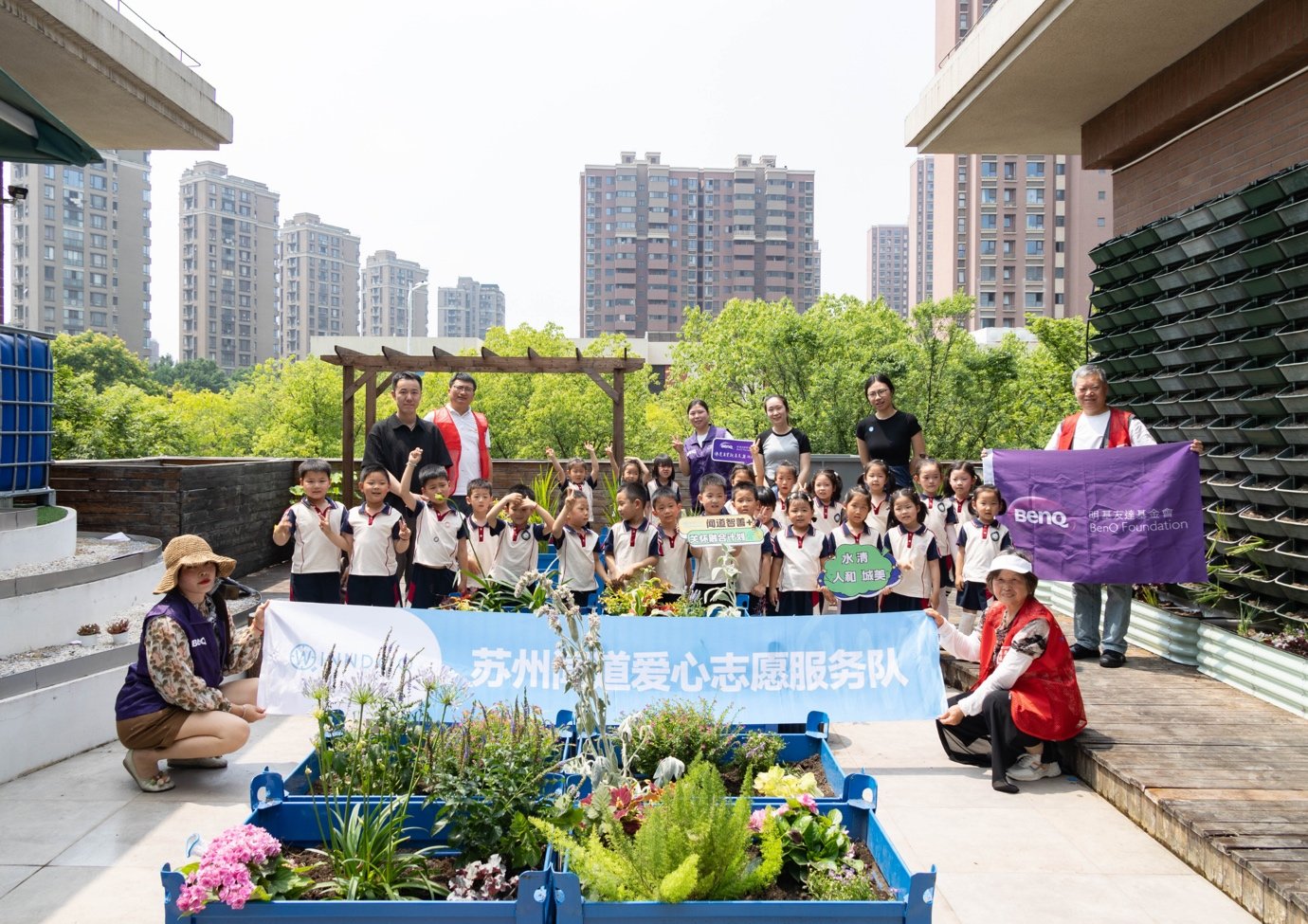
Shangcheng Kindergarten: Utilized the garden as an outdoor learning base to disseminate knowledge on climate change and the water cycle starting from early childhood.
(II) Ecological Renovation: Addressing Stormwater Issues through Nature-Based Solutions
The project abandoned the “large-scale demolition and construction” model and focused on pragmatic, ecological renovation goals:
Addressing waterlogging: The community led a comprehensive review and reorganization of the existing aging drainage pipelines, optimizing drainage and diversion design to fundamentally solve the terrace’s rainwater accumulation and backflow problems.
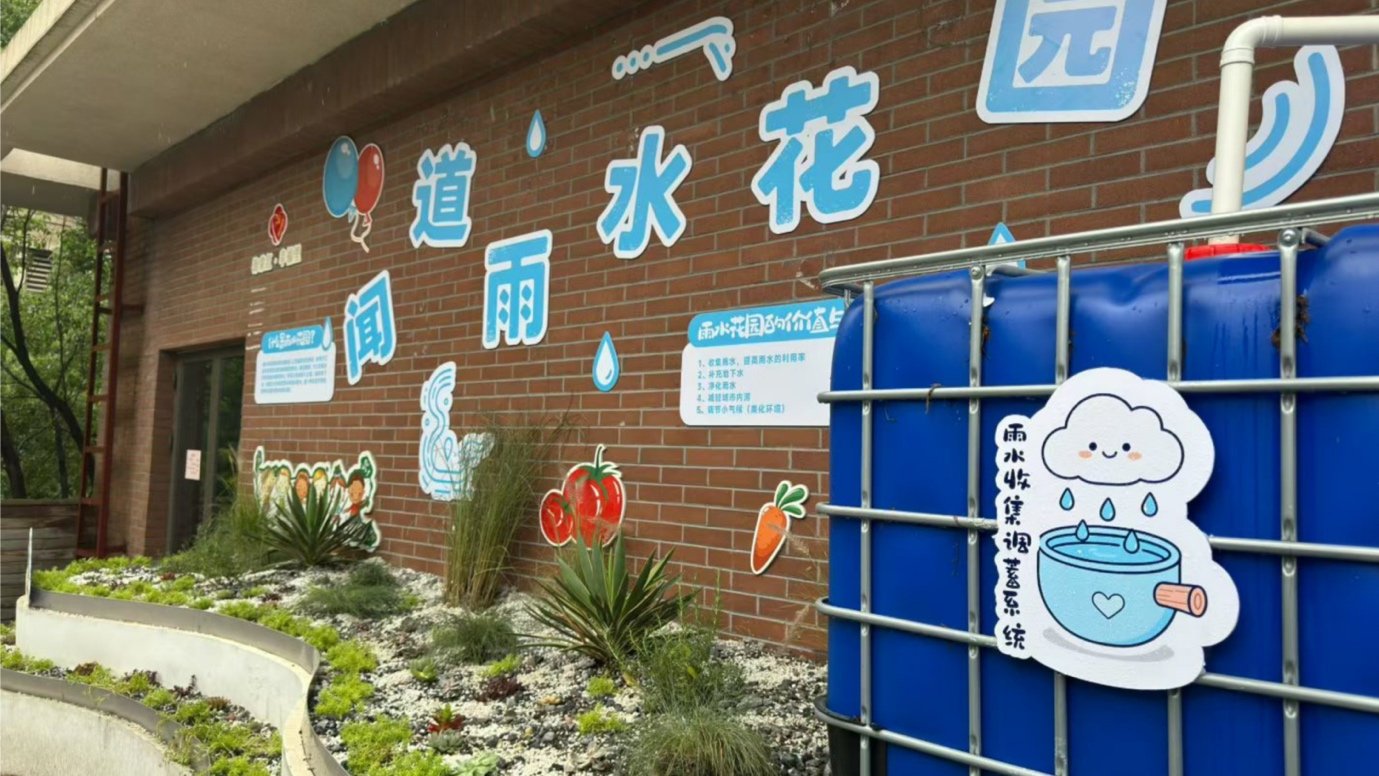
Addressing rainwater resource waste: A rainwater collection, sedimentation, and utilization system was established to capture and filter natural rainfall for routine irrigation of landscape plants, achieving rainwater recycling. The garden features six functional zones: rainwater collection and storage system, rainwater-purifying micro-wetland, vertical greening wall, succulent planting area, herb planting area, and composting area—comprehensively delivering three core functions: stormwater management, environmental beautification, and resource recycling.
Addressing construction waste: Embracing the concept of material circularity, the open-air wooden trellises dismantled during construction were re-cut and reassembled into garden compost bins for storing fallen branches and leaves to be fermented into organic fertilizer on-site—reducing construction waste generation while achieving closed-loop resource utilization.
(III) Public Participation: Cultivating Community Co-Governance Capacity
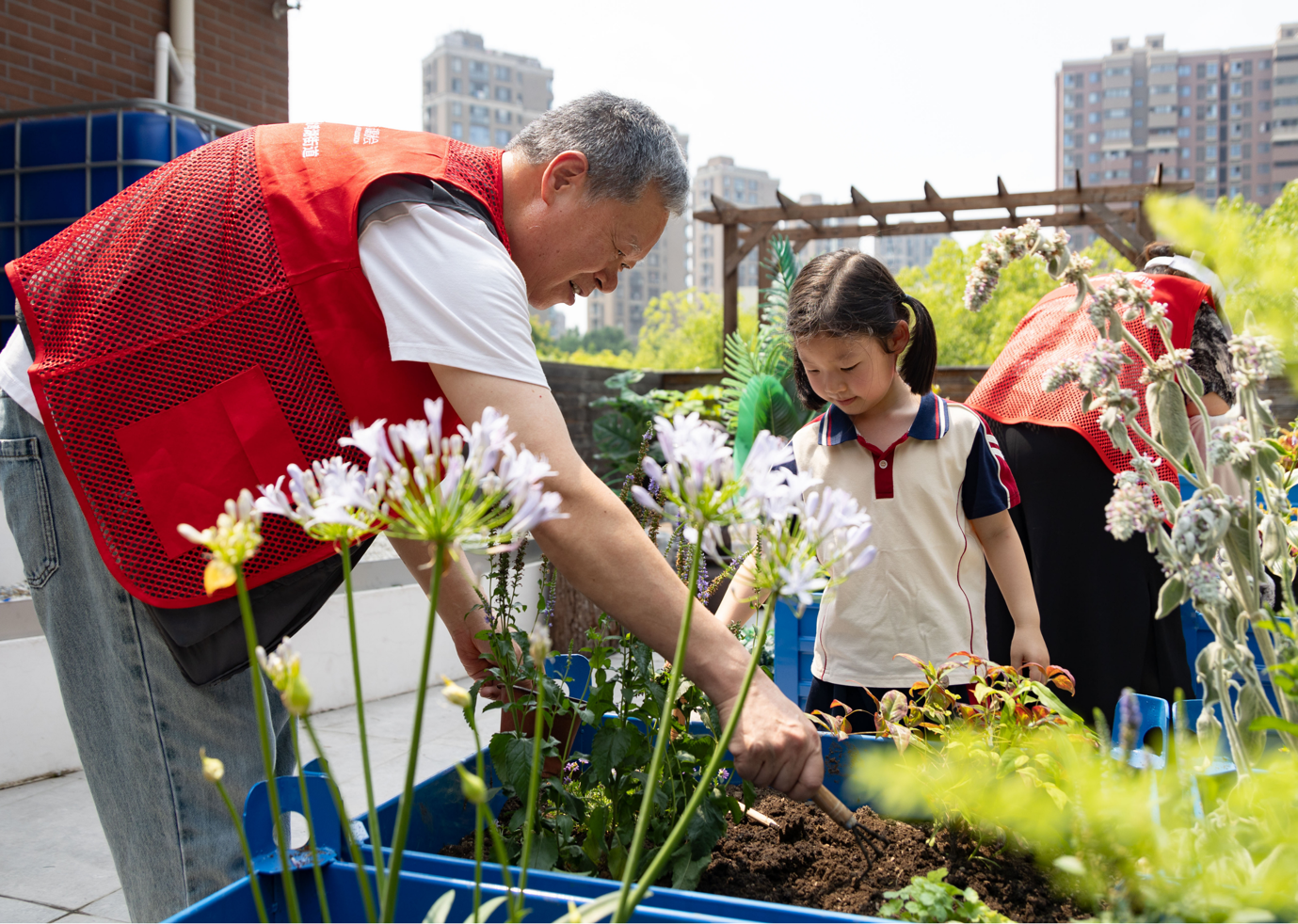
The project simultaneously launched the “Garden Co-Builder” recruitment program, guiding residents to transform from “spectators” into “builders” and “maintainers.” In January 2026, resident volunteers, design experts, and staff jointly participated in site clearing, rainwater system reconstruction, and terrain shaping. After the garden was fully completed in June 2026, community residents and kindergarten teachers and students were organized to participate in flower border planting and planter micro-renovations—with elders planting seedlings, children tending soil, and youth managing maintenance—building community ecological consensus through collective construction.
项目实施
针对社区公共空间积水内涝这一气候适应痛点,项目采取“党建引领、多方协同、生态改造、全民参与”的实施路径,历经半年协同推进,于2026年6月全面建成投用。
(一)党建引领,构建六方共建机制
2025年11月,在社区党组织牵头下,闻道网络、明基友达公益基金会、园区市政服务集团、沐风环保、时代上城北社区、尚城幼儿园六方党组织正式签约共建“闻道雨水花园”项目。
各方分工协同:
闻道网络:以企业ESG公益出资,筑牢项目资金底盘;
明基友达公益基金会:全程规范资金管理与流程透明;
园区市政服务集团:输出专业技术指导,确保方案科学可行;
沐风环保:统筹全流程规划设计、施工落地;
时代上城北社区:深耕居民动员协调,夯实落地根基;
尚城幼儿园:将花园作为户外研学基地,从孩童阶段普及气候变化与水循环知识。
(二)生态改造,以自然手法解决雨洪问题
项目实施摒弃“大拆大建”模式,聚焦实用化、生态化改造目标:
针对积水内涝问题——对原有老旧排水管路进行全面梳理和重新规整,优化排水导流设计,从源头解决露台雨天积水、大雨雨水倒灌问题。
针对雨水资源浪费问题——搭建雨水收集、沉淀、利用体系,将自然降雨统一收纳过滤,用于常态化浇灌景观绿植,实现雨水资源循环利用。花园落地六大功能分区:雨水收集调蓄系统、雨水净化小微湿地、立体绿化墙面、沙生植物种植区、香草种植区、堆肥区,全维度实现雨洪管控、环境美化、资源循环三大功能。
针对建筑废弃物问题——践行旧物循环理念,施工中拆除的露天木质花架,经过重新切割、组装,变身为花园堆肥箱,用来存放枯枝落叶就地发酵有机肥,既减少了建筑垃圾产生,又实现了资源闭环利用。
(三)全民参与,培育社区共治力量
项目同步启动“花园共建官”招募,引导居民从“旁观者”转为“建设者”和“维护者”。2026年1月,居民志愿者、设计专家、工作人员共同参与场地清障、雨水系统重塑、地形塑造等施工环节;2026年6月花园全面建成后,又组织社区居民、幼儿园师生参与花境种植与花坛微改造,老人栽苗、孩童培土、青年运维,在共同营建中建立社区生态共识。
Project Outcome
Spatial Transformation: The once “flooded wasteland” has been transformed into a “breathing, water-absorbing, living” community ecological infrastructure integrating rainwater storage, vertical greening, and nature education. The rainwater collection and storage system captures rooftop and pavement runoff on-site, while the ecological micro-wetland filters and purifies rainwater, significantly reducing peak runoff and addressing community flooding risks from extreme rainstorms. The vertical greening wall, combined with multi-layered vegetation, creates a micro-ecological cooling island that effectively mitigates localized heat island effects in the residential area.
Governance Innovation: A six-party co-building model featuring “Party-building leadership, corporate funding, foundation oversight, SOE empowerment, social organization implementation, and community + campus coordination” has been pioneered. This model establishes a complete chain from “addressing climate-induced waterlogging pain points—building resilient ecological spaces—cultivating public low-carbon water conservation action.” Suzhou Daily commented that it “skillfully solves community governance challenges with the ‘golden key’ of Party-building.”
Community Activation: The “Garden Co-Builder” mechanism has transformed residents from “spectators” into “stewardship actors.” This small garden has revitalized neighborhood interactions, reconnecting previously isolated community members through collective construction. Resident feedback: “Seeing everyone busy working for the same garden has warmed up our neighborhood relations—it feels like the community’s happiness has increased!”
Replicability: The project replaces traditional engineering renovation with low-cost, nature-based ecological approaches. The six-party co-building model is well-suited to the micro-renewal needs of existing spaces in Suzhou’s water town context, providing a scalable and replicable practical template for climate-adaptive renovation of similar communities.
成果亮点
空间优化:
(1)曾经的“积水荒地”蝶变为集雨水调蓄、立体绿化、自然科普于一体的“会呼吸、能喝水、有生命”的社区生态基础设施。
(2)雨水收集调蓄系统就地收纳屋面、路面径流,生态小微湿地完成雨水过滤净化,大幅削减峰值径流,直面极端暴雨带来的社区积水风险;
(3)立体绿化墙面搭配多层次植被形成微型生态冷源,有效缓解小区局部热岛效应。
治理创新:
探索出“党建引领、企业捐资、基金会监管、国企赋能、社会组织落地、社区+校园协同”的六方共建模式,打通“解决气候衍生积水痛点—营建韧性生态空间—培育全民低碳护水行动”全链路。
被《苏州日报》评价为“用党建‘金钥匙’巧解社区治理难题”。
社群激活:
“花园共建官”机制推动居民从“旁观者”变为“管护主体”,方寸花园打通邻里交往,原本疏离的社区人际在共建中重新联结。居民反馈:“现在看到大家为同一个花园忙前忙后,邻里关系热络了,感觉社区的幸福度提升了!”
可复制性:
项目以低成本自然生态手法替代传统工程改造,六方共建模式适配苏州水乡存量空间微更新现状,为同类型社区的气候适应型改造提供可推广、可复制的实践范本。
Project Highlights
Ecological and Environmental Benefits:
• Stormwater Storage & Water Conservation: The 1-ton capacity rainwater collection and storage system captures and retains runoff from roof and pavement surfaces within the catchment area. Based on Suzhou's average annual precipitation of 1,094mm, the system collects approximately 97.5 tons of rainwater annually for garden irrigation, while reducing carbon emissions by approximately 33 kg CO₂ equivalent per year.
• Microclimate Regulation: The 324㎡ vertical greening wall and micro-landscape planting, through plant evapotranspiration and shading, reduce ambient temperature by 0.5-1.0℃ in the surrounding area, effectively mitigating the local heat island effect in the residential community.
• Waste Recycling & Carbon Emission Reduction: The 1.7m³ composting facility processes approximately 0.5-1.0 tons of organic waste annually, producing about 0.3-0.5 tons of organic fertilizer to replenish garden soil, achieving closed-loop utilization of fallen leaves and pruning waste on-site, with an estimated annual carbon emission reduction of 90-180 kg CO₂ equivalent.
Social Impact:
The project has been reported by multiple mainstream media outlets including Gusu Evening News, Suzhou Daily, and Yinlibo. It has been promoted as a typical case of Party-building-led grassroots resilient community co-governance and co-construction.
成果影响力
生态环境效益:
雨水调蓄与减碳:1吨雨水收集调蓄系统对210平方米汇水区域的屋面及路面径流进行就地收集与滞蓄,年均可收集雨水约97.5吨,用于花园绿化浇灌,减少碳排放约33kg CO₂当量;
微气候调节:20㎡立体绿化墙与微景观种植通过植物蒸腾与遮荫作用,可使周边环境温度降低0.5-1.0℃,缓解小区局部热岛效应;
废弃物循环与碳减排:1.7m³堆肥设施年均可处理有机废弃物约0.5-1.0吨,产出有机肥约0.3-0.5吨,实现枯枝落叶就地资源化利用,年均减少碳排放约90-180kg CO₂当量。
社会影响效果:项目获《姑苏晚报》《苏州日报》及引力播等多家主流媒体报道。作为党建引领下基层韧性社区共建共治的典型案例进行推广。
Reviews & Honors
Resident volunteers who participated on-site remarked after the activity: “I can’t believe it’s the same place. Now when it rains, the paths are clean and dry, and rainwater is stored through the collection system. Having such a garden that absorbs water, cools the area, and allows the whole family to learn—it makes me so happy. This is not just a change in our community; it’s a change in our lifestyle.” — Resident volunteer, Times Shangcheng North Community
Media Coverage:
Gusu Evening News, November 6, 2025, A04: “Rain Garden Transforms Flood Hazard into Waterscape”
Suzhou Daily, June 11, 2026, A03: “Governance Innovation: ‘Flooded Roof’ Becomes ‘Rain Garden’”
Yinlibo: Governance Innovation—Six-Party Collaboration Transforms “Flooded Roof” into “Rain Garden”
Suzhou Mufeng Environmental Protection WeChat: World Environment Day | Wendao Rain Garden Launched, Creating a Suzhou Model for Climate-Resilient Communities
Suzhou Industrial Park Management Committee Official Website: Jinji Lake Subdistrict: Smart Renovation through Party-Building Co-Construction, New Scenery through Multi-Stakeholder Governance.
评价与荣誉
用户反馈:现场参与的居民志愿者在活动后说道:“简直不敢相信是同一个地方,现在下雨天路面清爽干净,雨水还会顺着收集器进行储存,我们有这么个能吸水、能降温、还能让全家人学到知识的花园,心里很开心——这不仅是小区的变化,更是我们生活方式的改变。”——时代上城北社区居民志愿者
媒体报道:
《姑苏晚报》2025年11月6日A04版《“雨水花园”水患变水景》
《苏州日报》2026年6月11日A03版《治理创新:“积水屋顶”变“雨水花园”》
引力播:治理创新—六方联动“积水屋顶”变“雨水花园”
苏州沐风环保公众号:世界环境日|闻道雨水花园落地,打造气候韧性社区苏州样板
苏州工业园区管委会官网报道:金鸡湖街道:党建共建巧改造 多元共治添新景

近零碳社区的美育升级---- 长寿苑社区 “低碳实践 + 影像科普” 共建项目
4天前 · 来源:成都市武侯区火车南站街道长寿苑社区居民委员会 · 作者:成都市武侯区火车南站街道长寿苑社区居民委员会

以绿色金融之力推动中国新质生产力!
4天前 · 来源:国泰海通证券研究所ESG及美丽中国研究组 · 作者:国泰海通证券研究所ESG及美丽中国研究组
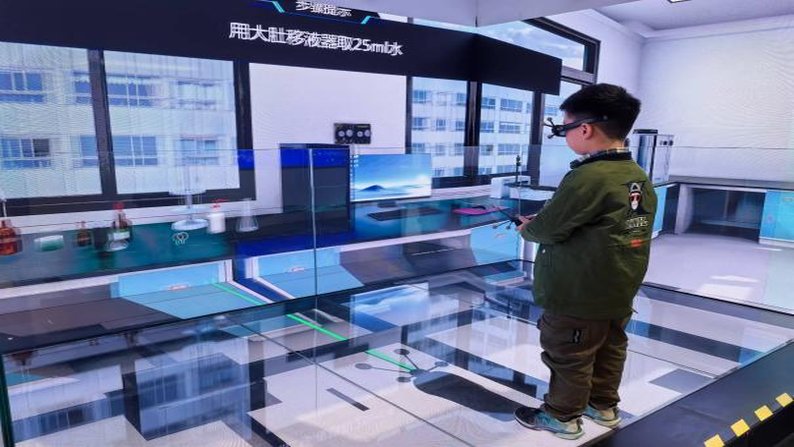
不择知行细流,蕴蓄蓝绿成深:雄安新区生态环境共享中心科普宣传空间营造雄安新区生态环境共享中心VR虚拟实验室(数字化仿真替代实体化学实验,实现科普零危废、低能耗)
6天前 · 来源:雄安新区生态环境监控中心 · 作者:雄安新区生态环境监控中心
