

Company/Organization Profile
Established in April 2024, Ordos PortLinked Energy Co., Ltd. is a joint venture between Ordos Airport Management Group Co., Ltd. and Inner Mongolia Shengyuan Group Yizheng New Energy Technology Development Co., Ltd. Committed to the national "dual carbon" goals (carbon peaking and carbon neutrality), the company provides onestop integrated energy services, including renewable energy project development, energy management system construction, and energy efficiency improvement solutions.
The company's core management team has approved green development objectives and action pathways in support of the national dualcarbon strategy. Leveraging the zerocarbon airport project, the company has built an integrated energy supply system that combines "solarstoragecharging green electricity, integrated CO₂ cooling and heating, seasonal energy storage, and AIpowered smart computing," enabling a fourinone coupled supply of cooling, heating, power, and storage. A dualcarbon science popularization and ecoculture exhibition space has been set up in the airport terminal. The company continuously implements clean energy substitution and energysaving and carbonreducing technological upgrades. It has launched multiple lowcarbon products and service solutions, promotes the replacement of apron support vehicles with electric alternatives, continuously increases the share of newenergy vehicles, reduces carbon emissions from apron operations, and supports green and lowcarbon operations throughout the entire aviation ground support process. The company communicates green and lowcarbon concepts to upstream partners and showcases its green achievements on its official website and thirdparty platforms.
机构简介
鄂尔多斯临港能源有限公司成立于2024年4月,由鄂尔多斯机场管理集团与内蒙古圣圆集团伊政新能源科技发展有限公司共同组建。公司以“双碳”目标为宗旨,致力于提供可再生能源项目开发、能源管理系统建设、能效提升方案实施等一站式综合能源服务。
公司核心管理团队已审议通过支持国家双碳战略的绿色发展目标与行动路径。依托零碳机场项目,构建“光储充绿电+二氧化碳冷热一体化+跨季节储能+AI智算”供能体系,实现冷热电储四位一体联供。在机场展厅设置双碳科普与生态文化展示空间,持续实施清洁能源替代与节能降碳技术改造。同时推动机坪保障车辆电动化更新替代,持续提升新能源车辆占比,减少机坪作业环节碳排放,从航空地面保障全流程助推绿色低碳运营。面向上游合作方传递绿色低碳理念,并在企业官网及第三方平台展示绿色低碳工作成果。
Project Overview
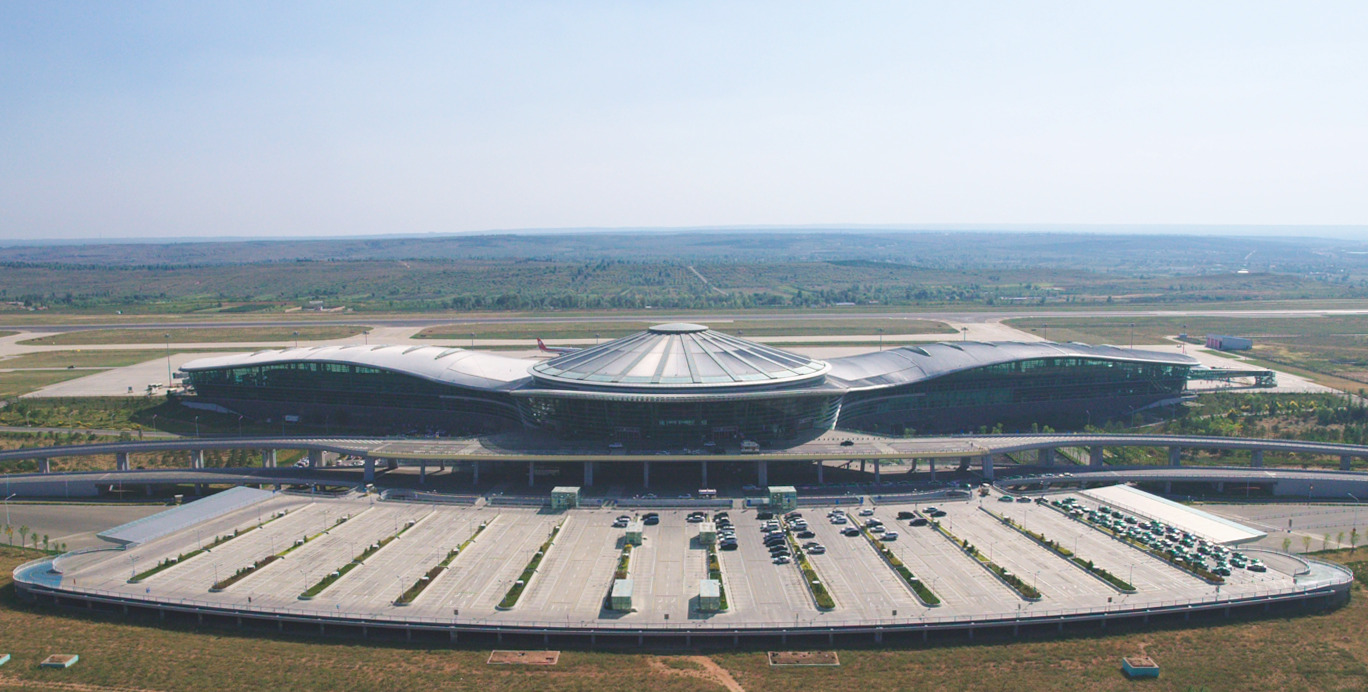
With a total floor area of 200,000 square meters, Ordos Ejin Horo International Airport is a major regional airport in the Inner Mongolia Autonomous Region. Under traditional operations, the airport consumed approximately 18 million kWh of electricity annually (including 2.15 million kWh for summer cooling), 2.6 million cubic meters of natural gas for heating, and generated about 13,000 tonnes of carbon emissions per year.
The Freonbased refrigeration system further contributed to ozone depletion and greenhouse effects. The airport faced common challenges in the civil aviation sector: high fossil fuel dependence, separation of cooling and heating supply, high energy consumption, and mismatch between green electricity generation and demand.
The project aims to build an integrated “windsolarstoragecoolingheatingpower” zerocarbon energy system and achieve dual substitution of fossil fuels and Freon refrigerants, providing a replicable technical pathway for China’s civil aviation green transition.
项目背景
鄂尔多斯伊金霍洛国际机场总建筑面积20万平方米,是内蒙古自治区重要的支线机场。在传统运行模式下,机场面临以下突出问题:
问题现状:机场每年耗电量约1800万千瓦时(其中夏季制冷耗电215万千瓦时),供暖消耗天然气260万立方米,年度碳排放量约1.3万吨,能源消耗及碳排放压力十分突出。同时,机场制冷系统使用氟利昂制冷剂,对臭氧层和气候环境构成威胁。
原因分析:民航机场作为高能耗公共基础设施,普遍面临化石能源依存度高、冷热供能分离、制冷取暖能耗大、绿电消纳与用能需求错配等行业共性痛点。机场建筑空间大、用能设备多、运营时间长,传统供能模式下能源利用效率低,冷热气供给各自独立,缺乏系统性的能源统筹管理。
改进目标:以绿色低碳理念为核心导向,依托鄂尔多斯风光资源禀赋和技术创新,构建“风—光—储—冷—热—电”一体化零碳能源体系,实现机场供能系统对化石能源和氟利昂制冷剂的双重替代,为全国民航绿色转型探索可复制推广的技术路径和运营范式。
Project Implementation
The project is implemented by Ordos Port‑Linked Energy Co., Ltd. as the executing entity, with technical support from Peking University Ordos Energy Research Institute. Construction commenced in April 2024 and was completed and put into operation in March 2025.
(1) Targeting the airport's single energy mix and high fossil fuel dependence – establishing a "solar‑storage" green electricity supply system Leveraging Ordos' abundant solar resources, an 8 MW photovoltaic power facility was constructed on idle land around the airport, coupled with a 4.6 MW/11.7 MWh multi‑energy storage system, achieving green electricity substitution under a "self‑generation and self‑consumption" model. The green electricity substitution rate has reached 80%, with clean energy accounting for over 90% of total energy consumption, and annual consumption of renewable electricity exceeding 21 million kWh.
(2) Targeting the separation of cooling and heating supply and high energy consumption – innovatively applying an integrated CO₂ cooling‑heating system Powered by green electricity, a 6×1.5 MW CO₂ integrated cooling‑heating unit replaces traditional air conditioning systems and gas boilers. The system uses CO₂ supplied by industrial enterprises as a substitute for Freon refrigerant, with an annual substitution volume of 3,500 kg, completely eliminating ozone depletion and greenhouse effects caused by the refrigeration system. Meanwhile, waste heat generated from the cooling process, along with ambient and building waste heat, is recovered to heat water, which is stored underground via geothermal wells across seasons and extracted for heating in winter. The thermal energy utilization efficiency reaches 81%, a 45% year‑on‑year improvement, while achieving zero annual cooling water consumption.
(3) Targeting unsophisticated energy dispatch and lack of systematic management – deploying an AI‑powered smart energy‑carbon management platform Over 2,000 sensors were deployed to establish an AI‑powered smart platform. Integrated with digital twin technology, the platform enables real‑time collection, monitoring, and analysis of site‑wide electricity consumption, energy supply system performance, and carbon emissions data. It precisely dispatches cooling, heating, and electricity production and conversion, achieving dynamic matching of energy supply and demand, and making carbon emissions fully visible, manageable, and controllable throughout the entire process. The platform is powered by the EnOS Intelligent IoT Operating System, equipped with a cloud‑edge collaborative microgrid control system, enabling millisecond‑level response times.
(4) Targeting low green service perception in traditional airport spaces – guiding space users to adopt low‑carbon behaviors A dual‑carbon science popularization and eco‑culture exhibition space has been set up in the airport's main terminal, communicating green value propositions to travelers and partners. Electric vehicle charging facilities have been installed in parking areas. Self‑service check‑in and electronic boarding passes are promoted to reduce the carbon footprint of passenger travel. The electrification rate of apron support vehicles is being continuously increased, gradually replacing conventional fuel‑powered special vehicles to promote green and low‑carbon operations throughout the entire aviation ground support process. Dual‑carbon concepts are integrated into the company's employee training and performance evaluation systems, with regular energy‑saving and carbon‑reduction training sessions and green office initiatives. Green service standards and energy management norms have been established for airlines, shops, ground service providers, and other on‑site entities, building a low‑carbon coordination mechanism from procurement sources to end‑user operations.
项目实施
(一)针对机场能源结构单一、化石能源依赖度高的问题——构建“风—光—储”绿电供能体系
依托鄂尔多斯风光资源禀赋,利用机场周边闲置土地建设8MW光伏发电设施,配套4.6MW/11.7MWh多元储能系统,以“自发自用”模式实现绿电替代。绿电替代比例达80%,清洁能源占比超90%,年消纳风光发电量突破2100万千瓦时。
(二)针对冷热供能分离、制冷取暖能耗大的问题——创新应用二氧化碳冷热一体化系统
以绿电驱动6×1.5MW二氧化碳冷热一体化机组,替代传统空调设备和燃气锅炉。系统以工业企业提供的二氧化碳替代氟利昂制冷剂,年替代量达3500公斤,彻底消除对臭氧层的破坏和温室效应影响。同时,利用制冷产生的余热及空气、建筑余热加热水,通过地源井跨季节储存,冬季取出供暖,热能利用效率达81%,同比提升45%,实现冷却水全年零消耗。项目由鄂尔多斯临港能源有限公司作为实施主体,北京大学鄂尔多斯能源研究院提供技术支撑。工程于2024年4月启动,2025年3月建成投运。
(三)针对能源调度粗放、缺乏系统管理的痛点——部署AI智算能碳管控平台
部署2000余个传感器,搭建AI智算平台,融合数字孪生技术,实时采集、监测、分析全场用电、供能系统和碳排放数据,精准调度冷、热、电生产与转化,实现能源供需动态匹配和碳排放全程可视、可管、可控。平台由EnOS智能物联操作系统,搭载云边协同微网控制系统,实现毫秒级响应。
(四)针对传统机场空间绿色服务感知度低的问题——引导空间使用者践行低碳行为
在机场主要展厅设置双碳科普与生态文化展示空间,面向旅客及合作伙伴传递绿色价值主张;在停车场配套建设新能源车辆充电设施,推广自助值机、电子登机牌等无纸化服务,降低旅客出行碳足迹;持续提升机坪保障车辆电动化率,逐步替换传统燃油特种车辆,从航空地面保障全流程助推绿色低碳运营。将双碳理念融入企业培训和绩效考核体系,定期开展节能降碳培训和绿色办公创建活动;面向航司、商铺、地服等驻场单位建立绿色服务标准和用能管理规范,构建从采购源头到末端运营的低碳协同机制。
Project Outcome
(1) Pre and postimplementation comparison:
The project reduces cooling/heating system energy consumption by 60% and operating costs by 50%, saves 2.6 million m³ of natural gas and 13,000 tonnes of carbon emissions annually (95.15% reduction), with residual emissions offset via CCER and local carbon inclusion mechanisms, achieving net zero. It reduces SO₂ emissions by 97 tonnes, NOx by 26 tonnes, and particulate matter by 43 tonnes per year.
(2) Innovation highlights:
Technological innovation: The project pioneers the integration of three core technologies – CO₂ integrated coolingheating supply, seasonal underground thermal storage, and AIpowered smart energycarbon management – in an airport setting. The 3,500 kg/year CO₂ refrigerant substitution eliminates Freon emissions; the seasonal thermal storage system achieves 81% efficiency (45% yearonyear improvement) with zero annual cooling water consumption, enabling fourinone coupled supply of cooling, heating, power, and storage.
Collaborative innovation: The airport management group and energy company work in synergy across the entire chain from R&D and engineering to operations. The project has established a technical solution and engineering paradigm centered on "solarstoragecharging + integrated CO₂ coolingheating + smart energy management," driving the agglomeration and development of upstream industrial chains including renewable energy equipment manufacturing, new energy storage systems, and CO₂ heat pumps.
Model innovation: An airportlevel microgrid under a "selfgeneration and selfconsumption" model enables efficient green electricity utilization and distributed energy coordination. The project simultaneously advanced management innovation, developing and certifying the Airport Company Energy Management System Manual in 2025 and establishing supporting policies including the Carbon Emission Management Measures and Regulations on Carbon Emission Monitoring, Accounting, and Reporting, forming a complete closedloop management system for energy and carbon control.
(3) Sustainability and replicability:
The project has established a complete technical standard system covering research reports, patents, and group/national standards. The technical pathway has been certified by the China Quality Certification Centre as scalable across China's civil aviation sector and various zerocarbon parks. The standardized experience, patented technologies, and operational data accumulated provide a replicable model for largescale deployment of zerocarbon energy systems in airports and large public buildings, promoting the deep integration of green energy technologies with civil aviation infrastructure.
成果亮点
(一)实施前后对比
项目建成投运后,供暖制冷系统年运行能耗降低60%、年度运行成本减少50%,年节约天然气约260万立方米,减少碳排放约1.3万吨,综合碳减排率95.15%。同时,每年减少二氧化硫排放97吨、氮氧化物26吨、颗粒物43吨。剩余5%残余碳排放通过CCER(国家核证自愿减排量)、地方碳普惠等碳信用机制全额抵销,实现整体净碳排放量≤0的目标。
(二)创新性亮点
技术创新:全球首创将二氧化碳冷热一体化供能、跨季节蓄采地源、AI智算能碳管控三大核心技术集成于机场场景,以二氧化碳替代氟利昂制冷剂,年替代量达3500公斤,消除对臭氧层的破坏和温室效应影响;跨季节储热系统热能利用效率达81%、同比提升45%,实现冷却水全年零消耗,实现冷热电储四位一体联供。
协同创新:机场管理集团与能源公司协同,打通技术研发—工程建设—运营管理全链条。项目形成了以“光储充+CO₂冷热一体化+智慧能源管控”为核心的技术方案与工程范式,有效带动了上游可再生能源装备制造、新型储能系统、二氧化碳热泵等产业链在区域内的集聚与发展。
模式创新:以“自发自用”模式构建机场园区级微电网,实现绿电高效消纳与分布式能源协同管理。项目同步推进管理创新,2025年编制完成《机场公司能源管理体系手册》并成功通过认证,制定出台《碳排放管理办法》《碳排放监测、核算和报告管理规定》等配套制度,构建了完整的能源管理与碳排放管控闭环体系。
(三)持续性与可复制性
项目已形成涵盖研究报告、专利群、团体及国家标准在内的完整技术标准体系,技术路径经中国质量认证中心审定,可在全国民航领域及各类零碳园区规模化复制推广。项目积累的标准化经验、专利技术和运行数据,为零碳能源系统在机场及大型公共建筑领域的规模化推广提供了可复制的范本,推动了绿色能源技术与民航基础设施的深度融合。
Project Highlights
Environmental benefits:The project reduces cooling/heating system energy consumption by 60% and operating costs by 50%, saves 2.6 million m³ of natural gas and 13,000 tonnes of carbon emissions annually (95.15% reduction). It reduces SO₂ emissions by 97 tonnes, NOx by 26 tonnes, and particulate matter by 43 tonnes per year. The 3,500 kg/year CO₂refrigerant substitution eliminates Freon emissions.
Economic benefits:The annual energy consumption of the heating and cooling system has been reduced by 60%, and annual operating costs have been cut by 50%.
Social impact:The project pioneers dual substitution of fossil fuels and Freon in largescale airport energy systems. It has been recognized by the China Transportation Association as internationally leading and is replicable across China’s civil aviation sector and zerocarbon parks.
成果影响力
(一)生态环境效益
项目建成投运后,年节约天然气约260万立方米,减少碳排放约1.3万吨,综合碳减排率95.15%。每年减少二氧化硫排放97吨、氮氧化物26吨、颗粒物43吨。跨季节储热系统热能利用效率达81%、同比提升45%,冷却水全年零消耗。机场制冷系统以二氧化碳替代氟利昂制冷剂,年替代量3500公斤,消除对臭氧层的破坏和温室效应影响。
(二)经济效益
供暖制冷系统年运行能耗降低60%、年度运行成本减少50%。
(三)社会影响
项目率先实现大型机场供能系统对化石能源和氟利昂的双重替代,填补零碳供能成套技术标准空白,树立民航绿色转型标杆。中国交通运输协会鉴定显示技术成果总体达到国际领先水平,可在全国民航领域及零碳园区规模化复制推广。
Reviews & Honors
(1) Authoritative Certifications and Honors
1.In 2025, the project was selected as a Green and Low-Carbon Typical Case by the Ministry of Ecology and Environment of China;
2.Ordos Ejin Horo International Airport was rated as a three-star "Dual-Carbon Airport" by the China Civil Airports Association;
3.Certification by the China Quality Certification Centre: the project has achieved a comprehensive carbon emission reduction rate of 95.15%, with overall net carbon emissions ≤ 0, demonstrating remarkable carbon reduction performance;
4.Appraisal by the China Transportation Association: the complete set of technological achievements has reached the internationally leading level overall.
5.The project has been granted one invention patent and one software copyright.
(2) Technical Standard Development
The project has achieved globally pioneering breakthroughs in three core technological areas: CO₂ integrated coolingheating energy supply, seasonal underground thermal storage, and AIpowered smart energycarbon management. It has established a complete technical standard system covering research reports, patent portfolios, academic papers, and group standards, providing systematic technical specifications for the construction of zerocarbon airports and zerocarbon parks.
(3) Next Steps
Ordos PortLinked Energy Co., Ltd. will continue to optimize the operational efficiency of the zerocarbon energy system, deepen technological iteration and upgrading, and fully promote the largescale replication and dissemination of its technological achievements across the national civil aviation sector, zerocarbon parks, and various zerocarbon scenarios, contributing more highlevel solutions to the implementation of the "dual carbon" strategy.
评价与荣誉
(一)权威认证与荣誉
1.2025年,项目入选国家生态环境部绿色低碳典型案例;
2.鄂尔多斯伊金霍洛国际机场被中国民用机场协会评为“双碳机场”三星级机场;
3.中国质量认证中心审定:项目项目综合碳减排率达95.15%,整体净碳排放量≤0,碳减排绩效显著;
4.中国交通运输协会成果鉴定:成套技术成果总体达到国际领先水平。
5.获得一项发明专利及一项软件著作权
(二)技术标准建设
项目在二氧化碳冷热一体化供能、跨季节蓄采地源、AI智算能碳管控三大核心技术领域实现全球首创突破,形成涵盖研究报告、专利群、学术论文、团体标准在内的完整技术标准体系,为零碳机场及零碳园区建设提供系统性技术规范依据。
(三)下一步计划
鄂尔多斯临港能源有限公司将持续优化零碳能源系统运行效能,深化技术迭代升级,全力推进技术成果在全国民航、零碳园区及各类零碳场景中的规模化复制推广,为“双碳”战略落地提供更多高水平方案。

近零碳社区的美育升级---- 长寿苑社区 “低碳实践 + 影像科普” 共建项目
4天前 · 来源:成都市武侯区火车南站街道长寿苑社区居民委员会 · 作者:成都市武侯区火车南站街道长寿苑社区居民委员会

以绿色金融之力推动中国新质生产力!
4天前 · 来源:国泰海通证券研究所ESG及美丽中国研究组 · 作者:国泰海通证券研究所ESG及美丽中国研究组
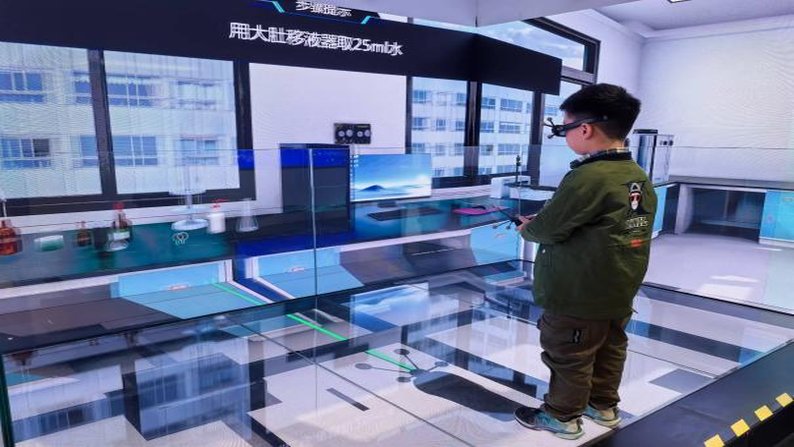
不择知行细流,蕴蓄蓝绿成深:雄安新区生态环境共享中心科普宣传空间营造雄安新区生态环境共享中心VR虚拟实验室(数字化仿真替代实体化学实验,实现科普零危废、低能耗)
6天前 · 来源:雄安新区生态环境监控中心 · 作者:雄安新区生态环境监控中心
