

Company/Organization Profile
Peking University is one of the earliest higher education institutions in China to initiate green campus development and is a member of the Global Sustainable Campus Network. The university has carried out solid work in sustainable development discipline construction, curriculum systems, campus culture cultivation, and ecological environment protection practices. Professors Tong Xin and Han Ling from Peking University have leveraged three courses—Sustainable Campus Practices, Industrial Ecology, and Community-Based Participatory Research—as entry points, and have collaborated with multiple on-campus stakeholders to establish a composting education base and a farming-reading space on the fourth-floor terrace of Jiayuan Canteen and in Weixiuyuan Community. These efforts encourage teachers, students, and community residents to jointly participate in kitchen waste valorization, compost garden construction, reuse of old items, low-value waste recycling, and farming-reading labor education, thereby exploring a new model of university-community collaborative green space regeneration driven by curriculum-based teaching.
机构简介
北京大学是中国最早开展绿色校园建设的高校之一,也是全球可持续校园联盟成员。学校在可持续发展学科建设、课程体系、校园文化培育、生态环境保护实践等方面开展了扎实工作。北京大学童昕、韩凌老师以《可持续校园实践》《产业生态学》《社区参与式研究》三门课程为抓手,联合校内多方主体在蔚秀园社区和家园食堂四楼露台打造堆肥科教基地与耕读空间,推动师生与社区居民共同参与厨余资源化、堆肥花园建设、旧物利用、低值废物回收与耕读劳动教育,探索高校课程教学驱动的校社联动绿色空间共建新模式。
Project Overview
Problem Statement
The Weixiuyuan Community adjacent to Peking University’s Yanyuan Campus is a residential area primarily for faculty and staff. It has long faced challenges such as high pressure in kitchen waste collection and disposal, underutilization of idle green spaces, and strong resident willingness to participate in environmental initiatives but with no organized channels for engagement. Meanwhile, the fourth-floor terrace of Jiayuan Canteen was originally a decorative planter area that has gradually fallen into disuse due to a lack of professional maintenance, leaving campus space resources not fully tapped. At the same time, environmental education in universities largely remains at the level of classroom theory, with students lacking authentic scenarios to translate sustainability concepts into on-the-ground practice.
Root Cause Analysis
There exist spatial and governance barriers between the campus and the community. Organic waste such as kitchen waste lacks on-site resource recovery channels. Idle spaces suffer from a lack of endogenous momentum for sustained operation after minor renovations. Moreover, there is no collaborative mechanism that enables deep participation by diverse stakeholders—including students, faculty, staff, and community residents.
Improvement Objectives
Leveraging university course-based practice as a catalyst, we aim to activate two idle spaces—the vacant land on the east side of Weixiuyuan and the fourth-floor terrace of Jiayuan Canteen—to build a collaborative system involving teachers, students, and community residents for kitchen waste valorization, compost gardens, and farming‑reading labor education. We also seek to cultivate a green community culture of co‑construction and co‑sharing, ultimately achieving an integrated green space model that combines environmental education, waste reduction, and community placemaking.
项目背景
问题现状:北京大学燕园校区周边的蔚秀园社区为教职工集中居住区,长期存在厨余垃圾收运处置压力大、社区闲置绿地活化不足、居民环境参与意愿强但缺乏组织渠道等问题;家园食堂四楼露台原为空置造景花圃,因缺乏专业打理而逐渐荒废,校园空间资源未能充分利用。同时,高校环境教育多停留在课堂理论层面,学生缺乏将可持续理念转化为在地实践的真实场景。
原因分析:校园与社区之间存在空间与治理壁垒,厨余垃圾等有机废弃物缺乏就地资源化通道,闲置空间微改造缺乏持续运营的内生动力,包含学生、教职工、社区居民的多元使用主体缺乏深度参与的协同机制。
改进目标:以大学课程实践为抓手,激活蔚秀园东侧空地与家园食堂四楼露台两处闲置空间,构建师生-社区居民协同参与的厨余资源化、堆肥花园与耕读劳动教育体系,培育共建共享的绿色社区文化,实现环境教育、垃圾减量化、社区营造三位一体的绿色空间共建目标。
Project Implementation
(1) To address the underutilization of idle spaces on campus and in the community, we implemented spatial micro‑renovations. The research team, in collaboration with the Yanyuan Subdistrict Office, jointly established the Peking University–Yanyuan Subdistrict Composting Science Education Base, transforming the community’s idle green space into a science education area that integrates kitchen waste composting, low‑carbon gardening, and environmental outreach. Community residents and students were organized to participate in composting and planting activities, making the composting process and plant growth fully visible and tangible, thereby creating a low‑carbon, visually accessible green living scene. With support from the Peking University Catering Center, the research team, together with the Peking University Gengdu (Farming‑Reading) Society, converted the previously abandoned decorative planter area on the fourth floor of Jiayuan Canteen into a “Farming‑Reading Space” campus farm, where crops such as tomatoes, mint, eustoma, and Chinese cabbage are grown to form an edible landscape. While dining, teachers and students can observe crop growth and the composting cycle at close range, achieving subtle and immersive environmental education.
(2) To address the lack of real‑world practice scenarios in university environmental education, we built a course‑driven multi‑stakeholder participation model. Relying on three courses—Sustainable Campus Practices, Industrial Ecology, and Community‑Based Participatory Research—and adopting an interdisciplinary course‑selection and project‑based practical teaching approach, students from different schools and diverse disciplinary backgrounds formed interest groups to carry out practices on specific topics such as campus waste sorting, kitchen waste composting, upcycling of old items, and low‑carbon space design. The courses moved the classroom directly to the community garden and campus farm, where students personally tilled soil, sowed seeds, watered, composted, and harvested, fully engaging in the entire crop growth cycle and the waste resource recovery process.
(3) To alleviate the pressure of kitchen waste collection and disposal, we implemented kitchen waste recycling and resource recovery technologies. At the Weixiuyuan base, we collected raw kitchen waste from the canteen and garden waste, and used composting bins and boxes for mixed composting. The kitchen waste, after sorted composting and fermentation, was turned into fertile soil, which was then used to nourish the crops and flowers planted at the base, achieving on‑site circularity from kitchen waste treatment to planting and fertilization. At the same time, we conducted experiments on black soldier fly breeding technology to examine the impact of decentralized treatment models on kitchen waste reduction. We also organized household participation in decentralized composting experiments, with the research team providing composting bins and families voluntarily signing up. At the Jiayuan Farming‑Reading Space, students personally used the fertile soil produced from kitchen waste composting for terrace planting, experiencing the entire material cycle of “kitchen waste → compost → fertile soil → food ingredients,” and gradually transformed the previously abandoned terrace into a multifunctional green space integrating edible landscape, labor education, and environmental science popularization.
(4) To expand the reach of ecological science popularization, we carried out outreach, education, and spatial embedding of science content. Based on the course interest groups, we established the “Yunmu Xinxi” Environmental Awareness Education Lecturer Team, which delivers diverse environmental awareness education activities for primary and secondary school students and community residents. At the Weixiuyuan base and the Jiayuan Farming‑Reading Space, we set up interpretive signage and guided tours covering composting process descriptions, plant identification, and waste sorting instructions, integrating ecological knowledge into daily use of the spaces. Since the project’s inception, more than ten training and outreach sessions on kitchen waste composting, waste reuse, and garden planting have been held at the Weixiuyuan base for residents and students. In collaboration with Tsinghua University’s Basic Industry Training Center and related courses, we have hosted the “Tsinghua–Peking University Low‑Carbon Campus Design Friendship Competition,” now in its seventh edition, providing a platform for students from both universities to participate in low‑carbon campus design.
(5) To address insufficient cross‑departmental coordination, we established a multi‑party collaborative mechanism. The project has received support from multiple university departments, including the General Affairs Department, the Academic Affairs Department, the Catering Center, the Campus Management Center, and the Yanyuan Subdistrict Office, forming a diversified collaborative governance structure comprising “university research team + subdistrict office + university logistics + student organizations + community residents,” which ensures the sustained and stable operation of the two spaces.
项目实施
(1)针对校园与社区闲置空间活化不足问题,实施空间微改造。课题组与燕园街道共同建成北大-燕园街道堆肥科教基地,将社区闲置绿地改造为集厨余堆肥、低碳花园、环境科普于一体的科教空间,组织社区居民与学生共同开展堆肥与种植劳动,使堆肥过程、植物生长全程可视可触,营造低碳可视的绿色生活场景。在北大餐饮中心支持下,课题组联合北大耕读社,将家园食堂四楼原先荒废的空置造景花圃改造为“耕读空间”校园农场,种植番茄、薄荷、洋桔梗、白菜等作物,形成可食地景,师生就餐时即可近距离观察作物生长与堆肥循环,实现润物无声的环境教育。
(2)针对高校环境教育缺乏在地实践场景问题,构建课程驱动的多元参与模式。依托《可持续校园实践》、《产业生态学》、《社区参与式研究》三门课程,采用跨院系选课、项目式实践教学模式,来自不同学院、多元学科背景的学生组成兴趣小组,围绕校园垃圾分类、厨余堆肥、旧物改造、低碳空间设计等具体议题开展实践。课程将课堂直接搬到社区花园与校园农场,学生亲手翻土、播种、浇水、堆肥、收获,全程参与农作物生长周期与废弃物资源化过程。
(3)针对厨余垃圾收运处置压力大问题,实践厨余循环资源化技术。在蔚秀园基地,收集食堂生厨余与园林废物,利用堆肥桶和堆肥箱进行混合堆肥,将厨余垃圾经分类堆肥发酵化作沃土,重新滋养基地种植的作物与花卉,从厨余处理到种植施肥实现就地循环;同时开展黑水虻养殖技术实验,考察分散处理模式对厨余垃圾减量化的影响;并组织家庭参与分散堆肥实验,课题组提供堆肥桶,家庭自愿报名参加。在家园耕读空间,学生亲手将厨余堆肥产出的沃土用于露台种植,全程体验“厨余—堆肥—沃土—食材”的物质循环,并将原先荒废的露台逐步打造为集可食地景、劳动教育、环境科普于一体的多功能绿色空间。
(4)针对生态科普辐射不足问题,开展科普宣教与空间植入。基于课程兴趣小组成立“云木新蹊”环境认知教育讲师团,面向中小学生和社区居民开展形式多样的环境认知教育;在蔚秀园基地和家园耕读空间设置堆肥流程说明、植物认知、垃圾分类指引等科普标识导览,将生态知识融入空间日常使用场景;项目成立以来以蔚秀园为基地面向居民和学生开展厨余堆肥、废物利用、花园种植等宣讲培训十多次;与清华大学工业基础训练中心及课程合作,举办“清北低碳校园设计友谊赛”,迄今已举办七届,搭建两校学生参与低碳校园设计的平台。
(5)针对跨部门协同不足问题,建立多方协同机制。项目获得学校总务部、教务部、餐饮中心、校园中心、燕园街道办事处等多部门支持,形成“高校课题组+街道办事处+学校后勤+学生社团+社区居民”的多元协同治理结构,保障两处空间持续稳定运行。
Project Outcome
(1) Mechanism Innovation: University Courses as the Endogenous Driving Force for Green Space Operation. Unlike traditional community garden models led by governments or NGOs, this project takes three regular courses as its core driving force, integrating teaching, research, and community practice into a unified whole. By embedding the continuous operation of green spaces into the university’s teaching system—with courses offered every academic year and students participating continuously—the space achieves a self-sustaining cycle of operation and maintenance. This endogenous mechanism effectively overcomes the persistent challenge of sustainability commonly faced by community gardens.
(2) Model Innovation: A Triple‑Driven Long‑Term Mechanism. The project breaks away from the traditional community garden model that relies solely on voluntary resident participation or short‑term external project funding. Instead, it establishes a long‑term mechanism supported by three mutually reinforcing drivers: policy and regulation, university courses, and material circulation. Beijing’s municipal solid waste sorting policy provides institutional support for on‑site kitchen waste treatment; regularly offered university courses continuously supply human and intellectual resources to the spaces; and the visible material cycle of “waste‑to‑soil” through composting consistently attracts participation from both teachers/students and residents. These three drivers complement and reinforce one another, enhancing the resilience of garden operations. The Weixiuyuan composting base has now been in continuous operation for over five years, demonstrating strong operational stability and sustainability.
(3) Spatial Innovation: Complementary and Interconnected Micro‑Renovations of Two Idle Spaces. The Weixiuyuan Composting Science Education Base serves both teachers/students and community residents, focusing on on‑site kitchen waste valorization and community placemaking. The Farming‑Reading Space on the fourth floor of Jiayuan Canteen serves on‑campus teachers and students, focusing on labor education and edible landscapes. The two spaces are interconnected through the material cycle chain of “kitchen waste → compost → fertile soil → planting → harvesting,” achieving cross‑boundary synergy between campus and community spaces.
(4) Educational Innovation: Project‑Based Practical Teaching Stimulates Youth Agency. The courses empower students to propose their own initiatives and lead investigations and transformative practices for a green campus. Students shift from being passive recipients of education to active co‑builders of green spaces. Through hands‑on labor, they experience the hardships of farming and the gifts of nature, reshape their reverence for food, and make low‑carbon living principles an everyday rhythm of campus life. At the same time, the project sparks students’ innovative spirit—for example, they have designed small‑scale waste recycling facilities, such as a soft‑plastic recycling device, which is currently being updated after initial application.
成果亮点
(1)机制创新:大学课程作为绿色空间运行的内生动力。不同于传统政府或NGO主导的社区花园模式,本项目以三门常态化课程为核心驱动力,将教学、科研与社区实践三位一体绑定,使绿色空间的持续运营嵌入大学教学体系,课程每学年开课,学生持续参与,空间即实现持续运维的内生循环机制有效破解了社区花园普遍面临的持续性困境。
(2)模式创新:项目打破了传统社区花园单一依赖居民志愿参与或外部项目短期投入的运行模式,构建了政策制度、大学课程、物质循环三重驱动相互支撑的长效机制——北京市生活垃圾分类政策为厨余就地处理提供制度保障,大学常态化开课为空间持续输入人力与智力资源,堆肥“垃圾变沃土”的可见物质循环则持续吸引师生与居民参与。三重驱动互为补充增强花园运营韧性,蔚秀园堆肥基地已持续运营超过五年,展现出较强的运行稳定性与可持续性。
(3)空间创新:两处闲置空间微改造形成互补联动。蔚秀园堆肥科教基地面向师生与社区居民,聚焦厨余就地资源化与社区营造;家园食堂四楼耕读空间面向在校师生,聚焦劳动教育与可食地景。两处空间通过“厨余—堆肥—沃土—种植—收获”的物质循环链条形成联动,实现了校园与社区空间的跨界协同。
(4)育人创新:项目式实践教学激发青年主体性。课程让学生自主提案、主导绿色校园调查与改造实践,学生从被教育者转变为绿色空间共建者,在亲手劳动中体会农耕艰辛与自然馈赠,重塑对粮食的敬畏,让低碳生活理念化作燕园日常的呼吸与心跳。同时,激发学生的创新意识,设计小型化废品回收设施,比如学生设计了软塑回收设备,初步应用后正在更新中。
Project Highlights
Ecological and Environmental Benefits: Through on‑site kitchen waste valorization, the Weixiuyuan composting base and the Jiayuan Farming‑Reading Space have formed a closed‑loop system of “kitchen waste → composting → planting → harvesting,” which has improved soil health in campus and community green spaces. Together, the two spaces have renovated approximately 600 square meters of idle green land and terrace areas, and have processed a cumulative total of dozens of tons of kitchen waste and garden waste.
Social Impact: The project has driven deep participation from diverse stakeholders, including multidisciplinary students, faculty and staff, and residents of the Yanyuan Subdistrict community. Community members have shifted from being onlookers to active co‑participants in composting and planting activities. The Sustainable Campus Practices course is highly sought‑after and oversubscribed; the three courses together attract students from all schools and departments each year. Since 2018, dozens of community‑based events have been co‑organized. The project has received media coverage from the Beijing Municipal Urban Management Commission, Beijing Television (BTV), People's Daily, China Environment News, and other outlets. In addition, universities such as Beijing Normal University, University of Science and Technology Beijing, HKUST(GZ), and Duke Kunshan University are also planning to offer similar courses, indicating that the project model has garnered broad social attention.
成果影响力
生态环境效益:项目通过厨余垃圾就地资源化,蔚秀园堆肥基地与家园耕读空间形成“厨余—堆肥—种植—收获”闭环,改善了校园绿地土壤健康,两处空间累计改造闲置绿地与露台约600平方米,累计处理数十吨厨余垃圾和园林废物。
社会影响效果:项目带动北大多学科学生、教职工、燕园街道社区居民等多元主体深度参与,社区居民从旁观者转变为堆肥与种植的共同劳动者,《可持续校园实践》课程一位难求,三门课程每年累计选课学生覆盖所有学院,2018年以来与社区联合举办数十场活动。获北京市城市管理委、北京电视台、人民日报、中国环境报等媒体报道,北师大、北科大、港科广、昆山杜克等高校也酝酿开课,项目模式获得社会关注。
Reviews & Honors
Evaluation and Feedback: The project has received positive feedback from both teachers/students and community residents. Students participating in the courses noted that by personally hauling kitchen waste, turning compost piles, sowing seeds, and harvesting, they came to deeply understand that environmental protection is not a distant ideal but a tangible part of everyday life. Community residents, through their involvement in composting and planting activities at the Weixiuyuan base and household‑scale composting experiments, have transitioned from bystanders to co‑builders of green spaces, strengthening their sense of belonging to the community and raising their environmental awareness.
Media and Industry Recognition: In May 2021, the Beijing Municipal Urban Management Commission and Beijing Television (BTV) reported on the project under the theme of “collaboration between universities and subdistricts on waste sorting.” In June 2025, China Environment News (online) published an in‑depth feature titled “Han Ling: Sowing Green Seeds in Yanyuan – Carbon Trailblazers ③,” highlighting the project’s practices. In addition, the official WeChat public accounts of Peking University, the College of Urban and Environmental Sciences, and the Catering Center have repeatedly covered activities at the Weixiuyuan composting base and the Jiayuan Farming‑Reading Space.
评价与荣誉
评价反馈:项目获得师生与社区居民的积极反馈。参与课程的学生表示,通过亲手搬运厨余垃圾、翻堆、播种、收获,深刻理解了环保不是遥远的理想,而是触手可及的日常;社区居民通过参与蔚秀园基地堆肥与种植劳动、家庭分散堆肥实验,从绿色空间的旁观者转变为共建者,增强了对社区的归属感和环境意识。
媒体/行业认可:2021 年 5 月,北京市城管委和北京电视台报道“高校与街道合作垃圾分类”项目;2025 年 6 月,中国环境网以《韩凌:在燕园播撒绿色的种子 | 碳路先锋③》为题深度报道项目实践;北京大学官方公众号、北大城环学院公众号、北大餐饮中心公众号等多次报道蔚秀园堆肥基地与家园耕读空间活动。
近零碳社区的美育升级---- 长寿苑社区 “低碳实践 + 影像科普” 共建项目
4天前 · 来源:成都市武侯区火车南站街道长寿苑社区居民委员会 · 作者:成都市武侯区火车南站街道长寿苑社区居民委员会

以绿色金融之力推动中国新质生产力!
4天前 · 来源:国泰海通证券研究所ESG及美丽中国研究组 · 作者:国泰海通证券研究所ESG及美丽中国研究组
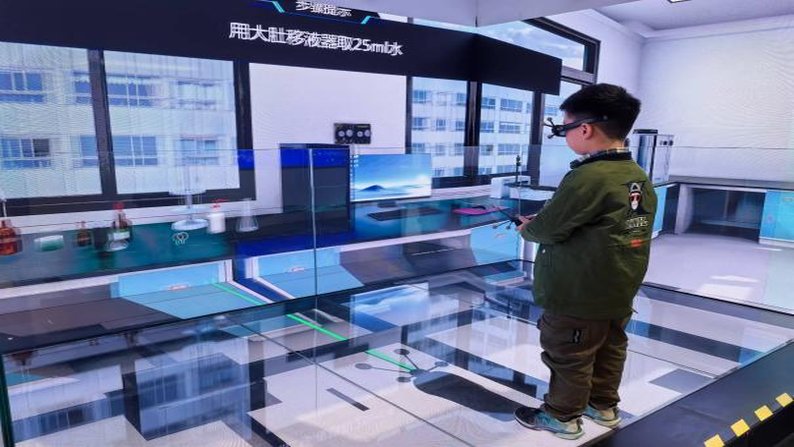
不择知行细流,蕴蓄蓝绿成深:雄安新区生态环境共享中心科普宣传空间营造雄安新区生态环境共享中心VR虚拟实验室(数字化仿真替代实体化学实验,实现科普零危废、低能耗)
6天前 · 来源:雄安新区生态环境监控中心 · 作者:雄安新区生态环境监控中心
