

Company/Organization Profile
Overview:Beijing New Aerotropolis Urban Operations Management Co., Ltd. was established in 2020 as a wholly-owned subsidiary of Beijing New Aerotropolis Holding Co., Ltd. with a registered capital of 182.5 million RMB. It serves as a platform for the holding company to revitalize urban operational assets and conduct investment and management business, thereby promoting the construction and development of the Airport Economic Zone.
Vision:Positioning itself as a world-class, service-oriented urban operator for the Airport Economic Zone, the company is committed to continuously optimizing urban operation standards, creating a benchmark for new smart cities, and providing comfortable spaces for enterprises and talent to thrive, thus supporting industrial growth.
Operations:Its core business encompasses investment, construction, and operation of integrated energy projects; operation and maintenance of municipal infrastructure; investment and operation of transportation projects; as well as cultural exhibitions and cultural tourism services.
机构简介
概况:北京新航城城市运营管理有限公司成立于2020年,是北京新航城控股有限公司的全资子公司,注册资金为18250万元,是新航城控股公司盘活城市运营资产,开展城市运营投资管理业务的平台,推动临空经济区建设发展。
愿景:定位国际一流临空区品牌服务型城市运营商,致力于持续优化临空区城市运营水平,打造新型智慧城市示范典型标杆,为企业和人才发展提供舒适空间,助力产业发展。
业务:核心业务涵盖综合能源项目投资建设运营、市政基础设施运维、交通类项目投资及运营、文化会展及文旅服务等板块。
LOGO:

Project Overview
Current Status of Issues:
The project is implemented within the Beijing Daxing International Airport Economic Zone, serving various energy stations, park energy consumers, and regional industrial users throughout the zone. The energy stations in the Airport Economic Zone are relatively scattered. The traditional integrated energy system faces practical challenges such as coarse dispatching modes, low data utilization, high operation and maintenance costs, and rudimentary carbon emission control measures. These issues make it difficult to meet the development needs of the region in promoting carbon peaking and constructing a new energy system.
Cause Analysis:
The traditional operation model lacks the technical support for the integration of AI intelligent algorithms and digital technologies. Furthermore, there are discrepancies between algorithm simulation results and actual engineering sites, and there is a lack of physical empirical platforms for algorithm verification. A closed-loop operation system integrating perception, dispatching, carbon control, and intelligent operation and maintenance has not yet been formed.
Improvement Goals:
Closely aligned with the requirements for developing new quality productive forces, the project aims to build an integrated smart energy operation system featuring “AI Perception + Smart Dispatching + Carbon Emission Control + Intelligent Operation and Maintenance.” Relying on the Xingzhan Energy Center, a comprehensive microgrid laboratory will be established to conduct real-world physical verification of multi-energy coupling. The ultimate goals are to improve regional energy efficiency, reduce operation and maintenance costs, and lower carbon emission intensity, thereby creating a demonstration model of smart and low-carbon transition for integrated energy systems that can serve as a reference for domestic industrial parks.
项目背景
问题现状:本项目实施范围为北京大兴国际机场临空经济区,服务对象涵盖临空区各能源场站、园区用能主体以及区域产业用户。鉴于临空经济区能源站点布局较为分散,传统综合能源系统存在调度模式粗放、数据利用率偏低、运维成本较高、碳排放管控手段粗放等现实问题,难以满足区域推进碳达峰、构建新型能源体系的发展需要。
原因分析:传统运营模式缺乏AI智能算法与数字化技术融合的技术支撑;算法仿真结果与工程现场存在偏差,且缺乏物理实证平台进行算法验证;尚未构建集多维感知、精准调度、碳管控与智能运维于一体的闭环运行体系。
改进目标:紧扣新质生产力发展要求,构建“AI感知+智能调度+碳排放管控+智能运维”一体化智慧能源运行体系;依托兴展能源中心建设综合微网实验室,开展多能源耦合实景物理验证;实现区域能源效率提升、运维降本、碳排放强度下降,为国内产业园区能源低碳转型及新质生产力场景化落地提供优质标杆范例。
Project Implementation
Led by Beijing New Aerotropolis Urban Operations Management Co., Ltd., this project forms an integrated consortium dedicated to “Planning + Construction + Operations + Technology + Laboratory Verification” in collaboration with the Beijing Daxing International Airport Airport Economic Area (Daxing) Management Committee, and the Beijing Academy of Science and Technology. The consortium members work in close coordination to ensure the smooth implementation of the project and the successful achievement of its goals.
1. Phase 1 (April 2025 - March 2026): Data Access and Platform Structure Setup
Current Pain Points: The existing platform suffers from low data utilization and weak data analysis capabilities, making it difficult to support the deep application of AI technology.
Implementation Measures: Complete the IoT data access and server setup for energy projects in the Airport Economic Area; develop various functional modules of the smart energy management platform to provide foundational data and platform support for AI applications.
Implementation Path: Complete data access and platform setup within 12 months; ensure the data interoperability rate of energy projects in the Airport Economic Area reaches 100%, laying the foundation for subsequent AI analysis.
2. Phase 2 (Q2 2026): Preparatory Research and Basic Construction
Current Pain Points: The lack of a comprehensive survey of on-site equipment restricts the scientific accuracy and precision of platform design and laboratory planning.
Implementation Measures: Conduct comprehensive on-site surveys to inventory the status of equipment, data, and loads; complete the procurement and deployment of sensing terminals and computing equipment; initiate the basic construction of the data center; and complete the microgrid scheme design and laboratory planning for the Xingzhan Energy Station.
Implementation Path: Complete research and basic construction within 3 months; deliver results such as research ledgers, hardware environments, and microgrid design schemes to provide a basis for platform R&D and laboratory construction.
3. Phase 3 (Q3-Q4 2026): Platform R&D and Microgrid Construction
Current Pain Points: Platform functions remain imperfect, and localization adaptation and functional debugging urgently require strengthening; the microgrid system has not yet achieved multi-energy coupling, restricting the overall system performance.
Implementation Measures: Complete the deployment, localization adaptation, and functional debugging of the smart energy management platform; develop and launch the intelligent agent steward system; complete full data access to the data center; promote the construction and equipment installation of the integrated microgrid at Xingzhan Energy Station to build a joint laboratory verification scenario; and conduct joint testing of the platform, agents, and microgrid to optimize algorithms and functions.
Implementation Path: Complete platform R&D and microgrid construction within 5 months; deliver deliverables including the smart energy management platform, intelligent agent system, data center, integrated microgrid, joint laboratory, and test reports, achieving successful system joint commissioning.
4. Phase 4 (Q1 2027): Full-Area Trial Operation and Achievement Promotion
Current Pain Points: The system has not yet undergone full-area trial operation, stability remains to be verified, and the promotion model is unclear, all of which affect the project’s implementation results.
Implementation Measures: Launch the entire system for full-area operation and carry out routine trial operations; rely on the joint laboratory microgrid to continuously conduct technical verification and model iteration; organize project materials to complete internal self-assessment and official acceptance; develop standardized solutions; implement a data asset operation model; and initiate external promotion.
Implementation Path: Complete full-area trial operation and achievement promotion within 4 months; deliver operational ledgers, acceptance materials, standardized solutions, business model proposals, and intellectual property achievements to ensure the stable operation of the project and the successful promotion of its results.
项目实施
本项目由北京新航城城市运营管理有限公司牵头,联合北京大兴国际机场临空经济区(大兴)管理委员会、北京市科学技术研究院,组建“规划+建设+运营+技术+实验室验证”一体化联合体,分工协作,确保项目顺利实施及目标圆满完成。
1.第一阶段(2025年4月-2026年3月):数据接入与平台结构搭建
现有痛点:原有平台数据资源利用率不足,数据分析能力薄弱,难以支撑AI技术的深度应用。
实施举措:完成临空区能源项目的物联数据接入、服务器布置,进行智慧能源管控平台各功能模块开发,为AI技术应用提供基础数据和平台支撑。
实施路径:在12个月内完成数据接入与平台搭建工作,确保临空区能源项目数据互通率达到100%,为后续AI分析奠定基础。
2.第二阶段(2026年Q2):筹备调研与基础建设
现有痛点:缺乏对现场设备的全面摸排,制约了平台设计与实验室规划的科学性与精准性。
实施举措:开展现场全维度摸排,梳理设备、数据、负荷现状;完成感知终端、算力设备采购部署;启动数据中台基础搭建;完成兴展能源站微网方案设计与实验室规划。
实施路径:在3个月内完成调研与基础建设,交付调研台账、硬件环境、微网设计方案等成果,为平台研发与实验室建设提供依据。
3.第三阶段(2026年Q3-Q4):平台研发与微网建设
现有痛点:平台功能尚待完善,本地化适配与功能调试工作亟需加强,微网系统尚未实现多能联动,制约系统整体效能的发挥。
实施举措:完成智慧能源管控平台部署、本地化适配与功能调试;开发上线智能体管家系统;完成数据中台全量数据接入;推进兴展能源站综合微网施工、设备安装,建成联合实验室验证场景;开展平台、智能体、微网联调测试,优化算法与功能。
实施路径:在5个月内完成平台研发与微网建设,交付智慧能源管控平台、智能体系统、数据中台、综合微网、联合实验室及测试报告等成果,实现系统联调通过
4.第四阶段(2027年Q1):全域试运行与成果推广
现有痛点:系统尚未经过全域试运行,稳定性尚待验证,推广模式不明,影响项目落地效果。
实施举措:全域上线整套系统,开展常态化试运行工作;依托联合实验室微网持续开展技术验证与模型迭代;整理项目资料,完成内部自评与官方验收;沉淀标准化方案,落地数据资产化运营模式,启动对外推广。
实施路径:4个月内完成全域试运行与成果推广,交付运行台账、验收资料、标准化方案、商业模式方案、知识产权成果等,确保项目稳定运行并实现成果推广。
(图1说明)
平台设计:平台整体采用分层架构设计,构建基础设施、数据与算法中枢、业务应用三层体系,实现多能源数据统一接入、统一治理与统一应用,支撑监控运行、能碳管理与经营管理的一体化协同。依托统一数据总线与模块化设计,平台具备良好的可扩展性,可平滑接入新站点、新能源类型和智能算法能力,持续演进为开放型、可复制的综合能源数字化平台。
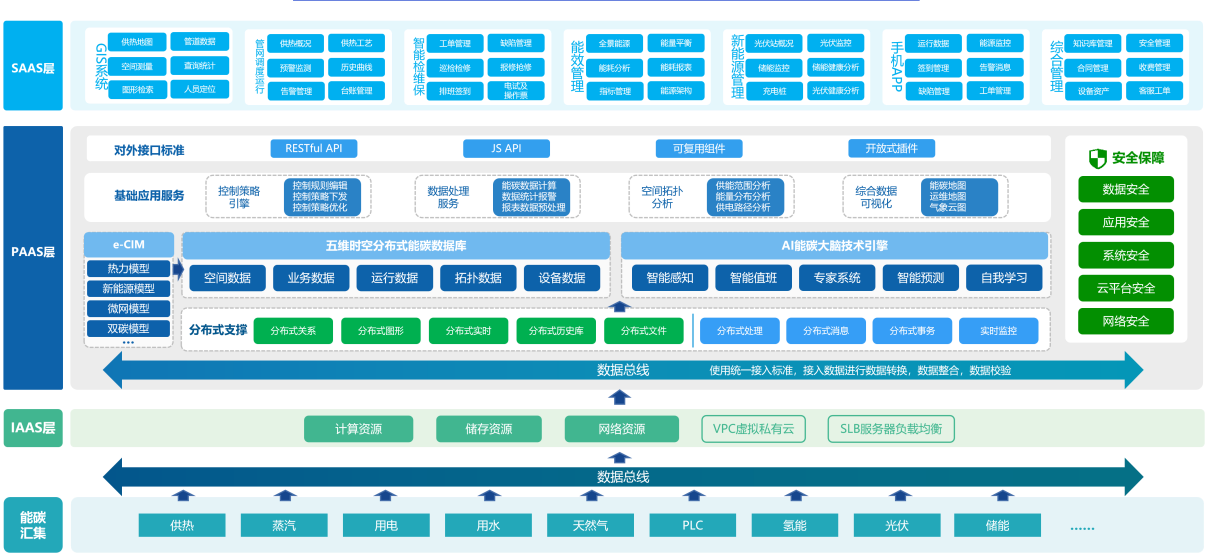
图1 智慧能源管理平台架构
(图2-5说明)
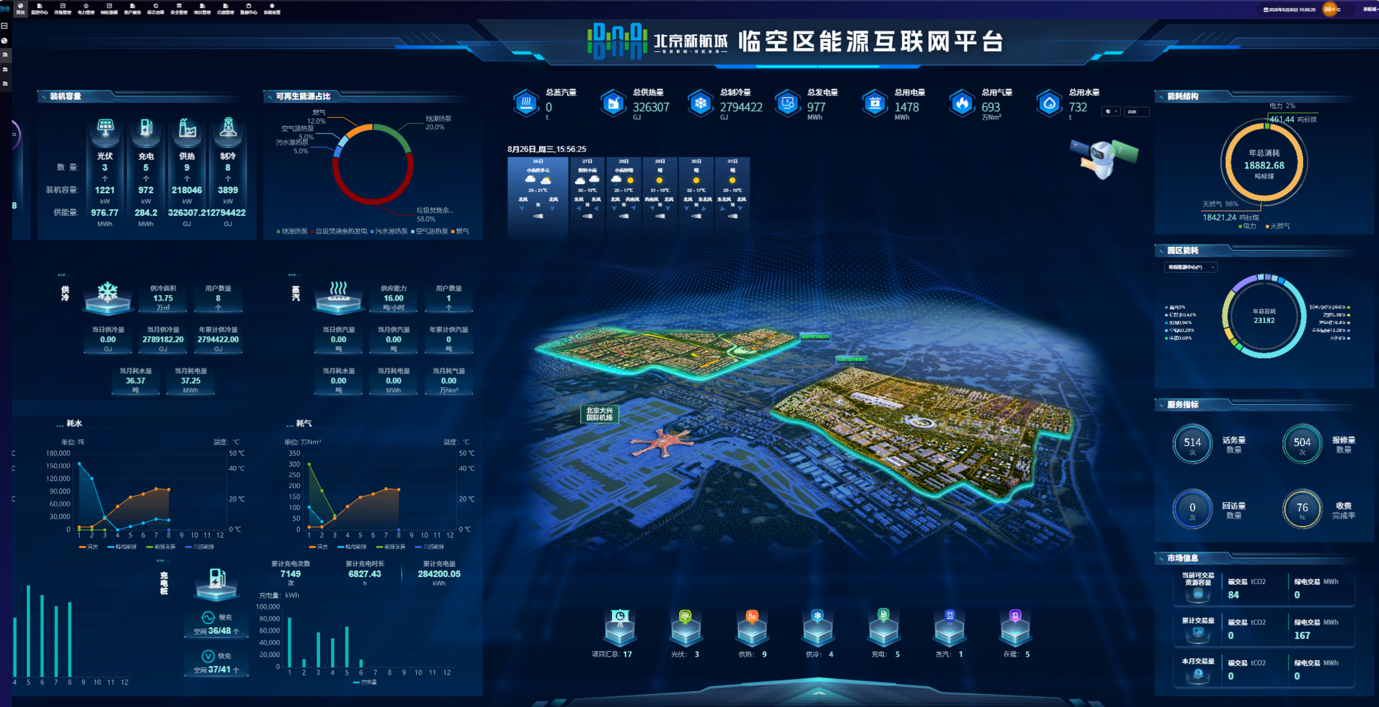
功能实现:搭建智慧能源管理平台,构建基础设施、AI算法中枢、业务应用三层体系,实现临空区内所有能源项目数据统一接入、治理、应用,支撑调度、能碳、经营管理的一体化协同。依托统一数据总线与模块化设计,平台具备良好的可扩展性,可平滑接入新站点、新能源类型和智能算法能力,并通过智能算法优化运行调度,动态管理碳排放,支撑项目有效减碳、低碳运行。
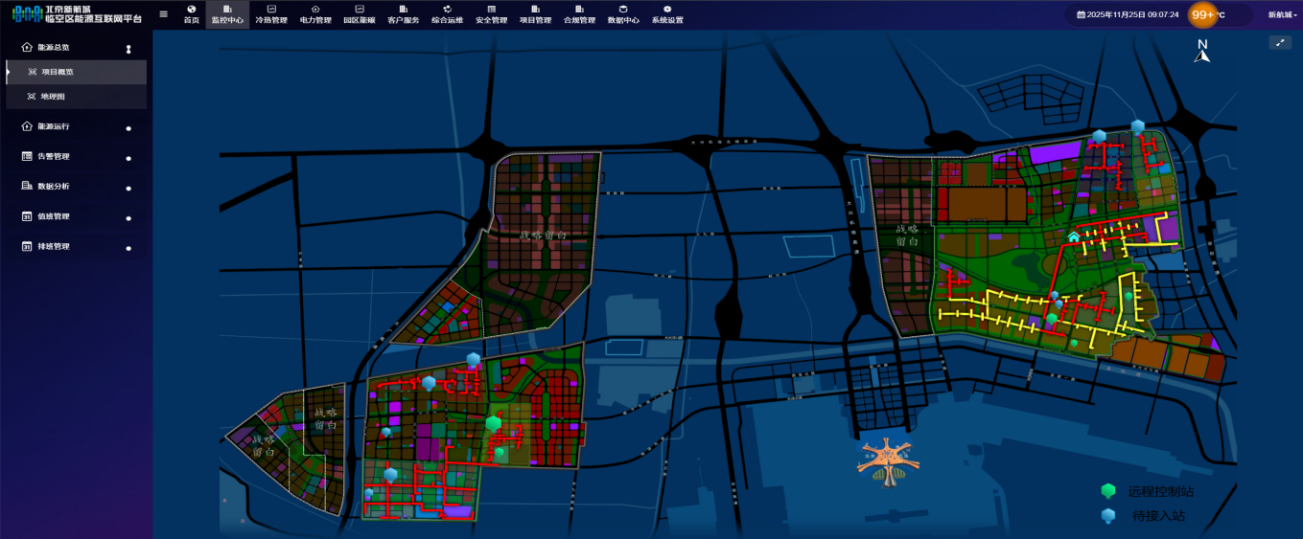
图2 临空区能源互联网平台-监控中心
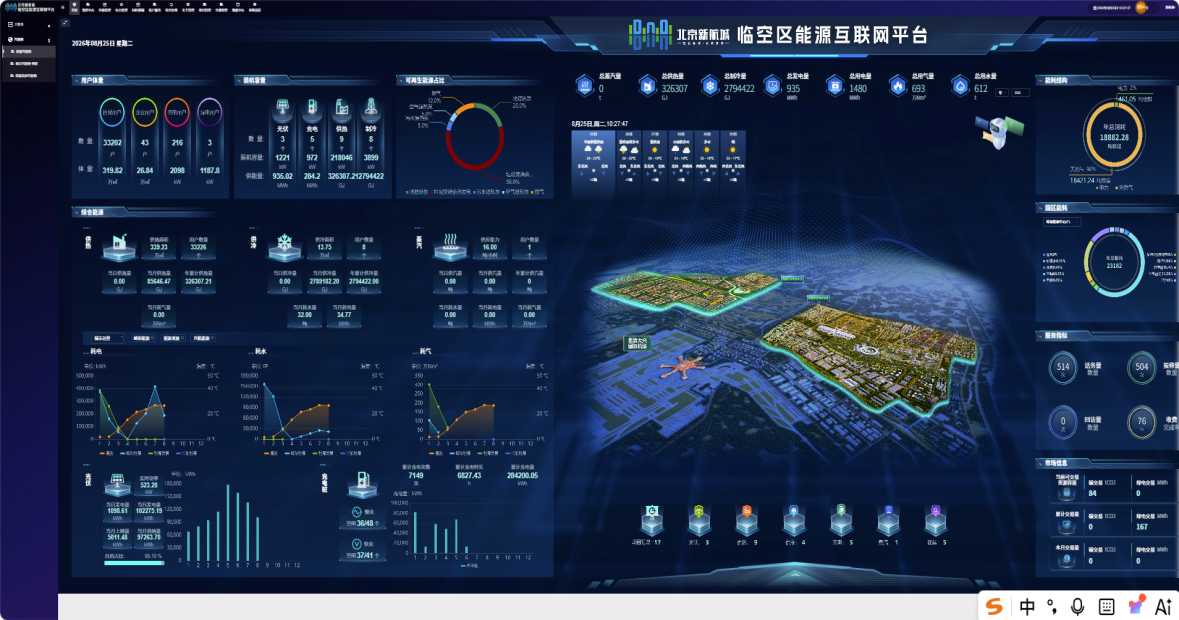
图3 临空区能源互联网平台-能源驾驶舱
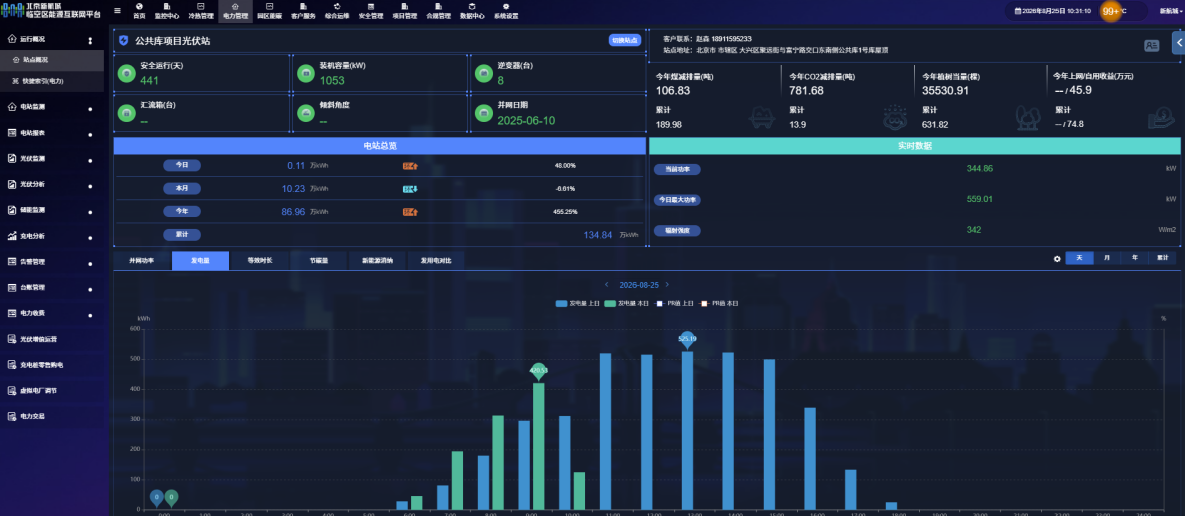
图4 临空区能源互联网平台-电力管理
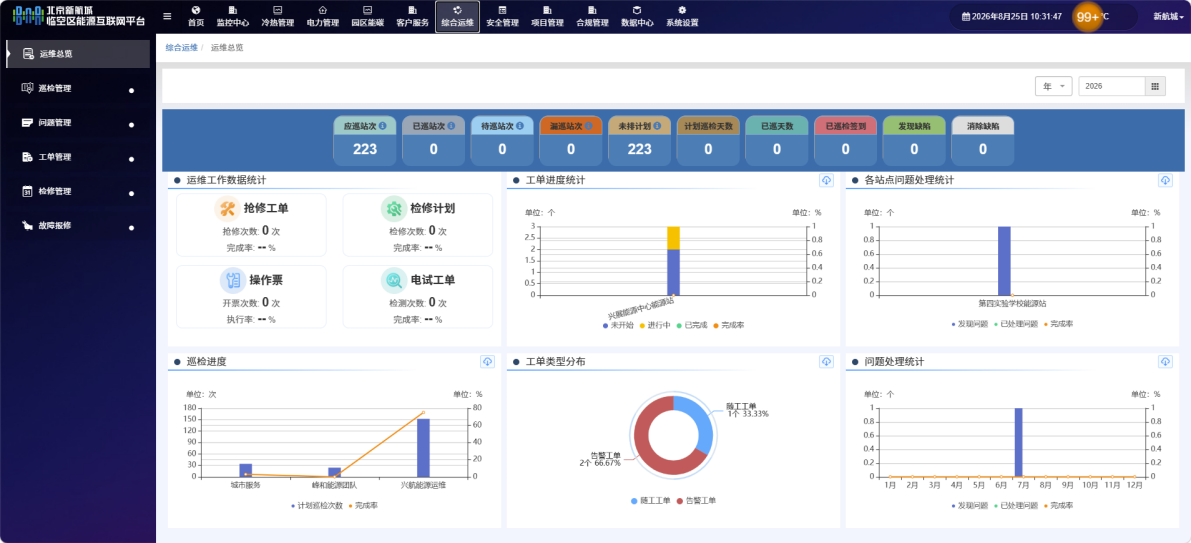
图5 临空区能源互联网平台-综合运维
(图6说明)
实验规划:高占比新能源智能微网联合创新实验室面向“源网荷储”一体化AI+场景,利用能源互联网与人工智能融合(AIoT)技术方法,打造太阳能、地热能、空气能等可再生能源与电动汽车、储能、建筑热(冷)负荷等绿色高效智慧利用的综合能源微网物理实证与示范平台。实验具有两项特色功能:一是开展建筑多热源耦合供热(冷)运行智能优化控制研究示范,为建筑负荷预测、多能耦合运行策略制定、无人运行控制等提供基础支撑;二是电-热-储智能协同调度优化研究与示范,为光储充一体、零碳园区建设以及虚拟电厂建设提供基础支撑与前瞻探索。
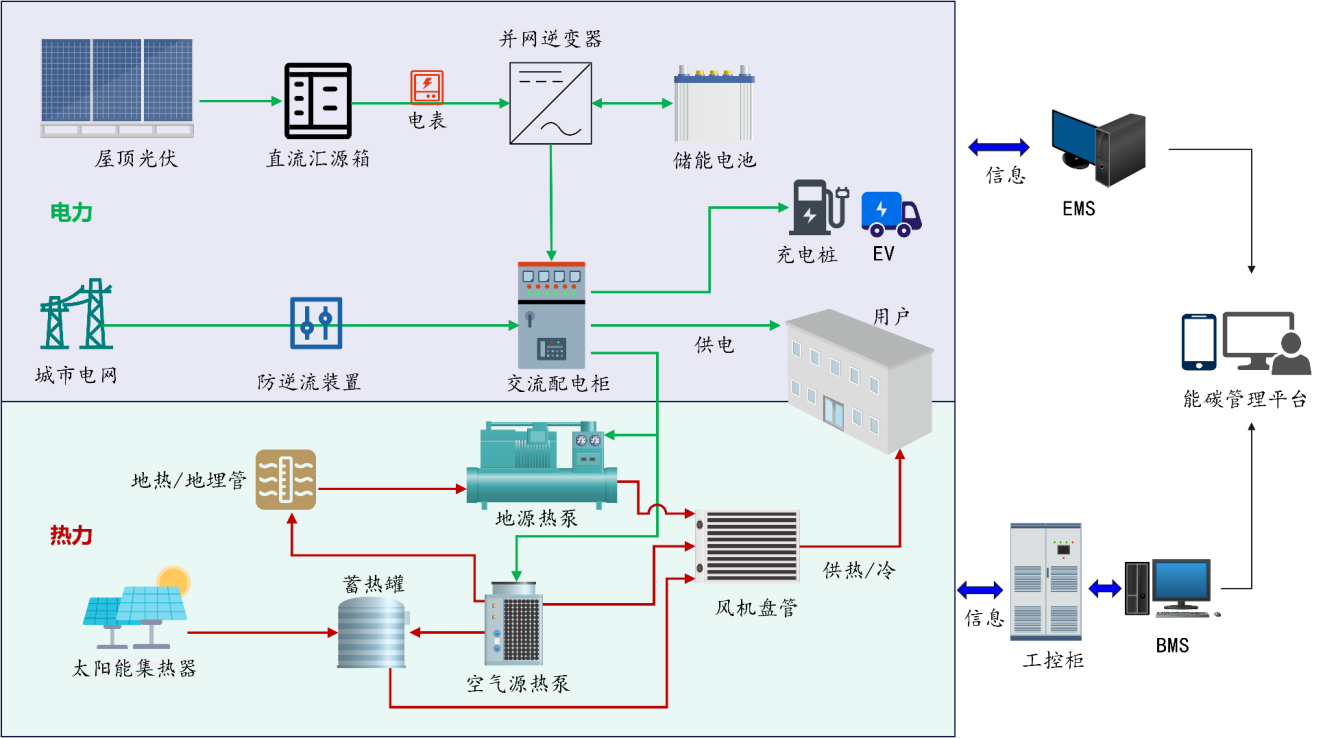
图6 电-热多能耦合系统智能优化调控实验室架构
Project Outcome
1. Technological Innovation: Deep Integration and Empowerment of AI Technology and Energy Platform
Before Implementation: Original regional energy analysis, carbon accounting, and equipment troubleshooting all relied on manual operations, lacking intelligent control measures.
After Implementation: This project integrates five types of AI technologies into the smart energy platform, fully covering core scenarios such as load scheduling, carbon management, equipment operation and maintenance, and business analysis. Relying on algorithms, it achieves precise prediction, multi-energy coordination, carbon accounting, and fault tracing. A smart management system featuring pre-event warning, intelligent decision-making, and closed-loop controllability is constructed, with an Artificial Intelligence analysis coverage rate exceeding 95%.
2.Model Innovation: Reform of the Full-Process Human-Machine Collaborative Intelligent Operation and Maintenance Model
Before Implementation: Traditional energy operation and maintenance relied on manual on-site inspections, resulting in high labor costs and delayed fault response.
After Implementation: This project innovatively builds a new operation and maintenance system of “platform decision-making, agent execution, and human-machine collaboration.” Relying on agent collaborative work, hierarchical trusteeship, and a comprehensive evaluation mechanism, it achieves full-process automated closed-loop management for energy operation and maintenance. This new model can replace more than 50% of manual operation and maintenance work, reduce operation and maintenance costs by more than 40%, and increase fault warning accuracy to more than 98%, significantly enhancing the operational efficiency of the energy system and emergency response efficiency.
3.Synergy and Mechanism Innovation: Innovation in the Integrated Industry-University-Research-Application Verification Model
Before Implementation: Previous industry algorithms relied only on simulation environments for testing, facing widespread problems of data distortion and poor adaptability to engineering migration.
After Implementation: This project pioneers a “platform plus laboratory plus operational project” trinity verification model. By establishing an electro-thermal coupled multi-energy complementary experimental platform, it completes Artificial Intelligence algorithm iteration and real-scenario verification of smart management control. Combined with a market-oriented operation mechanism, it achieves dual empowerment through technological innovation and management optimization, balancing low carbon, safety, and economic benefits in the park. The project establishes a long-term operation mechanism of routine laboratory iteration and continuous platform maintenance; the entire solution is modularly designed and can be transferred to various industrial parks and integrated energy stations, possessing good sustainability and replicability.
成果亮点
1.技术创新:AI 技术与能源平台深度融合赋能
实施前:原有区域能源研判、碳核算、设备故障排查均依靠人工操作,缺乏智能管控手段。
实施后:本项目在智慧能源平台集成五类AI技术,全覆盖负荷调度、碳管控、设备运维、经营分析核心场景,依托算法实现精准预测、多能协同、碳核算与故障溯源。构建事前预警、智能决策、闭环可控的智慧管控体系,AI分析覆盖率超95%。
2.模式创新:全流程人机协同智能运维模式革新
实施前:传统能源运维依赖人工现场巡检,人力成本高、故障处置滞后。
实施后:本项目创新构建 “平台决策、智能体执行、人机协同” 新型运维体系,依托智能体协同作业、分级托管与全维度评测机制,实现能源运维全流程自动化闭环管理。新模式可替代50%以上人工运维,运维成本下降40%以上,故障预警准确率超98%,大幅提升能源系统运行效能与应急响应效率。
3.协同+机制创新:产学研用一体化联动验证模式创新
实施前:以往行业算法仅依靠仿真环境开展测试,存在数据失真、工程迁移适配性差的普遍难题。
实施后:本项目首创“平台+实验室+在运项目”三位一体验证模式,搭建电-热耦合多能互补实验平台,完成AI算法迭代与智慧管控实景验证。结合市场化运营机制,以技术创新+管理优化双赋能,兼顾园区低碳、安全与经济效益。
项目建立实验室常态化迭代更新、平台持续运维的长期运行机制;整套方案模块化设计,可迁移应用于各类产业园区与综合能源场站,具备良好的可持续性与可复制性。
Project Highlights
The accounting boundary of this project covers more than a dozen operational energy stations in the Airport Economic Area, with a statistical cycle spanning a full year of comprehensive system trial operation. Carbon emissions are calculated in accordance with domestic regional greenhouse gas accounting standards.
Ecological and Environmental Benefits: By promoting deep regional decarbonization through AI multi-energy collaborative scheduling, the comprehensive energy utilization efficiency is increased by ≥12%; relying on granular dynamic carbon accounting, carbon emissions are made monitorable and traceable, and the regional carbon emission intensity is reduced by ≥30% compared to the baseline, supporting the implementation of regional carbon peaking goals. Furthermore, intelligent upgrades reduce operation and maintenance costs by more than 40%, achieving both cost reduction and efficiency enhancement.
Social Impact Effects: Addressing pain points in the integrated energy industry such as insufficient data utilization and high operation and maintenance costs, the project has established commercial models for operation and maintenance trusteeship, technology export, and data assetization. During the project period, full implementation across the Airport Economic Area will be completed, and subsequently, the model will be replicated and promoted to industrial parks in the Beijing-Tianjin-Hebei region and nationwide. This provides a practical model for the digital and low-carbon transformation of integrated energy, playing a leading and exemplary role in the industry.
成果影响力
本项目核算边界涵盖临空经济区十余个在运能源站点,以系统全域完整试运行年度为统计周期,碳排放执行国内通用区域温室气体核算方法。
生态环境效益:通过AI多能协同调度推动区域深度减碳,综合能源利用效率提升≥12%;依托颗粒化动态碳核算,实现碳排放可监测可追溯,片区碳排放强度较基线下降≥30%,支撑区域碳达峰落地;此外,智能化升级使运维成本下降40%以上,实现降本增效。
社会影响效果:针对综合能源行业数据利用不足、运维成本高等痛点,项目形成运维托管、技术输出、数据资产化商业化模式。项目期内完成临空经济区全域落地,后续将向京津冀及全国产业园区复制推广,为综合能源数字化低碳改造提供实践范本,发挥行业示范带动作用。
Reviews & Honors
The project has obtained phased‑level recognition from end‑users, all participating parties and internal stakeholders of the Airport‑Related Economic Zone at the current stage.
As the lead proponent, Beijing New Aerotropolis Urban Operation Management Co., Ltd., based on the actual comprehensive energy operation and maintenance business of the Airport‑Related Economic Zone, provides feedbacks that the smart energy management and control platform built under this project effectively addresses practical pain points including geographically‑dispersed energy stations, fragmented data and extensive carbon‑emission management. The platform has connected 11 operational comprehensive‑energy projects within the zone, covering a total energy‑supply area of over 4.21 million square meters. Its existing functions support core businesses such as monitoring & operation‑maintenance, energy‑consumption accounting and charge management, delivering a digital infrastructure underpinning the construction of zero‑carbon parks and ESG‑aligned green operation in the Airport‑Related Economic Zone.
Technical partners, Beijing Academy of Science and Technology, note that the verification scenario of the comprehensive‑energy micro‑grid laboratory provides a physical test environment for the coupling optimization of ground‑source and air‑source heat pumps as well as iteration of energy‑carbon algorithms, and delivers practical value for efficient consumption of regional renewable energy and improvement of comprehensive energy efficiency. The Administrative Committee of Beijing Daxing International Airport Airport‑Related Economic Zone holds that the project planning aligns with the policy orientation for low‑carbon development of the Daxing Airport‑Related Economic Zone, and its practical implementation accumulates valuable pilot experience for the zero‑carbon/low‑carbon planning and operation of the zone.
评价与荣誉
项目现阶段获得使用方、各参与方及临空区内部的阶段性认可。
牵头单位北京新航城城市运营管理有限公司结合临空经济区综合能源运维实际业务,反馈本项目搭建的智慧能源管控平台有效解决多能源站点分散、数据割裂、碳排放管控粗放的现实痛点,已接入区域内 11 个在运综合能源项目,覆盖供能面积超 421 万平方米,平台现有功能可支撑监控运维、能耗核算、收费管理等核心业务,能够为临空区零碳园区建设、ESG 绿色运营提供数字化底座支撑。
技术合作单位北京市科学技术研究院反馈,综合能源微网实验室验证场景,为地源‑空气源热泵耦合优化、能碳算法迭代提供实体测试环境,对区域可再生能源高效消纳、综合能效提升具备实操价值;临空经济区管委会认为项目规划契合大兴临空区低碳发展政策导向,项目落地实践可为片区零碳 / 低碳规划运行积累宝贵试点经验。

近零碳社区的美育升级---- 长寿苑社区 “低碳实践 + 影像科普” 共建项目
4天前 · 来源:成都市武侯区火车南站街道长寿苑社区居民委员会 · 作者:成都市武侯区火车南站街道长寿苑社区居民委员会

以绿色金融之力推动中国新质生产力!
4天前 · 来源:国泰海通证券研究所ESG及美丽中国研究组 · 作者:国泰海通证券研究所ESG及美丽中国研究组
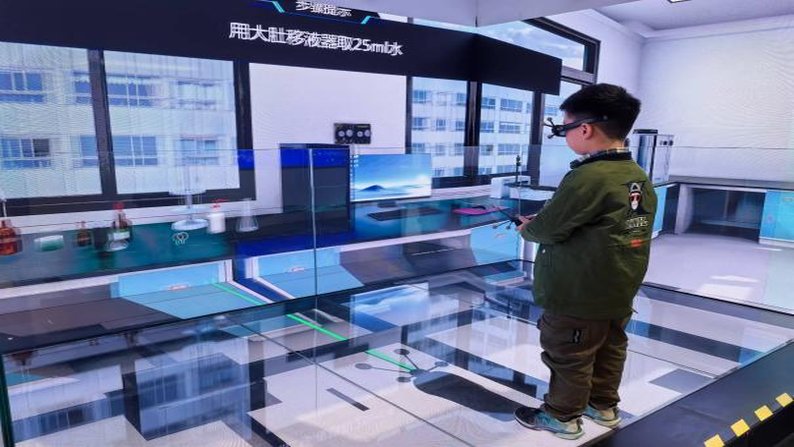
不择知行细流,蕴蓄蓝绿成深:雄安新区生态环境共享中心科普宣传空间营造雄安新区生态环境共享中心VR虚拟实验室(数字化仿真替代实体化学实验,实现科普零危废、低能耗)
6天前 · 来源:雄安新区生态环境监控中心 · 作者:雄安新区生态环境监控中心
