

Company/Organization Profile
China National Botanical Garden was officially inaugurated in April 2022 and serves as China’s core base for national biodiversity conservation. Boasting 600 hectares of green space, it undertakes core functions including exsitu plant conservation, scientific research, public education, as well as landscape exhibition. Upholding the philosophy of green and lowcarbon development, the garden has delved deep into the resource utilization of landscaping waste. Through technological upgrading, model innovation and science communication, it has built an ecological closedloop of“waste–treatment–resource recovery–reuse”. Committed to creating a replicable and scalable model for green circular development in the landscaping sector, it contributes to delivering the capital’s ecological civilization goals and the“Dual Carbon”strategy.
机构简介
国家植物园于2022年4月正式揭牌,是我国国家生物多样性保护核心基地。园区拥有600公顷绿化空间,承担植物迁地保护、科学研究、科普教育、园林展示等核心职能。园区始终践行绿色低碳发展理念,深耕园林绿化废弃物资源化利用领域,通过技术升级、模式创新与科普传播,构建“废弃物—处理—资源化—再利用”的生态闭环,致力于打造可复制、可推广的园林绿色循环发展样板,助力首都生态文明与“双碳”战略落地。
Project Overview
Rich vegetation in the North Garden of China National Botanical Garden generates large volumes of branches,leaves and weeds from routine maintenance.Before renovation,aging equipment and conventional processes brought heavy disposal pressure in peak seasons.Products were mainly primary organic fertilizer with limited application scenarios.Operations produced dust and noise,while waste landfilling outside the park brought transport carbon emission and resource loss.To meet requirements of low-carbon development and waste-free-city initiative,the 7000 square meters landscape-waste treatment plant was renovated.The whole chain of"on-site collection-centralized treatment-reuse within garden"was established to convert garden waste into organic soil improver and reduce outward landfill.Ecological science outreach was carried out based on practical results to realize coordinated ecological,economic and social benefits.
项目背景
国家植物园(北园)植被丰富,每年养护产生大量树枝、树叶、杂草类园林绿化废弃物。改造前,处理厂设备老化,处理工艺较为传统,高峰期垃圾处置压力大;产出以初级有机肥为主,产品应用场景有限;作业存在扬尘、噪音等环境问题,废弃物外运填埋会带来运输碳排放与资源浪费。为落实绿色低碳、无废城市建设要求,园区对7000平方米绿化废弃物处理厂实施改造升级,打通“就地收集-集中处置-园内回用”链条,把绿化垃圾转变为改良土壤的有机资源,减少外运填埋,同时依托成果开展生态科普实践,实现生态效益、经济效益、社会效益协同提升。
Project Implementation
Focusing on hardware upgrade,process optimization,on-site resource utilization and science outreach,Phase-I renovation of the treatment plant has been completed and a full-process standardized treatment system has been put into practice.
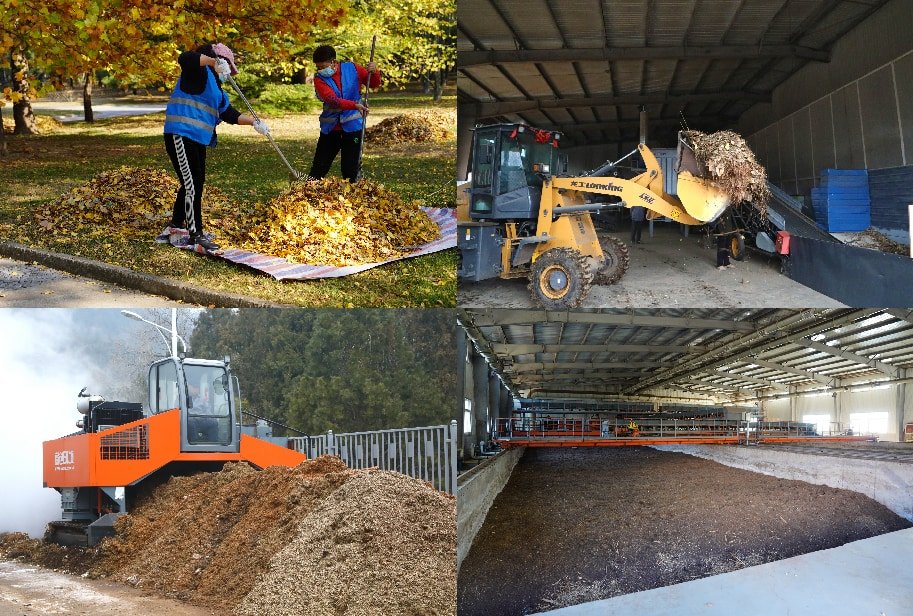
1、Hardware renovation of treatment plant.Workshops and water-electricity infrastructure were repaired.Silent comprehensive crusher,fine crusher,full-hydraulic turning machine,rotary screen,intelligent dust-control system,PLC integrated control system and closed conveying equipment were deployed.Mechanized closed-loop operations covering pretreatment,mixing,aerobic high-temperature composting,discharging and screening have been realized,mitigating dust and noise issues.The upgraded capacity fully absorbs garden-generated landscape waste and achieves zero outward transport and zero landfill.
2、Optimize treatment processes and test new technologies.Standard workflow of"crushing-mixing-material distributing-aerobic turning-discharging-screening"is adopted.Dynamic aerobic composting produces organic substrates for in-garden planting and soil improvement.Pilot tests on branch carbonization and leaf extrusion granulation are carried out to explore diversified disposal approaches for woody waste.
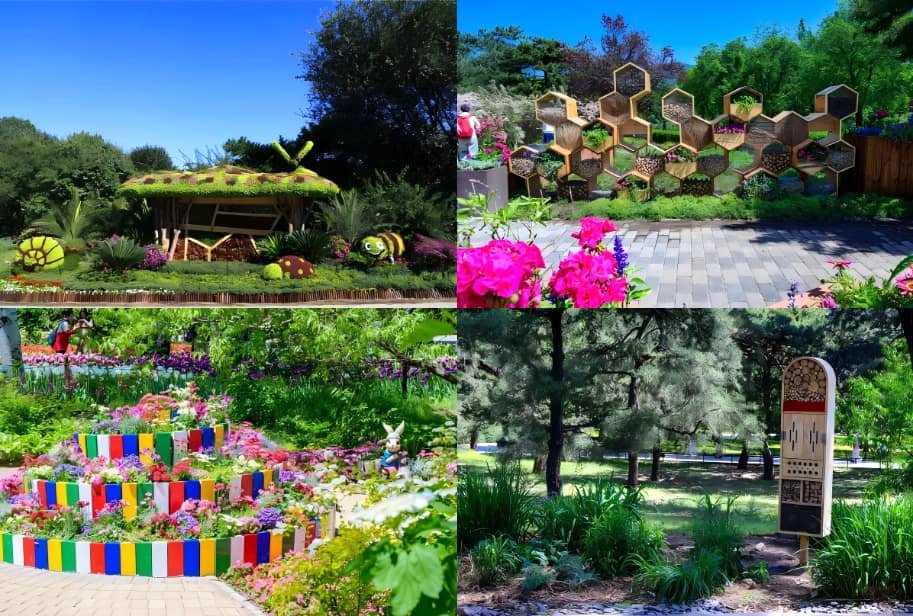
3、On-site landscape application of waste.Pruned branches are processed into garden installations such as insect hotels.Processed primary-color organic mulch is laid on flower borders and tree pits for waste absorption as well as landscape and ecological improvement.Self-produced organic substrates are applied for soil amelioration to improve soil organic matter,bulk density and water-holding capacity.
4、Cultural-creative product and science-education practice.Plant blind boxes are developed using home-made substrates.Based on real"waste-to-resource"cases,green-circular-concept research and popular-science activities are held for teenagers and visitors in existing science venues to disseminate knowledge of landscape waste recycling.
项目实施
项目聚焦设备升级、工艺优化、就地资源化利用、科普实践四大方向,完成处理厂一期升级改造,落地全流程标准化处理体系:
1、处理厂硬件升级改造。完成厂房、水电基础设施修缮,更新静音综合粉碎设备、综合细粉设备、全液压翻抛设备、滚筒筛,配套粉碎线智能控尘系统、PLC集成控制系统、密闭联动输送设备。实现预处理、混配、高温好氧翻堆发酵、出料筛分机械化闭环作业,解决原有工艺扬尘、噪音突出问题,处理能力较改造前实现显著提升,能够消纳园区全年产生的园林绿化废弃物,实现园内绿化废弃物零外运、零填埋。
2、完善资源化处理工艺,开展新技术试验。执行“粉碎-混配-布料-翻堆发酵-出料-筛分”标准化工序。以动态好氧堆肥为主生产有机基质,回用于园区绿化养护与土壤改良;同步开展树枝粉碎碳化处理技术、树叶直接挤压造粒工艺试验探索,拓展木质废弃物多元化处理路径。
3、推进废弃物景观化就地应用。将修剪枝干加工为昆虫旅馆等园林小品;把绿化废弃物加工为原色有机覆盖物,应用于花境、树穴地表覆盖,既实现废弃物消纳,又提升园区景观与生态功能。产出有机基质用于园区土壤改良,改善土壤有机质、容重与保水持水性能。
4、落地文创产品与科普实践。利用自制有机基质开发植物盲盒文创产品;依托园区现有科普场馆,结合废弃物变废为宝的现实案例,面向青少年与游客开展绿色循环主题研学科普活动,向公众传播园林绿化废弃物循环利用理念。
Project Outcome
Quantifiable improvements before and after implementation are distinct.In terms of disposal capacity,the plant suffered from aging equipment and insufficient capacity before renovation,with part of the waste requiring outward transport for landfill.After renovation,it achieves zero outward transport and zero landfill of garden green waste,stably treating about 20000 cubic meters of waste annually and producing 4000 cubic meters of organic substrates fully reused for garden maintenance.In terms of operating environment,open operations previously caused prominent dust and noise problems.After renovation,a closed production line and intelligent dust control system enable low-dust and low-noise eco-friendly operations without disturbing surrounding visiting experience.In terms of soil quality,continuous application of organic substrates has increased soil organic matter by 0.8-1.2%on average,reduced bulk density by 6%-8%,and raised field water-holding capacity by 10%-15%,steadily improving soil fertility and water retention.Economically,self-produced substrates replace purchased commercial fertilizers while saving waste haulage costs,delivering tangible cost-saving and efficiency gains.
Core innovations are clear and diversified.First,model innovation:it builds a full closed-loop disposal model of"in-garden collection–on-site treatment–garden-wide reuse",solving the common industry pain points of long-distance transportation and landfill land occupation of urban garden waste.Second,technological innovation:modular upgrading is carried out on the original plant site,integrating complete sets of technologies including silent crushing,dynamic aerobic composting and intelligent dust control to improve both treatment efficiency and environmental standards.Processes of branch carbonization and direct leaf extrusion granulation have been put into practice,reserving diversified resource utilization technical paths.Third,scenario innovation:it breaks the single production function of the treatment plant and extends to landscape applications such as insect hotels and organic mulch,as well as science popularization scenarios such as plant blind boxes and themed research activities,realizing coordinated release of ecological,landscape and social values.
Long-term operation and replicability are prominent.The project has built fixed treatment facilities and a professional operation team,formed standardized full-process operation specifications and established a normalized operation and maintenance mechanism.The positive ecological cycle of"green waste generation–substrate return to field–quality and greening improvement"has endogenous momentum for long-term stable operation.Adopting an on-site upgrading and lightweight transformation path without large-scale new construction land,the project features mature technology and controllable investment,which is adaptable to the existing conditions of most urban parks and botanical gardens in China and has strong promotion and replication value.
成果亮点
实施前后量化对比成效鲜明。处置效能上,改造前设备老化、产能不足,部分废弃物需外运填埋;改造后实现全园绿化废弃物零外运、零填埋,年稳定消纳废弃物约2万立方米,年产有机基质4000立方米并全部回用于园区养护。作业环境上,改造前开放式作业扬尘、噪音问题突出;改造后采用密闭化生产线与智能控尘系统,实现低粉尘、低噪声环保作业,不干扰周边游览体验。土壤质效上,经有机基质持续改良,园区绿化土壤有机质平均提升0.8%-1.2%,容重降低6%-8%,田间持水量提高10%-15%,土壤肥力与保水能力稳步提升。经济效益上,自产基质替代外购商品肥,同步节约清运处置成本,降本增效直观可感。
核心创新维度清晰多元。一是模式创新,打造“园内收集—就地处理—全域回用”全闭环处置模式,破解城市园林废弃物长距离运输、填埋占地的行业共性痛点。二是技术创新,依托原有厂区实施模块化升级,集成静音粉碎、动态好氧堆肥、智能控尘成套技术,实现处理效能与环保标准双提升;同步落地树枝粉碎碳化、落叶直接挤压造粒工艺,储备多元化资源化技术路径。三是场景创新,突破处理厂单一生产功能,延伸出昆虫旅馆、有机覆盖物等景观应用,以及植物盲盒、主题研学等科普场景,实现生态、景观、社会价值协同释放。
长效运行与可复制性突出。项目已建成固定处理设施与专业化运维队伍,形成标准化全流程作业规范,建立常态化运维保障机制;“绿化产废—基质还田—提质增绿”的正向生态循环具备内生动力,可长期稳定运行。项目采用原址升级、轻量改造的建设路径,无需新增大规模建设用地,技术成熟、投资可控,适配国内多数城市公园、植物园的现有条件,具备较强的推广复制价值。
Project Highlights
Ecological and environmental benefits:It completely abandons the previous model of transporting landscape waste out-of-park for landfill.On-site resource utilization of waste is realized within the 600-hectare green space,reducing land occupation and carbon emissions caused by landfill.Self-produced organic substrates continuously improve garden green-belt soil and enhance the overall quality of green-space soil.
Social impact:As a practical large-scale case of on-site landscape-waste disposal among municipal parks,it provides tangible reference for waste management in urban park green spaces.Treatment outputs are converted into science-education resources to spread the ecological circular concept of"turning waste into treasure"to the public,giving full play to the ecological-education value of public green spaces.
Economic benefits:All organic substrates are reused on-site to replace purchased commercial fertilizers.Costs related to fertilizer procurement and waste collection&disposal are saved,realizing the transformation from ecological value to practical economic value.
成果影响力
生态环境效益:彻底改变园林绿化废弃物外运填埋模式,在600公顷绿化空间内完成废弃物就地资源化,减少填埋占地与填埋碳排放;自产有机基质持续改良园区绿化土壤,提升绿地土壤质量。
社会影响效果:作为市属公园中规模化就地处理园林绿化废弃物的实践案例,为城市公园绿地绿化废弃物处置提供现实可参考样本;将处理成果转化科普教育资源,面向公众传递“变废为宝”生态循环理念,发挥公共空间生态教育价值。
经济效益:有机基质全部就地回用,替代外购肥料,节约肥料采购、废弃物清运处置相关成本,实现生态价值向现实经济价值转化。
Reviews & Honors
The project has received wide recognition and positive feedback since its operation.
From the public perspective,landscape applications of waste such as insect hotels and primary-color organic mulch have become characteristic ecological scenes in the garden.Plant blind boxes and circular-themed science activities keep gaining popularity,with visitors and research participants showing significantly enhanced awareness and recognition of"turning landscape waste into treasure".
In terms of media communication,the practical achievements of the project have been reported by many mainstream media including CCTV News,People's Daily,Guangming Daily and Beijing Daily,covering a wide range of audiences.It has effectively conveyed the concept of green circular development of urban gardens to the public,and further amplified the demonstration effect of ecological practices in public spaces.
At the industry level,as a typical practice of large-scale on-site disposal of landscape waste in municipal parks,its renovation path and technical scheme of on-site upgrading and closed-loop operation have received extensive attention and recognition.It provides a practical operable sample for the resource utilization of landscape waste in Beijing.As a landmark achievement of China National Botanical Garden in practicing ecological civilization construction and promoting green and low-carbon transformation,the project has strong industry promotion value.
评价与荣誉
项目运行以来获得多方认可与正向反馈。
公众层面,昆虫旅馆、原色有机覆盖物等废弃物景观化应用成为园区特色生态场景,植物盲盒、循环主题科普活动参与热度持续提升,游客与研学群体对园林绿化废弃物“变废为宝”的认知度与认可度显著增强。
媒体传播层面,项目相关实践成果先后被央视新闻、人民日报、光明日报、北京日报等多家主流媒体报道,社会传播覆盖面广,有效向大众传递了城市园林绿色循环发展理念,进一步放大了公共空间生态实践的示范效应。
行业层面,作为市属公园规模化就地处置绿化废弃物的典型实践,其原址升级、闭环运营的改造路径与技术方案得到业内广泛关注与认可,为北京市园林绿化废弃物资源化利用提供了可落地的实操样本。该项目是国家植物园践行生态文明建设、推进绿色低碳转型的标志性成果,具备较强的行业推广价值。

近零碳社区的美育升级---- 长寿苑社区 “低碳实践 + 影像科普” 共建项目
4天前 · 来源:成都市武侯区火车南站街道长寿苑社区居民委员会 · 作者:成都市武侯区火车南站街道长寿苑社区居民委员会

以绿色金融之力推动中国新质生产力!
4天前 · 来源:国泰海通证券研究所ESG及美丽中国研究组 · 作者:国泰海通证券研究所ESG及美丽中国研究组
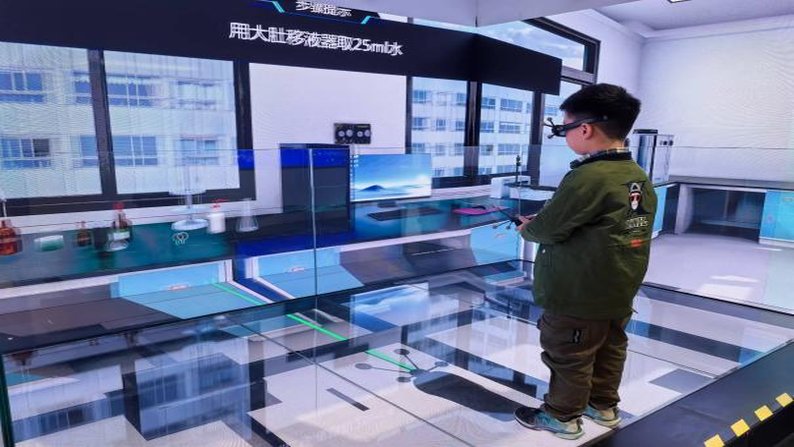
不择知行细流,蕴蓄蓝绿成深:雄安新区生态环境共享中心科普宣传空间营造雄安新区生态环境共享中心VR虚拟实验室(数字化仿真替代实体化学实验,实现科普零危废、低能耗)
6天前 · 来源:雄安新区生态环境监控中心 · 作者:雄安新区生态环境监控中心
