

Organization Profile
Xinnong Community Residents' Committee (Lead Applicant & Implementing Body) Located in Hushu Subdistrict, Jiangning District, Nanjing, Xinnong Community governs 13 natural villages. It features a typical polder water-village landscape with greenhouse vegetable planting as a dominant agricultural industry. Since 2023, the community has revitalized understory spaces, building rooftops and idle rural land. Centered on on-site composting and vegetable waste recycling, it has established a co-construction model for low-carbon green spaces. The practice has achieved comprehensive improvements in spatial environment quality, circular low-carbon operation and grassroots governance efficiency, transforming the community from a conventional environmental governance unit into a frontline practitioner of rural climate action.
Lingtan Social Consulting (Changzhou) Co., Ltd. (Co-Applicant & Technical Support Partner) Established in 2022, Lingtan Social Consulting (Changzhou) Co., Ltd. focuses on integrated innovative practices of rural low-carbon circulation and climate governance. Targeting prevalent rural bottlenecks including insufficient organic waste disposal channels, underutilized green space potential, and the disconnection between climate actions and grassroots governance, the company adopts an embedded empowerment strategy to mobilize endogenous community vitality and activate idle spatial resources. It explores sustainable community pathways for organic material circulation and multi-stakeholder green co-governance in rural areas.
机构简介
南京市江宁区湖熟街道新农社区居民委员会:辖13个自然村、常住2252人,大棚蔬菜近千亩。自2023年起盘活林下、屋顶、闲置土地等存量空间,落地以尾菜就地堆肥循环利用为载体的绿色空间共建模式,实现空间提质、低碳循环、治理增效多维共赢,从环境治理主体转变为乡村气候行动的基层实践主体。

澪碳社会咨询服务(常州)有限公司:成立于2022年,深耕乡村低碳循环与气候治理融合创新,针对乡村社区有机废弃物处置渠道单一、绿色空间价值未激活、气候行动与基层治理脱节等痛点,以“嵌入式”赋能方式活化社区内生力量与闲置空间资源,探索出社区为本的有机循环绿色共治路径。
Project Background
Xinnong Community lies in the polder watertown area of the Qinhuai River Basin, with a permanent resident population of 2,252. It features a high ageing rate and a certain number of people with mild disabilities. In addition, migrant growers lease land to operate nearly 1,000 mu of greenhouse vegetables, generating over 1,000 tons of organic waste such as vegetable residues and crop straw annually.
Before project implementation, three prominent pain points existed. First, organic waste relied on offsite disposal, incurring tens of thousands of yuan in annual disposal costs and substantial carbon emissions. Piled rotten vegetable leaves decayed and emitted foul odours that harmed the environment, turning agricultural waste into a community governance liability. Second, rural hollowingout and population ageing were worsening. The elderly and people with mild disabilities had few avenues for community participation, while migrant growers lacked local support networks. The community was also short of lowcost, practical onsite resourceutilisation technologies and management models suited to rural contexts. Third, there was a lack of platforms for cobuilding green spaces. The value of existing spaces including understory spaces, rooftops and idle land remained untapped, and there were insufficient cogovernance scenarios where residents, growers and the community could observe, experience and take part in joint efforts. Fundamentally, under the outsourced sanitation service mechanism, the community lacked the initiative and technical capacity for onsite waste disposal, and operations of existing spaces were not linked with community governance and peoplecentred benefits.
Improvement Goals: Centring on the onsite resource utilisation of organic waste, the project revitalises existing green spaces, promotes the transformation of community environmental liabilities into ecological and commonbenefit values, and builds a replicable new paradigm for greenspace governance in poldertype villages.
项目背景
新农社区地处秦淮河流域圩田水乡,常住人口2252人,老龄化程度高,且有一定数量微残人士,另有外来种植户租地经营大棚蔬菜近千亩,年产尾菜、秸秆等有机废弃物上千吨。
实施前存在三大突出痛点:一是有机废弃物依赖外运处置,年处置费数万元,碳排放偏高,烂菜叶堆放腐臭影响环境,成为社区负资产;二是空心化老龄化加剧,老年及微残人士缺乏参与渠道,外来种植户缺乏本地支持网络,社区缺少适配乡村、低成本、可落地的就地资源化技术与管理模式;三是绿色空间共建载体缺位,林下、屋顶、闲置土地等存量空间价值未激活,居民、种植户、社区多方可视、可感、可参与的共治场景不足。究其根源,在于环卫外包机制下社区缺乏就地处置的主动权与技术能力,存量空间运营与社区治理、民生收益也未形成联结。
改进目标:以有机废弃物就地资源化利用为核心,盘活存量绿色空间,推动社区环境负资产向生态价值、共益价值转化,构建可复制的圩田乡村绿色空间治理新范式。
Project Implementation
The project focuses on on-site organic waste resource recovery and the enhancement of community green low-carbon governance capacity, advancing the collaborative co-governance of urban green spaces. Evolving from initial idle space activation, the initiative has developed into a community-wide scalable practice driven by three interlinked closed-loop systems: on-site composting, photovoltaic power generation, and independent sanitation management.
Key Milestones: In 2023, 13.1 mu of idle land was revitalized to construct the Photosynthesis (Guanghe) Farm. In 2024, the community transformed its sanitation service model from outsourced contracting to independent operation, cutting operational costs by 50% and achieving an annual cost saving of 550,000 RMB. In 2025, a standardized composting site was completed and stably operated on low-efficiency understory public welfare forest land, with designed annual treatment capacity expanded from 100 tons to 500 tons.
Multi-Participation System: The project adopts a collaborative governance model featuring community leadership, professional institutional empowerment, university technical support, foundation resource backing, and resident extensive participation. The Xinnong Community Residents’ Committee provides venues, organizational mobilization and community green jobs. Lingtan Social Consulting (Changzhou) Co., Ltd. undertakes model design, technical training and experience promotion. Qingdao Agricultural University supports compost testing and carbon data accounting. Heyi Green Foundation, FoodThink and Bosch China offer financial and resource support. Full-time sanitation staff, green-job employees, community volunteers and migrant farmers fully participate in on-site implementation.
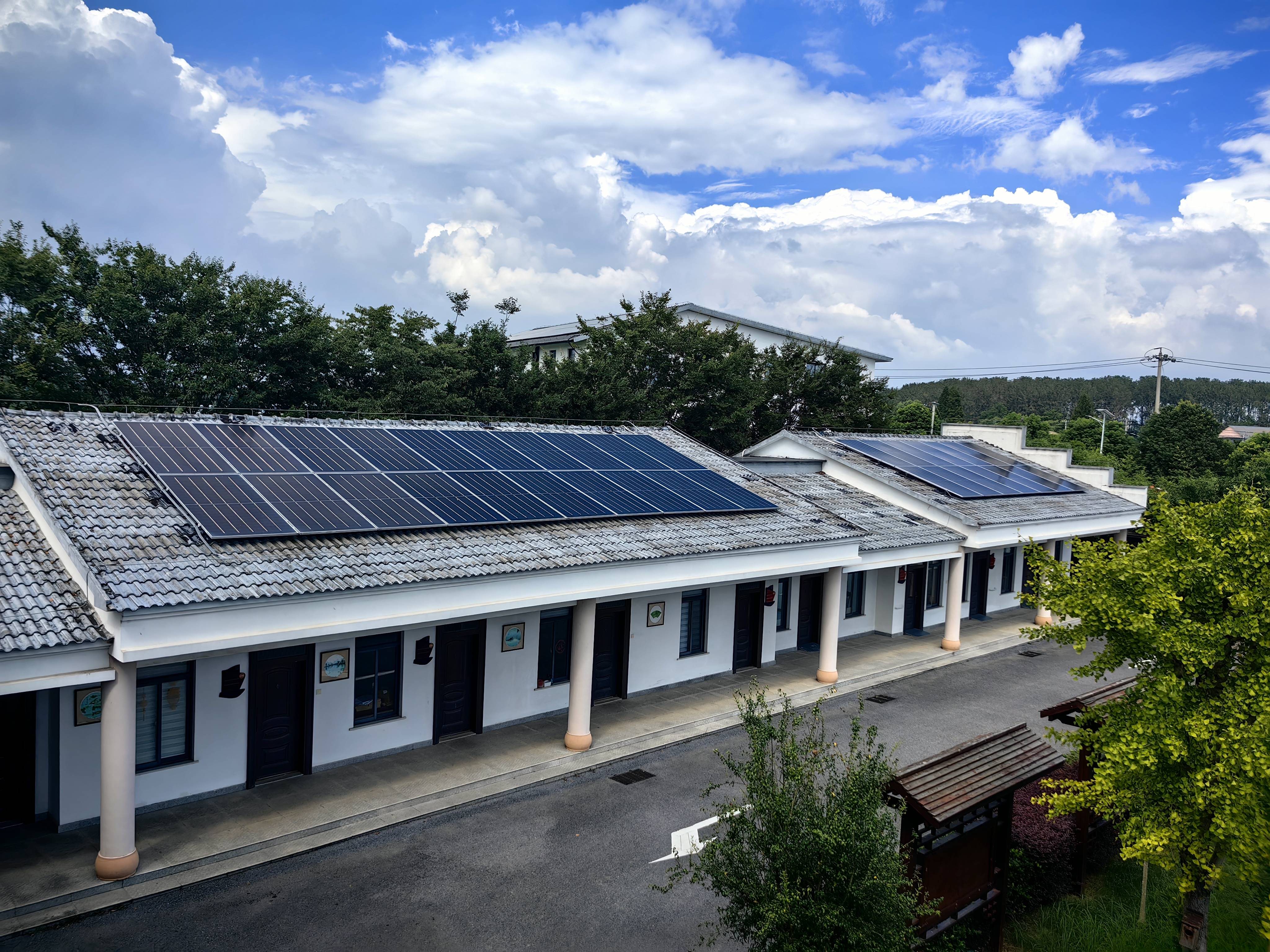
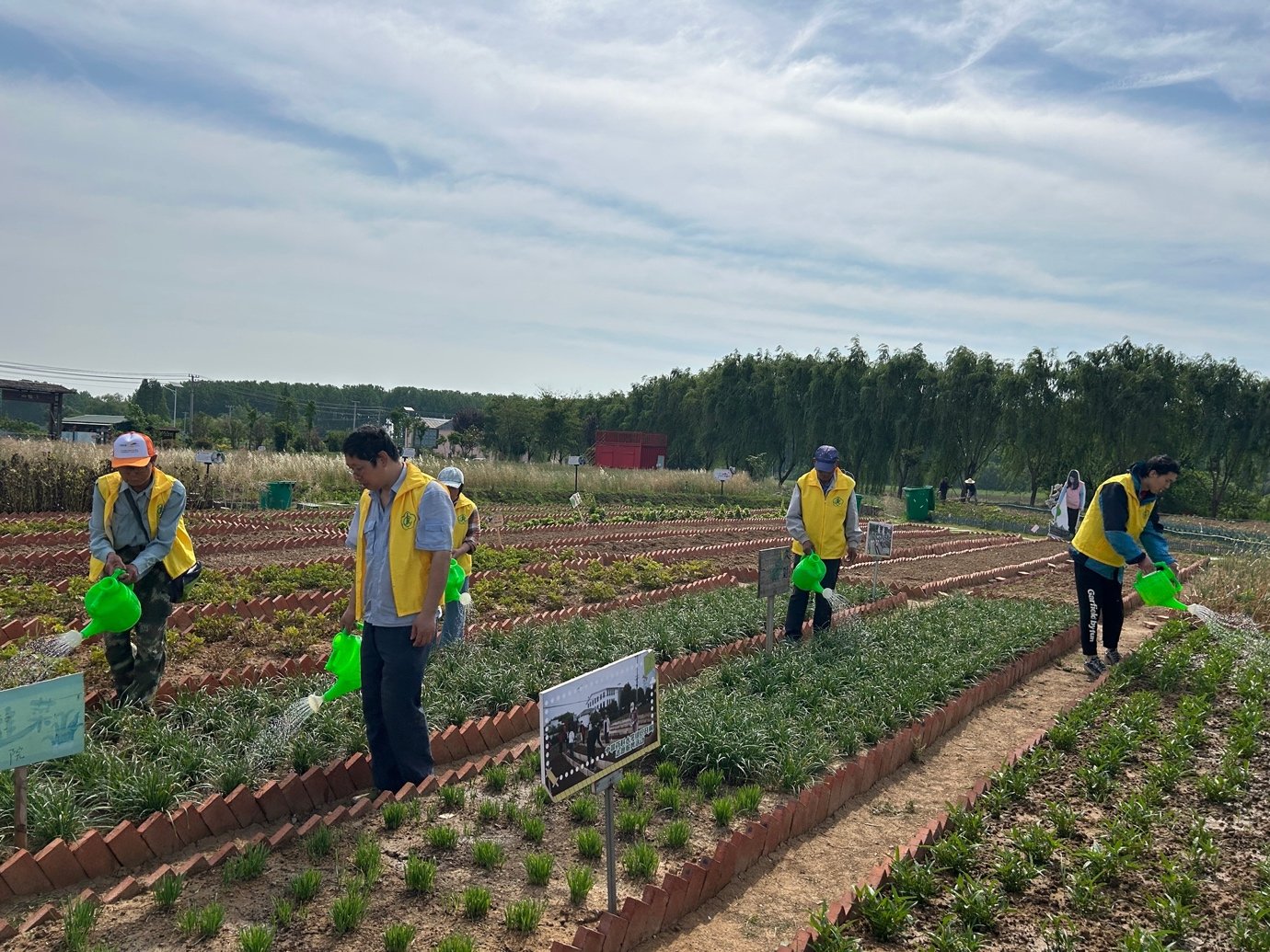
Coordination Mechanism: Low-cost localized waste recycling technologies and community mobilization strategies are embedded into three core systems: independent sanitation operation, grassroots livelihood services, and community charity funds. Collaborative understory composting utilizes existing public welfare forest space without occupying new construction land. Revitalized idle land supports the Photosynthesis Farm, where green-job employees conduct ecological cultivation; farm produce is donated to vulnerable groups. Rooftop photovoltaic facilities generate stable annual revenue of over 20,000 RMB, which is injected into the “Hemei Xinnong” Charity Fund to benefit community residents, forming a goal-consistent and interest-sharing grassroots governance community.
Targeted Low-Carbon Actions:
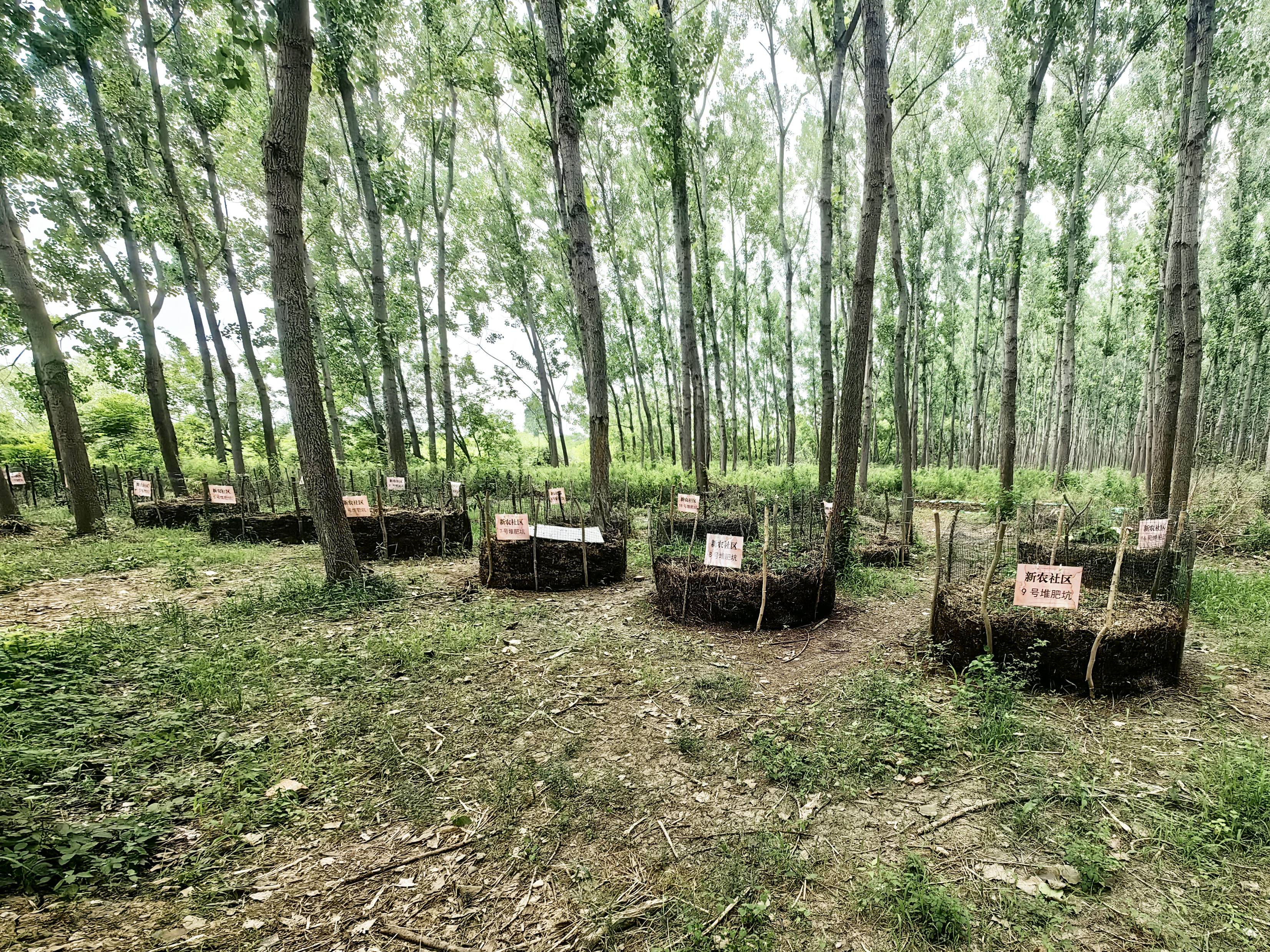
To resolve high costs and excessive carbon emissions from off-site waste disposal, composting management has been integrated into routine sanitation work. Adopting natural static composting with no mechanical turning or microbial inoculants and a 2–3 month natural maturation cycle, the site processes over 300 tons of vegetable trimmings and crop straw annually, producing 100 tons of organic compost, reducing approximately 30 tons of carbon emissions and cutting external waste transportation volume by 50%. The self-produced compost is fully applied to the Photosynthesis Farm, replacing 30% of chemical fertilizer usage.
To strengthen scientific data support, the project cooperates with Qingdao Agricultural University to establish real-time compost temperature monitoring, regular quality testing and controlled soil improvement experiments.
To optimize outdoor working conditions for sanitation staff in summer, the understory composting site provides natural shading and cooling, with elevated ground design to prevent waterlogging.
To expand participation of vulnerable groups against rural aging and hollowing-out, the community has created 11 tailored green jobs for elderly residents and people with mild disabilities, increasing the vulnerable group employment participation rate by 40%.
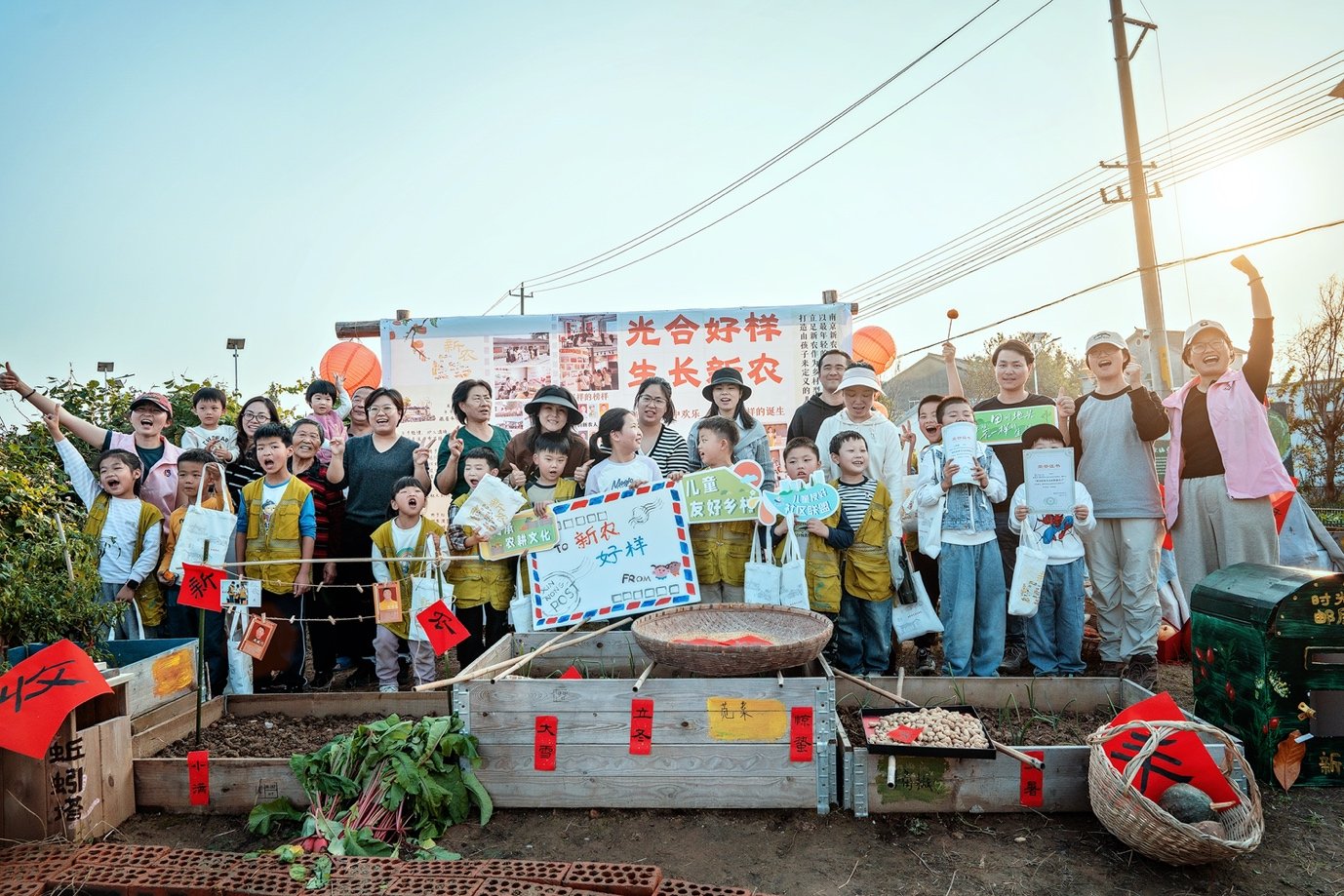
Public Participation Effect: The Photosynthesis Farm serves as a core public engagement platform, hosting over 500 youth research and practice activities and maintaining 120 regular community volunteers annually. Migrant farmers actively deliver agricultural waste to designated collection points, while ecological farm produce is regularly donated to disadvantaged households. Visible and tangible low-carbon outcomes continuously enhance residents’ awareness and initiative of co-construction and shared benefits.
Through the linkage of composting, photovoltaic and sanitation self-management closed loops, the project achieves coordinated triple benefits of cost reduction, environmental optimization and livelihood improvement. It institutionalizes localized waste recycling and closed-loop ecological operation within daily community governance, realizing deep integration of ecological circulation and grassroots low-carbon governance in polder water villages.
项目实施
项目以社区有机废弃物就地资源化利用为核心、社区绿色低碳治理能力提升为内核,推动绿色空间协同共治模式转型,从盘活闲置空间单点破题,迭代为“堆肥—光伏—环卫自治”三大闭环联动的整社区规模化实践。
关键节点:2023年盘活13.1亩闲置土地建成“光合农场”;2024年社区推进环卫改革,外包改自营,成本降50%、年节约55万元;2025年利用公益林下低效空间建成堆肥区并投入稳定运行,产能规划由100吨/年提升至500吨/年。
参与主体:构建社区主体、机构赋能、高校智撑、基金会助力、居民参与的多元协同体系。社区居委会负责场地供给、组织动员与岗位设置;澪碳社会咨询服务(常州)有限公司负责模式设计、技术培训与经验输出;青岛农业大学承担堆肥检测与数据核算;合一绿色公益基金会、食通社、博世中国提供资金与资源支撑;专职保洁员、绿色岗位人员、志愿者与外来种植户深度参与落地。
协同机制:把低成本资源化技术与社区动员方法,深度嵌入环卫自营、民生服务与慈善基金三大体系——依托公益林下空间开展协同堆肥,不占用新增建设用地;流转闲置土地打造“光合农场”,绿色岗位人员打理、生态蔬果惠赠困难人群;盘活闲置屋顶建设光伏,年收益2万余元汇入“和美新农”慈善基金反哺居民,形成有共同目标的治理共同体。
针对性行动:1.针对尾菜外运处置成本高、碳排放大的问题,保洁员岗位纳入堆肥管护职责,采用静态堆肥工艺(不翻堆、不用菌种、自然发酵,2-3个月出肥),年消化尾菜、秸秆等300多吨,产出堆肥100吨,减碳约30吨,外运量减少50%,腐熟堆肥用于社区自营光合农场,替代30%化肥;2.针对科学数据薄弱问题,由澪碳对接青岛农业大学,建立堆体温度监测记录,检测堆肥品质,开展土壤改良对比实验;3.针对保洁员夏季高温户外作业暴露问题,推行林下协同堆肥遮荫降温、场地垫高防渍涝;4.针对老龄化空心化、弱势人群参与不足问题,由社区居委会设11个绿色岗位安置老年及微残人士,残疾人就业参与率提升40%。
公众参与:依托社区自营光合农场,每年500余名儿童参与农场研学、120名志愿者常态化服务;外来种植户配合将尾菜投放专属垃圾桶,农场产出的生态蔬果免费赠送给社区困难人群,以可视化成效唤醒居民共建意识。
三大闭环联动,综合实现运维降本、环境升级、居民受益三重增益,让资源化利用扎根社区日常、闭环运转,达成生态循环与基层治理的深度共生。
Project Outcomes and Innovations
(I) Implementation Results
Prior to project implementation, agricultural organic waste accumulated in farmfields and along roadsides, rotting and contaminating the community environment. Offsite waste disposal brought high fiscal costs and substantial carbon emissions, while lowcost recycling approaches and effective greengovernance carriers remained absent.
First, ecological and environmental benefits. More than 300 tons of agricultural organic waste are recycled onsite each year out of an annual total of around 1,000 tons. Offsite waste transportation volume has been cut by half, with a resource recovery rate exceeding 90 tons. Annually 100 tons of organic compost are produced, replacing 30 % of chemical fertilizer consumption. A 3,365 m² solarphotovoltaic installation generates 400,000 kWh of electricity per annum, delivering an approximate CO₂ emission reduction of 320 tons.
Second, greenspace activation. 13.1 mu of lowefficiency land has been renovated into Photosynthesis (Guanghe) Farm; 3,365 m² of idle rooftops have been equipped with photovoltaic panels; and understory woodland space has been converted into composting zones. Twentyone farming households receive extra landrental income every year, and over 500 children take part in educational study programmes annually.
Third, economic benefits: the sanitation system was converted to self-operated and saved 550,000 yuan annually; tens of thousands of yuan in off-site transportation costs were saved; annual photovoltaic income of over 20,000 yuan was invested in a charity fund (with a total of over 630,000 yuan and over four years supporting over 1,600 people from eight groups of groups); 11 green jobs were created, and the employment participation rate for people with disabilities increased by 40%.
(II) Innovation Highlights
Mechanism innovation: Sanitation governance has transitioned from external outsourcing to communityled selfmanagement and selfgovernance. Local residents have become cobuilders and operators of community green spaces. Elderly residents and people living with mild disabilities have shifted from passive recipients of care into valued contributing participants.
Technical innovation: Adopting static naturalfermentation composting without mechanical turning or microbial inoculants, the system features low capital cost and minimal operationandmaintenance requirements. Supported by monitoring and testing from research institutes, the technical solution is highly suitable for largescale replication across rural contexts.
Value innovation: Former environmental burdens including vegetable trimmings, unused rooftops and lowefficiency farmland are converted into productive green ecological assets. A complete circular chain of “waste reduction – composting – carbon sequestration – community feedback” has been established.
Model innovation: An embedded climateaction model pursuing synergies between climate mitigation and adaptation has been developed under the framework of “community leadership + professional technical support + philanthropic funding”. This approach enables climaterelated actions to become organically integrated into daytoday communitygovernance routines.
Requiring no additional land acquisition, characterised by low technical barriers and delivering tangible benefits for local residents, the interlinked closedloop systems can operate sustainably in the long run. The practice is replicable and promotable for other poldertype rural communities with greenhousevegetable production across the Qinhuai River Basin.
成果亮点
(一)实施成果
实施前:农业有机废弃物堆放田间地头,腐烂污染社区环境;若外运处理,成本和碳排放偏高,且缺乏低成本资源化路径与绿色治理载体。
一是生态环境效益:年就地资源化农业废弃物300多吨(年产上千吨),外运减半、资源化率超90%;产出100吨堆肥替代30%化肥;3365㎡光伏年发电40万度、减碳320吨。
二是激活绿色空间:盘活13.1亩低效土地建成“光合农场”、3365㎡闲置屋顶铺设光伏、林下空间改建堆肥区,21户农户年增租金,每年500余名儿童参与研学。
三是经济效益:环卫改自营年省55万元;省尾菜外运费数万元;光伏年收益2万余元注入慈善基金(基金累计63万余元、4年累计资助8类人群超1600人;创造11个绿色岗位,残疾人就业参与率提升40%。
(二)创新亮点
一是机制创新:环卫外包转社区自营自治,居民成为绿色空间共建运维主体,老人与微残人士从“被照顾者”变为“被需要者”。
二是技术创新:静态堆肥不翻堆、不用菌种、自然发酵,低成本、极简运维,对接科研机构监测,适配乡村规模化推广。
三是价值创新:将尾菜、闲置屋顶、低效土地等环境负资产转化为绿色生态资产,形成“减量—堆肥—固碳—反哺”闭环。
四是模式创新:构建“社区主体+专业支持+公益资助”的嵌入式减适协同模式,让气候行动长在社区治理肌理里。
项目不新增用地、技术门槛低、居民有获得感,各闭环长效运转,值得在秦淮河流域有大棚种植的圩田社区复制推广。
Project Impact
(I) Ecological and Environmental Value
The project achieves the on-site recycling of over 300 tons of agricultural organic waste every year, cutting off-site waste transportation volume by 50%. A total of 100 tons of self-produced organic compost is returned to farmland annually, replacing 30% of chemical fertilizers, which effectively realizes soil carbon sequestration and farmland soil improvement. The 3,365-square-meter rooftop photovoltaic system generates 400,000 kWh of clean electricity per year. The project achieves a total annual carbon reduction of approximately 350 tons, including 30 tons from composting carbon sequestration and 320 tons from photovoltaic power generation. It builds a replicable low-carbon green space governance model tailored to polder water villages.
(II) Social Impact
The project has been selected as a typical climate action case in the "Carbon Road Future 2025" (the only grassroots community among 38 cases); One of the 174 community scenario-based practices under the CCCP community food waste composting platform was promoted by the industry; Received nearly 100 visits from domestic and international experts focused on waste resource utilization and out-of-town growers; Provided 11 green positions, 120 volunteers, and over 500 children participate in study tours annually; Provided replication and promotion models for nearly 10,000 mu of greenhouse planting communities in Hushu Subdistrict.
成果影响力
(一)生态环境价值:年就地资源化农业废弃物300余吨,垃圾外运量减少50%;产出100吨堆肥还田、替代30%化肥,固碳改良土壤;3365㎡光伏年发电40万度。年减碳合计约350吨(堆肥约30吨、光伏约320吨),为圩田乡村绿色空间低碳治理提供样板。
(二)社会影响效果:入选“碳路未来2025”气候行动典型案例(38个案例中唯一基层社区);作为CCCP社区厨余堆肥平台的174个社区场景化实践之一获行业推广;接待境内外关注废弃物资源化利用的专家以及外地种植户参访近100人次;提供11个绿色岗位,120名志愿者、每年500余名儿童参与研学;为湖熟街道近万亩大棚种植社区提供复制推广样板。
Reviews and Honors
Evaluation feedback: In August 2026, Xinhua News Agency reported that the project "explored a new low-cost, replicable, and grounded grassroots climate governance model"; Jiangning Release referred to it as the "Jiangning Model."
Industry recognition: Selected as a typical climate action case in the "Carbon Road Future 2025" (jointly solicited by China Weather Network and the National Center for Climate Change Strategy Research and International Cooperation, the only grassroots community among three cases nationwide in the climate public welfare category); Promoted in industry practice as the CCCP community food waste composting platform (initiated by Nanjing University (Lishui) Institute of Ecological Environment and Vanke Public Welfare Foundation).
Awards and honors: Jiangsu Province Ecological Civilization Demonstration Community, Jiangsu Province Elderly-Friendly Community, Nanjing Wasteless Community (2025), China Charity Federation "Community Charity Fund" Innovation Case (2025), Jiangning District Community Charity Fund Micro-Project Creative Competition Special Prize (2024), Nanjing Advanced Grassroots Party Organization (2026).
Technical and public welfare support: Qingdao Agricultural University provides compost testing and data monitoring support; Bosch China, Beijing Heyi Green Public Welfare Foundation, and Food News provide empowering micro-grants; Nanjing University (Lishui) Institute of Ecological Environment provides technical endorsement and promotion support.
评价与荣誉
评价反馈:2026年8月新华网报道,评价该项目“探索出一套低成本、可复制、接地气的基层气候治理新模式”;江宁发布将其称为“江宁样本”。
行业认可:入选“碳路未来2025”气候行动典型案例(中国天气网与国家应对气候变化战略研究和国际合作中心联合征集,气候公益类全国3个之一、38个案例中唯一基层社区);作为CCCP社区厨余堆肥平台(南京大学(溧水)生态环境研究院与万科公益基金会发起)实践场景获行业推广。
奖项荣誉:江苏省生态文明示范社区、江苏省老龄友好社区、南京市无废社区(2025年)、中华慈善总会“社区慈善基金”创新案例(2025年)、江宁区社区慈善基金微项目创意大赛特等奖(2024年)、南京市先进基层党组织(2026年)。
技术与公益支持:青岛农业大学提供堆肥检测与数据监测支持;博世中国、北京合一绿色公益基金会、食通社提供赋能小额资助支持;南京大学(溧水)生态环境研究院提供技术背书和推广支持。

近零碳社区的美育升级---- 长寿苑社区 “低碳实践 + 影像科普” 共建项目
4天前 · 来源:成都市武侯区火车南站街道长寿苑社区居民委员会 · 作者:成都市武侯区火车南站街道长寿苑社区居民委员会

以绿色金融之力推动中国新质生产力!
4天前 · 来源:国泰海通证券研究所ESG及美丽中国研究组 · 作者:国泰海通证券研究所ESG及美丽中国研究组
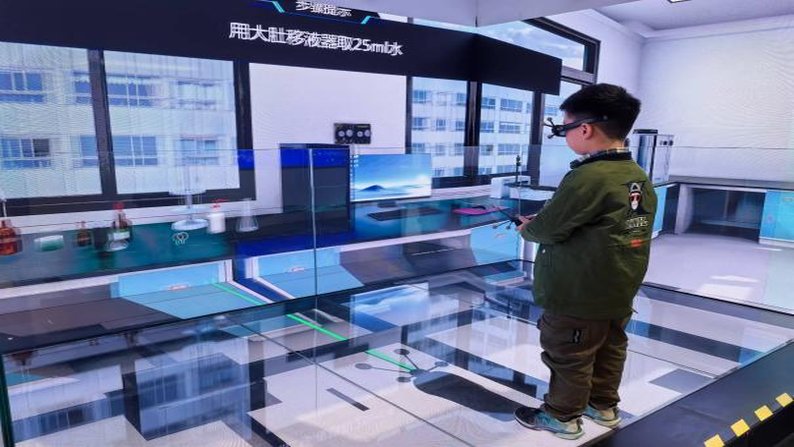
不择知行细流,蕴蓄蓝绿成深:雄安新区生态环境共享中心科普宣传空间营造雄安新区生态环境共享中心VR虚拟实验室(数字化仿真替代实体化学实验,实现科普零危废、低能耗)
6天前 · 来源:雄安新区生态环境监控中心 · 作者:雄安新区生态环境监控中心
