

Company/Organization Profile
South-Central Minzu University, a higher education institution directly affiliated with the National Ethnic Affairs Commission, occupies a campus area of over 1,500 mu (approximately100 hectares) with a green coverage of 530,000 square meters. The university enrolls more than 30,000 full-time students from all 56 ethnic groups in China.
It has consistently embedded green and low-carbon principles into all aspects of its institutional governance and educational operations, systematically establishing a comprehensive, whole-chain energy conservation management system characterized by institutional safeguards, technological upgrading, digital empowerment, and university-enterprise collaboration.
A campus-wide energy consumption monitoring and smart energy management platform has been deployed, alongside continuous implementation of green retrofitting programs covering power distribution infrastructure renewal, building envelope optimization, and water distribution network leakage mitigation.
The university has also rolled out low-carbon facilities at scale, including air-source heat pumps, new-energy vehicle charging stations, and low-emission campus commuter fleets, while delivering targeted carbon-incentivized programs and energy conservation literacy initiatives for all faculty and students.
The university has been accredited as a "National Model Unit for Energy-Saving Public Institutions" and a "Water-Conserving University of Hubei Province", and has maintained the title of "Model Civilized Unit of Hubei Province" for nine consecutive terms.
机构简介
中南民族大学是国家民委直属高校,占地1500余亩,绿化53万余平方米,现有56个民族全日制在校生3万余人。学校将绿色低碳理念贯穿办学全过程,构建形成“制度保障、技术改造、数字赋能、校企协同”节能管理体系,建成覆盖全校的能耗监测与智慧能源管理平台,持续实施配电设备更新、建筑围护改造、管网漏损治理等绿色化改造工程,推广空气源热泵、新能源充电桩与通勤车辆等低碳设施,并面向师生开展碳普惠推广与节能实践教育。学校先后获评“全国节约型公共机构示范单位”“湖北省节水型高校”,连续9次被评为湖北省最佳文明单位。

Project Overview
Prior to the project implementation, the university’s green development was confronted with the following four core operational constraints:
First, the public infrastructure across campus had severely deteriorated: 711 power distribution rooms had been in service for over 20 years, 23 elevators had exceeded 15 years of operation, and portions of the water supply network still utilized gray cast iron pipes, resulting in persistently high leakage risks.
Second, air-conditioning units installed in student dormitories and public classrooms in 2012 had exceeded their designed service life, with energy efficiency declining by 30% to 50%.
Third, energy conservation awareness among space users varied considerably; ineffective energy consumption and waste occurred frequently in classrooms and offices, and sub-metering coverage for secondary-level units remained inadequate.
Fourth, smart management capabilities exhibited significant deficiencies; existing energy-saving platforms were functionally limited, with weak analytical, early-warning, and predictive capacities regarding energy consumption data.
Root Cause Diagnosis: Tracing the root causes of the aforementioned constraints, the core contributing factors can be summarized into four dimensions: historical under-investment in infrastructure over an extended period; insufficient application of market-oriented energy conservation mechanisms; inadequate integration of digital management tools with spatial operation scenarios; and an underdeveloped participatory mechanism for faculty and students, who serve as the primary users of these spaces.
Objectives for Improvement: Guided by the core principles of "greening, intelligentization, refinement, and low-carbonization," the project advances along three implementation pathways: green retrofitting of infrastructure, establishment of a smart energy management platform, and behavioral guidance for space users.
Through these efforts, campus public spaces will be transformed into eco-friendly, visibly low-carbon demonstration scenarios of green living, ultimately achieving the dual objectives of systematically enhancing spatial operational efficiency and fostering the spontaneous development of low-carbon behaviors among users.
项目背景
中南民族大学绿色校园建设面临以下挑战:一是校园公共空间基础设施老化,11所配电房使用年限超20年,23台电梯使用年限超15年,部分供水管网为灰口铸铁管,漏损风险较高;二是2012年集中装配的学生宿舍和公共教室空调已超期使用,能效下降30%-50%;三是空间使用者节能意识参差不齐,教室、办公室空调浪费现象依然存在,二级单位分户计量覆盖率不足;四是智慧化管理水平有待提升,已有节能平台功能单一,能耗数据的分析、预警、预测能力较弱。
原因分析:基础设施投入历史欠账较多,市场化节能机制应用不足,数字化管理手段与空间运营融合不深,师生作为空间使用者的主体参与机制尚不健全。
改进目标:以“绿色化、智慧化、精细化、低碳化”为方向,通过基础设施绿色化改造、智慧能源管理平台搭建、空间使用者行为引导三大路径,将校园公共空间打造为生态友好、低碳可视的绿色生活场景,实现空间运营效率提升与使用者低碳行为养成的双重目标。
Project Implementation
The project adopts targeted measures to address each identified challenge, constructing an implementation system characterized by multi-stakeholder collaboration and multi-dimensional coverage:
Spatial Operation Optimization: Green Retrofitting of Infrastructure
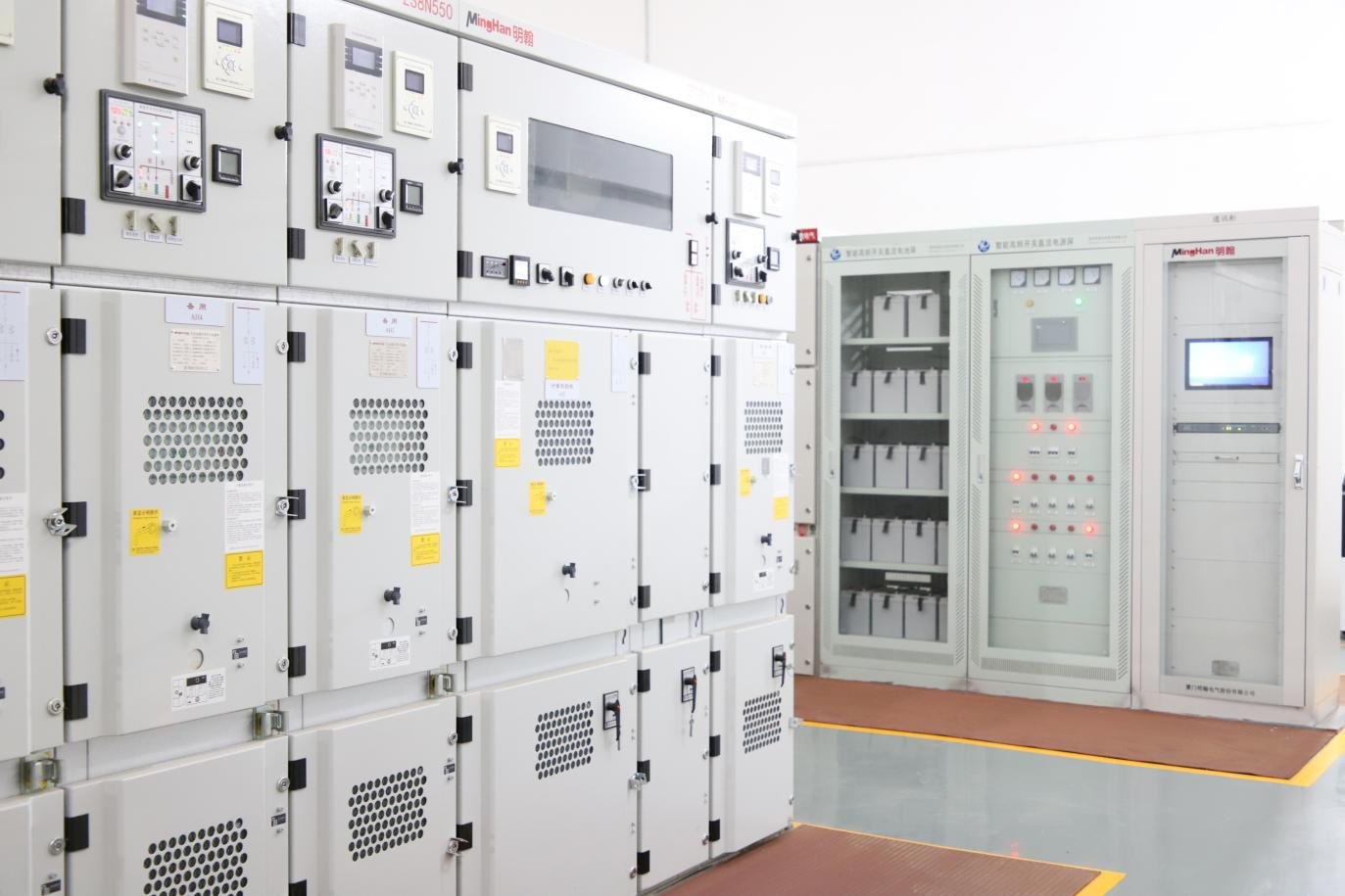
To address the high energy consumption and prominent safety hazards of aging equipment, the university has cumulatively invested over RMB 20 million in dedicated energy-saving retrofit funds, completed two phases of power distribution room upgrades, and comprehensively replaced equipment with Grade-1 energy efficiency ratings, achieving annual electricity savings of approximately 140,000 kWh.
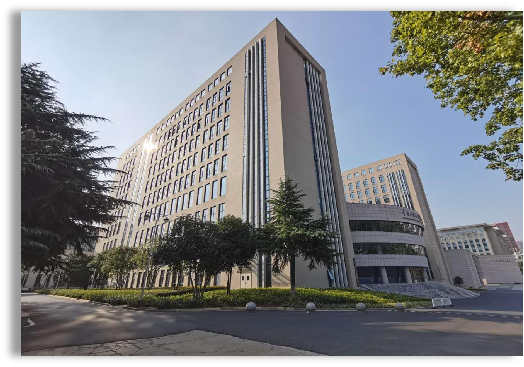
Building energy-saving retrofits have been steadily advanced, with seven envelope and thermal insulation door and window renovation projects completed within five years. An average of 25 pipeline leakage points have been repaired annually, with cumulative water savings exceeding 10,000 tons over five years.
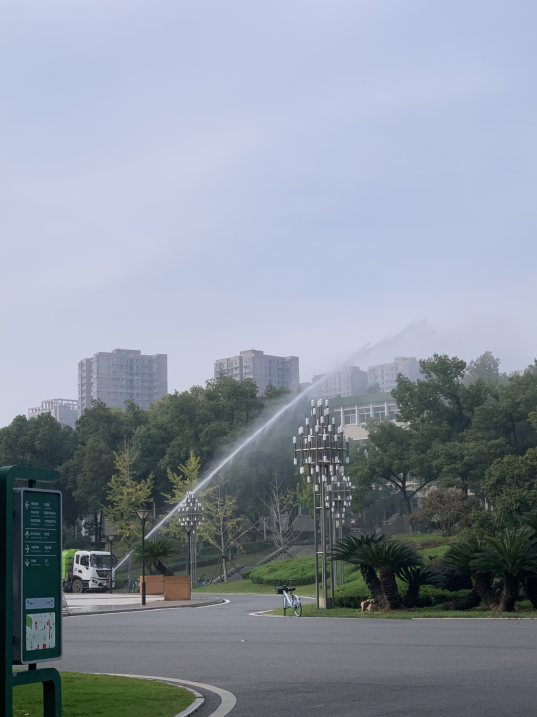
Simultaneously, three 30-cubic-meter rainwater harvesting tanks and multiple micro-irrigation systems have been constructed, saving 4,000 cubic meters of landscaping water annually. This module is led by the Logistics Support Department, with coordinated implementation by the Infrastructure Construction Department and the State-owned Assets Management Department.
Innovative Technology Application: Construction of a Smart Energy Management Platform
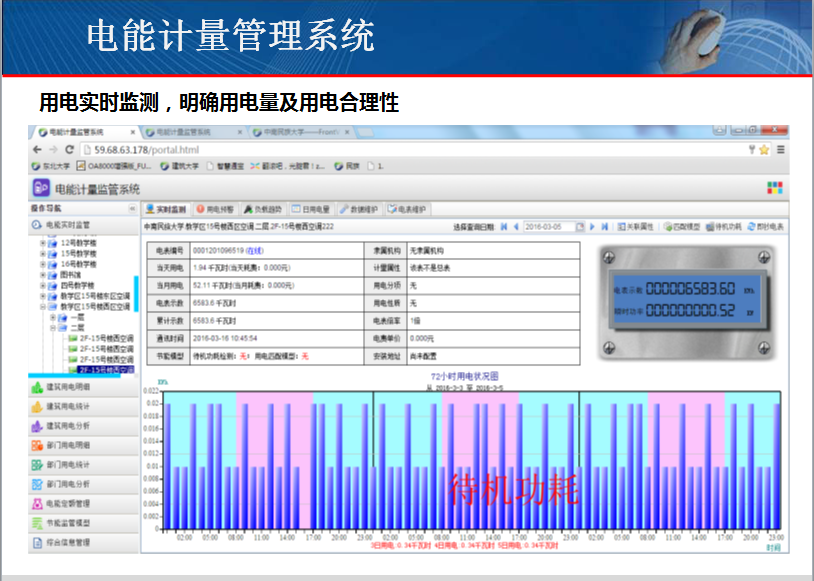
To address the deficiency in digital energy management, a smart power supply and distribution management system has been established, realizing real-time load monitoring, automatic fault early warning, and dynamic energy efficiency assessment for nine power distribution rooms.
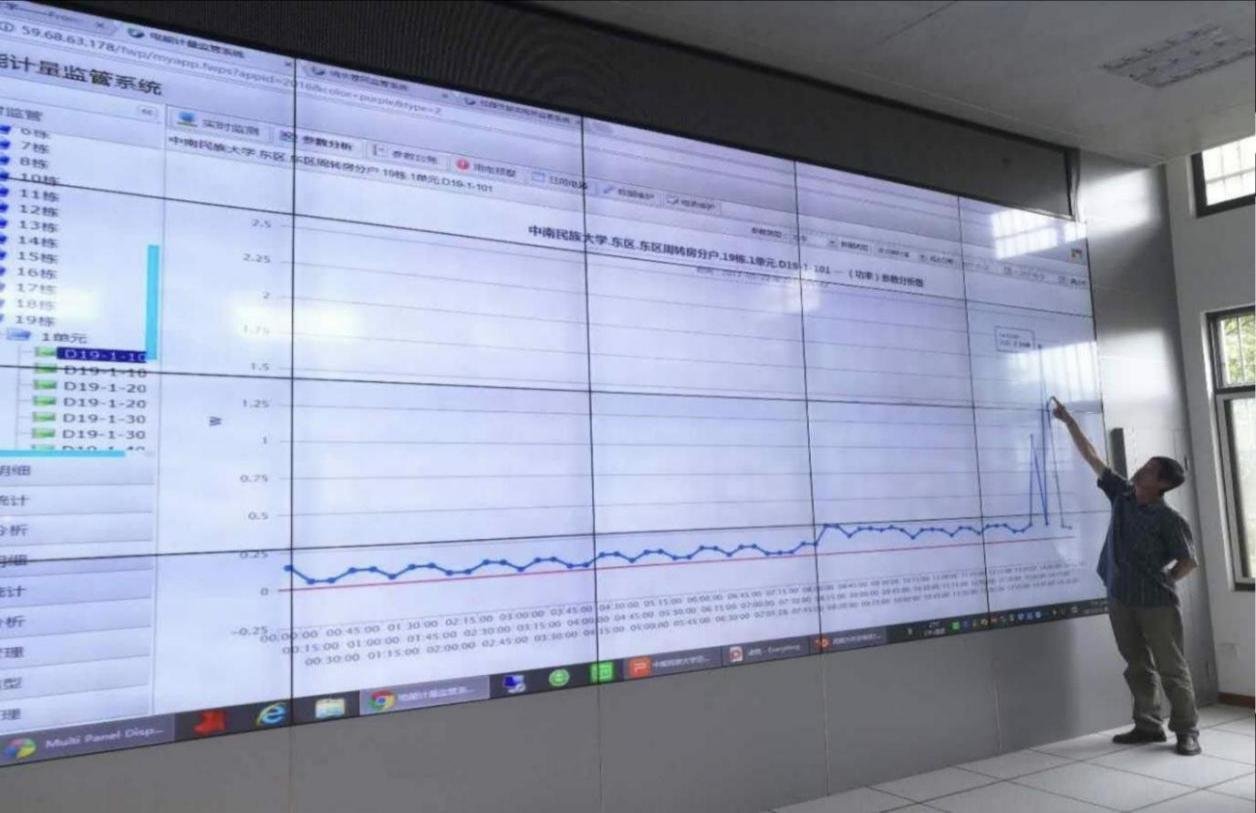
The energy consumption platform has been comprehensively upgraded to enable dynamic monitoring of energy consumption data for all campus buildings, with monthly public disclosure. Leveraging proprietary leak detection technology developed by the university's in-house research team, an IoT-based pump room inspection and water leakage early warning system has been established, having cumulatively detected over 50 pipeline leakage points.
This module is specifically implemented by the Water, Electricity and Energy Conservation Management Service Center of the Logistics Support Department, with comprehensive technical support provided by the Information Technology Management Office.
Public Participation and Behavioral Advocacy: Cultivating Green Actions Among Space Users
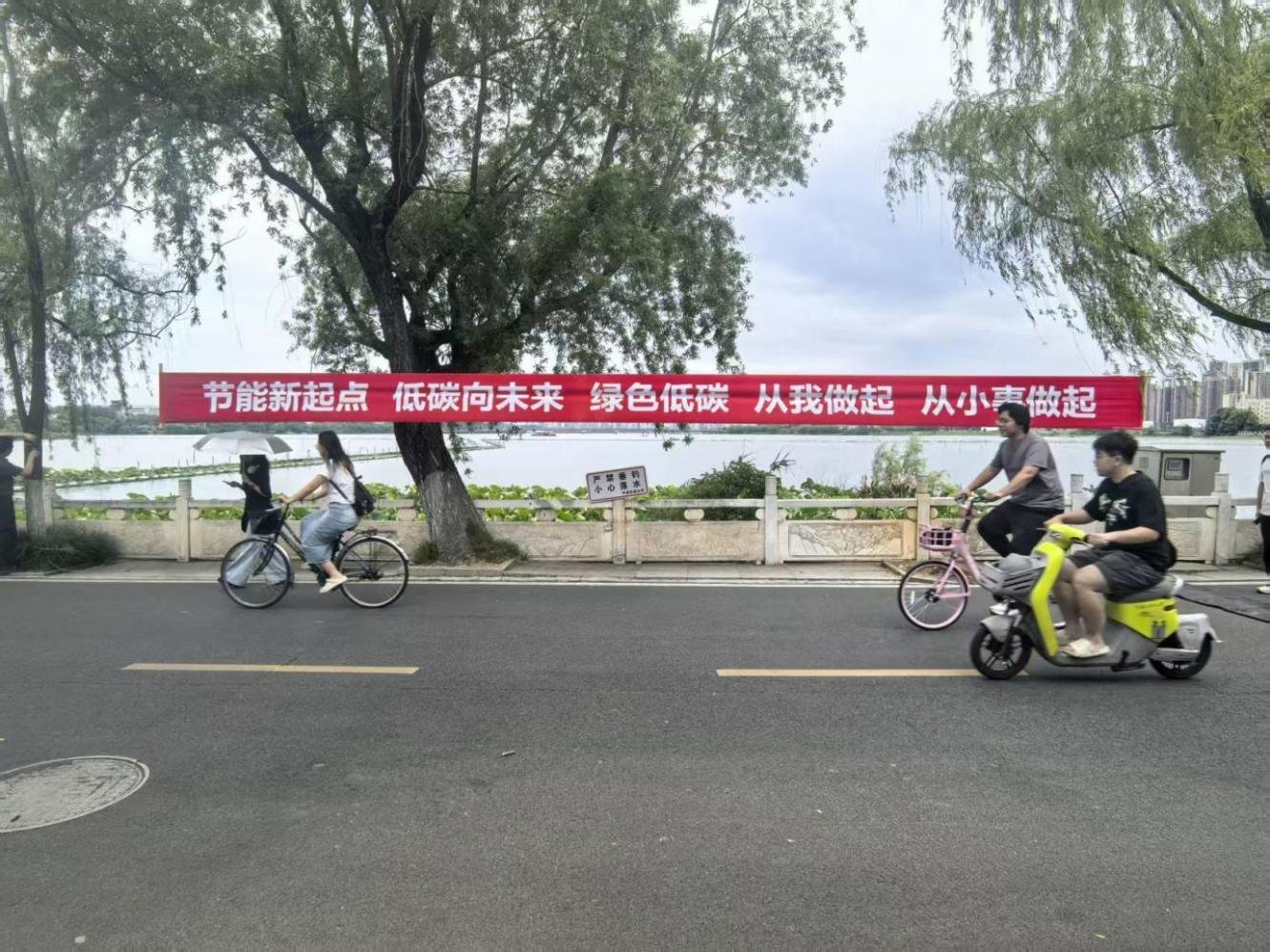
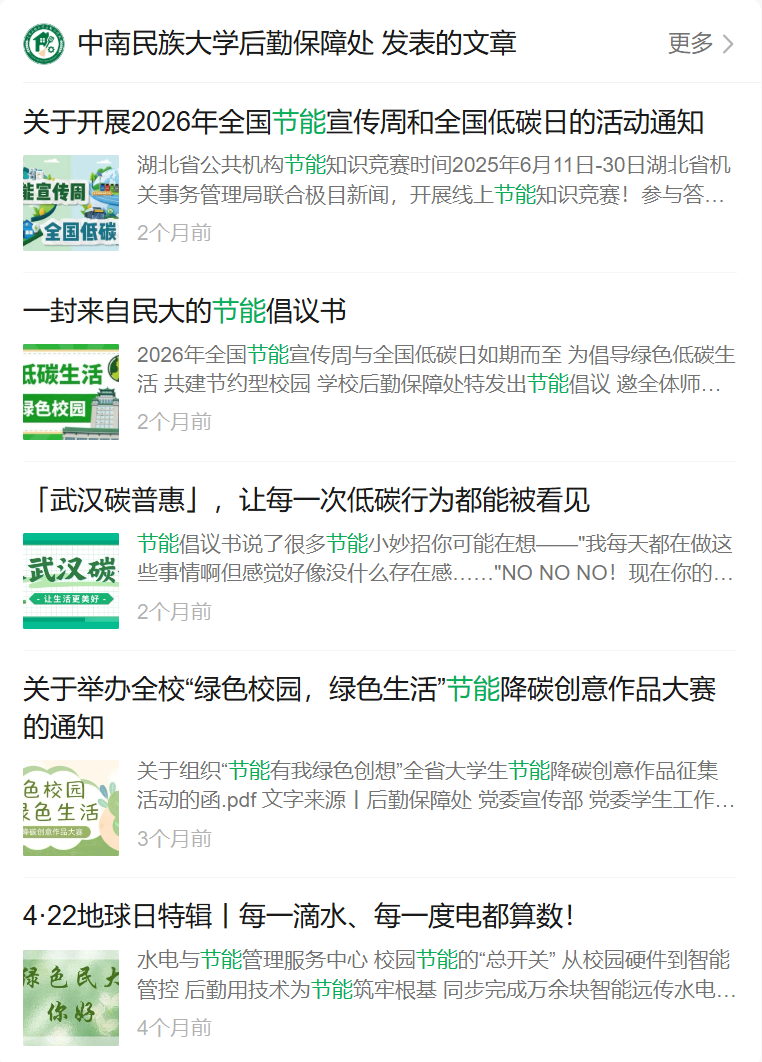
To address the inadequacy of energy conservation participation mechanisms, a diversified public participation system has been constructed. Leveraging key occasions such as National Energy Conservation Publicity Week, National Low-Carbon Day, and World Water Day, low-carbon knowledge is promoted through diversified formats including material distribution, signage installation, and themed competitions.
From 2021 to 2025, over 10,000 publicity materials were cumulatively distributed and over 1,000 energy-saving reminder signs were installed.
Faculty and students have been organized to deeply participate in practical activities such as pipeline leak detection, water quality testing, and energy consumption surveys, promoting the deep integration of "labor education and energy conservation practice.
" During the 2026 National Energy Conservation Publicity Week, special activities including knowledge quizzes, trail check-in point redemption, and Earth Hour were simultaneously conducted, achieving full coverage of all faculty and students.
This module is jointly implemented by the Logistics Support Department in collaboration with the Publicity Department, Student Affairs Department, University Youth League Committee, and all colleges.
Eco-friendly Facility Construction: Enhancing the Quality of Green Spaces
To meet the demand for enhancing campus ecological quality, multi-dimensional green and low-carbon scenarios have been created.
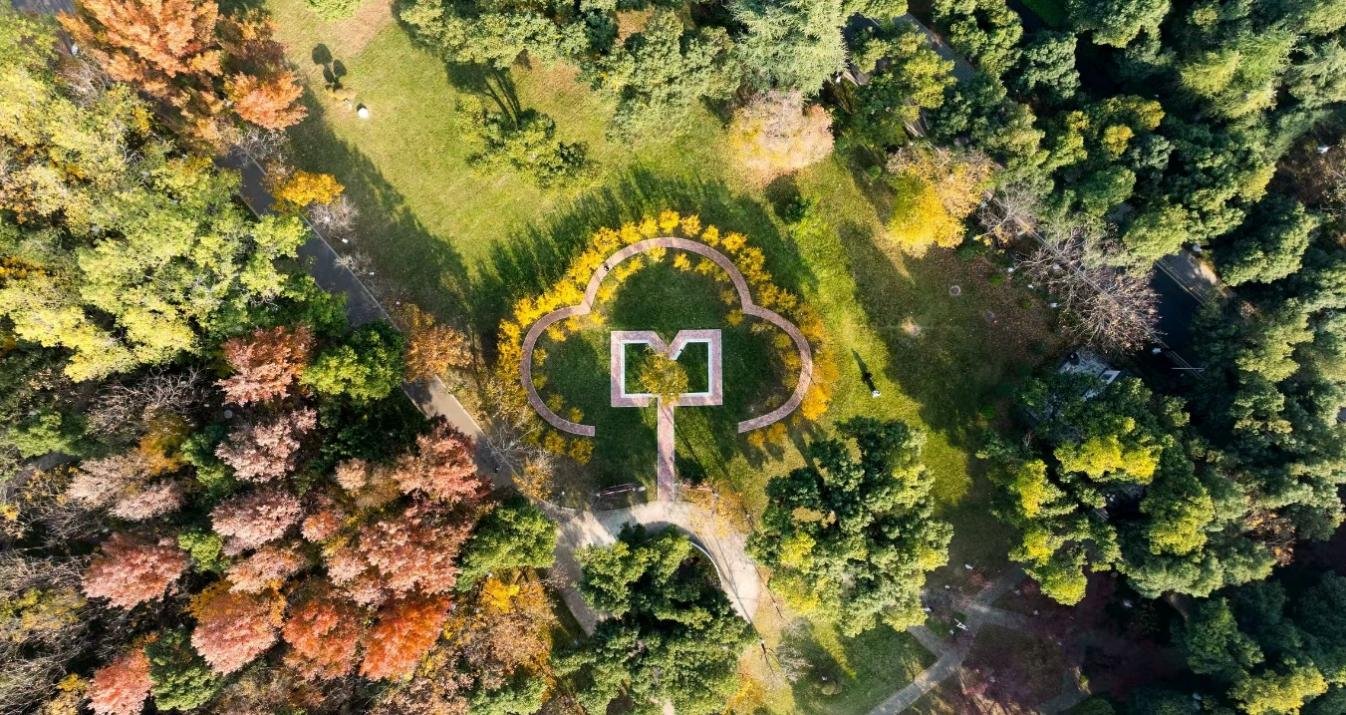
A professional operation and maintenance team has been established to carry out refined plant care, utilizing micro-spray water-saving irrigation technology to maintain landscape features and flower walls.
Eighty-one new-energy vehicle charging stations have been installed, and new-energy commuting vehicles have been comprehensively introduced. In 2024, social investment of RMB 22.9784 million was introduced to complete the upgrade of air-source heat pump water heating systems in 48 dormitory buildings, with all equipment adopting Grade-1 energy efficiency standards.
This module is jointly implemented by the Campus Environment Service Center and the Water, Electricity and Energy Conservation Management Service Center of the Logistics Support Department, together with the Party Committee Student Affairs Department.
Resource Investment and Multi-party Collaboration: Completing the Closed-Loop Energy Conservation Management System
In terms of financial investment, the university has cumulatively invested over RMB 20 million in dedicated fiscal funds, introduced social capital of RMB 22.9784 million through the Build-Operate-Transfer (BOT) model, and in 2026 introduced social investment of RMB 3.25 million through the Energy Performance Contracting (EPC) model, establishing a diversified energy conservation investment mechanism.
In terms of organizational safeguards, the university has promoted energy conservation mechanism construction at the highest administrative level. In 2019, a Water and Electricity Energy Conservation Leading Group was established, headed by the Vice President in charge; this was elevated in 2026 to a Conservation-Oriented Campus Leading Group headed by the President, covering 15 functional departments and all colleges.
A four-tier management system has been established, characterized by "overall coordination by the leading group, primary implementation by functional departments, execution by secondary units, and participation by faculty and students."
At the institutional level, specialized regulations including the "South-Central Minzu University Water and Electricity Management Regulations" and the "Water and Electricity Metering and Charging Management Provisions" have been successively formulated.
Energy-saving review has been comprehensively embedded throughout the entire process of project initiation, equipment procurement, and completion acceptance, forming a full-chain institutional closed loop.
项目实施
(一)空间运营优化:基础设施绿色化改造
针对老旧设备能耗高、安全隐患大等问题,累计投入超2000万元实施节能改造,完成两期配电房改造,更换一级能效设备,年节电约14万度。推进建筑节能改造,5年内完成7项围护结构与保温门窗改造。年均修复管网漏损25处,五年累计节水超万吨。建成3座30立方米雨水蓄水池及多套微灌系统,年节约绿化用水0.4万立方米。由后勤保障处牵头,基建处、国资处协同实施。
(二)创新技术应用:智慧能源管理平台建设
针对能源管理数字化不足,建成供配电智能管理系统,实现9所配电房负荷实时监测、故障自动预警与能效动态评估。升级能耗平台,动态监测全校建筑能耗并月度公示。依托校内团队专利探漏技术,建成泵房巡检与漏水预警物联网系统,累计探测管网漏点50余处。由后勤保障处水电与节能管理服务中心实施,信息化建设管理处提供技术支持。
(三)公众参与与行为倡导:空间使用者绿色行动培育
针对节能参与机制不健全,构建多元化公众参与体系。利用节能宣传周、全国低碳日、世界水日等节点,以资料发放、标识设置、竞赛等形式普及知识,2021-2025年累计发放资料万余份、设置标识千余个。组织师生参与管网测漏、水质检测、能耗调研等实践,推动“劳动育人+节能实践”融合。2026年宣传周开展知识答题、步道打卡积分兑换、熄灯一小时等活动,覆盖全校。由后勤保障处联合宣传部、学工部、校团委及各学院实施。
(四)生态友好设施建设:绿色空间品质提升
针对校园生态品质提升需求,打造多维绿色场景。组建专业团队开展绿植管养,采用微喷节水灌溉技术养护园林小景与鲜花墙。建设充电桩81台,引入新能源车辆。2024年引入社会投资2297.84万元,更新48栋宿舍空气能热水系统,全部采用一级能效设备。由后勤保障处校园环境服务中心、水电与节能管理服务中心与党委学生工作部实施。
(五)资源投入与多方协同:完善节能管理制度闭环
在节能改造方面,学校累计投入财政资金超2000万元,通过BOT模式引入社会资本2297.84万元,2026年通过合同能源管理模式引入社会投资325万元。组织保障方面,学校高位推动节能机制建设。2019年成立由分管副校长任组长的水电节能工作领导小组。
2026年升格为校长任组长的节约型校园工作领导小组,覆盖15个职能部门及所有学院,建立“领导小组统筹、职能部门主抓、二级单位落实、师生参与”四级管理体系。制度建设方面,制定《中南民族大学水电管理办法》《水电计量及收费管理规定》等制度,将节能审查嵌入项目立项、设备采购、竣工验收全流程。
Project Outcome
The project has yielded remarkable outcomes with pronounced differences between pre- and post-implementation conditions. Its core achievements are distinguished by outstanding innovation and replicability:
Substantial Enhancement of Spatial Operational Efficiency
Through a full spectrum of green infrastructure retrofitting, energy utilization efficiency has been systematically improved. In 2025, electricity accounted for 90.18% of the university's total energy consumption, establishing low-carbon energy as the absolute primary source.
During the 2021–2025 period, total campus water consumption decreased by 4% cumulatively, with per capita water consumption declining by 4.67%. Fuel oil consumption over the five-year period was reduced by 9,162 liters, representing a decrease of nearly 50%. A total of over 18,000 units of obsolete and inefficient equipment were phased out, resulting in electricity savings exceeding 14 million kWh.
Both total comprehensive energy consumption and per capita energy consumption have consistently remained at relatively low levels among the central government-affiliated institutions of higher education in the Wuhan region.
Systematic Transformation of Smart Management Capabilities
The smart power supply and distribution management system has enabled "one-key sequence control" and unattended operation, with the relevant technologies and university-enterprise collaboration models having been fully promoted across the higher education community in Wuhan.
The energy consumption monitoring platform has achieved dynamic real-time monitoring and monthly public disclosure for all buildings, facilitating the transition of energy management from the traditional "extensive" model to a full-process "refined" management approach.
The water conservation performance contracting project has saved over 100,000 RMB in water fees annually, with the actual per capita water saving rate exceeding 5% per year throughout the contract period.
Establishment of Long-Term Mechanisms for Space User Participation
A four-tier energy conservation management system has been established, characterized by "overall coordination by the leading group, primary implementation by functional departments, execution by secondary units, and participation by faculty and students."
A total of three professional operation and maintenance personnel have been trained and certified as Senior Energy Management Engineers. Thematic activities such as Energy Conservation Publicity Week and creative works competitions have been institutionalized as regular operational mechanisms.
In 2026, the "Energy Conservation in Action, Green Innovation" Creative Works Competition collected 244,376 valid entries, covering all 18 schools of the university. Faculty and student participation and enthusiasm have continued to grow, with the green and low-carbon philosophy deeply embedded in the campus culture, and the quality of campus green spaces has achieved sustained iterative improvement.
Outstanding Model Innovation with Broad Replicability
The project has pioneered the "performance-guaranteed" water conservation service model, the profit-sharing energy performance contracting model, and the implementation pathway of introducing social capital through the BOT model for bathing hot water systems, establishing a lightweight energy-saving renovation model characterized by "zero capital threshold, controllable risks, and technologically guaranteed outcomes."
A university-enterprise power supply guarantee mechanism has been jointly established with State Grid Wuhan Power Supply Company, enabling data sharing and emergency coordination.
This comprehensive market-oriented energy-saving model has matured into a replicable set of best practices, providing a complete reference paradigm for green campus development at peer institutions of higher education nationwide.
成果亮点
(一)空间运营效能显著提升
通过基础设施绿色化改造,能源利用效率大幅提升。2025年学校电能占总能耗比重达90.18%,低碳化用能成为主体。2021-2025年,全校水资源消耗累计降幅达4%,人均下降4.67%;燃油消耗五年累计减少9162升,降幅近50%。淘汰老旧低效设备1.8万余台,节约用电超1400万千瓦时。综合能耗总量和人均能耗始终保持在武汉地区部委属高校较低水平。
(二)智慧化管理能力实现转型
供配电智能管理系统实现“一键顺控”和无人值守,该技术和校企合作模式在武汉高校圈推广。能耗监测平台实现所有楼栋动态监测和月度公示,推动节能管理从“粗放式”向“精细化”转型。合同节水项目年节约水费10余万元,合同期内实际年人均节水率超过5%。
(三)空间使用者参与形成长效机制
构建了“领导小组统筹、职能部门主抓、二级单位落实、师生共同参与”四级节能管理体系,3名员工取得高级能源管理师证书。节能宣传周、创意作品大赛等活动形成常态化机制,2026年“节能有我、绿色创想”创意作品大赛征集有效作品376件,覆盖18个学院。师生参与积极性持续增强,绿色低碳理念深入人心,校园绿色空间品质不断提升。
(四)模式创新与可复制性
创新“效果保证型”合同节水服务和利益分享型合同能源管理模式以及洗浴热水系统BOT模式引入社会资本,形成“零资金门槛、风险可控、技术兜底”的节能改造模式。与国网武汉供电公司共建校企保供机制,实现数据共享与应急联动。市场化节能模式已形成可推广经验,为同类高校提供了参考借鉴。
Project Highlights
Ecological and Environmental Benefits
Taking the 2021–2025 period as the statistical cycle, covering all campus public buildings, pipeline networks, and ancillary facilities within the defined boundary, the verified results are as follows: total campus water consumption decreased by 4% cumulatively, with per capita water consumption declining by 4.67%; fuel oil consumption was reduced by 9,162 liters cumulatively; over 18,000 units of obsolete and inefficient equipment were phased out, resulting in electricity savings exceeding 14 million kWh.
Both total comprehensive energy consumption and per capita energy consumption have consistently remained at relatively low levels among the central government-affiliated institutions of higher education in the Wuhan region.
Consumption of petrochemical-based energy has been substantially curtailed, with electricity accounting for 90.18% of total energy consumption, demonstrating significant progress in the low-carbon transition of the energy mix.
The rainwater storage tanks constructed as part of the project save 4,000 cubic meters of water for greening purposes annually, while the campus water supply leakage rate has continued its steady decline, simultaneously achieving cost reduction and efficiency enhancement with annual water fee savings exceeding 100,000 RMB.
Social Impact
The university has been successively designated as a National Model Institution for Conservation-Oriented Public Agencies and a Water-Conserving University of Hubei Province, and has been rated as Hubei Province's Best Civilized Unit for nine consecutive terms.
The independently developed smart power distribution "one-click sequential control" technology and the university-locality cooperation model have been comprehensively promoted across universities in Wuhan. Annual themed activities such as National Energy Conservation Publicity Week and creative works competitions have reached over 10,000 faculty and students per year, effectively promoting the extensive dissemination and practical implementation of green and low-carbon concepts in public spaces of higher education institutions.
成果影响力
生态环境效益
2021-2025年,全校水资源消耗累计降幅达4%,人均水耗下降4.67%;燃油消耗减少9162升;淘汰老旧低效设备18000余台,节约用电超1400万千瓦时,综合能耗总量和人均能耗水平始终位居武汉地区部委属高校低位。减少石化类能源消耗,电能占总能耗比重达90.18%,能源结构低碳化转型成效突出。雨水蓄水池年节约绿化用水0.4万立方米,供水漏损率持续下降。
社会影响效果
学校先后获评“全国节约型公共机构示范单位”“湖北省节水型高校”,连续9次被评为湖北省最佳文明单位。智能配电“一键顺控”技术及合作模式在武汉高校范围内推广。节能宣传周、创意作品大赛等活动年均覆盖师生万余人次,有效推动了绿色低碳理念在高校空间的传播与实践。
Reviews & Honors
Feedback from Competent Authorities
In May 2026, the Hubei Provincial Development and Reform Commission Energy Conservation and Carbon Reduction Center and the Energy Conservation Division of the Hubei Provincial Government Affairs Administration conducted a joint field investigation at the university, giving full affirmation to the university's energy conservation and carbon reduction endeavors.
The investigation team explicitly noted that higher education institutions, serving as a core front for energy conservation among public institutions, bear significant responsibility, and that South-Central Minzu University's proactive exploration in the application of market-oriented energy conservation models and smart management methodologies has made an outstanding demonstrative contribution to the advancement of energy conservation undertakings among public institutions in Hubei Province.
Feedback from service recipients indicates that satisfaction with the campus green space experience has been continuously enhanced, and the cultivation of low-carbon behaviors among faculty and students has achieved remarkable results.
Industry and Academic Recognition
The university's "one-click sequential control" technology and university-locality cooperation model have been comprehensively promoted across universities in Wuhan.
In 2025, the Logistics Support Department submitted exemplary energy conservation cases to the Smart Logistics and Energy Management Professional Committee of the Hubei Provincial Association of Higher Education Logistics Management, and delivered an achievement presentation at the green and low-carbon transformation seminar hosted by the State Grid Wuhan Power Supply Company.
The relevant energy conservation achievements have received full affirmation from the National Ethnic Affairs Commission and competent authorities at all levels in Hubei Province.
Awards and Honors
The university has been successively designated as a National Model Institution for Conservation-Oriented Public Agencies and a Water-Conserving University of Hubei Province, and has been rated as Hubei Province's Best Civilized Unit for nine consecutive terms.
In 2025, the university's Water, Electricity and Energy Conservation Management Service Center was recognized as an Outstanding Collective in Energy Conservation Work. Conducting self-assessment in accordance with the official energy conservation evaluation standards of the National Government Affairs Administration, the project scored 14.5 points out of a total of 16 points, demonstrating outstanding performance in core dimensions including green retrofitting, new energy promotion, and anti-food waste initiatives, thereby possessing exceptionally high value for industry-wide promotion.
评价与荣誉
主管部门评价
2026年5月,湖北省发改委节能降碳中心与省机关事务管理局节能处来校调研,对学校节能降碳工作给予充分肯定。调研组指出,高校是公共机构节能的重要阵地,学校在市场化节能模式与智慧化管理手段应用方面积极探索,为湖北省公共机构节能事业作出了积极贡献。
行业认可
学校“一键顺控”技术及校地合作模式在武汉高校范围内推广。2025年,学校后勤保障处向湖北省高等学校后勤管理研究会智慧后勤与能源管理专业部报送节能典型案例,并在国网武汉供电公司绿色低碳转型研讨会上做成果交流发言。节能工作成果获国家民委及湖北省主管部门充分肯定。
奖项荣誉
学校先后获评“全国节约型公共机构示范单位”“湖北省节水型高校”,连续9次被评为湖北省最佳文明单位。2025年,学校水电与节能管理服务中心被评为优秀集体。依据国家机关事务管理局节能工作评价标准开展自评,得分14.5分(总分16分),在绿色化改造、新能源推广、反食品浪费等工作中表现突出。

近零碳社区的美育升级---- 长寿苑社区 “低碳实践 + 影像科普” 共建项目
4天前 · 来源:成都市武侯区火车南站街道长寿苑社区居民委员会 · 作者:成都市武侯区火车南站街道长寿苑社区居民委员会

以绿色金融之力推动中国新质生产力!
4天前 · 来源:国泰海通证券研究所ESG及美丽中国研究组 · 作者:国泰海通证券研究所ESG及美丽中国研究组
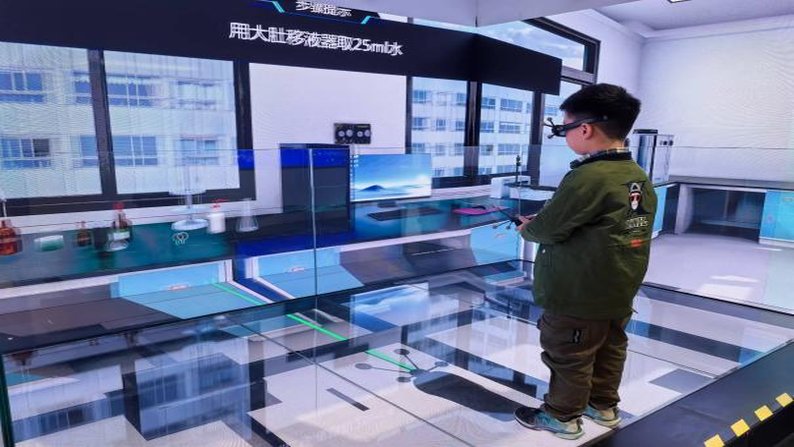
不择知行细流,蕴蓄蓝绿成深:雄安新区生态环境共享中心科普宣传空间营造雄安新区生态环境共享中心VR虚拟实验室(数字化仿真替代实体化学实验,实现科普零危废、低能耗)
6天前 · 来源:雄安新区生态环境监控中心 · 作者:雄安新区生态环境监控中心
