

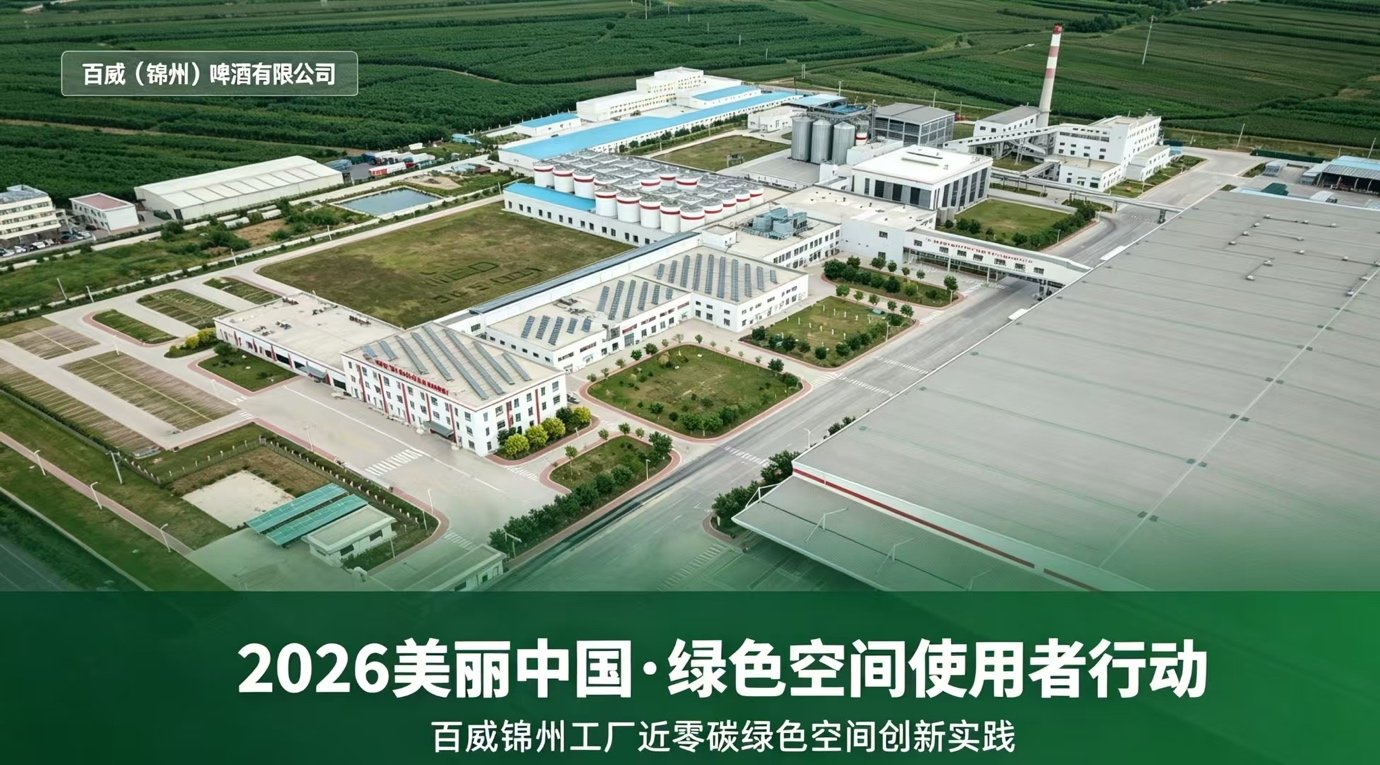
Company/Organization Profile
Anheuser-Busch InBev (Jinzhou) Brewery Co., Ltd. was established in 2000, is a subsidiary of Budweiser APAC, and is located in Songshan New District, Jinzhou City. The company is primarily engaged in the R&D and production of mid-to-high-end beers, with a designed annual production capacity of 300,000 tons. Its products cover brands such as Budweiser, Hoegaarden, Harbin, and others. Committed to the 'Dual Carbon' strategy, the company has adopted measures such as biomass boiler replacement, photovoltaic power generation, and green electricity procurement.
Guided by the Group's goal of 'Net Zero Value Chain by 2040', it continues to pursue green and low-carbon transformation. The company has been recognized as a national-level 'Green Factory' and a provincial-level 'Green Supply Chain' enterprise. From 2022 to 2025, it has passed independent third-party carbon neutrality certification for four consecutive years. It is the first carbon-neutral brewery in Liaoning Province's beer industry and the second carbon-neutral brewery of Budweiser Group globally, setting a benchmark for green and low-carbon development in the industry."
机构简介
百威(锦州)啤酒有限公司成立于2000年,隶属百威亚太,位于锦州市松山新区。主营中高端啤酒生产研发,设计产能30万吨,产品覆盖百威、福佳白、哈尔滨等系列品牌。公司践行"双碳"战略,通过生物质锅炉替代、光伏发电、绿电采购等举措,在集团"2040年价值链净零"目标指引下,持续践行绿色低碳转型,获得国家级"绿色工厂"和省级"绿色供应链"企业称号。2022至2025年连续四年通过独立第三方碳中和认证,是辽宁省啤酒行业首家碳中和工厂,也是百威全球第二家碳中和工厂,树立了行业绿色低碳发展的标杆典范。
Project Overview
As a traditional high-energy-consumption beer manufacturing enterprise, Budweiser Jinzhou Brewery faced three major pain points before its green transformation: First, its energy structure was highly dependent on fossil fuels. The original two 20-ton coal-fired boilers and conventional non-clean energy electricity purchases resulted in persistently high carbon emission intensity, with zero clean energy usage before 2015. Second, water resource utilization efficiency was relatively low. Beer brewing consumes large amounts of water, with annual wastewater treatment costs exceeding RMB 3 million, and the water reuse rate was less than 70%. Third, the degree of solid waste resource utilization was insufficient. By-products such as spent grain, waste yeast, and waste packaging materials could not be fully recycled.
In response to the above bottlenecks, the brewery adopted a comprehensive implementation pathway of 'Carbon Reduction at Source, Decarbonization in Process, Synergistic Emission Reduction, and Intelligent Carbon Control,' with systematic planning and phased progress. It planned to achieve 100% green steam supply by 2015 and install photovoltaic power generation facilities in the brewery area to partially green its electricity supply. Concurrently, it formulated a three-year environmental target for 2017–2020. It planned to achieve RE-100 (100% green electricity) by 2022, while simultaneously formulating a five-year environmental target for 2020–2025. With the ultimate goal of achieving full operational carbon neutrality and building a near-zero carbon green brewery space, the brewery is committed to becoming a pioneer and leader in the green and low-carbon transformation of the beer industry.
项目背景
百威锦州工厂作为传统高耗能啤酒制造企业,绿色转型前面临三大突出痛点:一是能源结构高度依赖化石能源,原有两台20吨燃煤锅炉及常规外购非清洁能源电力导致碳排放强度居高不下,2015年前清洁能源使用占比为零;二是水资源利用效率偏低,啤酒酿造耗水量大,废水处理年成本超300万元,水重复利用率不足70%;三是固体废物资源化程度不足,废麦糟、废酵母、废包装材料等副产品未能实现充分循环利用。
针对上述瓶颈,工厂以“源头减碳、过程脱碳、协同降碳、智能控碳”为总体实施路径,系统谋划、分步推进。规划于2015年实现100%绿色蒸汽供应,并在厂区铺设光伏发电设施,实现部分电力绿色化;同步制定2017—2020三年环境目标。规划于2022年前实现RE-100(100%绿色电力),同步制定2020—2025年五年环境目标。以全面实现运营碳中和、打造近零碳绿色工厂空间为最终目标,致力于成为啤酒行业绿色低碳转型的先行者与引领者。
Project Implementation
I. Organizational Mechanism Building to Lay a Solid Foundation for Green Governance
The brewery established a green and low-carbon leadership group headed by the brewery manager, with three specialized working groups for energy, water resources, and solid waste. It built a VPO (Brewery Optimization) environmental management system, formulated a target responsibility system and assessment system for energy conservation and emission reduction, and decomposed carbon reduction, water conservation, and solid waste resource utilization targets level by level to each workshop, incorporating them into the performance appraisal system, forming a green governance pattern of "layer-by-layer transmission, everyone responsible."
II. Energy System Transformation to Achieve Carbon Reduction at Source
To address the high dependence on fossil energy, in 2014 the two 20-ton coal-fired boilers were converted to biomass boilers, achieving 100% green steam supply. Fully utilizing vacant land and rooftops, 20,000 square meters of photovoltaic panels were installed (installed capacity 2.17 MW, annual power generation 800,000 kWh, carbon reduction 493 tons). In 2021, a green electricity direct purchase agreement was signed, achieving 100% renewable electricity (RE100). In 2023, forklifts, commuter vehicles, and business vehicles were fully replaced with electric vehicles, with supporting charging piles built. Greenhouse gas emissions (Scope 1) were reduced by 99% compared to 2017.
To address the high steam energy consumption, RMB 3.65 million was invested to build a thermal energy center to recover flash steam from production, reducing steam usage by 50%. Heat recovery renovation was carried out on bottle washers and sterilizers (washing and sterilization interconnection), saving 2,500 tons of steam annually. Heat pump technology was introduced, reducing energy consumption by 2 MJ/HL, with a carbon reduction of approximately 233 tons.
Smart energy management was established: A Huawei IOT central control room was built, integrating intelligent systems from the power, brewing, logistics, and packaging workshops. Through the UMS energy management platform, real-time online monitoring of water, electricity, heat, and CO₂ at four levels was achieved, and the Grafana visualization platform was used to dynamically monitor energy usage trends, achieving refined and intelligent energy management.
III. Water Resource Recycling to Promote Process Decarbonization
To address the high cost of water intake and wastewater treatment, concentrated water reuse was implemented. Reverse osmosis concentrated water was treated by concentrated water RO for reuse, saving 300 tons of tap water per day, approximately 9,000 tons of fresh water annually. An ultrafiltration + RO reverse osmosis reclaimed water advanced treatment system was built, with reclaimed water used for greening, road cleaning, toilet flushing, etc., saving 12,000 tons of fresh water annually. Smart water management was deployed simultaneously, collecting water treatment data and generating PI data for dynamic control. Smart water meters and PLCs were installed in the packaging workshop, with real-time monitoring of each water point through the LMS system. In 2022, a Beer Wastewater Cooperative Utilization Agreement was signed with the Jinzhou Songshan New District South Station Water Company, using brewery wastewater as a high-quality carbon source for the downstream wastewater treatment brewery. The two parties cooperated with a division of labor to achieve cross-boundary pollution treatment, saving over RMB 600,000 annually.
IV. Solid Waste Resource Utilization and Zero-Waste Brewery Construction to Practice Circular Economy Concepts
Source reduction: Innovative measures such as "zero consumption" (100% liquid caustic soda recovery), "zero emission" (full recovery of weak wort and yeast wine), "zero leakage" (leakage renovation of high-temperature liquids and chemicals), and "zero plastic waste" (packaging plastic reduction training) were implemented. The generation intensity of general industrial solid waste was reduced by 17.2% annually, and the generation intensity of hazardous waste was reduced by 24% annually. Spent grain and waste yeast were used as animal feed, waste cardboard boxes were sold to papermaking enterprises, and broken glass was sold to glass bottle brewerys for recycling and remanufacturing. The comprehensive utilization rate of general industrial solid waste reached over 90%. In cooperation with university research teams, sludge, diatomaceous earth, and ash were mixed with white glass slag to make paving bricks and hydrophobic bricks, with small-scale trials successful, opening up new pathways for solid waste resource utilization.
V. Carbon Removal and Offsetting to Achieve Full-Chain Closure
CCUS project: In cooperation with PetroChina Liaohe Oilfield, carbon dioxide generated from beer fermentation was captured and used for oil displacement in the oilfield, which can increase crude oil recovery by 7%-15%, achieving carbon resource utilization. Employees breweryed over 5,300 trees (45 mu), with an annual carbon sequestration of approximately 51 tons. The enterprise has completed the annual full-brewery carbon neutrality closure for four consecutive years, strictly implementing the principle of "independent emission reduction first, CCER compliance offsetting as a backup." All rigid residual emissions were offset using nationally verified emission reductions under the China Certified Emission Reduction (CCER) mechanism, fully complying with national zero-carbon brewery construction rules and relevant mechanisms under the Paris Agreement.
VI. Public Participation and Ecological Culture Building to Gather Consensus on Green Development
To address the lack of low-carbon awareness in society, a "Better World Exhibition Hall" and a "Carbon-Seeking Eco-Park" were established, featuring exhibition areas on carbon neutrality journey, sustainable development, and a zero-carbon experience hall. Taking advantage of World Water Day, Earth Day, and Environment Day, over 50 environmental protection awareness campaigns were carried out, covering employees, government, upstream and downstream contractors, and surrounding communities. Waste-free awareness campaigns and water source clean-up activities were conducted in kindergartens and universities, creating a favorable atmosphere for the whole society to participate in green development.
项目实施
一、组织机制建设,筑牢绿色治理根基
工厂成立以厂长为组长的绿色低碳领导小组,下设能源、水资源、固废三个专项工作小组,构建VPO(工厂最优化管理)环境管理体系,制定节能减排目标责任制与考核制度,将碳减排、节水、固废资源化指标逐级分解至各车间,并纳入绩效考核体系,形成“层层传导、人人有责”的绿色治理格局。
二、能源系统改造,实现源头减碳
针对化石能源依赖度高的问题:2014年将两台20吨燃煤锅炉改造为生物质锅炉,实现100%绿色蒸汽供应;充分利用厂区空地及屋顶铺设2万平方米光伏(装机容量2.17兆瓦,年发电80万KWH,减碳493吨);2021年签订绿电直购协议,实现100%可再生电力(RE100);2023年将叉车、通勤车、商务车全面更换为电动车,并配套建设充电桩。推动温室气体排放(范围一)较2017年减少99%。
针对蒸汽能耗偏高问题:投资365万元建设热能中心回收生产闪蒸汽,减少蒸汽使用50%;实施洗瓶机与杀菌机热能循环改造(洗杀互联),年节省蒸汽2500吨;引入热泵技术,降低能耗2MJ/HL,减碳约233吨。
建立智慧能源管理:搭建华为物联网(IOT)中央控制室,集成动力、酿造、物流、包装车间智能系统,通过UMS能源管理平台实现水、电、热、CO₂四级在线实时监控,利用Grafana可视化平台动态监测能源使用趋势,实现能源管理精细化、智能化。
三、水资源循环利用,推动过程脱碳
针对取水与废水处理成本高的问题,实施浓水回用,将反渗透浓水经浓水RO再处理后回收利用,每天节约自来水300吨,年节约新鲜水约9000吨。建设超滤+RO反渗透中水深度处理系统,中水用于绿化、道路清洗、冲厕等,年节约新鲜水1.2万吨。同步部署智慧用水管控,收集水处理数据,生成PI数据进行动态管控;包装车间安装智能水表及PLC,通过LMS系统实时监控各用水点。2022年与锦州市松山新区南站水务公司签订《啤酒废水合作利用协议》,将啤酒废水作为下游污水处理厂优质碳源,双方分工协同,实现跨界治污,年节约60余万元。
四、固废资源化与无废工厂建设,践行循环经济理念
源头减量:实施“0消耗”(液碱100%回收)、“0排放”(弱麦汁和酵母酒全部回收)、“0泄漏”(高温液体及化学品泄漏改造)、“0废塑”(包装减塑培训)等创新举措,一般工业固废产生强度年度降低17.2%,危险废物产生强度年度降低24%。废麦糟、废酵母用作动物饲料;废纸箱出售造纸企业;碎玻璃出售玻瓶厂回收再制造;一般工业固废综合利用率达90%以上。与大学科研团队合作,将污泥、硅藻土、灰渣掺杂白玻璃渣制成步道方砖及疏水砖,小试成功,为固废资源化利用开辟新路径。
五、碳清除与抵消,实现全链条闭环
CCUS项目:与中国石油辽河油田合作,将啤酒发酵产生的二氧化碳捕集后用于油田驱油,可提高原油采收率7%-15%,实现碳资源化利用;组织员工种植5300余棵树木(45亩),年固碳量约51吨。企业已连续四年完成年度全厂碳中和闭环,严格执行“自主减排优先、CCER合规抵销兜底”原则,全部刚性剩余排放均采用全国温室气体自愿减排机制(CCER)合规核证减排量完成抵销,全程符合国家零碳工厂建设规则及《巴黎协定》相关机制要求。
六、公众参与与生态文化建设,凝聚绿色发展共识
针对社会低碳认知不足的问题,建立“美好世界展览馆”和“碳寻生态园”,设置碳中和历程、可持续发展、零碳体验馆等展区,依托世界水日、地球日、环境日为契机开展环保宣传活动50余场,覆盖员工、政府、上下游承包商、周边社区等;走进幼儿园、高校开展无废宣传和水源地清理活动,营造全社会共同参与绿色发展的良好氛围。
Project Outcome
I. Quantifiable Results of Remarkable Performance, Industry-Leading Indicators
Carbon Emissions: Product carbon emission intensity decreased from 7.83 kgCO₂e/hl in 2017 to 0.11 kgCO₂e/hl in 2025, a reduction of 98.6%. The independent emission reduction ratio reached 96.12%, with annual residual emissions of only 124 tons. The brewery has achieved carbon neutrality for four consecutive years from 2022 to 2025.
Energy: Achieved 100% renewable electricity, 100% green steam, and 100% electric vehicles. In 2025, the comprehensive energy consumption per unit product was 22.58 kgce/kL, a 24.1% decrease from 2023. This figure outperforms the advanced value of 26 kgce/kL specified in the "Energy Consumption Quota per Unit Product of Beer" (GB 32047-2025), reaching the industry's Level 1 energy efficiency standard.
Water Resources: Water intake per unit product decreased from 2.78 m³/kL to 1.99 m³/kL, meeting the advanced value (≤3.5 m³/kL) of the "Liaoning Province Water Usage Quota" (DB21/T 1237-2026). The water reuse rate increased from 70.14% to 75.09%.
Solid Waste: Achieved a 100% recycling rate for general solid waste. The intensity of general industrial solid waste generation decreased by 17.2% compared to 2021, and the intensity of hazardous waste generation decreased by 24%. The level of waste resource utilization ranks among the top in the industry.
II. Innovative Model Stands Out, Leading Industry Development
Technological Innovation: Established a diversified clean energy system integrating "Solar Photovoltaics + Green Certificates + Biomass Boilers + Heat Pumps + Heat Recovery." Pioneered the model of external supply of beer wastewater carbon sources, achieving cross-sector collaborative pollution control. Realized carbon resource utilization through CCUS (Carbon Capture, Utilization, and Storage) for CO₂-enhanced oil recovery.
Mechanism Innovation: Established a VPO (Voyager Brewery Optimization) Environmental Management System and a Huawei IoT-based Smart Energy and Carbon Management Platform. This enables real-time monitoring of energy data at four levels and dynamic PI (Performance Indicator) management, forming a new paradigm of "data-driven, intelligent control" for green management.
Model Innovation: Developed a "Five-in-One" carbon neutrality pathway: "Source Carbon Reduction – Process Decarbonization – Synergistic Emission Reduction – Intelligent Carbon Control – Carbon Offset." This provides a replicable and scalable model for the industry.
III. Strong Sustainability, Solid Long-Term Mechanism
The brewery has established a long-term operational green and low-carbon management mechanism. Energy conservation and emission reduction targets are incorporated into the performance assessments of all workshops. The smart management platform continuously optimizes operations. Annual carbon neutrality certification is consistently maintained, ensuring the effectiveness is continuously consolidated and steadily improved, providing a solid institutional guarantee for green and low-carbon development.
成果亮点
一、量化成效显著,指标行业领先
碳排放:单位产品碳排放强度从2017年的7.83kgCO₂e/hl降至2025年的0.11kgCO₂e/hl,降幅达98.6%;自主减排比例96.12%,年剩余碳排放仅124吨,2022—2025年连续四年实现碳中和。
能源:实现100%可再生电力、100%绿色蒸汽、100%电动车辆。2025年单位产品综合能耗为22.58kgce/kL,较2023年下降24.1%,优于《啤酒单位产品能源消耗限额》(GB32047-2025)先进值26kgce/kL,达到行业能耗1级水平。
水资源:单位产品取水量从2.78m³/kL降至1.99m³/kL,达到《辽宁省用水定额》(DB21/T 1237-2026)先进值(≤3.5m³/kL);水重复利用率从70.14%提升至75.09%。
固废:一般固体废物循环回收率100%,一般工业固体废物产生强度较2021年下降17.2%,危险废物产生强度下降24%,废弃物资源化利用水平位居行业前列。
二、创新模式突出,引领行业发展
技术创新:构建“光伏+绿证+生物质锅炉+热泵+热能回收”多元清洁能源体系;首创啤酒废水碳源外送模式,实现跨界协同治污;CCUS二氧化碳驱油实现碳资源化利用。
机制创新:建立VPO环境管理体系与华为IOT智慧能碳管理平台,实现能源数据四级实时监控和动态PI管理,形成“数据驱动、智能管控”的绿色管理新范式。
模式创新:形成“源头减碳—过程脱碳—协同降碳—智能控碳—碳抵消”五位一体碳中和路径,为行业提供可复制、可推广的范本。
三、可持续性强,长效机制稳固
工厂已形成长期运行的绿色低碳管理机制,节能减排指标纳入各车间绩效考核,智慧管理平台持续优化运行,碳中和认证每年持续进行,确保成效持续巩固、稳步提升,为绿色低碳发展提供坚实制度保障。
Project Highlights
I. Environmental Benefits (Statistical Scope: 2023, Brewery Operational Control Boundary, Scope 1 + Scope 2)
Carbon Reduction: Compared to the 2017 baseline year, annual CO₂ emissions reduced by approximately 10,000 tons; carbon sink forest sequesters 51 tons of carbon annually.
Energy Saving: Comprehensive energy consumption decreased from 3,245 tons of standard coal in 2023 to 2,187 tons of standard coal in 2025, a significant reduction.
Water Saving: Through measures such as reclaimed water reuse, secondary reverse osmosis, and segmented recovery of brewing water, approximately 21,000 tons of fresh water are saved annually, with a water reuse rate of 75.09%.
Waste Reduction: Comprehensive utilization rate of general industrial solid waste exceeds 90%; the external supply of beer wastewater as a carbon source saves approximately RMB 2 million annually.
Economic Benefits: Comprehensive annual cost reduction and efficiency improvement exceed RMB 5 million, achieving a win-win situation for both economic and ecological benefits.
II. Far-Reaching Social Impact, Significant Demonstration Effect
Industry Demonstration: As the first carbon-neutral brewery in Liaoning Province, it provides a replicable model for the green transformation of the industry. Numerous beer enterprises from within and outside the province have visited for exchange and learning.
Government-Enterprise Collaboration: Signed a carbon neutrality strategic cooperation agreement and a wastewater utilization agreement with the Jinzhou Municipal Government, promoting regional green and low-carbon development.
Public Participation: Over 50 environmental protection activities are carried out annually. The "Budweiser Jinzhou Carbon Neutrality Tour" has been included in the case study teaching materials of the Party School of the Liaoning Provincial Committee, becoming a vivid practical case of green development in the province.
成果影响力
一、生态环境效益(统计口径:2023年度,工厂运营控制权边界,范围一+范围二)
碳减排:较2017年基准年,年减排二氧化碳约1万吨;碳汇林年固碳51吨。
节能:综合能耗从2023年3245吨标煤下降至2025年2187吨标煤,降幅显著。
节水:通过中水回用、二次反渗透、酿造水分段回收利用等措施,年节约新鲜水约2.1万吨,水重复利用率达75.09%。
减废:一般工业固废综合利用率超90%;啤酒废水碳源外送年降本约200万元。
经济效益:综合年降本增效超500万元,实现经济效益与生态效益双赢。
二、社会影响深远,示范效应显著
行业示范:作为辽宁省首家碳中和啤酒厂,为行业绿色转型提供可复制范本,省内外多家啤酒企业前来交流学习。
政企协同:与锦州市政府签订碳中和战略合作及废水利用协议,推动区域绿色低碳发展。
公众参与:年开展环保活动50余场,“百威锦州碳中和之旅”纳入辽宁省委党校案例教学教材,成为全省绿色发展的生动实践案例。
Reviews & Honors
I. Third-Party Certifications and Verification
Carbon Neutrality Certification:
From 2022 to 2025, the brewery successfully obtained third-party Carbon Neutrality Certification for four consecutive years, independently verified in accordance with the PAS 2060:2014 and ISO 14064-3:2019 standards. Carbon emissions totaled 174 t CO₂e in 2022. In 2023, residual emissions were reduced to 142 t CO₂e and fully offset through the retirement of 93 Verified Carbon Standard (VCS) Verified Carbon Units (VCUs).
Greenhouse Gas Verification:
In 2022, the brewery received a Greenhouse Gas Verification Statement from TÜV SÜD (Certificate No. C2GHG 119743 0002), verifying Scope 1 emissions of 173.478 t CO₂e and Scope 2 emissions of 0 t CO₂e.
II. Government and Industry Recognition
2018: Awarded the title of Provincial Green Supply Chain Demonstration Enterprise by Liaoning Province.
2021: Recognized as a National Green Factory under the Ministry of Industry and Information Technology (MIIT) Green Manufacturing System.
2022: Awarded the title of Top Ten Green Factories of Jinzhou; honored as an Outstanding Contribution Enterprise in the inaugural “Low-Carbon Jinzhou” Awards; designated by the Jinzhou Municipal Ecology and Environment Bureau as the city’s sole Environmental Enforcement Training Base.
2024: Successfully passed the assessment for Liaoning Province’s Zero-Waste City Cell (Zero-Waste Factory) initiative.
2026: Recognized as a Provincial Water Efficiency Benchmark Enterprise in Liaoning Province.
III. Media Coverage and Social Recognition
Over the years, the brewery has continuously conducted public awareness campaigns on environmental protection, sustainability, and low-carbon development. These initiatives have been featured by 132 media outlets, generating more than 3 million views and engagements. The “Budweiser Jinzhou Brewery Carbon Neutrality Journey” was selected as a case study for economics teaching materials at the Party School of the Liaoning Provincial Committee of the Communist Party of China.
Building on its achievements in carbon neutrality, zero-carbon development, and green manufacturing, the brewery actively showcases the green transformation pathway of the light manufacturing industry. Through brewery tours, industry exchanges, public sustainability disclosures, and carbon information reporting, the brewery communicates the principles of scientific carbon accounting, precision emissions reduction, and compliant carbon neutrality to supply chain partners, business stakeholders, industry organizations, and the broader public, continuously expanding its influence as a low-carbon industry benchmark.
评价与荣誉
一、第三方认证与评价
碳中和认证:2022—2025年连续四年通过独立认证公司依据PAS 2060:2014和ISO 14064-3:2019标准的第三方“碳中和”认证。2022年碳排放量174吨CO₂e,2023年残余排放142吨CO₂e,并通过93份VCS核证减排量实现抵消。
温室气体核查:2022年通过TÜV南德温室气体核查声明(编号C2GHG 119743 0002),核查范围一排放173.478吨CO₂e、范围二排放0吨CO₂e。
二、政府与行业荣誉
2018年:获辽宁省省级“绿色供应链”示范企业称号
2021年:获国家级“绿色工厂”称号(工信部绿色制造体系)
2022年:获锦州市“十大绿色工厂”称号;首届“低碳锦州”评选获“杰出贡献企业”称号;获锦州市生态环境局唯一指定授牌“生态环境执法实训基地”
2024年:通过辽宁省“无废城市细胞”(无废工厂)建设评估
2026年:辽宁省省级节水标杆企业
三、媒体报道与社会认可
多年来持续开展绿色低碳环保宣传活动,获132家媒体报道,300万人次查阅点击,“百威锦州工厂碳中和之旅”纳入中共辽宁省委党校经济学案例教学教材。在行业与社会层面,依托企业碳中和实践成果、零碳建设经验、绿色生产模式,积极对外展示轻工企业绿色转型路径。通过生产参观、行业交流、绿色公示、碳信息披露等方式,向供应链客户、合作单位、行业机构、社会公众传递科学算碳、精准降碳、合规碳中和的绿色理念,持续扩大行业低碳示范影响力。
近零碳社区的美育升级---- 长寿苑社区 “低碳实践 + 影像科普” 共建项目
4天前 · 来源:成都市武侯区火车南站街道长寿苑社区居民委员会 · 作者:成都市武侯区火车南站街道长寿苑社区居民委员会
以绿色金融之力推动中国新质生产力!
4天前 · 来源:国泰海通证券研究所ESG及美丽中国研究组 · 作者:国泰海通证券研究所ESG及美丽中国研究组
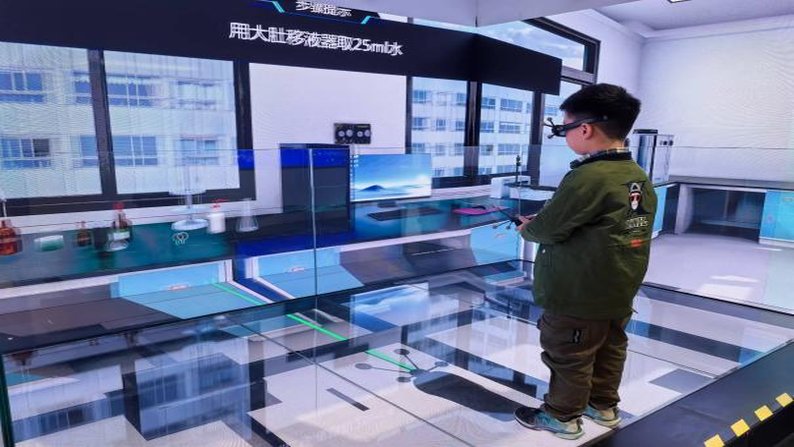
不择知行细流,蕴蓄蓝绿成深:雄安新区生态环境共享中心科普宣传空间营造雄安新区生态环境共享中心VR虚拟实验室(数字化仿真替代实体化学实验,实现科普零危废、低能耗)
6天前 · 来源:雄安新区生态环境监控中心 · 作者:雄安新区生态环境监控中心
