

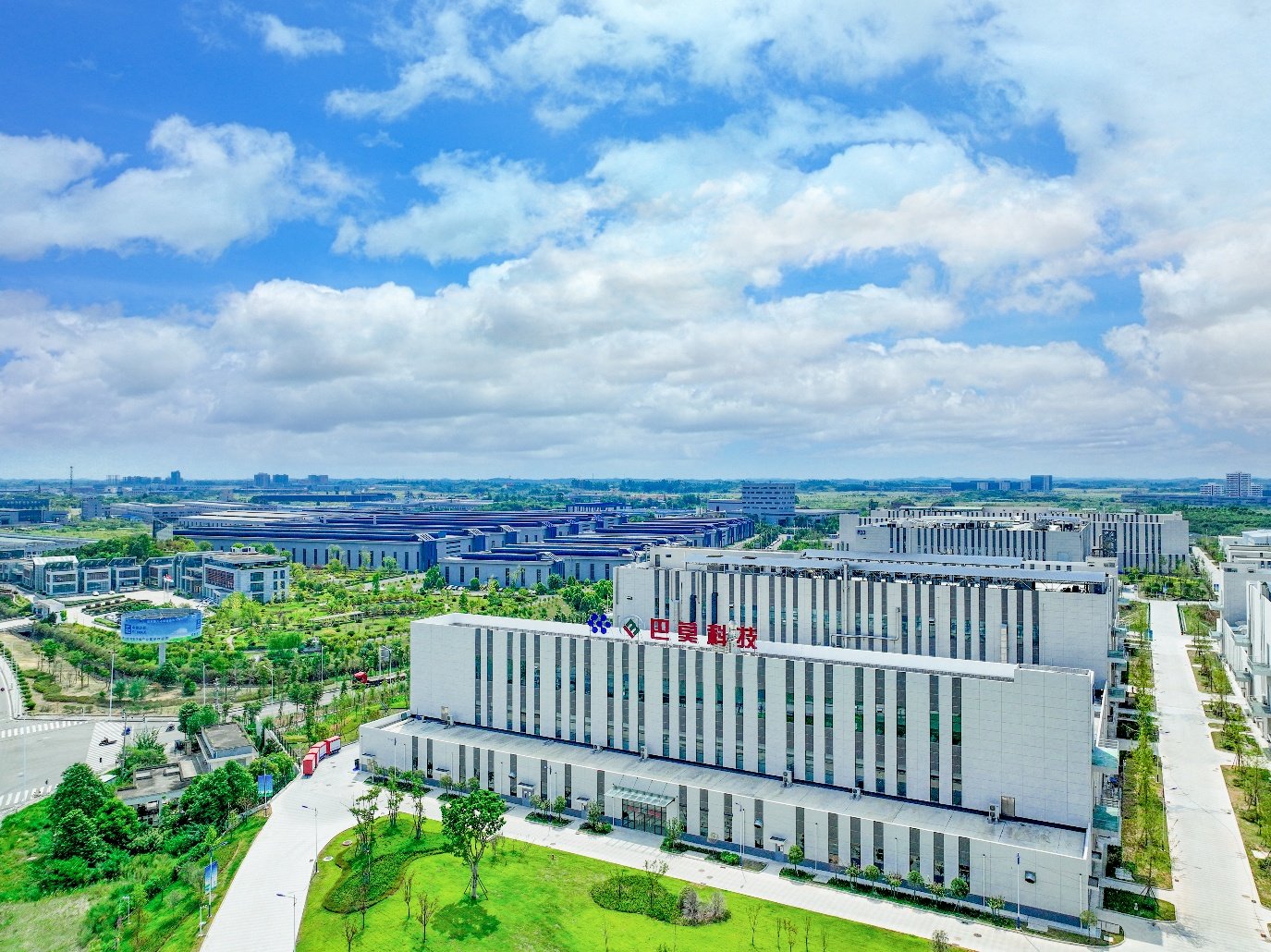
Company/Organization Profile
Chengdu Bamo Technology Co., Ltd. was founded in August 2015 and is principally engaged in the R&D, manufacturing, and production of lithium-ion battery cathode materials. The company has now built an annual production capacity of 100,000 tonnes of high-end cathode materials. Its product portfolio spans high-nickel materials, ternary materials, and high-voltage lithium cobalt oxide materials, among others. These products are widely applied across the supply chains of leading domestic and international automotive brands, the international energy storage market, mainstream consumer electronics markets, as well as in drones, the low-altitude economy, and embodied intelligence.
In April 2022, the company obtained PAS 2060 certification from SGS, becoming the world's first cathode material manufacturer to achieve “zero-carbon”status. It has also been recognized with credentials including the National Green Factory, National Intelligent Manufacturing Demonstration Factory, National Green Design Product, and Sichuan Provincial Green Supply Chain Management Enterprise.
机构简介
成都巴莫科技有限责任公司成立于2015年8月,主要从事锂离子电池正极材料研发、制造及生产,现已建成10万吨高端正极材料产能,产品涵盖高镍系材料、三元材料及高电压钴酸锂材料等,广泛应用于国际、国内高端品牌汽车产业链、国际储能市场、主流消费类电子市场、无人机、低空经济以及具身智能等领域。
2022年4月企业通过SGS的PAS 2060认证,成为全球首家达成“零碳”的正极材料生产企业,并获评国家级绿色工厂、国家级智能制造示范工厂、国家绿色设计产品、四川省绿色供应链管理企业等资质。
成都巴莫企业logo
Project Overview
Chengdu Bamo is located in the Cheng-A Industrial Park, Jintang County, Chengdu City. It serves as the core carrier of this Green Space practice, primarily serving the company's internal production and its downstream new-energy battery customers.
As a lithium-ion battery cathode material enterprise, its key processes—such as high-temperature sintering—are characterized by high energy consumption.
Meanwhile, the EU Carbon Border Adjustment Mechanism (CBAM) has entered its definitive taxation phase, the Battery Passport is about to be launched, and requirements including carbon footprint, supply chain traceability, and recycled-material ratios have become unified market-access thresholds.
Downstream international customers are imposing increasingly stringent low-carbon supply chain requirements; to maintain its competitive edge in the global market, the company must continuously reduce the carbon footprint of its products.
Although Sichuan is rich in hydropower resources and the company has a solid foundation for green electricity use, further tapping the potential of its clean-energy share, refined management and control of production processes, and the establishment of a carbon-emission management system covering its core business still require continuous improvement.
The low-carbon transition currently lacks a systematic entry point.In light of the above, Chengdu Bamo has actively responded to the national “dual carbon”strategy, integrating green and low-carbon development into its corporate governance system and responsibility framework, thereby establishing a long-term mechanism driven top-down and underpinned by institutional safeguards.
It has also systematically deployed clean-energy substitution, low-carbon technology application, and supply-chain collaboration, with the goal of building the world's first “zero-carbon”cathode material factory and forming a replicable operating paradigm for green space.
项目背景
成都巴莫位于成都市金堂县成阿工业园区,是本次绿色空间实践的核心载体,主要服务公司内部生产及下游新能源电池客户。作为锂离子电池正极材料企业,其高温烧结等关键工序具有高能耗特征,同时欧盟碳边境调节机制正式征税,电池护照即将上线,碳足迹、供应链溯源、再生材料配比等要求已成为统一准入门槛,下游国际客户对低碳供应链要求日益提高,企业要在全球竞争中保持优势,须持续压降产品碳足迹。
四川虽拥有丰富的水电资源,企业绿电使用具备良好基础,但清洁能源比例的进一步挖潜、生产过程的精细化管控,以及覆盖主营业务的碳排放管理体系建设仍需持续完善,低碳转型缺乏系统抓手。基于以上情况,成都巴莫积极响应国家“双碳”战略,将绿色低碳纳入企业治理体系与责任框架,形成顶层推动、制度保障的长效机制,并系统布局清洁能源替代、低碳技术应用与供应链协同,目标建成全球首家正极材料“零碳”工厂,并形成可复制的绿色空间运营范式。
Project Implementation
Chengdu Bamo has deeply embedded the "dual carbon" goals throughout every aspect of its production and operations, with its core management team taking the lead and driving the effort systematically from the top down.
The company established a Green and Low-Carbon Management Committee led by senior executives, explicitly incorporated green and low-carbon development into its development strategy, and defined its medium- and long-term development plan, annual targets, indicators, and implementation plans.
It has integrated carbon-emission control into a governance system covering its core business, clarified the responsibilities and performance assessment of functions such as EHS, production, lean manufacturing, and equipment, thus forming a normalized mechanism driven from the top and underpinned by institutional safeguards.
On the energy side, leveraging Sichuan's abundant hydropower resources, Chengdu Bamo achieved a clean-energy share of 82%. By purchasing Green Power Certificates (GECs) to cover the remaining non-clean electricity, it ultimately reached a 100% clean-energy usage ratio, eliminating the carbon emissions associated with purchased electricity at the source and significantly reducing its product carbon footprint.
The GEC procurement provides the company with traceable environmental-attribute certificates for its clean electricity consumption and fully offsets the carbon emissions from purchased electricity, further consolidating the accounting foundation of its zero-carbon factory.It developed the “126”short-process integrated process, substantially shortening the process flow and reducing energy and material consumption at intermediate stages.
Focusing on high-energy-consuming core processes such as calcination, it reduced heat loss and ineffective heating during calcination through precise and staged temperature-control technologies, lowering the electricity consumption of its kilns.
It also introduced standardized operations and mistake-proofing (poka-yoke) measures to improve operational precision, achieving a 22.92% reduction in comprehensive energy consumption per unit of output value.
On the digital carbon-management side, Chengdu Bamo built an energy-monitoring platform that collects data from smart electricity meters via intelligent gateways and transmits the data to its IMES system for visual display.
The platform supports multi-dimensional energy-consumption queries and historical-trend analysis, underpinning energy-saving diagnostics and continuous optimization. It can also separately collect kiln energy-consumption data for dedicated analysis, precisely identifying high-energy-consuming links.
Relying on the group's centrally built integrated energy-carbon management and control platform, Chengdu Bamo implements unified emission-entity control along the two main threads of “organizational carbon”and “product carbon”.
For representative products, the platform has established a complete carbon-footprint model spanning from ore or recycled resources through precursor to cathode material, and can produce product carbon-footprint reports in strict accordance with international standards such as the EU Battery Regulation, providing a solid compliance data basis for product exports.
Together, the two platforms constitute Chengdu Bamo's full-chain digital management foundation—from energy consumption to carbon emissions.
On the supply-chain side, Chengdu Bamo formulated procurement policies such as the Supplier Management Procedure and the Procurement Process Control Procedure, integrating green and low-carbon requirements into supplier management and procurement standards.
It added green indicators—covering compliance with “three-waste” emissions, energy efficiency, toxic and hazardous substance management, and recyclability—into supplier evaluations. It established a normalized training and collaborative emission-reduction communication mechanism for key suppliers to strengthen the shared awareness of building a green supply chain, and incorporated raw-material suppliers' carbon-reduction target-setting and clean-electricity usage ratios into supplier assessment requirements.
Through the above measures, the company has not only raised suppliers' awareness of green production but also fostered in-depth cooperation between the two parties in the environmental protection domain, jointly advancing the building of a green supply chain. This extends the zero-carbon practice from a single enterprise space to the industrial chain, and the spillover effect of the zero-carbon practice continues to grow.
项目实施
成都巴莫将“双碳”目标深植于企业生产运营各环节,由核心管理层牵头、自上而下系统推进。公司成立由高管负责的绿色低碳管理委员会,将绿色低碳明确写入发展战略,明确中长期发展规划、年度目标、指标、实施方案等,把碳排放管控纳入覆盖主营业务的治理体系,厘清安环、生产、精益、设备等部门职责与考核,形成顶层推动、制度保障的常态化机制。
在能源侧,成都巴莫依托四川丰富的水电资源,清洁能源占比达 82%;通过购买绿色电力证书覆盖剩余非清洁电力,最终实现清洁能源使用比例 100%,从源头消除外购电力对应的碳排放,显著压降产品碳足迹;绿证采购使公司清洁电力消费获得可追溯的环境权益凭证,对外购电力的碳排放实现全额抵消,进一步夯实了零碳工厂的核算基础。
开发了“126”短程一体化工艺,大幅缩短了工艺流程,减少了中间环节的能源与物料消耗。聚焦高能耗的焙烧等核心工序,通过精确温度控制与分段温度控制技术,减少了焙烧过程中的热量散失与无效加热,实现窑炉电力消耗降低,并引入标准化作业与防错防呆提升操作精度,单位产值综合能耗下降22.92%。
在数字化碳管理侧,成都巴莫搭建了能源监控平台,通过智能网关采集智能电表上的数据,并将数据传输到IMES系统中进行可视化展示,并支持多维度能耗查询与历史趋势查看分析,支撑节能诊断与持续优化,同时可单独采集窑炉能耗并开展专项分析,精准定位高耗能环节。
依托集团统一建设的能碳一体化管控平台,围绕“组织碳”与“产品碳”两条主线对成都巴莫实施统一的排放主体管控。针对典型产品,平台建立了从矿石或再生资源到前驱体、正极材料的完整碳足迹模型,可严格按照欧盟电池法规等国际标准输出产品碳足迹报告,为产品出口提供坚实的合规数据支撑。两个平台共同构成成都巴莫从能耗到碳排放的全链条数字化管理基础。
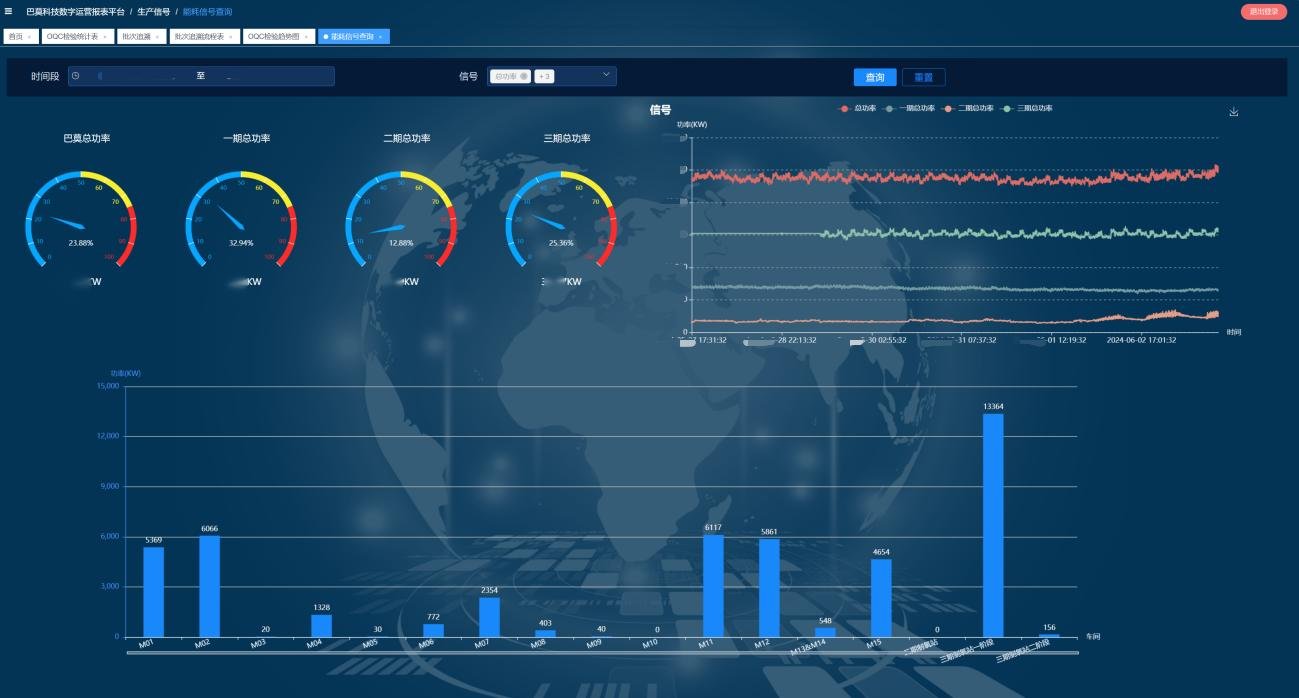
能源监控平台
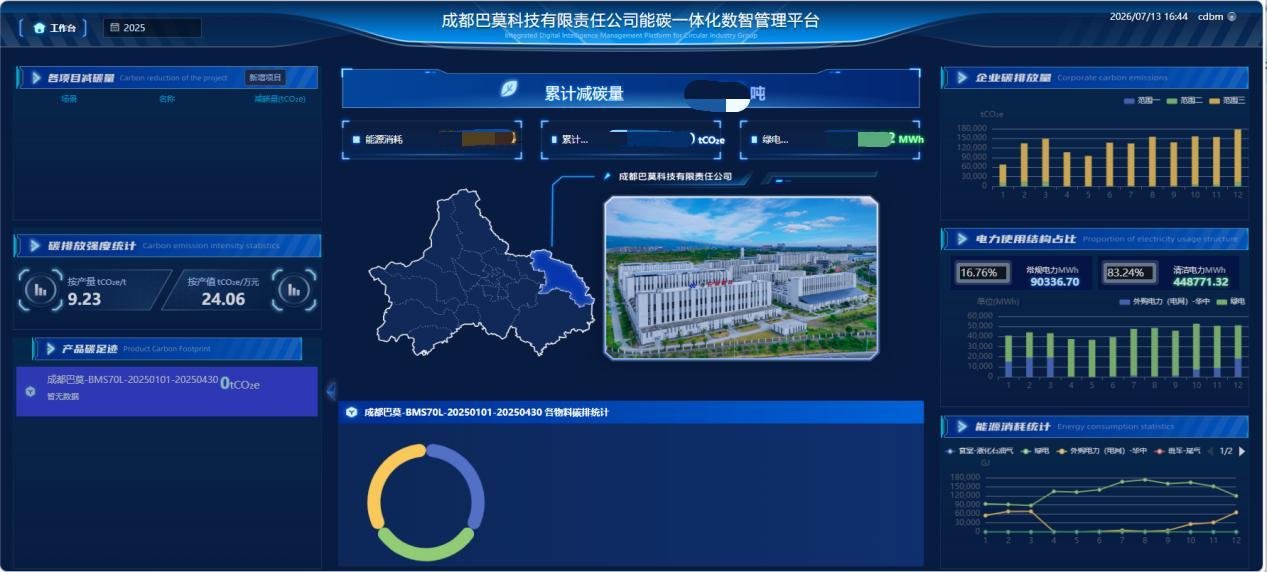
能碳一体化管控平台
在供应链侧,成都巴莫制定《供应商管理程序》《采购过程控制程序》等采购制度,将绿色低碳要求融入供应商管理与采购标准,在供应商评价中增设“三废”排放合规、能耗效率、有毒有害物质管理及可回收性等绿色指标;建立重点供应商绿色低碳常态化培训与协同减排宣贯机制,强化绿色供应链共建意识,将原料供应商的降碳目标设定与清洁电力使用比例纳入供应商考核要求。
通过以上措施,公司不仅增强了供应商的绿色生产意识,还促进了双方在环保领域的深度合作,共同推动构建绿色供应链,使零碳实践从单一企业空间向产业链延伸,零碳实践的外溢效应持续放大。
Project Outcome
In terms of institutional innovation, Chengdu Bamo has written the “dual carbon”goals into its corporate governance and performance-assessment systems, established a Green and Low-Carbon Management Committee and a dedicated task force, and built a digital energy-carbon management platform—turning low-carbon from a slogan into a top-down, institutionalized, and normalized course of action.
In terms of technological innovation, the company has advanced green-certificate substitution, energy-saving technical retrofits, and digital carbon management in a coordinated manner, achieving a 100% clean-energy usage ratio. Combined with data collection via intelligent gateways, it has realized refined energy-consumption management and energy-saving retrofits, reducing comprehensive energy consumption per unit of output value by 22.92% and CO₂ emissions per unit of output value by 13.81%.
Relying on the energy-monitoring platform and the integrated energy-carbon management and control platform, it has achieved energy-consumption data collection and visualization as well as monthly dynamic accounting of organizational and product carbon, and rigorously produces compliant product carbon-footprint reports in accordance with the EU Battery Regulation, providing a solid low-carbon compliance foundation for cathode material exports.
In terms of model innovation, Chengdu Bamo obtained the Carbon Neutrality Verification and Declaration certification through SGS, built the world's first “zero-carbon”cathode material factory, and distilled a zero-carbon space operating paradigm that can be replicated across the group's multiple sites and the wider industrial chain.
Through its green and low-carbon innovation practices, Chengdu Bamo has now passed the ISO 14001 Environmental Management System certification, the ISO 14064 Greenhouse Gas Verification, and the ISO 14068-1 Carbon Neutrality Verification and Declaration certification, and has institutionalized these achievements through a long-term carbon-management system.
Its zero-carbon pathway is being promoted not only within the group but also extended outward through supplier collaboration and industry exchange, earning high recognition from leading downstream customers. The green benefits have been amplified on a sustained and stable basis: cathode material sales have ranked among the industry's top three for five consecutive years, and its high-nickel material shipments took the global No. 1 position in 2025.
成果亮点
在机制创新方面,成都巴莫把“双碳”目标写进公司治理与考核体系,设立绿色低碳管理委员会与推进小组、搭建数字化能碳管理平台,让低碳从口号变成自上而下、制度化的常态行动。在技术创新方面,公司以绿证替代、节能技改与数字化碳管理协同推进,清洁能源使用比例达100%,配合智能网关采集实现能耗精细化管理与节能技改,单位产值综合能耗下降22.92%,单位产值二氧化碳排放量下降13.81%;
依托能源监控平台与能碳一体化管控平台,实现能耗采集展示、组织碳与产品碳月度动态核算,并严格按欧盟电池法规输出合规产品碳足迹,为正极材料出口提供扎实的低碳合规支撑。模式创新方面,成都巴莫通过SGS达成碳中和宣告核证声明认证,建成全球首家正极材料“零碳”工厂,并沉淀出一套可向集团多基地与产业链复制的零碳空间运营范式。
通过绿色低碳的创新实践,成都巴莫现已通过ISO 14001环境管理体系、ISO 14064温室气体核查、ISO 14068-1碳中和宣告核证声明认证,并以长效碳管理制度予以固化。零碳路径不仅在集团内推广,同时通过供应商协同与行业交流向外溢出,获得下游头部客户的高度认可,绿色效益得以长期稳定放大,正极材料销量连续五年位居行业前三,2025年高镍材料出货量位居全球第一。
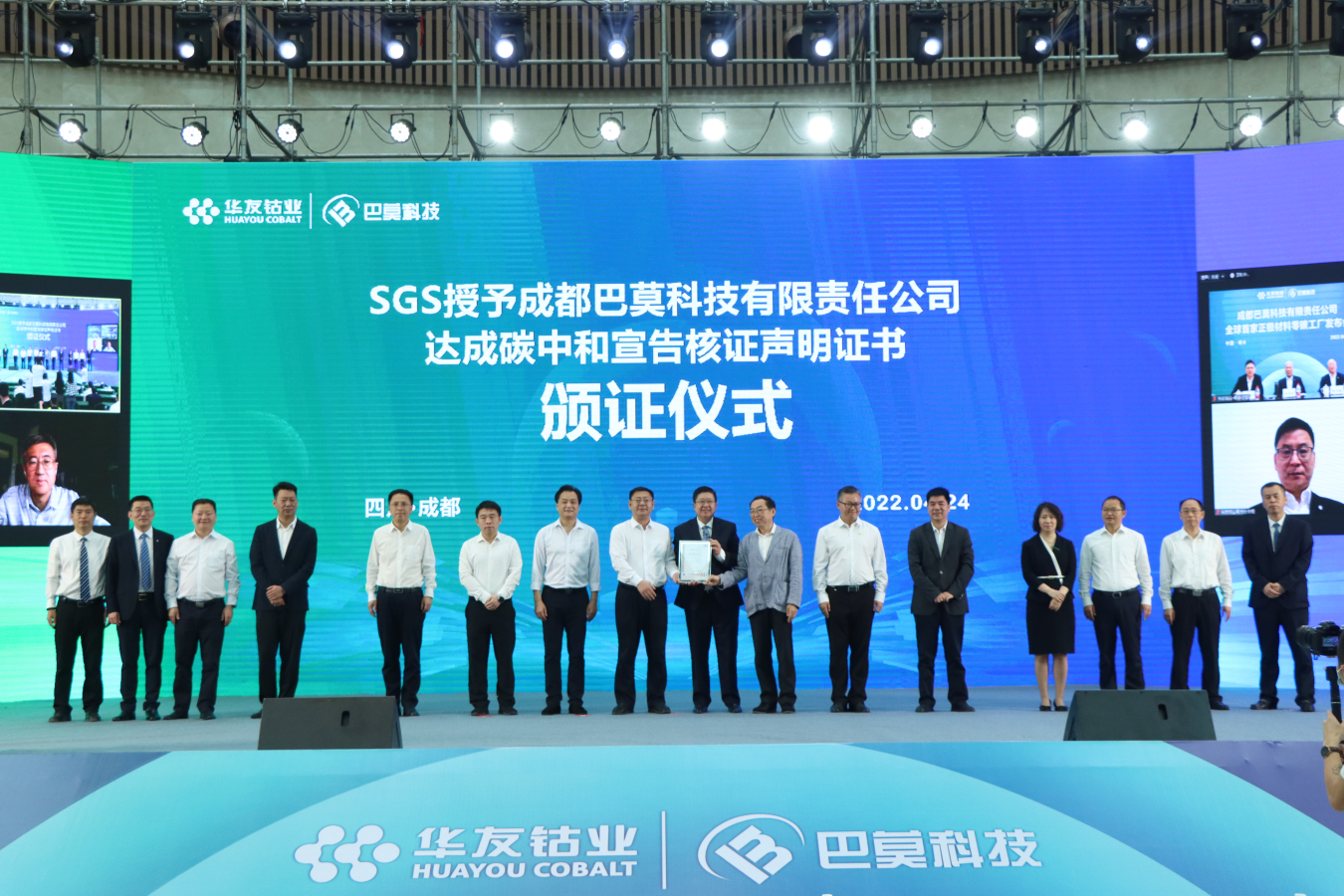
成都巴莫达成碳中和宣告核证声明证书颁证仪式
Project Highlights
In terms of eco-environmental benefits, comprehensive energy consumption per unit of output value decreased by 22.92%, and CO₂ emissions per unit of output value decreased by 13.81% (the accounting boundary is Chengdu Bamo's operational boundary, in accordance with ISO 14064-1:2018), achieving an annual CO₂ emission reduction of approximately 120,000 tonnes.
Since 2022, Chengdu Bamo has achieved the Carbon Neutrality Verification and Declaration certification through SGS for five consecutive years. Its products fully meet international carbon-footprint market-access standards such as the EU New Battery Regulation, successfully breaking through green trade barriers and enabling batch exports of its products to global markets including South Korea, France, the Netherlands, and the United States.
In terms of social impact, as the "chain-leader" enterprise of Chengdu's advanced energy industry chain, its zero-carbon factory construction model provides a replicable “Bamo solution”for the lithium-ion battery materials industry's progress toward carbon neutrality.
During the 2026 National Low-Carbon Day, 30 representative enterprises from Chengdu in fields such as new-energy vehicles, photovoltaics, and lithium-ion batteries made a special visit to the factory to learn from its zero-carbon construction experience, effectively driving the vigorous development of Chengdu's green new-material industry cluster.
成果影响力
生态环境效益方面,单位产值综合能耗下降22.92%,单位产值二氧化碳排放量下降13.81%(核算边界为成都巴莫运营边界,依据标准ISO 14064-1:2018),每年实现二氧化碳减排量约12万吨。
自2022年以来,成都巴莫已连续5年通过SGS达成碳中和宣告核证声明认证,产品全面满足欧盟新电池法等国际碳足迹准入标准,成功突破绿色贸易壁垒,实现了产品向韩国、法国、荷兰、美国等全球市场批量出口。社会影响方面,作为成都先进能源产业链链主企业,其零碳工厂建设模式为锂电材料行业向碳中和迈进提供了可复制的“巴莫方案”。
2026年全国低碳日期间,30家成都新能源汽车、光伏、锂电等领域代表企业专程走进该工厂学习零碳建设经验,有效带动了成都绿色新材料产业集群的蓬勃发展。
Reviews & Honors
In terms of third-party certification, Chengdu Bamo obtained the Carbon Neutrality Verification and Declaration certificate issued by SGS in April 2022, becoming the world's first cathode material manufacturer to achieve "zero-carbon" status.
It also passed the ISO 14064-1:2018 Greenhouse Gas Verification and the ISO 14001 Environmental Management System certification, with its green and low-carbon achievements receiving authoritative endorsement.
In terms of qualifications and honors, its green and low-carbon practices have been covered by media outlets including Sichuan News Broadcast, Sichuan Daily, Sichuan News Network, Sichuan Guancha, Chengdu Daily, and Chengdu TV.
The company was awarded the "2025 China Energy Conservation Association Innovation Award – First Prize in the Science and Technology Progress Award for Energy Conservation and Emission Reduction (Carbon Neutrality Category)," and has earned honors such as “National Green Factory,”“National Green Design Product,”“Sichuan Provincial Green Supply Chain Management Enterprise,” and “National Digital-and-Green Development Case.”
Its core integrated production process for lithium-ion ternary cathode materials was successfully included in the national Green Technology Promotion Catalog (2024 Edition).
评价与荣誉
在第三方认证方面,成都巴莫于2022年4月获得SGS颁发的达成碳中和宣告核证声明证书,成为全球首家实现“零碳”的正极材料生产企业,并通过ISO 14064-1:2018温室气体核查与ISO 14001环境管理体系认证,绿色低碳成效获得权威背书。
在资质与荣誉方面,其绿色低碳实践被四川新闻联播、四川日报、四川新闻网、四川观察、成都日报、成都电视等媒体报道,公司获评“2025中国节能协会创新奖节能减排科技进步奖(碳中和领域)一等奖”,取得“国家绿色工厂”“国家绿色设计产品”“四川省绿色供应链管理企业”“全国数字化绿色化发展案例”等荣誉称号,核心的 锂电三元材料集成式生产工艺成功纳入国家《绿色技术推广目录(2024年版)》。

近零碳社区的美育升级---- 长寿苑社区 “低碳实践 + 影像科普” 共建项目
4天前 · 来源:成都市武侯区火车南站街道长寿苑社区居民委员会 · 作者:成都市武侯区火车南站街道长寿苑社区居民委员会
以绿色金融之力推动中国新质生产力!
4天前 · 来源:国泰海通证券研究所ESG及美丽中国研究组 · 作者:国泰海通证券研究所ESG及美丽中国研究组
不择知行细流,蕴蓄蓝绿成深:雄安新区生态环境共享中心科普宣传空间营造雄安新区生态环境共享中心VR虚拟实验室(数字化仿真替代实体化学实验,实现科普零危废、低能耗)
6天前 · 来源:雄安新区生态环境监控中心 · 作者:雄安新区生态环境监控中心
