

Company/Organization Profile
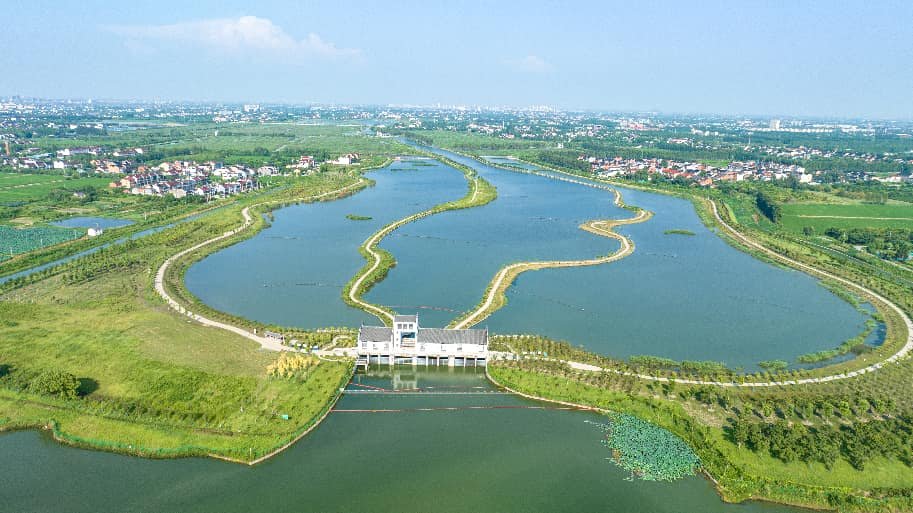
Everbright Water (Tongxiang) Co., Ltd. was registered in July 2019 as a holding subsidiary of China Everbright Water Limited. It is mainly engaged in the investment, construction and operation of the PPP Project for Tongxiang Western Drinking Water Source Protection and Construction. Implemented under the PPP model, the project comprises the ecological wetland project as well as the water intake pumping station and raw water pipeline project, with a concession period of 20 years including a two-year construction period.
The newlybuilt ecological wetland has a treatment capacity of 600,000 tons per day. Two DN1600 raw water pipelines are constructed with a total length of approximately 27 kilometres, serving a population of about 1.05 million. The total land area within the project's redline boundary is 5,385.66 mu, and the total project investment amounts to 1.253 billion yuan. Construction started on 12 November 2019. The central and northern zones were commissioned for trial water supply on 12 November 2021, and the southern zone was put into official water supply operation on 6 May 2025. Since the trial water supply on 12 November 2021, the effluent quality has consistently met the ClassⅡ water criteria specified in Environmental Quality Standards for Surface Water (GB38382002).
Listed among Jiaxing's “100 Centennial Key Projects” and designated as a major livelihood project of the Tongxiang Municipal Government, the project delivers systematic construction, technological empowerment, and routine operation and maintenance. It comprehensively enhances capacities in water source conservation, water purification, and water supply security, and builds a solid ecological foundation of water safety for Tongxiang's high-quality development.
机构简介
光大水务(桐乡)有限公司于2019年7月注册,系中国光大水务有限公司控股子公司,主要承担投资建设运营桐乡市西部饮用水源保护建设工程PPP项目。项目包括生态湿地工程和取水泵站及原水管线工程,采用PPP方式实施,特许经营期20年(含建设期2年)。
项目新建生态湿地处理规模为60万吨/日,新建DN1600原水管线2条,总长约27公里。服务人口约105万。工程用地红线内总面积5385.66亩,工程总投资12.53亿元。工程于2019年11月12日开工建设,中区、北区于2021年11月12日通水试运行,南区于2025年5月6日通水运行。自2021年11月12日通水试运行以来,出水指标稳定达到《地表水环境质量标准》(GB3838-2002)规定的Ⅱ类水标准。该工程作为嘉兴市“百年百项”重大项目、桐乡市政府重大民生实事工程,通过系统化建设、科技化赋能、常态化运维,系统性提升水源涵养、水质净化、供水保障能力,为桐乡高质量发展筑牢水安全生态基底。
Project Overview
The Tongxiang Western Drinking Water Source Protection Project is located at the border of Zhouquan Town and Dama Town in western Tongxiang, stretching from Sangchihuyang in the west to Baidangyang in the east, serving approximately 1.05 million urban and rural residents across the city. Prior to the project, Tongxiang had long suffered from waterqualityinduced water shortage. Firstly, though crisscrossed by river networks, the local terrain is flat with slow water flow and weak selfpurification capacity. Secondly, the municipal water intakes were once located in Kangjing Pond and the BeijingHangzhou Grand Canal. As a navigable waterway with heavy shipping traffic, numerous riparian enterprises and a dense population, the Grand Canal could hardly be under closedoff management. The raw water quality consistently failed to meet the standards for water supply sources, with constant risks of sudden pollution incidents. Thirdly, the city relied on only one water intake, resulting in a single water source and poor riskresistance capacity of water plants.
In 2016, the Tongxiang Municipal Government launched the Western Drinking Water Source Protection and Construction Project. It aims to establish a multi-source water supply security pattern, with the western water source as the main supply, Qiandao Lake water source as a high-quality supplement, and the Grand Canal water source for emergency backup. The project fundamentally addresses the problems of a single water source and unstable water quality, and safeguards the drinking water safety for over one million local residents.
项目背景
桐乡市西部饮用水源保护项目位于桐乡市西部洲泉镇与大麻镇交界处,西起桑柴湖漾、东至白荡漾,服务全市约105万城乡居民。项目实施前,桐乡长期面临水质型缺水状况:一是境内河网密布但地势平坦、水流缓慢、自净能力弱;二是市区取水口先后设在康泾塘和京杭大运河,运河属于通航河道,航运繁忙、沿河企业众多、人口密集,难以实行封闭式管理,原水水质长期不达供水水源标准,突发污染威胁时刻存在;三是全市仅一个取水口,水源单一,水厂抗风险能力弱。2016年,桐乡市政府启动实施西部饮用水源保护建设工程,旨在构建以西部水源为主、千岛湖水源为优质补充、运河水源为应急备用的多水源保障格局,从根本上解决水源单一、水质不稳问题,保障百万群众饮水安全。
Project Implementation
Construction of the project started on 12 November 2019. The central and northern zones commenced trial water supply on 12 November 2021 and entered formal operation in November 2022. The southern zone was completed and put into service in May 2025. The ecological wetland has a treatment capacity of 600,000 tons per day and a total area of 5,385.66 mu. The project includes one newlybuilt water intake pumping station and 27kilometers of DN1600 rawwater pipelines, which can meet Tongxiang’s demand for a seven-day emergency water reserve. After completion, the project tackled prominent problems item by item.
I. To address single water source and substandard water quality, the project adopted four patented technologies, including the artificial constructedwetland rootpore technology and enhanced plantbedtrench structure technology from the Research Center for Eco-Environmental Sciences, Chinese Academy of Sciences, and built a multi-stage purification system of “pre-treatment zone — rootpore purification zone — advancedtreatment zone”. Considering Jiaxing’s geological condition, dominated by clay with a low permeability coefficient, an innovative sand-added layered structure was applied to improve the permeability of plant beds. The No. 2 gate station was constructed for secondary reflux purification. As a model of the fifthgeneration ecological wetland in Jiaxing, the project has facilitated the city’s shift from a sole GrandCanal water source to multi-source water security.
II. To cope with safety management risks of the watersource site, an original closedisolation solution of “boundary river plus enclosure wall” was adopted, featuring an approximately 8-kilometre boundary river and 14-kilometre fences and walls. One set of electronic fence, 174 fixed cameras, 50 global video recorders, and one panoramic camera were deployed. The northern, central, and southern wetland zones operate in parallel in intermittent mode to guarantee continuous water supply during maintenance. Crossed bridges are fully enclosed with heightandwidth restrictions. Hard isolation is achieved via road enclosure walls, and one emergency collection pond is built, forming a three-dimensional defence system of “human-based prevention, physical prevention, and technical prevention.”
III. To resolve supervision blind spots and efficiency bottlenecks, a smart wateraffairs management system was established. Two automatic monitoring stations are installed at the waterlifting gate station and waterintake pumping station for 24-hour online waterquality monitoring and information exchange between the watersource site and waterworks. Equipped with UAVs and unmanned surface vessels, the system supports unmanned patrols, waterquality testing, automatic sampling, and high-altitude loudhailing. Thermal imaging technology is deployed to solve nighttime supervision difficulties.
IV. To strengthen weak links in waterquality control and emergency response, internal waterquality standards and the inspection regime for upstream water sources were formulated. Grid-based management is implemented with dedicated personnel, posts, and responsibilities. Eleven routine indicators are tested daily, supplemented by tests for algae and chemical oxygen demand. Fullparameter monitoring covering 29 items is conducted monthly and 109 items every six months, together with monthly indicator analysis meetings. Regular industry-universityresearch collaboration has been built with the Research Center for Eco-Environmental Sciences, Chinese Academy of Sciences, and Zhejiang Tsinghua Yangtze River Delta Research Institute. A research project on rawwater algae prevention and control was finished in 2024, enabling hierarchical management and rapid response.
V. To curb ecological degradation and biodiversity loss, fish stock renewal and stock enhancement releasing are carried out to control algae and improve water quality by fish. Multi-layer terrestrial and aquatic plant communities are constructed, and ecological floating islands are arranged to realize composite purification through interception, containment, and degradation.
VI. To improve public environmental awareness, themed publicity campaigns are organised on World Water Day and June 5 Environment Day. Schools, enterprises and citizens are invited to participate, building a social co-governance model integrating ecological education and conservation actions.
项目实施
本工程于2019年11月12日开工,中区、北区于2021年11月12日通水试运行,2022年11月转入正式运营,2025年5月南区建成通水,生态湿地处理规模60万吨/日、总面积5385.66亩、新建取水泵站一座及DN1600原水管线27公里,满足桐乡市7天应急备用水量需求。项目建成后围绕突出问题逐项攻坚。
一、针对水源单一、水质不达标问题,项目引入中国科学院生态环境研究中心人工构筑湿地根孔技术、植物床—沟壕结构强化技术等4项专利技术,构建“预处理区—根孔净化区—深度处理区”多级净化系统;立足嘉兴多粘土、渗透系数低的地质特点,创新采用加砂分层结构提高植物床渗透性,增设2#闸站实现二次回流净化,建成嘉兴地区第五代生态湿地样本,推动全市由单一运河水源转向多水源保障。
二、针对水源地安全管理风险,首创“界河+围墙”封闭式隔离方式,界河约8公里、围栏围墙约14公里,布设电子围栏1套、固定式摄像头174个、全球录像机50台、全景摄像机1台;实行北、中、南三片湿地并联、间歇运行,检修不停供;穿越桥梁全封闭、限高限宽,道路围墙硬隔离、设应急收集池1座,构建“人防+物防+机防”立体防线。
三、针对监管盲区和效率瓶颈,建设智慧水务管理系统,在提水闸站、取水泵站设2个自动监测站,水质24小时在线监控,实现水源地与供水厂信息互通;配备无人机、无人船,具备无人巡视、水质检测、自动采样、高空喊话功能,运用热成像技术破解夜间监管难题。
四、针对水质管控和应急处置短板,制定《水质内控标准》《上游水源巡查制度》等,实行“定人、定岗、定责”网格化管理;日常检测11项常规指标并加测藻类、化学需氧量,每月开展29项、每半年109项全指标监测,每月召开指标分析会;与中国科学院生态环境研究中心、浙江清华长三角研究院建立常态化产学研联动,2024年完成原水藻类防控技术课题,分级管控、快速响应。
五、针对生态退化与生物多样性下降,实施鱼类更新与增殖放流,以鱼控藻、以鱼养水;构建多层次陆生、水生植物群落,布设生态浮岛实现“拦、控、消”复合净化;
六、针对公众环保意识薄弱,依托世界水日、六五环境日开展主题宣传,邀请学校、企业、市民参与,形成“生态教育+保护行动”社会共治模式。
Project Outcome
After project implementation, the source water quality has improved from long-term non-compliance to the stable ClassⅡ standard specified in Environmental Quality Standards for Surface Water, with most indicators reaching ClassⅠ, ranking among the top tier in Jiaxing and achieving a 100% qualified effluent rate. The water supply system has been upgraded from a single GrandCanal water source to a multi-source pattern featuring “western water source as priority, Qiandao Lake as supplement, and Grand Canal for emergency backup”. In 2025, the cumulative rawwater supply from the western source reached approximately 103 million tons, with a maximum daily supply of about 340,000 tons and an average daily supply of around 280,000 tons. It can meet the demand for a seven day emergency water reserve and serves roughly 1.05 million residents. In 2019, the site was successfully designated as a provincial-level wetland park. National ClassII protected wild animals, such as the collared owlet and white-fronted goose, were recorded in Tongxiang for the first time. Biodiversity has been greatly enhanced, and the area has become a vital habitat for local wild fauna and flora within Tongxiang.
Highlights of Innovations:
Technological Innovation: Four patented technologies are adopted, with processes tailored to local conditions, creating a model of the fifth-generation ecological wetland in Jiaxing.
Mechanism Innovation: The pioneering “boundary river plus enclosure wall” isolation solution and the “three-zone parallel and intermittent operation” dispatching mode are applied to establish a safety system of human-based, physical, and technical prevention.
Collaborative Innovation: Multi-party cooperation among governments, enterprises, research institutes, and universities has built a regular industry-universityresearch collaboration mechanism.
Model Innovation: The PPP model facilitates the delivery of this major livelihood project, forming an integrated governance path of “water source protection, ecological restoration, and smart management”.
The project has a 20year concession period. Longterm operational mechanisms including internal water quality control, patrol monitoring and emergency response have been established. It offers a replicable and promotable “WesternSource Model” for water source protection in plain rivernetwork regions.
成果亮点
项目实施后,水源水质由长期不达标跃升至稳定达到《地表水环境质量标准》Ⅱ类水标准、大部分指标达Ⅰ类,稳居嘉兴第一梯队,出水水质合格率100%;供水能力由单一运河水源升级为“西部为主、千岛湖补充、运河备用”多水源格局,2025年西部原水累计供水量约1.03亿吨,最高日供水量约34万吨、日均约28万吨,满足7天应急备用水量需求,服务人口约105万人;2019年成功创建省级湿地公园,斑头鸺鹠、白额雁等国家二级重点保护野生动物首次在桐乡出现,生物多样性显著提升,成为桐乡市域重要的野生动植物栖息地。
创新亮点:一是技术创新,采用4项专利技术并因地制宜改良工艺,打造嘉兴第五代生态湿地样本;二是机制创新,首创“界河+围墙”隔离方式和“三片并联、间歇运行”调度模式,构建“人防+物防+机防”安全体系;三是协同创新,政府、企业、科研院所、高校多方联动,形成常态化产学研合作机制;四是模式创新,以PPP模式推动重大民生工程落地,形成“水源保护+生态修复+智慧管理”一体化治理路径。
项目特许经营期20年,已建成水质内控、巡查监测、应急处置等长效运行机制,可为平原河网地区水源地保护提供可复制、可推广的“西部模式”。
Project Highlights
Ecological and Environmental Value The effluent from the wetland stably meets ClassⅡ water standards, with most indicators attaining ClassⅠ and a 100percent qualification rate. Regional vegetation coverage and water source conservation capacity have been markedly improved. National ClassII protected wild animals including collared owlets and whitefronted geese inhabit the site, and biodiversity has achieved remarkable restoration.
Social Impacts It provides a safe and highquality water supply for approximately 1.05 million urban and rural residents across the city, greatly enhancing public satisfaction. Public events such as World Water Day and June 5 Environment Day foster a citywide atmosphere of water conservation and support rural revitalization. As a watersource project boasting "four superlatives" in Jiaxing, namely the largest investment, scale, land area and water storage capacity, the project has been included in Everbright Environment’s 2025 ESG Case Library, delivering cross-departmental coordination and serving as an industry demonstration model.
成果影响力
生态环境价值:湿地出水水质稳定达Ⅱ类、大部分指标达Ⅰ类,合格率保持100%;区域林草覆盖率与水源涵养能力显著提升,斑头鸺鹠、白额雁等国家二级保护野生动物在此栖息,生物多样性明显恢复;
社会影响:为全市约105万城乡居民提供安全优质供水,公众满意度显著提升;世界水日、六五环境日等公众活动带动全民护水氛围,助力乡村振兴;项目作为嘉兴地区投资、规模、面积、储水能力“四个最”的水源地项目,入选光大环境2025年ESG案例库,发挥跨部门协同与行业示范作用。
Reviews & Honors
Evaluation and Feedback Citizens generally report a notable improvement in water quality and speak highly of this major livelihood project. Monthly spotcheck sampling conducted by the Department of Ecology and Environment of Zhejiang Province achieves a 100% qualification rate. The project receives continuous technical support and recognition from professional institutions including the Research Center for EcoEnvironmental Sciences, Chinese Academy of Sciences and Zhejiang Tsinghua Yangtze River Delta Research Institute.
Industry Recognition As Everbright Water’s first drinkingwater source wetland project, a key livelihood project of the Tongxiang Municipal Government and one of Jiaxing’s “100 Centennial Key Projects,” the project has been included in Everbright Environment’s 2025 ESG Case Library and generated demonstration effects for the industry.
Awards and Honors In 2019, the site was successfully granted the title of Zhejiang Provinciallevel Wetland Park. The project was awarded the Demonstration Project of Zhejiang Provincial Civilized and Standardized Hydraulic Construction Site and the Zhejiang Workers’ Pioneer honor. It consecutively obtained the "Excellent" rating in the safetysecurity compliance assessment for centralized drinkingwater sources at and above the county level in Zhejiang Province for 2023, 2024 and 2025. The countylevel standardized management accreditation for hydraulic facilities at the water intake pumping station and waterlifting gate station has been completed.
评价与荣誉
评价反馈:市民普遍反映水质明显改善,对这项重大民生工程高度认可;省环保厅每月抽检采样合格率100%;项目获得中国科学院生态环境研究中心、浙江清华长三角研究院等专业机构的持续技术支持与肯定。
行业认可:项目作为光大水务首个饮用水源湿地项目、桐乡市重大民生实事工程和嘉兴市“百年百项”重大项目,入选光大环境2025年ESG案例库,形成行业示范效应。
奖项荣誉:2019年成功创建浙江省级湿地公园;项目工程获评浙江省级水利文明标化工地示范工程、浙江省工人先锋号;2023、2024、2025年度连续获评浙江省县级以上集中式饮用水水源地安全保障达标评估“优秀”等级;完成取水泵站、提水闸站水利设施县级标准化管理创建。

近零碳社区的美育升级---- 长寿苑社区 “低碳实践 + 影像科普” 共建项目
4天前 · 来源:成都市武侯区火车南站街道长寿苑社区居民委员会 · 作者:成都市武侯区火车南站街道长寿苑社区居民委员会

以绿色金融之力推动中国新质生产力!
4天前 · 来源:国泰海通证券研究所ESG及美丽中国研究组 · 作者:国泰海通证券研究所ESG及美丽中国研究组
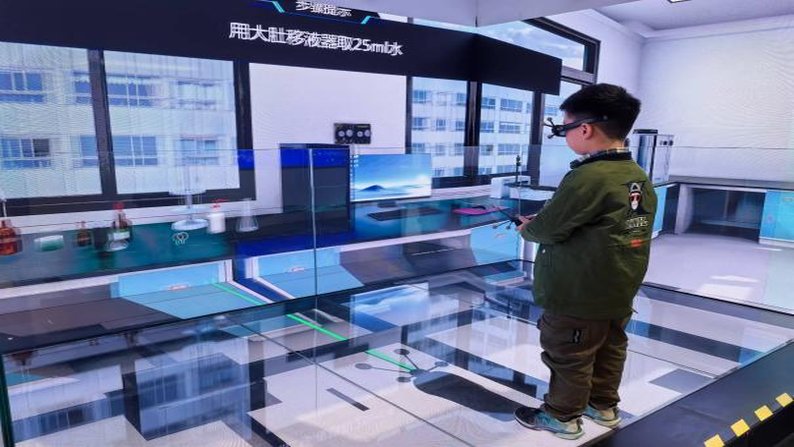
不择知行细流,蕴蓄蓝绿成深:雄安新区生态环境共享中心科普宣传空间营造雄安新区生态环境共享中心VR虚拟实验室(数字化仿真替代实体化学实验,实现科普零危废、低能耗)
6天前 · 来源:雄安新区生态环境监控中心 · 作者:雄安新区生态环境监控中心
