

Company/Organization Profile
Linyi City Landscaping and Sanitation Service Center
As a Category I public welfare institution at the principal county level under the Municipal Bureau of Urban Management, the Center coordinates municipal policies, planning, construction, supervision, and assessment for the landscaping and environmental sanitation sectors.
It directly manages over 20 urban green spaces totaling 23.05 million square meters, undertaking maintenance, cleaning, facility upkeep, and special fund management to provide citizens with accessible and shareable urban green spaces.
Meanwhile, it guides the citywide collection, transportation, and disposal of municipal solid waste as well as the construction of large-scale sanitation facilities, promotes comprehensive urban environmental governance and green, low-carbon development, and safeguards Linyi’s urban greenery through meticulous management, creating green public spaces that citizens can closely enjoy and actively engage with.
Linyi Library
Linyi Library is a Category I public welfare institution affiliated with the Linyi Bureau of Culture and Tourism. Located on the west side of the People's Square, the library has a floor area of 21,000 square meters. It houses a total collection of over 800,000 paper books and provides more than 1,800 reading seats.
Annually, it organizes over 1,600 public cultural events, both online and offline, including public lectures, training sessions, exhibitions, and reading promotion activities. It has been rated as a "First-Class Library" by the Ministry of Culture and Tourism, recognized as a "National Demonstration Base for Reading for All" by the Library Society of China, and has successively received honors such as "Shandong Provincial Advanced Collective in Culture and Tourism System" and "Shandong Provincial March 8th Red Banner Collective."
Green Bright Prospects Ecological Technology Co., Ltd.
Guided by the core mission of "rebuilding the warm connections between people," Green Bright Prospects Ecological Technology Co., Ltd. is rooted in the ecological landscaping industry, using flora as a medium to bridge landscape technology, circular resources, and public services. The company is deeply engaged in three major areas: the application and promotion of Chinese ornamental grasses, the resource utilization of garden waste, and the design and operation of public spaces.
It participates in the revitalization of idle spaces and the development of "third places," integrating natural science education and civic activities into these spaces to dissolve urban alienation through accessible nature. With ecological technology as its foundation, the company enables natural spaces to carry human emotions and social interactions, achieving a symbiotic relationship among ecological, industrial, and social values.
Linyi State Owned Holding Gardens Group Co., Ltd.
As a large municipal state-owned leading enterprise in landscaping in Linyi, Linyi State owned holding gardens Group Co., Ltd. consistently upholds its state-owned enterprise responsibilities. It integrates municipal state-owned landscaping resources through intensive operations and enhances urban environmental governance through professional services.
The Group has formed significant comprehensive strength and market competitiveness in the integrated management of municipal works, landscaping, and environmental sanitation, becoming a core backbone force in Linyi's urban environmental construction and operational support, providing solid state-owned landscaping enterprise support for regional urban renewal and ecological environment enhancement.
机构简介
临沂市园林环卫保障服务中心系市城管局所属正县级公益一类事业单位,统筹全市园林绿化与环卫行业政策指导、规划建设及监督考核。中心直管城区20余处绿地,总面积2305万平方米,承担养护保洁、设施维护与专项资金管理,为市民提供可进入、可共享的城市绿色空间。同时指导全市生活垃圾收运处置及大型环卫设施建设,推动城市环境综合治理与绿色低碳发展,以精细化管养守护临沂城市绿意,为市民打造可亲近、可参与的绿色公共空间。
临沂市图书馆为公益一类事业单位,隶属于临沂市文化和旅游局。场馆位于人民广场西侧,建筑面积 2.1万平方米。图书纸质图书总藏量80万余册,各类读者座席1800余个,年均举办公益讲座、培训、展览、阅读推广等线上线下公共文化活动1600余场次。被文化和旅游部评为“一级馆图书馆”,被中国图书馆学会评为全国“全民阅读示范基地”,先后获得“山东省文化和旅游系统先进集体”“山东省三八红旗集体”等荣誉称号。
绿鑫卉景生态科技有限公司,以 "重建人与人之间的温暖连接" 为内核,立足生态景观产业,以草木为媒介,打通景观技术、循环资源与公共服务。公司深耕三大方向:中国景观草应用与推广、园林废弃物资源化利用、公共空间设计运营,参与闲置空间活化与第三场所建设,将自然科普、市民活动植入空间,用可亲近的自然消解城市疏离。以生态技术为底座,让自然空间承载人的情感与交往,实现生态、产业与社会价值共生。

临沂国控园林集团有限公司,是临沂市市属国有大型园林龙头企业,集团始终秉持国企担当,以集约化运营整合市属园林国有资源,以专业化服务提升城市环境治理水平,在市政、园林、环卫一体化管理领域形成了显著的综合实力和市场竞争力,成为临沂城市环境建设与运营保障的核心骨干力量,为区域城市更新、生态环境提升提供坚实的国有园林企业支撑。
Project Overview
Against the backdrop of the in-depth advancement of the Beautiful China Initiative and the "dual-carbon" goals (carbon peaking and carbon neutrality), urban public green spaces serve not only as carriers of ecological carbon sinks but also as nurseries for cultivating green behaviors.
The Langya Study Sculpture Park Branch, located in Linyi Sculpture Park, was opened and put into operation in December 2024. Covering an area of 1,300 square meters, it functions as an ecological and cultural space in the central urban area.
It serves over 280,000 visits annually, with a cumulative total exceeding 400,000, radiating to the central urban area and surrounding regions, and undertaking the dual functions of ecological governance and public culture.
However, prior to its implementation, it faced four major challenges:
First, the dilemma of garden waste disposal. Nearly 1,300 tons of withered branches and fallen leaves are produced annually. Off-site landfill transportation incurs high costs and severe pollution, while mainstream treatment processes are characterized by high carbon emissions, high costs, and unstable quality.
Second, the lack of public green behaviors. There is a deficiency in guiding low-carbon concepts, and science popularization remains a one-way indoctrination lacking interactive engagement.
Third, the alienation between humans and nature. Public spaces prioritize artificial landscapes over habitats, leaving citizens with a lack of daily interaction with vegetation, animals, and other non-human entities.
Fourth, the high energy consumption and high costs of public spaces. Traditional venues emphasize luxurious decoration and high energy consumption, resulting in high per capita costs and heavy reliance on fiscal support.
Root Causes: Ecological and cultural governance remain fragmented without integration; technology relies on off-site transportation, lacking zero-carbon solutions; public participation is passive, lacking behavioral advocacy; and operations focus on hardware while neglecting low-carbon practices.
Objective: By integrating "Park + Study + Zero-carbon Cycle" as the pathway, the project aims to create an ecological "third place" that serves as a zero-carbon demonstration, promotes green advocacy, fosters symbiosis between humans and non-humans, and achieves ultra-low energy consumption.
项目背景
在美丽中国建设与"双碳"目标深入推进背景下,城市公共绿地既是生态碳汇载体,也是绿色行为培育场。琅琊书房雕塑园馆位于临沂雕塑公园,2024年12月开放运营,面积1300㎡,作为中心城区生态文化空间,年均服务28万余人次、累计超40万,辐射中心城区及周边,承担生态治理与公共文化双功能。然实施前面临四大问题:
一是园林废弃物处置困境,年产枯枝落叶近1300吨,外运填埋成本高污染重,主流工艺碳排放高成本高品质不稳;
二是公众绿色行为缺失,缺乏低碳理念引导,科普单向灌输缺互动;
三是人类与自然疏离,公共空间重人工轻生境,市民缺与植被、动物等非人类日常互动;
四是公共空间高能耗高成本,传统场馆重豪华装修高能耗,人均成本高财政依赖重。
原因:生态与文化分治未融合;技术依赖外运缺零碳方案;公众参与被动缺行为倡导;运营重硬件忽视低碳化。目标:以"公园+书房+零碳循环"融合为路径,打造零碳示范、绿色倡导、人非共生、超低能耗的生态型第三场所。
Project Implementation
To address the technological bottleneck in garden waste disposal, the project was jointly advanced by Green Bright Prospects Ecological Technology Co., Ltd. and Linyi State owned holding gardens Group, under the overall guidance and coordination of the Linyi Urban Landscaping and Environmental Sanitation Service Center. A dedicated research and operation team was formed in 2018. Over a period of seven years, the team conducted full-cycle comparative tests on four mainstream processes: trough-type, tank-type, membrane-covered fermentation, and traditional composting. They completed over 120 experimental groups, systematically recording key parameters such as temperature, moisture content, carbon-to-nitrogen ratio, and maturity, thereby establishing a parameter database that substantiates the common shortcomings of existing technologies—"high energy consumption, high emissions, high costs, and low quality." In 2025, a new zero-carbon static continuous fermentation process was independently developed, establishing a chain of "source classification — nearby collection — fermentation treatment — graded reuse," thus achieving on-site consumption and resourceful reuse of garden waste within the park.
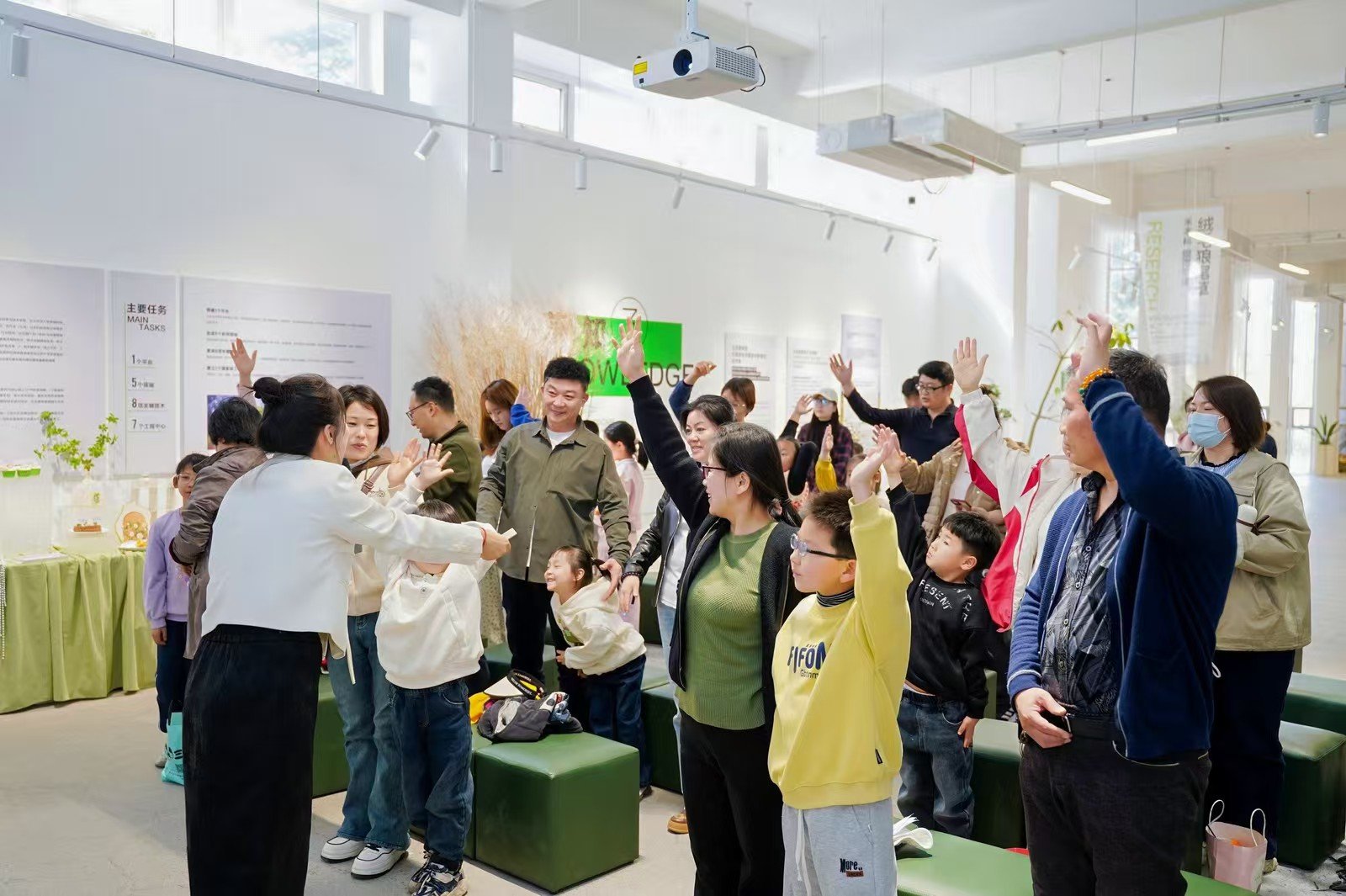
To address the lack of public green behaviors, the project utilized the Langya Study as a carrier. The operation team collaborated with the Linyi Library for joint implementation, constructing a four-in-one system integrating "exhibition demonstration + science education + national reading + behavior guidance." This system combines a habitat garden, a reading area, and a science popularization area. Within the science area, four themed exhibition zones were set up: ornamental grass science popularization, garden waste resource utilization, park carbon cycling & zero waste, and sustainable living advocacy, all equipped with interpretive signage and interactive installations. A dual-track interpretation mechanism of "professional team + volunteers" was established. In 2025, 158 activities were carried out, including ecological composting, soil science education, used-item recycling markets, gardening handicrafts, and group reading and sharing sessions, covering over 25,000 visits. In collaboration with the Municipal Library's unified borrowing and returning system, the space offers zero-threshold access for all scenarios, including elderly newspaper reading, citizen self-study, student reading, and rest stops for outdoor workers. Through community check-ins, citizens are encouraged to shift from conceptual understanding to practical low-carbon actions.
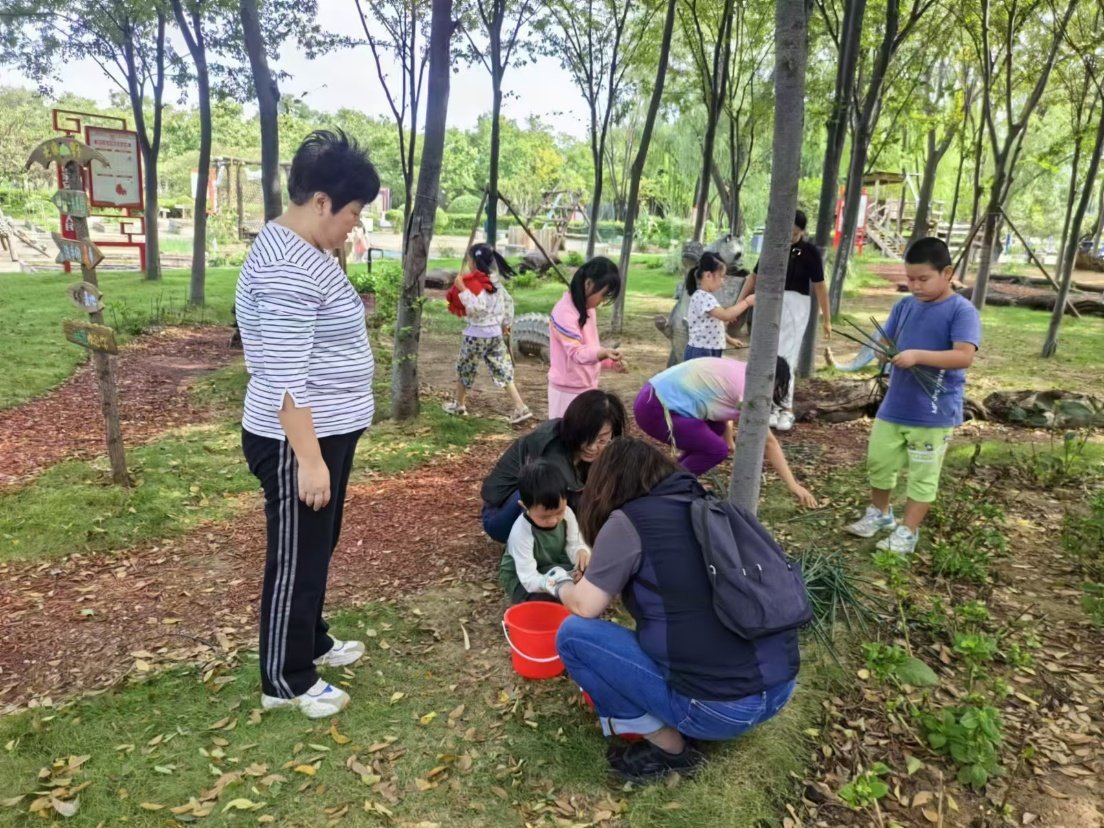
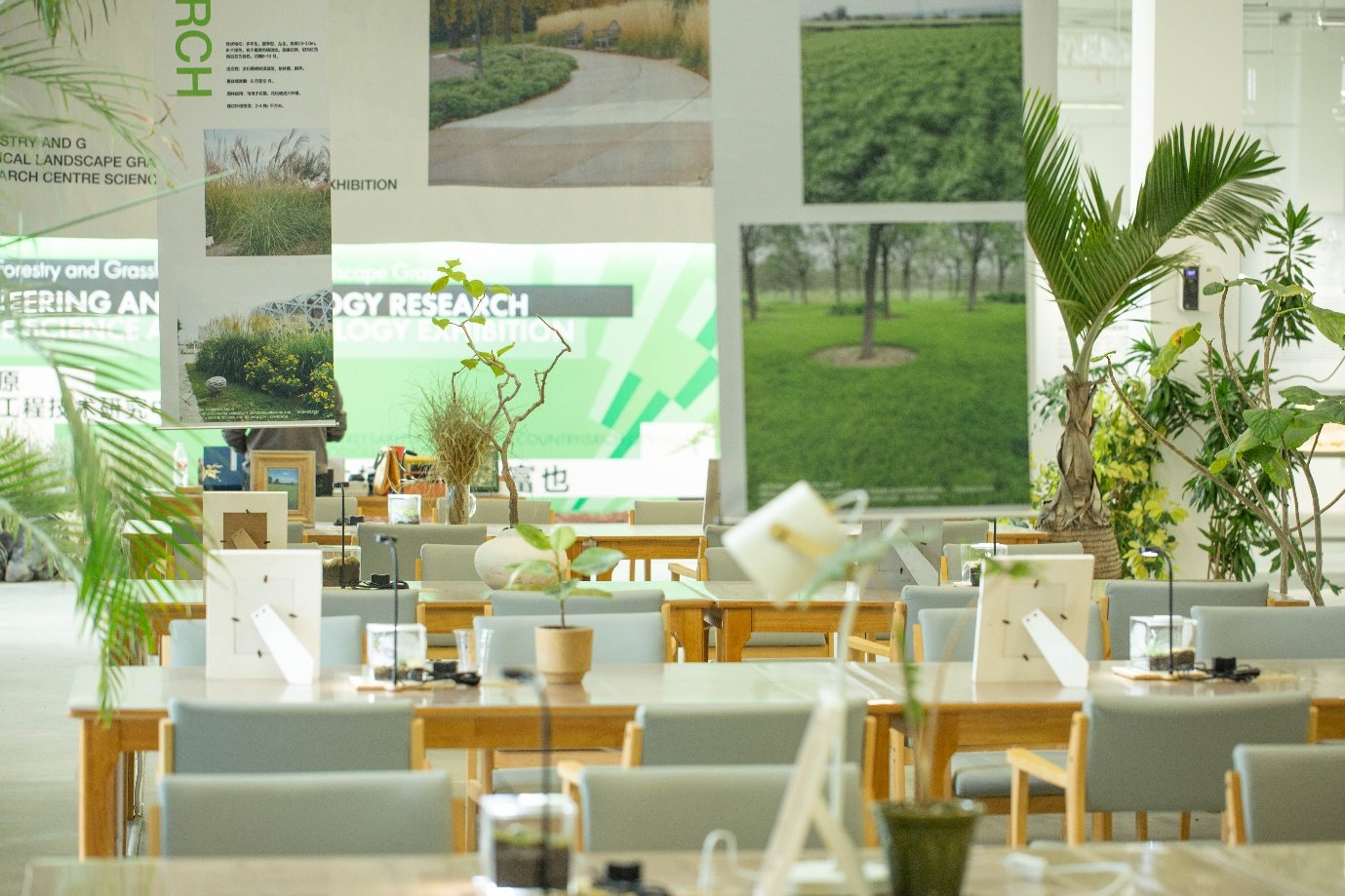
To address the alienation between humans and nature, the project focused on ecological and nature-friendly facilities. Adhering to the "near-nature" principle, a habitat garden was created within and around the venue, featuring multi-layered native vegetation of trees, shrubs, and grasses. Fallen branches and leaves were retained to create habitats for small animals, such as insect hotels, vermicomposting towers, and bird feeders. In partnership with the Beijing Academy of Agriculture and Forestry Sciences, the Shandong Center of the National Forestry and Grassland Administration Engineering Research Center for Ornamental Grasses — the only professional ornamental grass exhibition platform located in an urban public space in China — was established. It integrates germplasm resource display with ecological science education, allowing citizens to closely observe plants, insects, and birds while reading. Regular records of visiting species are kept, and a biodiversity observation ledger is maintained.
To tackle the challenge of high energy consumption and high costs in public spaces, the project adheres to public welfare attributes, operates with zero fiscal operating funds, and pursues sustainable, lightweight operations. The site was originally an idle warehouse. During the renovation phase, only basic interior work was done, preserving the warehouse's original structure to revitalize the space with minimal investment. During the operation phase, with zero municipal funding, the team relies on meticulous management for self-sustaining operation — establishing zoned energy metering and time-based temperature control, formulating detailed energy management rules and conducting monthly tracking, and making full use of natural lighting and ventilation. The 1,300-square-meter venue has no municipal heating; an annual consumption of only 60,000 kWh of electricity covers winter electric heating, cooling, lighting, exhibition areas, and all equipment. Daily maintenance requires no special funds; a citizen volunteer operation and maintenance mechanism has been established, fostering volunteer teams such as the "Yihe River Beach Cleaners." Facilities like the public welfare printing station are spontaneously maintained by citizens. Through the model of "asset-light + low-energy consumption + mass participation," the project achieves the long-term sustainable operation of a public welfare space, serving over 280,000 citizens annually.
(AI翻译)
项目实施
针对园林废弃物处置技术瓶颈,项目在临沂市园林环卫保障服务中心统筹指导下,由绿鑫卉景生态科技有限公司联合国控园林集团共同推进。2018 年起组建攻关运营团队,历时 7 年对槽式、罐式、膜式发酵及传统堆肥四类主流工艺开展全周期对照测试,累计完成120余组实验,系统记录温度、含水率、碳氮比、腐熟度等关键参数,建立参数数据库,印证现有技术 "高能耗、高排放、高成本、低品质" 共性短板。
2025 年自研新型零碳静态连续发酵工艺,构建 "源头分类 — 就近归集 — 发酵处理 — 分级回用" 链条,实现园林废弃物园区内消纳与资源化回用。
针对公众绿色行为缺失,项目以琅琊书房为载体,运营团队联合临沂市图书馆共建实施,构建 "展区示范+科普教育+全民阅读+行为引导" 四位一体体系。将生境花园、阅读区、科普区结合,同时科普区设置景观草科普、废弃物资源化利用、公园碳循环&零废弃、可持续生活倡导四大主题展区,配套解说标识与互动装置;建立 "专业团队 + 志愿者" 双轨讲解,2025 年开展生态堆肥、土壤科普、旧物循环市集、园艺手作、共读分享等活动158场,覆盖 2.5 万余人次;
与市图书馆通借通还,面向老年读报、市民自习、学生阅读、户外工作者歇脚等全场景零门槛开放;通过社群打卡推动市民从理念认知转向低碳行为实践。
针对人类与自然疏离,项目以生态友好设施为抓手,遵循 "近自然" 原则,在场馆及周边设置生境花园,配置本土乔灌草多层植被,保留枯木落叶,营造昆虫旅馆、蚯蚓塔、鸟类喂食器等小动物栖息地;
联合北京农林科学院落地国家林业草原生态景观草工程研究中心山东中心—国内唯一设于城市公共空间的景观草专业展示平台,将种质资源展示与生态科普融合,市民在阅读中可近距离观察植物、昆虫、鸟类,定期记录到访物种并建立生物多样性观察台账。
针对公共空间高能耗高成本难题,项目坚持公益属性、无财政运营经费、可持续轻量化运营。场地原为闲置仓库,改造阶段仅做基础装修,保留仓库原有结构,以最低投入完成空间活化;运营阶段全程无财政拨款,依靠团队精细化管理实现自我运转——建立能耗分区计量、分时温控,制定能耗管理细则并月度跟踪,充分利用自然采光通风,1300㎡场馆无市政供暖,全年仅6万度电即覆盖冬季电采暖、制冷、照明、展区及全部设备;
日常治理不设专项经费,建立市民志愿运维机制,培育沂河净滩使者等志愿队伍,公益打印点等设施由市民自发维护,以 "轻资产 + 低能耗 + 众参与" 模式实现公益场所长期可持续运营,年服务市民 28 万余人次。
Project Outcome
The project's core innovation is reflected in four dimensions, with industry breakthrough and demonstration value.
First, technological innovation. The static facultative continuous fermentation process breaks through the industry's long-standing dilemma of "aerobic carbon emissions versus anaerobic methane leakage." Through microbial directed humification, carbon is stably sequestered in humus and returned to the soil. The facultative environment simultaneously avoids excessive CO₂ emissions from aerobic fermentation and methane leakage from anaerobic fermentation, achieving zero carbon emissions throughout the fermentation process and reaching the "Four No's, Two Zeros, One High" standard, filling the industry gap in lightweight zero-carbon treatment technology.
Second, model innovation. The project establishes a trinity integrated model of "Park + Library + Zero-Carbon Cycle," breaking the fragmented governance of ecological restoration, public culture and low-carbon behavior. The closed-loop reuse of garden waste provides substrate for soil improvement in park green spaces; habitat creation provides ecological scenes for the library; and the library exhibition area provides a public communication channel for zero-carbon technology. The three form a mutually supportive value cycle rather than a simple functional overlay.
Third, mechanism innovation. The project pioneers the ESCG (Environment–Social–Culture–Governance) four-dimensional operation model, integrating environmental performance, social participation, cultural services and governance innovation into a unified operational framework. Supported by a citizen co-construction and co-governance mechanism, it addresses the common problem of "valuing construction over operation and valuing supply over participation" in public spaces, providing a replicable mechanism for the sustainable operation of similar public spaces.
Fourth, value innovation. The project proposes and practices the concept of a "symbiotic field for humans and non-humans," redefining the value boundary of public cultural spaces. The space not only serves human reading and social needs but also incorporates the habitat rights of non-human life into spatial design goals, expanding the ecological value connotation of public spaces and providing a new value benchmark for ecological public space construction.
The project has established a long-term operation mechanism, and its technical standards and operation manuals are being systematically refined. Requiring no high-cost infrastructure or specialized personnel, it is adaptable for replication and promotion across various urban parks, community green spaces and campus areas.
(AI翻译)
成果亮点
项目核心创新体现在四个维度,具有行业突破性与示范价值。一是技术创新:静态兼氧连续发酵工艺突破传统发酵"好氧排碳、厌氧漏甲烷"的行业两难。通过微生物定向腐殖化将碳元素稳定封存于腐殖土回归土壤,兼氧环境同时避免好氧发酵CO₂过度排放与厌氧发酵甲烷泄漏,实现发酵过程零碳排放,达成"四不两零一高",填补行业轻量化零碳处理技术空白。二是模式创新:构建"公园+书房+零碳循环"三位一体融合模式,打破生态治理、公共文化、低碳行为三者分治格局。园林废弃物闭环回用为公园绿地土壤改良提供基质,生境营造为书房提供生态场景,书房展区为零碳工艺提供公众传播渠道,三者形成互为支撑的价值闭环,而非简单功能叠加。三是机制创新:创立ESCG"环境-社会-文化-治理"四维联动运营模式,将环境绩效、社会参与、文化服务、治理创新纳入统一运营框架,配套市民共建共治机制,破解公共空间"重建设轻运营、重供给轻参与"共性难题,为同类公共空间可持续运营提供可复制的机制方案。四是价值创新:提出并实践"人类与非人类共生场域"理念,重新定义公共文化空间价值边界。空间不仅服务人的阅读与社交需求,同时将非人类生命的栖息权纳入空间设计目标,拓展公共空间的生态价值内涵,为生态型公共空间建设提供新的价值标尺。项目已形成长期运行机制,技术标准与运营手册正在系统化提炼,无需高额基建与专业人员,适配各类城市公园、社区绿地、校园园区复制推广。
Project Highlights
Ecological and Environmental Benefits (Statistical scope: 2025, covering Langya Study and the surrounding 3 km² of park green space; carbon emission reduction calculated as carbon sequestration through zero-carbon fermentation plus avoided transportation and landfill): Annual waste absorption of nearly 1,300 tons with 100% resource utilization rate; annual carbon reduction of over 300 tons; annual production of over 800 tons of humus for reuse. The 1,300 m² venue operates without municipal heating, consuming only 60,000 kWh annually including winter heating and all electricity use, with a total unit-area consumption of 46.15 kWh/(m²·a)—outperforming the average for similar public buildings under all-electric heating, serving as a demonstration of energy conservation and carbon reduction in public buildings.
Economic Benefits: Annual comprehensive cost savings of over 400,000 RMB, with a per capita cost of 0.6 RMB, filling gaps in the 15-minute living circle at extremely low cost.
Social Impact: Serves 280,000 visits annually, with a cumulative total exceeding 400,000; per capita electricity consumption of 0.214 kWh. 158 science education events reaching 25,000 participants, driving citizens from conceptual awareness to low-carbon behavior. The project is ready for nationwide replication and promotion.
(AI翻译)
成果影响力
尽量体现综合效益,建议至少覆盖生态环境价值和社会影响两个方面,请提供具体数据,并注明统计口径(如核算标准、时间范围、边界界定等)。
生态环境效益:如有节能、减排、节水、减废、碳汇增加等量化成果。如同时产生了降本增效等经济效益,可作为辅助信息说明。
社会影响效果:公众参与、行业示范、跨部门协同、区域带动等;
生态环境效益(统计口径:2025年度,边界为琅琊书房及公园周边3平方公里绿地,碳减排按零碳发酵固碳+避免转运填埋算):年消纳废弃物近1300吨,资源化利用率100%;年减碳300余吨;年产腐殖土800余吨回用;1300㎡场馆无市政供暖,全年6万度含冬季采暖及全部用电,单位面积总电耗46.15kWh/(㎡·a),全电采暖下优于同类公共建筑均值,为公共建筑节能降碳示范。经济效益:年节约综合成本40余万元,人均成本0.6元,以极低成本补齐15分钟生活圈短板。社会影响:年服务28万人次,累计超40万,人均电耗0.214度;158场科普覆盖2.5万人次,推动市民从理念转向低碳行为;具备全国复制推广条件。
Reviews & Honors
Public Feedback: Citizens widely describe Langya Study as "combining tranquility with everyday vitality," creating a unique atmosphere of "serene bustle" and earning it the reputation as "a spiritual sanctuary for the people of Linyi." The interactive exhibits in the three thematic zones are well received by citizens and youth, with feedback that they are "visible, tangible, and learnable." Citizen-maintained facilities such as the public printing station operate smoothly, reflecting high public recognition and civic awareness. Surrounding schools and communities use the project as an ecological education site. Partners including the Beijing Academy of Agriculture and Forestry Sciences have given positive evaluations of its technological innovation and science communication outcomes.
Media and Industry Recognition: The zero-carbon technology, developed through seven years of research, ranks among the leading levels in China and demonstrates the potential to become a national model. The ultra-low-energy model (1,300 m² with all-electric heating consuming only 60,000 kWh annually) serves as a demonstration for energy conservation and carbon reduction in public buildings. The "Park + Library" integrated model provides Linyi's experience for new public cultural spaces, with cross-departmental collaboration recognized by supervisory authorities. The project has received media coverage and been hailed as "Shandong's first ecological library."
Awards and Honors: In 2025, the project won First Prize in the Shandong Provincial New Public Cultural Space Competition. Patent applications and research commercialization are underway, with preparations being made in coordination with supervisory authorities for provincial- and national-level awards and pilot demonstration declarations.
(AI翻译)
评价与荣誉
评价反馈:市民普遍评价琅琊书房"兼具静谧与烟火气",形成"安静的喧嚣"独特氛围,被誉为"临沂人的精神避风港";三大展区互动获市民及青少年欢迎,反馈"看得见、摸得着、学得会";公益打印点等市民自维护设施良性运转,体现高度认同与公共意识;周边中小学、社区将项目作为生态教育点;北京农林科学院等合作方对技术创新与科普转化给予积极评价。媒体/行业认可:零碳工艺经7年攻关,技术水平国内前列,具备打造全国样板潜质;超低能耗模式(1300㎡全电采暖年仅6万度电)为公共建筑节能降碳提供示范;"公园+书房"融合模式为新型公共文化空间提供临沂经验,跨部门协同获主管部门肯定;项目获媒体关注报道,被誉为"山东首家生态图书馆"。奖项荣誉:2025年获评山东省新型公共文化空间大赛一等奖;项目正推进专利申报与科研转化,配合主管部门做好省级、国家级奖项与试点示范申报筹备。

近零碳社区的美育升级---- 长寿苑社区 “低碳实践 + 影像科普” 共建项目
4天前 · 来源:成都市武侯区火车南站街道长寿苑社区居民委员会 · 作者:成都市武侯区火车南站街道长寿苑社区居民委员会

以绿色金融之力推动中国新质生产力!
4天前 · 来源:国泰海通证券研究所ESG及美丽中国研究组 · 作者:国泰海通证券研究所ESG及美丽中国研究组
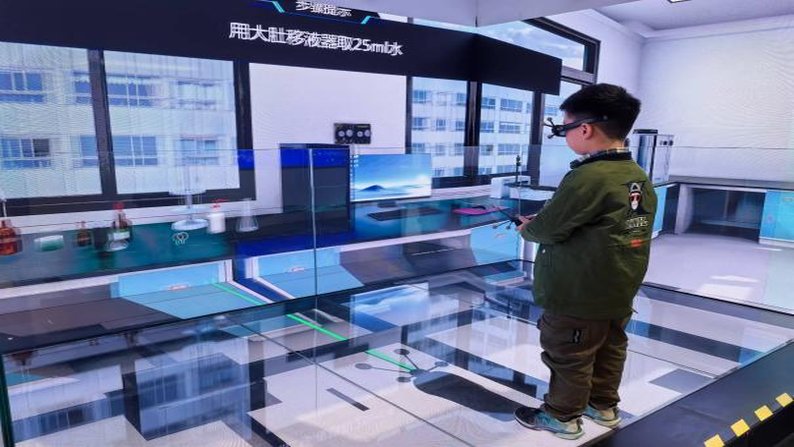
不择知行细流,蕴蓄蓝绿成深:雄安新区生态环境共享中心科普宣传空间营造雄安新区生态环境共享中心VR虚拟实验室(数字化仿真替代实体化学实验,实现科普零危废、低能耗)
6天前 · 来源:雄安新区生态环境监控中心 · 作者:雄安新区生态环境监控中心
