

Company/Organization Profile
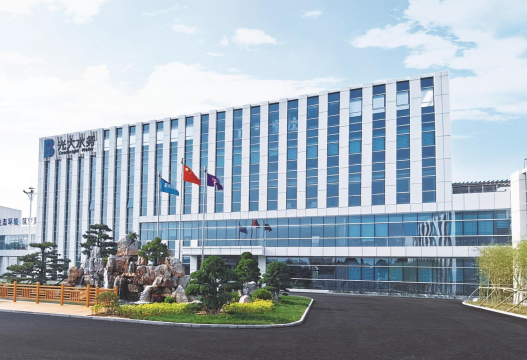
Everbright Water (Zibo) Limited (hereinafter referred to as "Zibo Water") is a wholly-owned subsidiary of China Everbright Water Limited. It is a large-scale wastewater treatment enterprise that focuses on wastewater treatment, while being rooted in watershed water environment governance and comprehensive water resource utilization, and integrating production operations, scientific research and development, and technical services. Since entering Zibo's environmental protection industry at the end of 2005, it has grown into the largest wastewater treatment enterprise in the city.
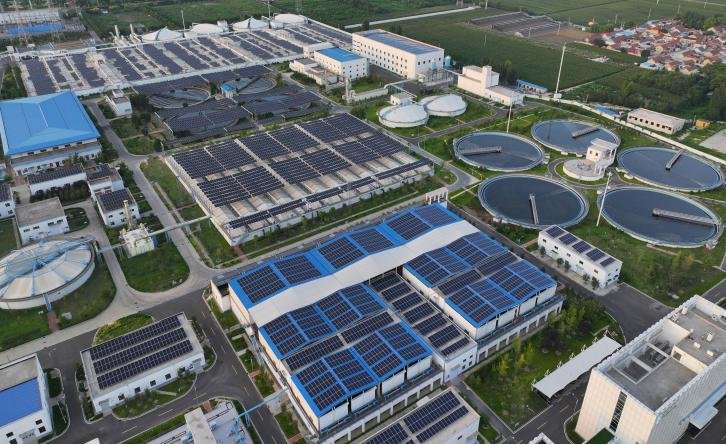
The company operates three wastewater treatment plants and one reclaimed water plant, with a total wastewater treatment capacity of 400,000 tons per day and an ultrapure reclaimed water reuse supply capacity of 9,600 tons per day. The company continuously explores new pathways for synergistic pollution reduction and carbon reduction in wastewater treatment plants, and vigorously promotes the industry's green transformation toward energy-saving and low-carbon operations, efficient management, and resource recycling.
It has been honored with titles such as "China's First Batch of Youth Ecological Civilization Education Practice Venues," "Shandong Province Top Ten Environmental Protection Facility Open Units," and "E20 Environmental Platform Benchmark Wastewater Treatment Plant for Energy Utilization and Low-Carbon Operation".
机构简介
光大水务(淄博)有限公司(以下简称“淄博水务”)是中国光大水务有限公司的全资子公司,是一家以污水处理为主导,立足于流域水环境治理与水资源综合利用,集生产运营,科技研发,技术服务于一体的大型污水处理企业。自2005年底进入淄博市环保行业,现已成长为淄博市规模最大的污水处理企业。公司下辖三座污水厂及一座中水厂,污水处理总规模40万吨/日,超纯中水回用供水能力9600吨/日。
公司持续探索污水处理厂减污降碳协同增效新路径,全力推进行业向节能低碳化、运营高效化、资源循环化的绿色发展方向转型升级,先后荣获“全国首批青少年生态文明教育实践场馆”“山东省十佳环保设施开放单位”“E20环境平台能源开发利用标杆污水厂及低碳化标杆污水处理厂”等荣誉称号。
Project Overview
Zibo is a typical resource-based water-scarce city, where water scarcity has become a bottleneck constraining sustainable economic and social development. With the advancement of China's dual carbon strategy (carbon peaking and carbon neutrality goals), the wastewater treatment industry faces severe challenges in its green transformation.
On the one hand, increasingly stringent discharge standards and accelerating process upgrades have led to rising energy consumption per ton of treated wastewater. On the other hand, the water reuse rate of treated effluent from municipal wastewater treatment plants remains generally low, with a large volume of up-to-standard effluent not being fully utilized as a resource—a significant gap from the requirements of sustainable development.
As the largest wastewater treatment enterprise in Zibo, the company bears the dual mission of improving the regional water environment and promoting water resource recycling.
To address the above challenges, the company has established a synergistic governance pathway of "low-carbon operation + energy self-sufficiency + resource recycling", driving energy conservation and consumption reduction through technological innovation, achieving cost reduction and efficiency improvement through the application of green energy, and building a circular value chain through reclaimed water reuse.
In this way, the company is systematically advancing the green leap of wastewater treatment from "up-to-standard discharge" to "resource circularity".
项目背景
淄博市是典型的资源型缺水城市,水资源匮乏已成为制约经济社会可持续发展的瓶颈。随着我国“双碳”战略的推进,污水处理行业面临绿色转型的严峻挑战:一方面,排放标准日趋严格,工艺加速迭代导致吨水处理能耗持续攀升;
另一方面,城镇污水厂再生水回用率普遍偏低,大量达标出水未得到充分资源化利用,与可持续发展要求存在明显差距。公司作为淄博市规模最大的污水处理企业,承载着区域水环境改善与水资源循环利用的双重使命。针对上述痛点,公司构建了“低碳运行+能源自给+资源再生利用”的协同治理路径,以科技创新驱动节能降耗,以绿色能源应用实现开源增效,以再生水回用构建循环链条,系统推进污水处理从“达标排放”向“资源循环”的绿色跃升。
Project Implementation
(I) Cleaner Effluent, Higher Quality; Precision-Driven Reduction of Energy and Chemical Consumption
To address the dual challenges of high energy and chemical consumption in wastewater treatment, Zibo Water has leveraged technological innovation to develop a Precise Aeration System and an Intelligent Dosing System. The Precise Aeration System collects real-time data signals including dissolved oxygen (DO), water flow, air flow, blower pressure and power, and uses an intelligent control system to calculate real-time oxygen demand, dynamically adjusting blower operation and valve openings to achieve on-demand air supply.
The Intelligent Dosing System — taking the Smart Carbon Source Dosing System as an example — collects signals from online instruments measuring nitrate nitrogen (NO₃-N), water flow, chemical dosing flow, and dosing pump frequency. Through intelligent computation, it precisely controls dosing pump frequency, rotation speed, and valve openings to achieve fine-tuned chemical dosing.
Since the system was commissioned, pollutant removal has increased significantly while energy consumption and cost per ton of wastewater treated have declined rather than risen: in 2025, COD, ammonia nitrogen, total phosphorus, and total nitrogen removal reached 19,734 tons, 3,823 tons, 413 tons, and 4,280 tons respectively, with electricity consumption per ton reduced by 4.11% and cost per ton reduced by 10.67%.
Practice has proven that stricter discharge standards and lower resource consumption can be achieved simultaneously, providing a replicable model for the smart transformation of the wastewater treatment industry.
(II) Green Energy Substitution, Low-Carbon Energy Supply
In line with China's dual carbon strategy (carbon peaking and carbon neutrality goals), Zibo Water took the lead in implementing Everbright Water's first "on-site photovoltaic" pilot project.
With a total investment of RMB 24.85 million, the project utilizes monocrystalline silicon photovoltaic panels installed on the roofs of water treatment tanks and ancillary structures. Built in two phases, it has established a distributed PV power station with a total installed capacity of 5.25 MWp, which was fully connected to the grid on December 31, 2022, operating under the "self-consumption with surplus fed to the grid" model. In its initial phase, the project was expected to generate 5.65 million kWh annually, providing a practical model of "low-carbon operation" for traditional energy-intensive industries.
With continuous operational optimization, by 2025 annual generation had reached 6.98 million kWh, with green electricity accounting for over 18% — equivalent to saving approximately 2,149 tons of standard coal per year (estimated based on the average coal consumption rate of thermal power of 308 g/kWh), effectively reducing dependence on traditional thermal power and achieving synergistic growth in economic and environmental benefits.
(III) Transforming Wastewater, Activating Green Recycling
To address the acute challenge of water scarcity in Zibo, the company leverages its large volume of high-quality up-to-standard effluent to promote water resource recycling. The daily 400,000 tons of up-to-standard effluent, with water quality superior to the Class IV standard of surface water, provides a solid foundation for multi-scenario water reuse.
The majority is used as ecological replenishment for the Zhulong River and as a water source for the Yulong Lake Park system in the High-tech Zone, reshaping the city's water network and enhancing landscape quality. A portion is directed to on-site green space irrigation, landscape lakes, and production systems, forming a self-sufficient micro-cycle within the plant.
Another portion is processed through the ultrapure reclaimed water project, using the "ultrafiltration + reverse osmosis" double-membrane process, with a daily supply capacity of 9,600 tons — delivering over 2.87 million tons in 2025 directly to industrial users including Chalco Shandong Co., Ltd. and Huadian Zibo Thermal Power Co., Ltd. This has created a multi-path circulation of "ecological replenishment — on-site reuse — industrial reuse", activating a new paradigm of green recycling in this water-scarce northern city.
(IV) Public Engagement, Cultivating a Green Consensus
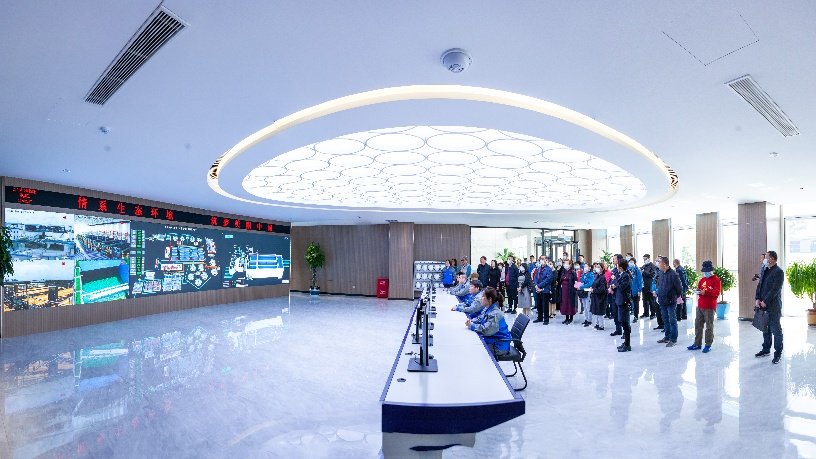
Urban development requires not only "blue skies and clear waters" but also broad public consensus. Since opening to the public in July 2021, Zibo Water has received over 1,700 in-person visitors and more than 70,000 online views. Leveraging events such as World Environment Day (June 5), the company has organized a series of science outreach activities, developed the "Water Baby" IP-guided tour system, integrated green and low-carbon concepts throughout the visitor experience, and continuously expanded public participation channels.
Through sustained commitment and tangible results, the company has been honored with multiple titles including "National Youth Ecological Civilization Science Education Venue" and "Shandong Province Top Ten Environmental Protection Facility Open Units" , building a deep green foundation through dedicated environmental education and outreach, and contributing to the city's green and harmonious development.
项目实施
(一)净水提质,精准降耗
针对污水处理能耗药耗双高难题,淄博水务以科技创新为驱动,打造精确曝气与智能加药系统。精确曝气系统通过实时采集溶解氧、水量、气量及鼓风机压力和功率等数据信号,利用智能化控制系统计算实时需氧量,动态调节鼓风机与阀门开度,实现按需供气;智能加药系统(以碳源智能加药系统为例)通过在线仪表采集硝态氮、水量、药剂投加流量和加药泵频率等信号,经智能计算后精准控制加药泵频率、转速和阀门开启度,做到精细化药剂投加。
系统投运以来,主要污染物削减量显著提升,吨水电耗与成本不升反降:2025年COD、氨氮、总磷、总氮削减量分别达19734吨、3823吨、413吨、4280吨,吨水电耗降低4.11%,吨水成本降低10.67%。实践证明,更严的排放标准与更低的资源消耗可以兼得,为污水处理行业智慧转型提供了可复制的实践样本。
(二)绿电替代,低碳供能
淄博水务紧跟“双碳”战略目标,率先落地光大水务首个“厂内光伏”试点项目。项目总投资2485万元,利用单晶硅光伏板,在水处理池顶及构筑物顶部,分两期建成总装机容量5.25MWp的分布式光伏电站,于2022年12月31日实现两期全部并网发电,采用“自发自用、余电上网”运营模式。
投运初期,项目预计年均发电量565万千瓦时,为传统高耗能行业提供了“低碳运营”的实践范本。随着运行持续优化,至2025年,年发电量已达698万千瓦时,绿电占比超过18%,相当于每年节约标煤2149吨(按火电平均供电煤耗308克/千瓦时估算),有效降低对传统火电的依赖,实现经济效益与环境效益协同增长。
(三)污水焕新,激活绿色循环
针对淄博市水资源短缺的突出矛盾,公司依托水量大、水质优的达标水,推动水资源循环利用。每日40万吨达标出水水质优于地表水Ⅳ类标准,为多场景水资源再利用奠定坚实基础。其中,大部分作为潴龙河生态补水及高新区玉龙湖公园水系补给水源,重塑城市水脉、提升景观品质;
一部分引入厂区绿地灌溉、景观湖和生产系统,形成自给自足的厂区小循环;另一部分依托超纯中水项目,经“超滤+反渗透”双膜工艺处理,日供水能力9600吨,2025年供应超287万吨,直供中铝山东、华电淄博热电等工业企业。由此形成“生态补水—厂内自用—工业回用”的多路径循环,激活了北方缺水城市的绿色循环新范式。
(四)公众开放,厚植绿色共识
城市发展不仅需要“蓝天碧水”,更需凝聚广泛的公众共识。淄博水务自2021年7月面向公众开放以来,累计接待线下访客超1700人次,线上平台浏览超7万人次。公司依托“六五环境日”等节点策划系列科普活动,打造“水宝宝”IP导览体系,将绿色低碳理念融入参观全程,持续拓宽公众参与渠道。凭借长期深耕与扎实成效,公司先后荣获“全国青少年生态文明科普教育场馆”、“山东省十佳环保设施开放单位”等多项称号,以环保宣教的深耕细作,以环保宣教厚植绿色底蕴,助力城市绿色和谐发展。
Project Outcome
Zibo Water has centered its efforts on four main pillars: "pollution and carbon reduction, green and low-carbon operations, resource recycling, and public co-governance." Through this framework, it has developed four green pathways—smart management and control, green energy supply, circular reuse, and public co-governance—achieving four key transformations: from compliance-driven discharge to low-carbon operations, from energy-intensive processes to smart management, from end-of-pipe treatment to resource circularity, and from closed operations to open sharing.
Smart Management and Control: From "Rough Operation" to "Precision Regulation." Prior to implementation, aeration and chemical dosing relied heavily on manual experience, resulting in high energy and chemical consumption. Post-implementation, the company has established a Precise Aeration System and an Intelligent Dosing System, enabling on-demand air supply and precision chemical dosing.
In 2025, COD, ammonia nitrogen, total phosphorus, and total nitrogen removal reached 19,734 tons, 3,823 tons, 413 tons, and 4,280 tons respectively, with electricity consumption per ton reduced by 4.11% and cost per ton reduced by 10.67%. This has created a data-driven smart operation mechanism, enabled a part-time unattended operation model for wastewater treatment projects, and driven the deep integration of technological and managerial innovation.
Photovoltaic Green Power: From External Power Purchase to On-Site Green Generation. Prior to implementation, all electricity for wastewater treatment was sourced from the external grid, with zero share of green electricity. Post-implementation, the company utilized tank-top space to build a 5.25 MWp distributed photovoltaic (PV) power station, which was connected to the grid by the end of 2022.
By 2025, annual generation reached 6.98 million kWh—23.5% above expectations—with green electricity accounting for over 18% of total consumption, equivalent to saving approximately 2,149 tons of standard coal per year, establishing a new model of green operations.
Wastewater Renewal: From Compliance Discharge to Circular Reuse. The company serves as a model for comprehensive water resource utilization. For ecological replenishment, the company's effluent quality—with key indicators including COD, ammonia nitrogen, and total phosphorus—consistently outperforms the Class IV standard of the Environmental Quality Standards for Surface Water (GB3838-2002), and serves as the primary source of ecological replenishment for the Zhulong River, effectively improving its water environment quality.
For landscape water supply, the effluent serves as a major water source for the Yulong Lake Park water system in the High-tech Zone. For on-site reuse, the company leverages its high-quality effluent for landscape lakes, green space irrigation, and production water within the plant, enhancing the aesthetic appeal of the facility.
Additionally, through its ultrapure reclaimed water project, the company has established long-term supply arrangements with multiple industrial enterprises, significantly improving the reclaimed water reuse rate.
Public Openness: From a Closed Facility to an Open Classroom. Prior to implementation, the plant operated as a closed facility with limited public awareness. Post-implementation, since opening to the public in 2021, the company has received over 1,700 in-person visitors and more than 70,000 online views.
It has developed the "Water Baby" IP-guided tour system and received multiple honors including the "National Youth Ecological Civilization Science Education Venue" , establishing a branded and routinized mechanism for public co-governance in environmental protection.
These four green pathways are mutually reinforcing, forming a complete闭环 "pollution and carbon reduction—green energy supply—circular reuse—consensus building" . This model is sustainable in its operation and replicable across the industry.
成果亮点
淄博水务以“减污降碳、绿色低碳、循环利用、公众共治”为主线,探索形成智慧管控、绿色供能、循环回用、公众共治四条绿色路径,实现从达标排放向低碳运营、高耗能向智慧管控、末端治理向资源循环、封闭运行向开放共享的四个转变。
智慧管控:从“粗放运行”到“精准调控”。实施前,曝气与加药依赖人工经验,能耗药耗双高;实施后,建成精确曝气与智能加药系统,按需供气、精准加药,2025年COD、氨氮、总磷、总氮削减量分别达19734吨、3823吨、413吨、4280吨,吨水电耗降低4.11%,吨水成本降低10.67%,形成数据驱动的智慧运行机制,实现污水处理项目少人值守模式,推动技术创新与管理创新深度融合。
光伏绿电:从外部购电到绿色发电。实施前,污水处理用电全部依赖外部电网,绿电占比为零;实施后,利用池顶空间建成5.25MWp分布式光伏,2022年底并网,2025年发电量达698万千瓦时,超出预期23.5%,绿电占比超18%,年节约标煤2149吨,形成绿色运营新模式。
污水焕新:从达标排放到循环利用。公司以身为例,打造水资源综合利用实例。生态补水,公司出水 COD、氨氮、总磷等主要指标优于《地表水环境质量标准》 Ⅳ类水质标准,作为潴龙河主要生态补水水源,有效提升了潴龙河的水环境质量水平;景观补水,高新区的玉龙湖公园水系部分由公司出水作为主要补给水源;再生利用,厂区内水系公园、绿化、生产用水等均利用得天独厚的出水资源优势,使得厂区空间布局更加宜人美丽,同时依托超纯中水项目,与多家企业建立长期供应机制,有效提升再生水利用率。
公众开放:从封闭厂区到开放课堂。实施前,厂区封闭管理,公众了解有限;实施后,自2021年开放以来,线下接待超1700人次,线上浏览超7万人次,打造“水宝宝”IP,获全国青少年生态文明科普教育场馆等多项称号,形成品牌化、常态化社会共治机制。
四条绿色路径相互支撑,构成“减污降碳—绿色供能—循环回用—共识凝聚”的完整闭环,具有持续运行能力和行业可复制性。
Project Highlights
In terms of eco-environmental benefits, in 2025, Zibo Water achieved pollutant reduction of 19,734 tons of COD, 3,823 tons of ammonia nitrogen (NH₃-N), 413 tons of total phosphorus (TP), and 4,280 tons of total nitrogen (TN). Electricity consumption per ton of wastewater treated decreased by 4.11% compared to the pre-implementation level, contributing to a 10.67% reduction in cost per ton.
The on-site photovoltaic (PV) power station generated 6.98 million kWh of electricity annually, with green electricity accounting for over 18% of total consumption, equivalent to saving approximately 2,149 tons of standard coal per year (estimated based on the average coal consumption rate of thermal power generation of 308 g/kWh). The ultrapure reclaimed water project supplied over 2.87 million tons annually, effectively alleviating pressure on regional water scarcity.
In terms of social impact, since opening to the public in July 2021, the company has received over 1,700 in-person visitors and more than 70,000 online views, and has been honored with multiple awards including the "National Youth Ecological Civilization Science Education Venue." As the pioneer of Everbright Water's first on-site photovoltaic power station and ultrapure reclaimed water project, Zibo Water has provided a replicable model for the low-carbon transformation of the wastewater treatment industry. Through market-based supply of reclaimed water and ecological replenishment, it has also driven coordinated green development across the region.
成果影响力
生态环境效益方面,2025年度淄博水务COD、氨氮、总磷、总氮削减量分别达19734吨、3823吨、413吨、4280吨;吨水电耗较实施前降低4.11%,同步带动吨水成本降低10.67%;厂内光伏年发电698万千瓦时,绿电占比超18%,年节约标煤2149吨(按火电平均供电煤耗308克/千瓦时估算);超纯中水年供应超287万吨,有效缓解了区域水资源短缺压力。
社会影响方面,自2021年7月开放以来,累计线下接待超1700人次、线上浏览超7万人次,获“全国青少年生态文明科普教育场馆”等多项殊荣;打造光大水务首个厂内光伏和超纯中水项目,为污水处理行业低碳转型提供可复制样本,并通过再生水市场化供应和生态补水带动区域绿色协同发展。(统计口径:污染物削减量及中水回用量按实际处理量核算;时间范围除公众开放为2021年7月至今外,其余均为2025年度;边界为淄博水务相关设施及服务范围。)
Reviews & Honors
In terms of stakeholder feedback and social impact, as an urban wastewater treatment enterprise, Zibo Water undertakes the public service function of municipal wastewater treatment. With stable up-to-standard effluent and continuous improvement of the water environment, the company effectively serves the government's pollution control objectives and contributes to the livability of the local community.
Industrial users of the ultrapure reclaimed water project—including Chalco Shandong Co., Ltd. and Huadian Zibo Thermal Power Co., Ltd.—have reported consistent water quality and responsive service, which have effectively reduced the exploitation of groundwater and the consumption of tap water.
Since the public open program was launched in July 2021, the company has received over 1,700 in-person visitors and more than 70,000 online views, fostering a social resonance that spans from collaborative ecological stewardship to shared green values.
In terms of industry recognition and awards, the company's integrated model encompassing smart management and control, photovoltaic energy supply, reclaimed water reuse, and public co-governance has attracted attention from industry media in the water sector. It has been recognized by the E20 Environmental Platform as a "Benchmark Wastewater Treatment Plant for Energy Utilization" and a "Benchmark Wastewater Treatment Plant for Low-Carbon Operation" .
Its practices have been featured in the 2022 Enterprise Climate Action Case Collection [2022中国企业气候行动案例集] compiled by the Publicity and Education Center of the Ministry of Ecology and Environment. Two videos produced by the company—"Working in Concert for Green and Harmonious Development" [《“齐”心协“绿”,和谐发展》] and "Micro-Ecological Guardians: The Secret of Turning Wastewater Clean" [《微观生态卫士 污水变洁的秘密》]—were recognized as Outstanding Promotional Videos in the national "I Am an Ecological Environment Interpreter" [我是生态环境讲解员] program.
The company has been honored with multiple titles including "China's First Batch of Youth Ecological Civilization Education Practice Venues" , "Shandong Province Top Ten Environmental Protection Facility Open Units" , "Shandong Province Key Enterprise in the Water-Saving Industry" , and "Zibo City Science Education Base" . Through its distinctive "Water Baby" IP-guided educational tour system, the company has established itself as a model in ecological civilization education, continuing to play a leading role as a green benchmark.
评价与荣誉
评价反馈与社会影响方面,淄博水务作为城镇污水处理企业,承担着城市污水治理公共服务职能,出水稳定达标、水环境持续改善,切实服务政府治污需求与一方百姓宜居生活;超纯中水用户中铝山东、华电淄博热电等企业反馈供水水质稳定、服务响应及时,有效减少了地下水的开采和自来水的消耗;公众开放活动自2021年7月启动以来,累计接待公众超1700人次,线上浏览量达7万人次,推动形成从生态共建到绿色共鸣的社会效应。
行业认可与奖项荣誉方面,公司以智慧管控、光伏供能、中水回用与公众共治的集成模式,受到水务行业媒体关注,获评E20环境平台“能源开发利用标杆污水厂”“低碳化标杆污水处理厂”等,实践案例入选生态环境部宣传教育中心《2022企业气候行动案例集》;拍摄视频《“齐”心协“绿”,和谐发展》及《微观生态卫士 污水变洁的秘密》获评全国“我是生态环境讲解员”优秀宣传片。
公司先后荣获“全国首批青少年生态文明教育实践场馆”“山东省十佳环保设施开放单位”“山东省节水产业重点企业”“淄博市科普教育基地”等称号,打造“水宝宝”IP特色科普导览,在生态文明教育领域已形成示范,持续发挥绿色标杆引领效应。

近零碳社区的美育升级---- 长寿苑社区 “低碳实践 + 影像科普” 共建项目
4天前 · 来源:成都市武侯区火车南站街道长寿苑社区居民委员会 · 作者:成都市武侯区火车南站街道长寿苑社区居民委员会
以绿色金融之力推动中国新质生产力!
4天前 · 来源:国泰海通证券研究所ESG及美丽中国研究组 · 作者:国泰海通证券研究所ESG及美丽中国研究组
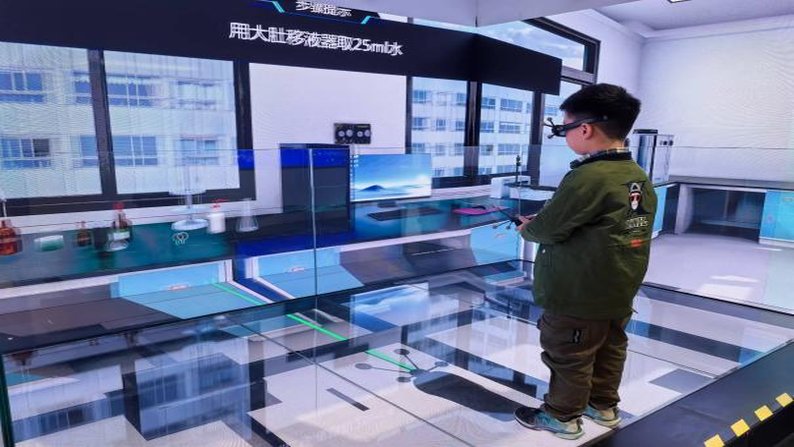
不择知行细流,蕴蓄蓝绿成深:雄安新区生态环境共享中心科普宣传空间营造雄安新区生态环境共享中心VR虚拟实验室(数字化仿真替代实体化学实验,实现科普零危废、低能耗)
6天前 · 来源:雄安新区生态环境监控中心 · 作者:雄安新区生态环境监控中心
