

Company/Organization Profile
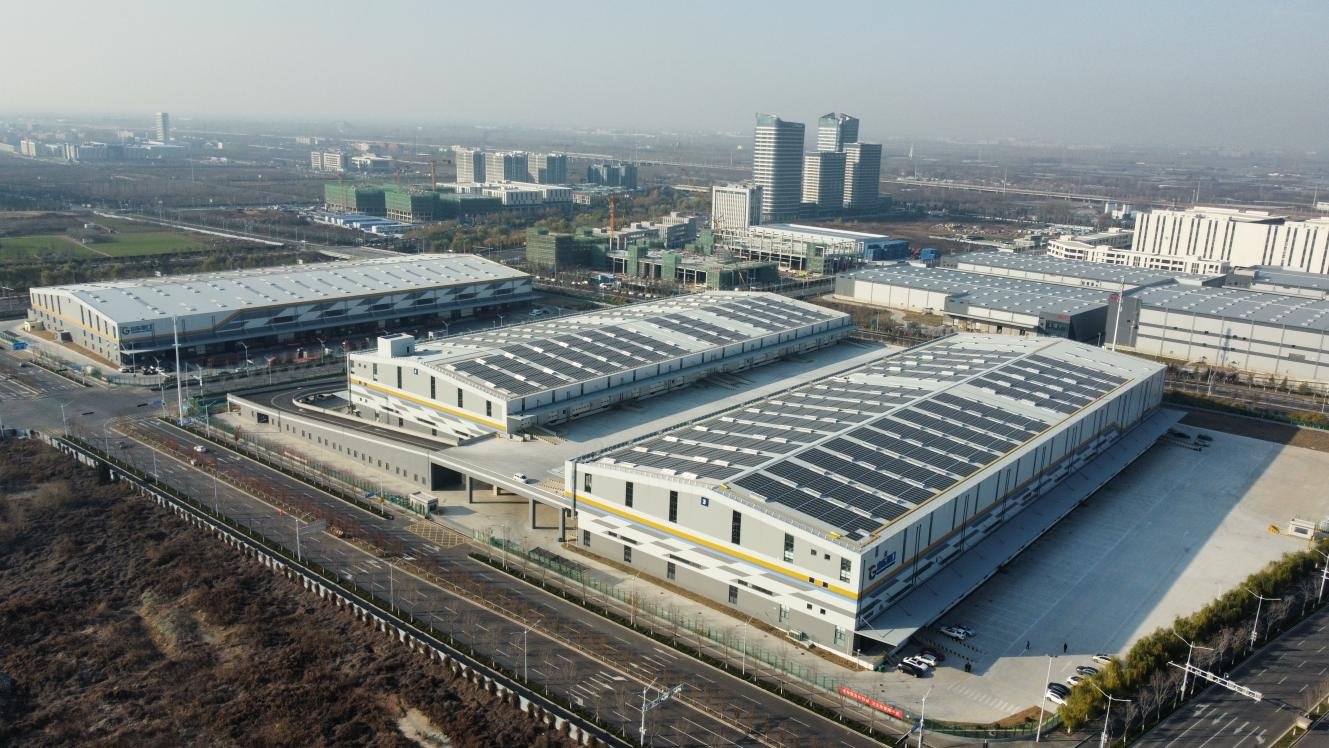
Shandong Port Land-Sea International Logistics (Jinan) Co., Ltd. was founded in December 2021 as a state-holding enterprise with a registered capital of RMB 200 million. The company operates the North China Consumer Goods Distribution Center (Jinan), a key project for the construction of Shandong Province's world-class port cluster, and is positioned as a comprehensive logistics hub integrating an inland port yard, a multimodal transport center, a supply chain finance center, an e-commerce public warehouse operation center, and an urban warehousing and distribution service center.
Actively implementing the national "Dual Carbon" strategy, the company aims to build a near-zero-carbon smart logistics park, and focusing on green energy supply, low-carbon facilities and equipment, and smart management models, it strives to build a clean-dominated, electricity-centered and interconnected modern energy system for logistics parks.
机构简介
山港陆海国际物流(济南)有限公司成立于2021年12月,为国有控股企业,注册资本2亿元人民币。公司运营中国北方生活消费品(济南)分拨中心,是山东省世界级港口群建设重点项目,定位为集内陆港堆场、多式联运中心、供应链金融中心、电商公共仓运营中心、城市仓配服务中心于一体的综合物流枢纽。公司积极践行国家“双碳”战略,以打造近零碳智慧物流园区为目标,围绕能源供给绿色化、设施设备低碳化、管理模式智慧化,着力构建清洁主导、电为中心、互联互通的现代化物流园区能源体系。

Project Overview
North China Consumer Goods Distribution Center (Jinan) is located in Lingang Economic Development Zone of Jinan International Inland Port. It covers an area of 182.82 mu, with a total investment of 406 million yuan and a gross floor area of 105,000 square meters, including one single-story high-standard warehouse, two double-story Class C Category 2 high-standard warehouses, and a 12,000-square-meter container yard.
It is the core carrier of the logistics development pattern of "dual centers in Jinan and Qingdao, multiple bases along the Yellow River," serving the sea-rail intermodal export business of more than ten customers such as Sinotruk, BYD, Bond Laser and Mayora, as well as the warehousing and distribution business of multiple customers including Sinotruk, China Post and Adelong.
Before the project was implemented, traditional logistics parks generally faced three major pain points: First, the energy structure was highly dependent on traditional energy sources. Warehouse operations, logistics distribution, facilities and equipment were highly reliant on conventional electricity and fuel, with high carbon emission intensity.
Second, energy management was extensive, lacking refined energy monitoring and control measures, and energy utilization efficiency was relatively low. Third, the path of green transformation was unclear. The logistics industry lacked systematic solutions and demonstration guidance for low-carbon transformation, and enterprises "did not know how to transform and dared not transform".
The reason is that logistics parks have long valued operations over energy conservation, with insufficient investment in green and low-carbon development, inadequate integrated application of technologies, and imperfect management systems. Guided by the national "dual carbon" strategy and taking the integration of "source-grid-load-storage" as the path, Jinan Company has set three improvement goals: green energy supply, low-carbon facilities and equipment, and smart management mode, aiming to build a replicable and promotable demonstration model of near-zero-carbon smart logistics parks.
项目背景
中国北方生活消费品(济南)分拨中心位于济南国际内陆港临港经济开发区内,占地182.82亩,总投资4.06亿元,建筑面积10.5万平方米,其中单层高标仓库一座,双层丙二类高标仓库2座,集装箱堆场面积1.2万平方米。是“济青双中心、沿黄多基地”物流发展格局的核心载体,服务于中国重汽、比亚迪、邦德激光、迈大等十余家客户的海铁联运出口业务以及中国重汽、中国邮政、艾达隆等多家客户的仓储分拨业务。
项目实施前,传统物流园区普遍面临三大痛点:一是能源结构传统能源依赖性较强,仓储运营、物流配送、设施设备高度依赖传统电力和燃油,碳排放强度较高;二是用能管理粗放,缺乏精细化能源监测与管控手段,能源利用效率偏低。三是绿色转型路径不清,物流行业低碳改造缺乏系统方案和示范引领,企业“不会转、不敢转”。
究其原因是物流园区长期重运营轻节能,绿色低碳投入不足,技术集成应用不够,管理体系不完善。济南公司以国家“双碳”战略为引领,以“源-网-荷-储”一体化为路径,确立了能源供给绿色化、设施设备低碳化、管理模式智慧化三大改进目标,旨在打造可复制、可推广的近零碳智慧物流园区示范样板。
Project Implementation
Jinan Company, centering on the goal of building a near-zero-carbon park, has systematically advanced five major projects, forming a systematic solution featuring "low-carbon construction + PV-powered operation + green distribution + smart warehousing + innovative management".
First, in terms of green park construction. Shandong Port has invested 406 million yuan to build the North China Consumer Goods Distribution Center (Jinan). Prefabricated buildings are adopted in the overall construction, accounting for 52.16% of the total floor area. The exterior walls are made of color steel plates, the roof adopts outer steel plates, the floor slabs use laminated slabs, and the interior walls adopt ALC panel walls.
The interior walls and roof surfaces are finished with inorganic coatings, and the warehouse exterior wall panels use rock wool sandwich panels. Tests show that when the outdoor temperature drops to -10℃, the indoor temperature of the warehouse can remain above 0℃, reducing the electric heat tracing operation time by 60% and saving over 300,000 kWh of energy annually.
Meanwhile, rainwater is purified and stored through facilities such as bioretention zones and water storage modules. Rainwater flows into the water storage modules via rainwater pipelines, and excess rainwater beyond the storage capacity is discharged into the surrounding municipal pipelines through overflow devices. At present, one water storage module is designed in the east plot with a storage capacity of 1,404.5 cubic meters, which mainly collects rainwater from roads and paved areas for green space irrigation and ground cleaning.
The west plot is equipped with bioretention zones with a water storage capacity of 1,044.8 cubic meters, and the east plot has bioretention zones with a storage capacity of 723.3 cubic meters, which purify rainwater runoff through the retention and infiltration system of plants, soil and microorganisms.
Second, the distributed photovoltaic power generation project. In response to the park's over-reliance on traditional energy in its energy structure, Jinan Company makes full use of the idle roof space of the three warehouses, laying 21,304 square meters of PV modules with a total installed capacity of 4 MW. The project was officially connected to the grid on December 17, 2024.
Adopting the mode of "self-generation for self-use, surplus power fed into the grid," it prioritizes meeting the power demand of the park's loads and feeds the excess power into the public grid, realizing local consumption of green power and supplying the surplus green power to surrounding areas.
It is estimated that the total power generation over the 25-year full life cycle will reach 102.5 million kWh. Each year, it can save 1,118 tons of standard coal, reduce emissions of various harmful gases and waste gases, cut carbon dioxide emissions by 3,629 tons, sulfur dioxide emissions by 123.2 tons, and nitrogen oxide emissions by 61.6 tons, laying a foundation for building a green near-zero-carbon logistics park.
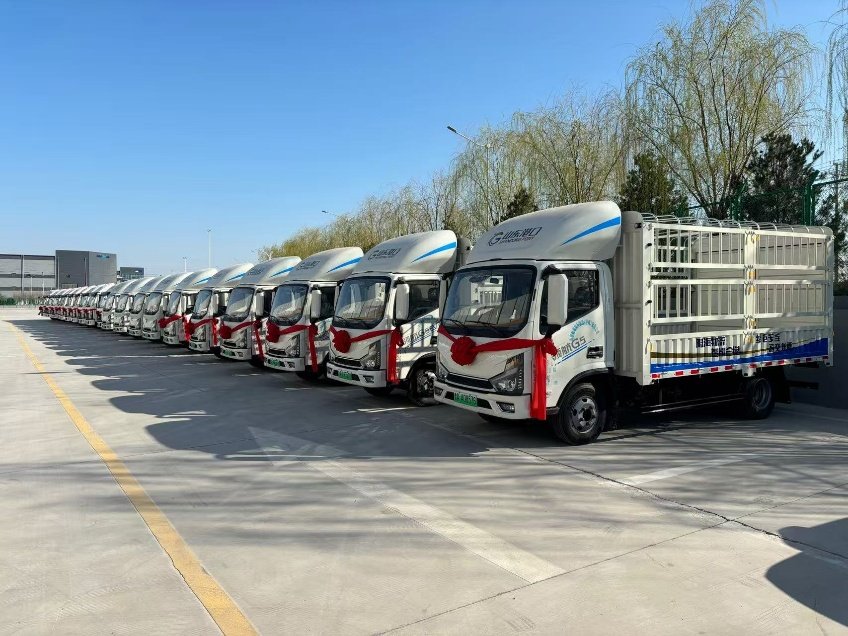
Third, the construction of a green distribution system. To address the high carbon emissions from logistics transportation, 50 new energy pure electric transport vehicles have been purchased to form a green urban distribution fleet.
Meanwhile, in cooperation with TELD, DC charging piles have been built and linked with the photovoltaic power generation system, forming an operation mode of "PV power supply + green urban distribution". The PV-generated power is stored and used on site, charging new energy vehicles through the charging piles, thus forming a green closed loop of energy supply and consumption.
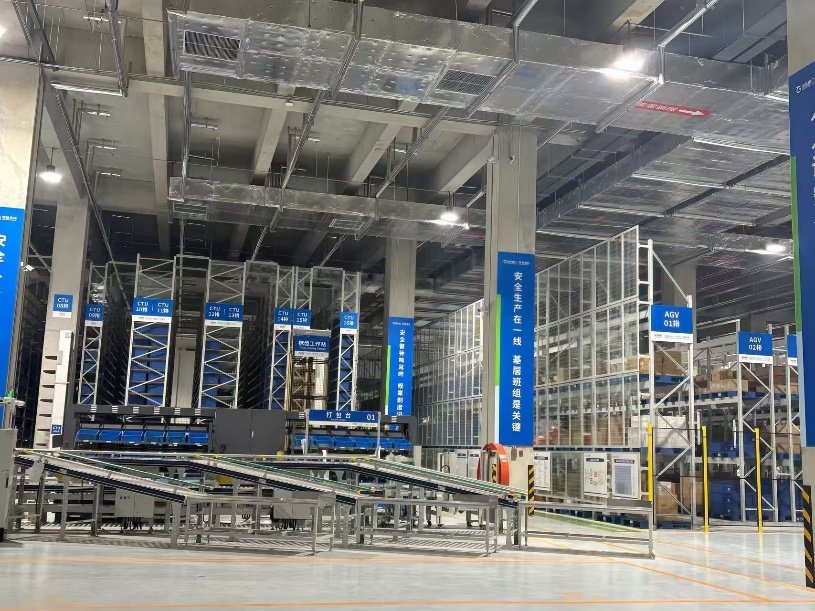
Fourth, the construction of smart green intelligent warehouses. Aiming at the high energy consumption of warehousing operations, new energy logistics equipment is fully promoted, including 15 electric forklifts, 5 electric pallet trucks, 4 AGV stacking forklifts and 6 CTU bin robots, with 100% of all operating equipment powered by green electricity.
A Warehouse Management System (WMS) has been developed, and 5G technology is applied to realize automatic sorting operations, with a sorting efficiency 4-6 times that of manual work and an accuracy rate of 99.99%. The warehouse lighting and air conditioning systems have been fully upgraded to LED lighting fixtures and variable-frequency energy-saving air conditioners, realizing low-energy transformation.
Fifth, the construction of a smart energy management platform. In response to the extensive energy management problem, an integrated energy management platform has been built, integrating data from systems such as PV monitoring, power transformation and distribution, meteorology, face recognition and parking.
The platform is equipped with an "Energy Brain" module, which realizes real-time monitoring of energy consumption data, intelligent analysis and carbon emission measurement. Through new-generation information technologies such as big data, cloud platforms and the Internet of Things, a complete carbon metering system has been established to realize integrated management of energy and carbon emissions, improving energy management efficiency by more than 30%.
项目实施
济南公司围绕近零碳园区建设目标,系统推进五大工程,形成了“低碳建设+光伏驱动+绿色配送+智慧仓储+创新管理”的系统解决方案。
一是绿色园区建设方面。山东港口投资4.06亿元,建设中国北方生活消费品(济南)分拨中心,整体建设采用装配式建筑,面积比为52.16%。外墙采用彩钢板,屋顶采用外钢板,楼板采用叠合板,室内墙体采用ALC条板墙,室内内墙和屋面采用无机涂料饰面,仓库外墙板采用岩棉夹芯板,经过测试室外温度负10度时库内温度还可以保持在0度以上,减少电伴热时间60%,年节约能耗超30万度。
同时通过设置生物滞留带、蓄水模块等对雨水进行净化存蓄,雨水由雨水管道进入蓄水模块,超标的雨水采用溢流装置排入周边的市政管线。目前东地块设计1处蓄水模块,蓄水量为1404.5立方米,主要收集路面及铺装的雨水,用于绿地浇灌及地面洒扫。西地块设计生物滞留带蓄水1044.8立方米,东地块设计生物滞留带蓄水723.3立方米,通过植物、土壤和微生物系统蓄渗来净化径流雨水。
二是分布式光伏发电工程。针对园区能源结构偏传统能源的问题,济南公司充分利用3座仓库屋顶闲置空间,铺设光伏组件21304平方米,总装机容量4兆瓦。2024年12月17日正式并网运行。采用“自发自用、余电上网”模式,优先满足园区负载用电,多余电力馈入公共电网,实现绿电就地消纳,多余绿电辐射周边。预计25年全生命周期发电量10250万度,每年可节约标准煤1118吨,减少多种有害气体和废气排放;减排二氧化碳3629吨,减排二氧化硫123.2吨,减排氮氧化物61.6吨,为打造绿色近零碳物流园区奠定基础。
三是绿色配送体系建设。针对物流运输碳排放高的问题,采购50辆新能源纯电运输车,组建绿色城配车队,同步与特来电合作建设直流充电桩,与光伏发电系统联动,形成“光伏驱动+绿色城配”运营模式,光伏发电储能自发自用,通过充电桩为新能源车辆充电,使能源供应与使用形成绿色闭环。
四是智慧化绿色智能库建设,针对仓储作业能耗高的问题,全面推广新能源物流设备,配置电动叉车15台、电动地牛5台、AGV堆垛叉车4台、CTU料箱机器人6台,所有作业设备100%采用绿电驱动。开发WMS系统,运用5G技术实现自动化分拣作业,分拣效率是人工的4-6倍,准确率达99.99%。仓储照明、空调系统全面升级为LED灯具和变频节能空调,实现低能耗转型。
五是智慧能源管理平台建设。针对用能管理粗放的问题,构建综合能源管理平台,集成光伏监控、变配电、气象、人脸识别与停车等系统数据。平台配备“能源大脑”模块,实现能耗数据实时监测、智能分析和碳排放计量。通过大数据、云平台、物联网等新一代信息技术,建立完整的碳计量体系,实现能源与碳排放一体化管理,提升能源管理效率30%以上。
Project Outcome
The innovation highlights of the project lie in four dimensions: model, technology, mechanism and collaboration. In terms of model, it breaks through the limitations of single-point energy-saving retrofits in traditional logistics parks, takes source-network-load-storage integration as the core approach, builds a systematic solution supported by five coordinated projects, and creates a closed-loop operation mode of "PV-powered operation + green urban distribution," realizing a full-chain closed loop of green power from production to consumption.
In terms of technology, it integrates low-carbon technologies including prefabricated buildings, thermal insulation envelopes and rainwater resource utilization, deploys large-scale rooftop distributed PV systems, and is equipped with an "Energy Brain" management platform and a smart warehousing system, enabling the integrated application of low-carbon technologies across multiple scenarios.
In terms of mechanism, it establishes an integrated energy and carbon emission management system, which conducts classified and hierarchical metering of all types of energy consumption and unified carbon emission accounting, increasing energy management efficiency by over 30%.
In terms of collaboration, it promotes cross-industry integration between the transportation and energy sectors, and engages multiple stakeholders to build a low-carbon industrial ecosystem, exploring a cross-sector practice path for the industry to deliver on the "dual carbon" goals.
The project features solid long-term sustainability and broad high replicability and promotion value. For sustainability, the PV model of self-generation for self-use with surplus power fed into the grid can reduce electricity costs and generate steady revenue over the long term.
Electrified equipment and energy-saving retrofits continuously drive down operating costs, forming a positive economic cycle of "cost reduction + revenue growth". The PV systems, paired with an iterable smart management platform, ensure continuous upgrading of low-carbon capabilities.
Low-carbon standards are deeply embedded in the whole process of park construction and operation, rather than being a phased pilot initiative.
The project has established a sound long-term operation mechanism to ensure the stable and lasting performance of low-carbon functions. The regular smart management mechanism enables 24/7 dynamic monitoring and intelligent analysis of energy consumption and carbon emissions, shifting energy management from "post-event accounting" to "real-time optimization," and defines clear paths for equipment iteration and system upgrading.
The continuous energy optimization mechanism breaks down carbon reduction targets and integrates them into all operation links, forming a closed-loop improvement system of "monitoring-analysis-optimization-verification". The market-oriented self-operation mechanism relies on revenue from green power consumption to support operation, maintenance and upgrading, free from long-term dependence on financial subsidies, and realizes independent and sound operation of the park's low-carbon system.
成果亮点
该项目的创新亮点集中在模式、技术、机制与协同四大维度。模式上打破传统物流园区单点节能改造的局限,以“源-网-荷-储”一体化为核心路径,构建五大工程协同的系统解决方案,创新“光伏驱动+绿色城配”闭环运营模式,实现绿电从生产到消纳的全链路闭环。技术上集成装配式建筑、保温围护、雨水资源化等低碳技术,规模化布局屋顶分布式光伏,搭载“能源大脑”管控平台与智能仓储系统,实现多场景低碳技术融合落地。机制上建立能源-碳排放一体化管控体系,对各类能耗分类分级计量并统一核算碳排放,推动能源管理效率提升30%以上。协同上推动交通与能源产业跨界融合,联动多方主体构建低碳产业生态,为行业“双碳”落地探索出跨界实践路径。
项目具备扎实的长期可持续性与广泛的可复制推广价值。可持续性方面,光伏“自发自用、余电上网”模式可长期降低用电成本并产生稳定收益,电动化设备与节能改造持续压缩运营成本,形成“降本+增收”的正向经济循环;光伏搭配可迭代的智慧管控平台,保障低碳能力持续升级;低碳标准深度嵌入园区建设与运营全流程,并非阶段性试点任务。
项目已构建起完善的长效运行机制,保障低碳能力长期稳定发挥。常态化智慧管控机制实现能耗与碳排放7×24小时动态监测和智能分析,推动能源管理从“事后核算”转向“实时优化”;明确设备迭代和系统升级路径;持续节能优化机制将降碳目标拆解并融入各作业环节,形成“监测-分析-优化-验证”的闭环改进体系;市场化自运营机制依托绿电消纳的收益反哺运维升级,无需长期依赖财政补贴,实现园区低碳运营的自主良性运转。
Project Highlights
Ecological and Environmental Benefits:The project reduces annual carbon dioxide emissions by 3,629 tons, sulfur dioxide emissions by 123.2 tons and nitrogen oxide emissions by 61.6 tons, with cumulative carbon dioxide emission reductions reaching approximately 90,000 tons over its 25-year full life cycle. It saves 1,118 tons of standard coal each year, recycles over 3,000 cubic meters of rainwater annually, and achieves a 50% utilization rate of non-traditional water sources.
The sea-rail intermodal trains generate 40% less carbon emissions than road transportation, cutting annual carbon emissions from road transport by around 2,000 tons. (Data source: Project feasibility study report and actual operation monitoring data; the statistics cover energy consumption and emissions during the park's operation period)
Social Impact Outcomes:The project has built a demonstration model for Shandong Port's 'Zero-Carbon Smart Logistics Park' providing replicable practical experience for the green and low-carbon transformation of the logistics industry. The sea-rail intermodal service serves more than 20 enterprises including Bond Laser, BYD and Sinotruk, reducing logistics costs by 20% and boosting the green development of the regional economy.
Meanwhile, it has attracted hundreds of visitors from Shandong University, Shandong Normal University, Shandong University of Finance and Economics and local communities to learn about the park's practices, contributing Shandong Port's efforts toward the green and low-carbon development of industrial parks.
成果影响力
生态环境效益:项目年减排二氧化碳3629吨、二氧化硫123.2吨、氮氧化物61.6吨,25年全生命周期累计减排二氧化碳约9万吨。年节约标准煤1118吨,年回收雨水超3000立方米,非传统水源利用率达50%。海铁联运班列相较公路运输碳排放量降低40%,年减少公路运输碳排放约2000吨。(数据来源:项目可研报告及实际运行监测数据,统计范围为园区运营期能耗及排放)
社会影响效果:项目打造了山东港口“零碳智慧物流园区”示范样板,为物流行业绿色低碳转型提供了可复制的实践经验。海铁联运班列服务邦德激光、比亚迪、中国重汽等20余家企业,降低物流成本20%,助力区域经济绿色发展。同时带动山东大学、山东师范大学、山东财经大学及社区等上百人参观学习园区相关知识,为绿色低碳的园区发展贡献山港力量。
Reviews & Honors
North China Consumer Goods Distribution Center (Jinan) has obtained a series of qualifications and honors: it is included in the third batch of national pilot projects for urban green freight and distribution demonstration programs, and is among the first batch of national multimodal transport operators in China.
It has been designated as a Shandong provincial pilot project for the single-document system of multimodal transport, a major project of Shandong Province, and a key project of Jinan City. It acts as the leading unit of the Jinan Land-Port National Logistics Hub project, and the main drafting unit of the group standard Technical Guidelines for Construction of Near-Zero-Carbon Port Logistics Parks.
It has also been recognized as a Shandong Port demonstration industrial park for port-industry-city integration (striving for official accreditation), a typical case of green and low-carbon warehousing and distribution, and the Industry-City Integration Practice Base of University of Jinan. It has been selected as a pilot site for Shandong's "Beautiful China Publicity Volunteer Action" (Document No. Lu Huan Zi 〔2026〕 No. 24).
The center has been reported and promoted by multiple official media outlets, including the Department of Ecology and Environment of Shandong Province, Jinan Municipal Bureau of Ecology and Environment, Beautiful Shandong, Jinan Daily, Qilu Evening News, Dazhong Daily and Yellow River Times.
It has hosted hundreds of students and community members from Shandong University, Shandong University of Finance and Economics, Shandong Normal University and other institutions for practical learning activities, and received thank-you letters from multiple organizations such as the Jinan Municipal Bureau of Ecology and Environment.
评价与荣誉
中国北方生活消费品(济南)分拨中心荣获国家第三批城市绿色货运配送示范工程试点项目、全国第一批多式联运经营人、山东省多式联运“一单制”试点工程、山东省重大项目、济南市重点项目、济南市陆港型国家物流枢纽项目牵头单位、近零碳港口物流园区建设技术指南团体标准主要起草单位、山东港口港产城融合示范(争创)产业园区、仓储配送绿色低碳典型案例、济南大学产城融合实践基地、鲁环字〔2026〕24号山东省“美丽中国宣讲志愿行动”试点项目等。
被山东省生态环境厅、济南市生态环境局、美丽山东、济南日报、绿行齐鲁、大众日报、黄河时报等多家官媒报道推送,接待山东大学、山东财经大学、山东师范大学等上百名学生及社区人员实践学习,并收到济南市生态环境局等多家单位感谢信。

近零碳社区的美育升级---- 长寿苑社区 “低碳实践 + 影像科普” 共建项目
4天前 · 来源:成都市武侯区火车南站街道长寿苑社区居民委员会 · 作者:成都市武侯区火车南站街道长寿苑社区居民委员会

以绿色金融之力推动中国新质生产力!
4天前 · 来源:国泰海通证券研究所ESG及美丽中国研究组 · 作者:国泰海通证券研究所ESG及美丽中国研究组
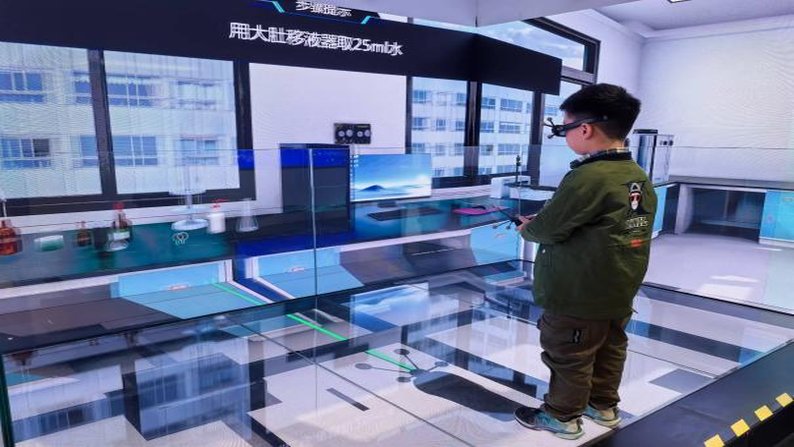
不择知行细流,蕴蓄蓝绿成深:雄安新区生态环境共享中心科普宣传空间营造雄安新区生态环境共享中心VR虚拟实验室(数字化仿真替代实体化学实验,实现科普零危废、低能耗)
6天前 · 来源:雄安新区生态环境监控中心 · 作者:雄安新区生态环境监控中心
