

Company/Organization Profile
Shenzhen Future Landscape Technology Co., Ltd. specializes in empowering landscape design through digital modularization. Built on the world's first-ever "flowing and transformable" landscaping technology, the company serves clients in high-end gardens, nature education and related fields, delivering future-landscape solutions that are green, circular, mobile and shared — co-designed and co-created through public participation, with scenery that evolves as needs change.
The projects have been implemented in multiple locations including Shenzhen and Beijing, and have been granted relevant patents as well as awards and honors across a range of fields.
机构简介
深圳未来风景科技有限公司专注数字模块化赋能园林造景领域。以世界首创流动可变化造景技术,为高品质园林及自然教育等客户,提供绿色循环流动共享、全民参与设计共建、景观可随需要而变化的未来风景解决方案。
项目已在在深圳北京等多处落地,并获得相关专利及多个领域奖项荣誉。

Project Overview
Implementation Sites: 2025/08-2026/05,Zhuyuan and Binjiang Communities in Futian District (Shenzhen), Lianhuashan Park, Guanhu Community in Dapeng, and other locations.
Target Users: Community residents, children with their parents, and visitors.
Problems in Green Space:
Traditional landscapes are static and monotonous. They can hardly be adjusted to changing needs, and lack both a sense of novelty and ecological value.
Residents' participation is limited in scope and depth. Community co-building gardens are often one-off events; afterwards, residents are left with little more than basic maintenance, with no ongoing interaction. Nature education for children relies mainly on theoretical guided tours, lacking hands-on practice.
Greening achievements remain isolated with no coordination between them. Well-funded projects frequently replace seasonal flowers, generating waste and pollution, while other areas lack greenery altogether — revealing social inequality in access to a beautiful environment.
Root Cause: For thousands of years, traditional landscaping has relied on manual planting fixed to the ground, making it difficult to alter or move any element at will. For ordinary people, barriers of expertise, funding and accessibility stand in the way, preventing broad public participation in greening initiatives.
Improvement Goals: Using digital modular landscaping technology, we aim to build adaptable "Beautiful Cell Garden" (Meili Xibao Huayuan) scenarios. Working locally and grounded in these transformable settings, we will expand traditional nature-ecology activities to include habitat design, collaborative garden building, reorganization and reconfiguration, as well as hands-on experience in applying the results. By linking multiple projects into a regional sharing network, we will launch initiatives such as a "Garden City Drift" program and four-season flower sharing. These efforts respond to the call for nationwide action in building a Beautiful China, to the pioneering demonstration zone mandate of the Greater Bay Area, and to the requirements of child-friendly participation.
项目背景
实施空间:2025/08-2026/06深圳市福田竹园、滨江社区、莲花山公园及大鹏官湖社区等地。服务对象为社区居民、亲子儿童与游客。
绿色空间问题:
1.传统景观固定少变化,难以随需要调整,缺乏新鲜感生态性;
2.居民可参与活动内容受限。共建花园一次性活动,后续居民只能简单养护,缺乏参与互动。儿童自然教育以理论导赏为主,缺少动手实践;
3.绿美成果孤立、缺乏联动。有钱项目的时花更换浪费污染,而部分地区美景缺乏,绿美社会不平等。
原因分析:千年来传统景观为手工栽植的地面固定造景。元素难以随意改变移动。普通人有专业、资金及参与门槛,难以全民参与绿美行动。
改进目标:以数字模块化造景技术,构建美丽细胞花园可变化场景。基于可变场景在地合作,将传统自然生态活动,拓展至生境设计,花园共建重组再变化及成果应用体验等内容。多项目联动构建区域共享网络,开展花园城市漂流,四季鲜花共享等活动。以回应美丽中国全民行动、大湾区先行示范区与儿童友好参与等要求。
Project Implementation
Supported by digital modular transformable landscaping technology, this project is implemented in partnership with social organizations, educational institutions, and community Party-mass service centers. Backed by public-interest programs such as Phase III of the "Green Benefit Plan" (Lüyí Jìhuà) and the "2025 Beautiful Dapeng Actors Assembly Plan," it has established a collaborative division of labor: "technology-led implementation — community organization support — local partnership operation." Addressing the three core problems, independent projects are carried out across multiple sites, while a regional multi-project mobile garden system is built to enable continuous, coordinated operation and ongoing growth.
Implementation Process: A Case Study of the "Waiting for Butterflies" Transformable Garden Design Project at a Special Education School in Shenzhen's Zhuyuan Community
Addressing Traditional Fixed Landscaping:
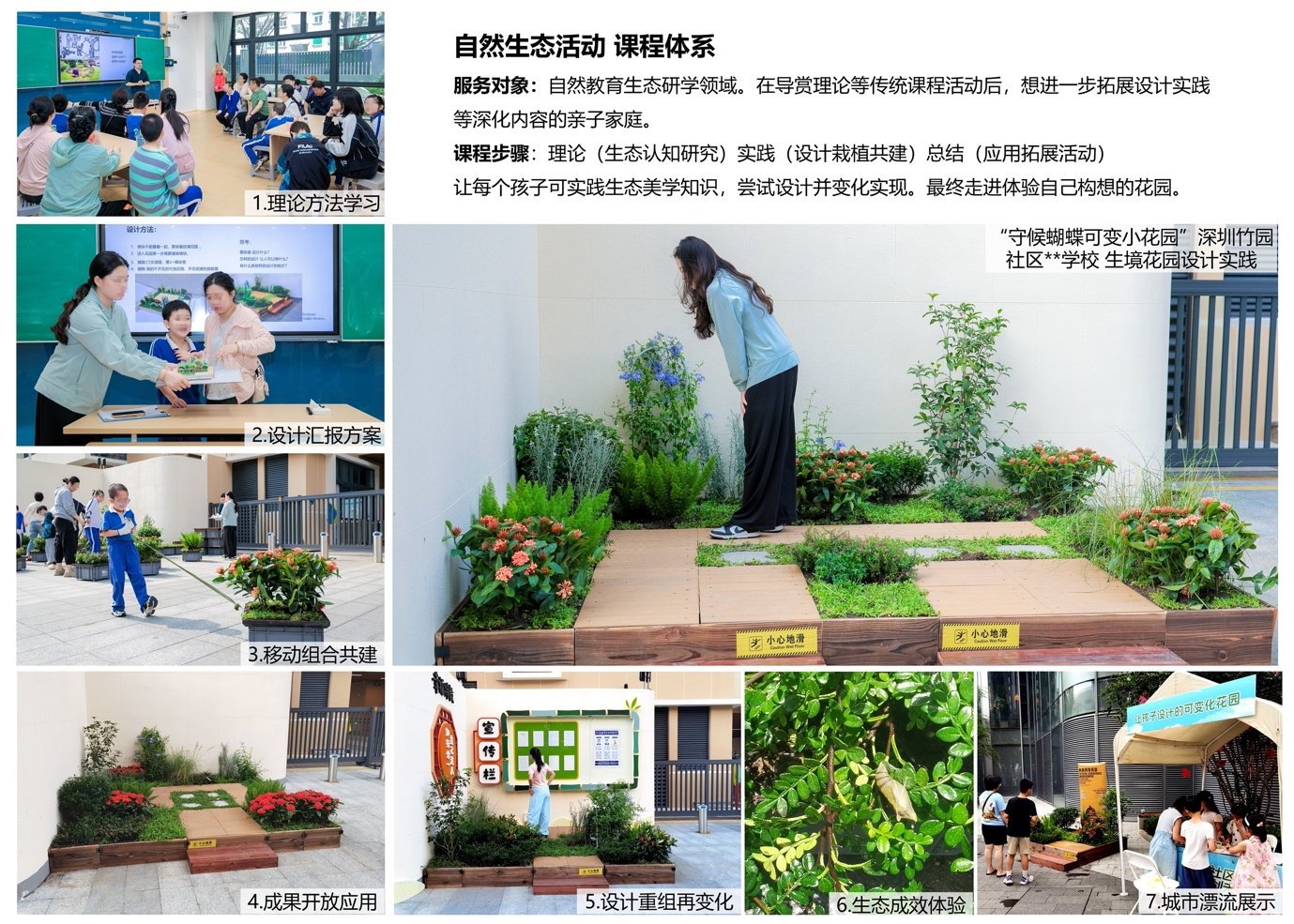
Preparatory Phase: Research community needs, willingness to participate, and local operational themes, then prepare materials accordingly. For example, after the community selected a butterfly ecology theme for children with special needs, the school was able to continue running nature education courses. Plants, landscaping modules, and physical twin models are procured in advance to create the foundation for a transformable garden.
Design Workshop: The partner school recruits participating parent-child pairs. After instructors introduce the composition of ecological systems and the spatial design of horticultural combinations, participants work in groups to develop design proposals using the twin models, then present them for review and selection. Theoretical content and the physical twin mini-models are specifically adapted for children.
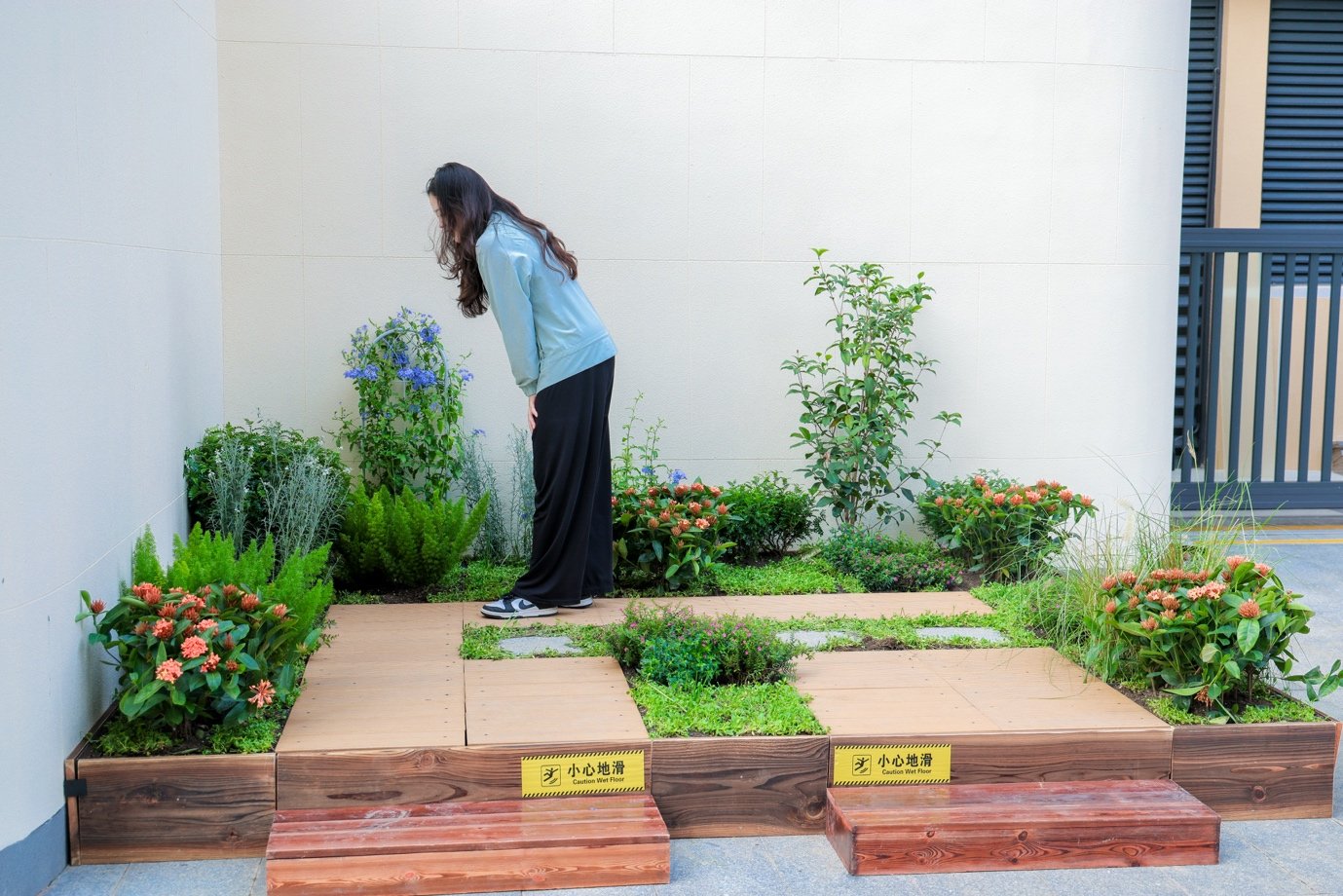
Garden Co-Building: Parents and children plant the vegetation, position and move the landscaping modules according to the numbering of the selected design, and assemble a scene — for instance, a "strolling garden." The resulting garden serves as a community landscape node, open for daily use by residents.
Reorganization and Re-transformation: The original strolling garden is disassembled, and the modules are moved again according to alternative designs — such as a "flower stage" — to create garden scenes with different forms and functions. This allows every child's vision to be realized, while bringing the community a public green space that keeps changing and feeling fresh.
Addressing Limited Opportunities for Participation:
Repeated Design and Transformation: A new cohort of children is recruited to participate in design, enabling more residents to take part in community landscape changes multiple times. Through trial-and-error practice and the application of results, participants genuinely engage in co-building urban green and beautiful scenes, overcoming the one-off limitation of traditional models.
Ecological Gatherings: Micro-habitat gardens optimized with ecological elements such as nectar and host plants for specific local species effectively attract the target butterflies to visit and breed larvae. Habitat experience and observation gatherings are then held, allowing participants to step inside and personally experience the ecological outcomes of their own designs. Related activities, such as nature journaling, are also developed.
Addressing Isolation and Lack of Coordination in Greening:
Regional Sharing and Circulation: Modules can be exchanged between projects, forming a regional sharing platform. The Guanhu Garden in Dapeng transported modules across districts, sharing part of them with Zhuyuan in Futian to support ecological activities for children with special needs. Meanwhile, some modules are circulated to community Party-mass service centers and community health centers according to the four-season flowering schedule, serving as entrance floral displays. This reduces the waste and pollution caused by traditional seasonal flower replacement, while allowing more ordinary residents to enjoy four-season floral landscapes.
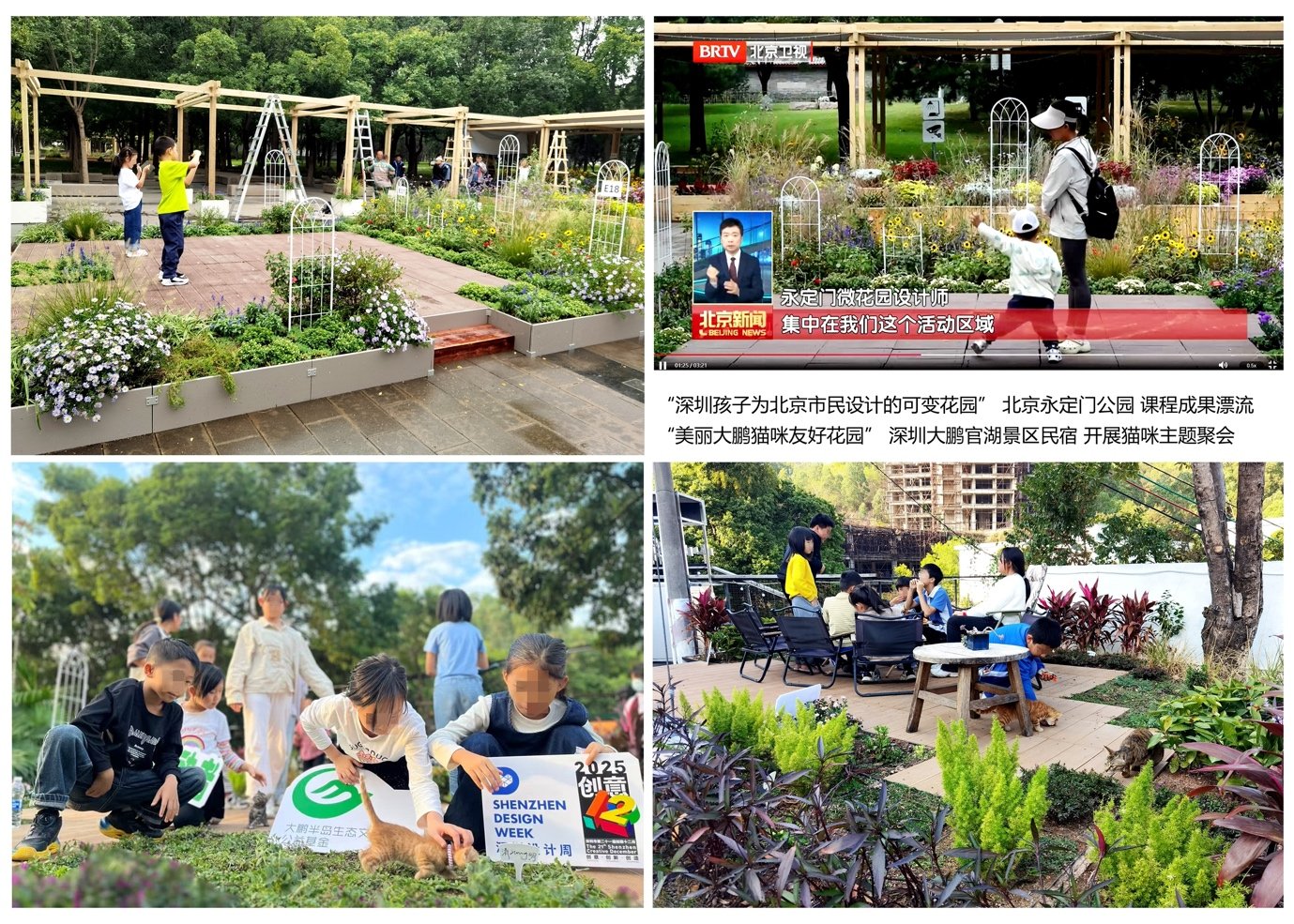
Mobile Exhibition of Results: The completed gardens can have their modules moved multiple times, "drifting" to other urban areas. There, they are reassembled into small garden and flower-border display scenes, enabling more citizens to walk in and experience the achievements of local greening and ecological activities firsthand.
Long-Term Maintenance: The school integrates the garden into its own curriculum and adopts responsibility for its upkeep with assistance from the community gardening team. Local nature instructors are also cultivated to sustain related ecological activities over the long term. Subsequently, with new social support, additional landscaping modules were added to the project, allowing it to keep transforming and growing.
项目实施
本项目以数字模块化可变造景技术为支撑,联合社会组织、教育机构、社区党群等单位共同实施。依托“绿益计划”三期、“2025美丽大鹏行动者集结计划”等公益支持,形成“技术主导实施—社区组织支持—在地合作运营”的协同分工。围绕三大问题,在多个实施地开展独立项目。并构建区域多项目流动花园体系,以持续联动运营,拓展生长。
实施过程:深圳竹园社区某特殊学校“守候蝴蝶”可变花园设计实践项目为例
针对传统固定造景:
1.前期准备:调研社区需求,参与意愿与在地运营主题。并以此开展物料制备。如社区为特殊儿童选定蝴蝶生态主题,后续学校可继续运营自然教育课程。前期采购植物物料、造景模块及实体孪生模型,制备可变化花园基础。
2.设计工坊:合作学校招募参与亲子。导师带领学习生态体系构成与园艺搭配空间设计后。分组用孪生模型设计方案,并汇报评选。活动针对儿童优化了理论内容及实体孪生小模型。
3.花园共建:亲子栽植植物,按入选方案标号定位移动造景模块,组成例如漫步花园场景。成果花园作为社区景观节点,开放居民日常使用。
4.重组再变化:拆分原漫步花园,按其他方案如鲜花舞台再次移动模块,组合为不同形态功能的花园场景。让每个孩子的构想都能实现出来,并为社区带来变化有新鲜感的公共绿色空间。
针对可参与内容受限:
5.再次设计变化:招募新一批儿童参与设计。让更多居民能多次参与社区景观变化。以可试错实践及成果应用,真正参与城市绿美场景共建,破解传统模式的一次性难题。
6.生态聚会:针对本地特定生物优化蜜源寄主植物等生态元素的微生境花园,可有效吸引主题蝴蝶来访幼虫繁育。以此开展生境体验观察聚会,让参与者可走进去,亲身感受自己设计成果的生态成效。同时拓展如自然笔记等相关活动。
针对绿美孤立缺乏联动:
7.区域共享循环:多项目之间可交换模块,构建区域共享平台。大鹏区官湖花园跨区域运输,联动共享部分模块至福田竹园支持特殊儿童生态活动。同时将部分模块按四季花期,循环移至社区党群社康作为入口摆花。减少传统时花浪费污染,也让更多普通居民能享有四季鲜花景观。
8.成果漂流展示:成果花园可多次移动模块,漂流至其他城市区域。再次组成小花园花境展示场景,让更多市民可走进亲身体验本地绿美建设及生态活动成果。
9.长效运维:学校结合自有课程,在社区园艺队协助下认领养护花园。并培育在地自然导师,以长期开展相关生态活动。后续在新的社会支持下,项目又增加部分造景模块,持续变化生长。
Project Outcome
1. Innovation in Greening Technology
The project transformed four previously hardened, idle sites in communities across Futian, Dapeng and other districts of Shenzhen into approximately 120 m² of habitat gardens. The modular gardens can be reconfigured and reorganized repeatedly, delivering green scenes with different forms and functions tailored to community needs. At the same time, themed micro-habitat systems are purposefully optimized for specific species. For example, the Zhuyuan project built a 9 m² butterfly garden, where more than 10 butterflies and over 6 larvae were observed.
2. Innovation in Public Participation
Design activities based on twin models break down the professional barriers to participation. Ordinary people can experiment with garden design as if assembling a puzzle, reshaping the composition of green space. As an innovative activity that is sustainable over the long term and open to repeated involvement, it enables every resident to design, experiment with, and put into practice their own ideas — truly taking part in co-building a green and beautiful city. For instance, in the Zhuyuan project, several children successively created more than 6 design proposals, which were translated into 5 realized garden forms, alongside a series of related ecological activities.
3. Innovation in Linkage Model
Within each community, the project adopts a four-season flowering rotation and circulation model to replace the traditional practice of seasonal flower replacement. Across projects, it builds a regional sharing system, allowing landscape elements to be exchanged and circulated according to activity needs. An urban "garden drifting" initiative is also launched to showcase local achievements. This breaks the isolation and closed-off nature of conventional greening projects, enabling gardens to "go out" and be put to use. The Zhuyuan project, for example, linked with the Dapeng garden and drifted to the Luohu Eco Market and the launch ceremony of the Greater Bay Area Nature Education Season, presenting local greening achievements to a wider public as well as government leaders.
4. Innovation in Operational Mechanism
The transformable garden scenes can host public-interest and commercial activities open to all. By integrating with the diverse needs of local operational formats, the project builds a long-term operational mechanism characterized by multiple benefits and positive feedback loops. Even after formal completion, the project remains connected to the regional sharing system and, with new support, continues to expand and grow its garden activities. In the Zhuyuan project, for instance, habitat design and practice activities were aligned with the school's own nature education curriculum while also serving as an engaging community landscape. After the project concluded, it continued to receive adoption and maintenance support from local organizations. Having since secured new funding from the Greater Bay Area Climate Action initiative, the garden has been expanded in area and new activities have been launched.
成果亮点
绿美技术创新:项目为深圳福田大鹏等4处社区原硬化闲置场地,构建约120㎡生境花园。模块花园可多次变化重组,为社区需求实现不同形态功能的绿色场景。同时为特定生物,针对性优化主题微生境体系。如竹园项目构建9㎡蝴蝶花园,观测到10+蝴蝶及6+只幼虫。
全民参与创新:基于孪生模型的设计活动,打破专业参与门槛。普通人也可像玩拼图般尝试花园设计,改变绿色空间构成。作为可长期持续,多次参与的创新活动,每个居民都可设计试错实践自己的构想,真正参与城市绿美共建。如竹园项目的多个儿童陆续设计6+个方案,并变化实现了5个形态花园,开展多个相关生态活动。
联动模式创新:项目在社区内可以四季花期更换循环模式,替传统时花更换。多项目间可联动构建区域共享体系,让景观元素根据活动需要交换流动。并开展城市花园漂流,展现本地成果。打破传统绿美项目孤立封闭,让花园走出去,用起来。如竹园项目联动大鹏花园,并漂流至罗湖生态市集及大湾区自然教育季启动仪式,向更多市民及领导展示本地绿美成果。
运营机制创新:可变花园场景可开展全民参与的公益/商业活动。并结合运营业态的需求多元融合联动,构建多元获益正向反馈的长效运营机制。项目完成后仍可联动区域共享体系,并基于新的支持,让花园活动继续拓展生长。如竹园项目的生境设计实践活动可结合学校自有自然课程需求,并作为社区趣味景观。项目完结后仍可获得在地单位的认领运维支持。现获得大湾区气候行动的新资助后,又扩大了花园面积,开展新活动。
Project Highlights
Ecological Benefits
The innovative practice of sustainable, universally accessible participation enables the creation of themed habitats. By purposefully optimizing micro-ecosystems for specific local species, the project promotes the concepts of greening, ecological beauty and biodiversity. While increasing community green coverage and climate resilience, it cuts at the source the plant waste, packaging pollution and transport-related carbon emissions caused by seasonal flower replacement — directly serving the dual-carbon goals and offering an important practical pathway for green development. (Traditionally, seasonal flowers require roughly 1 m² × 9 × 9 pots × 4 replacements per year ≈ 300 pots of bedding plants.)
Social Benefits
The innovative landscape of flowing, transformable gardens subverts the millennia-old fixed form of traditional landscaping, exploring new models for the future green spaces of a Beautiful China. The participatory "Beautiful Cell Garden" activities, combined with an operational positive-feedback mechanism, bring together diverse community organizations, institutions and residents, helping to shape the nationwide action system for a Beautiful China by 2030. It enables more ordinary residents to put their creativity into practice and take part in co-building the city, while equally enjoying four-season floral scenery — narrowing social inequality in access to green beauty. Meanwhile, the cross-project linkage, drifting and sharing of results allows achievements to be displayed and applied, generating a cross-regional demonstration and ripple effect.
成果影响力
生态效益:全民可持续参与的创新实践活动,可构建主题生境。针对性优化本地特定生物的微型生态系统,推广绿美生态及生物多样性理念。增加社区绿化率气候韧性的同时,从源头削减时花更换的植物浪费、包装污染与运输碳排,直接服务双碳目标,为绿色发展的重要实践路径。(传统时花需1㎡*9*9盆*4次更换/年≈300盆草花)
社会效益:流动变化的创新景观颠覆千年传统固定景观构成形态,为美丽中国的未来绿色空间探索新模式。可参与的美丽细胞活动及结合运营的正向反馈机制,多元联动社区单位居民,助力2030美丽中国全民行动体系形成。让更多普通居民能实践创意参与城市共建,并均等享有四季鲜花美景,缩小社会绿美不平等。同时多项目联动漂流共享可展示应用成果,形成跨区域示范带动效应。
Reviews & Honors
Evaluation and Feedback
Participants responded positively to the series of activities, including habitat garden design, transformation and co-building. In the Zhuyuan project, for example, several participating children with special needs took photos with the finished garden after the events. Parents also voluntarily expressed their gratitude in the school's parent communication group. In subsequent daily observations, residents were seen using the garden scenes, and the school itself has proactively carried out multiple garden reconfigurations.
Media Coverage and Industry Recognition
The transformable garden projects have been covered by multiple media outlets, including Shenzhen Plus, Dute, Hong Kong Commercial Daily, Shenzhen Portal and Xinhuanet. They have also gained recognition from industries related to landscape design, nature education and ecological activities, and were selected as a sharing session course at the 11th National Nature Education Forum, as well as receiving support from public-interest programs such as the "Green Benefit Plan" and the "2025 Beautiful Dapeng Actors Assembly Plan."
The transformable garden technology has been granted a national invention patent and a utility model patent, and has received more than ten national, provincial and municipal awards for design innovation. The implemented projects have won: First Prize at the 16th Zhejiang Provincial Eco-Environment Creative Design Competition (Zhejiang Ecological Communication Center); Outstanding Case in the 2025 Guangzhou "Small yet Beautiful" Cultural Tourism New Scene Revitalization (Guangdong Tourism Association); Bronze Award at the 2025 National "Golden Corner & Silver Edge" Micro-Garden Competition (Beijing Municipal Landscape and Forestry Bureau, Chinese Society of Forestry); Excellence Award at the 7th Global Future Education Design Competition (UNESCO and Beijing Normal University); and Second Prize in the Xiong'an Child-Friendly City Design (Xiong'an New Area Publicity and Cyberspace Affairs Bureau, Party-Mass Work Department).
评价与荣誉
评价反馈:项目中参与者对生境花园的设计变化与共建等系列给予积极评价。例如竹园项目多名参与的特殊儿童在活动结束后,与成果花园合影留念。家长也在学校交流群里主动感谢。后续日常观察到居民使用花园场景,学校本身也主动进行多次花园形态变化。
媒体行业:竹园及滨河社区等可变花园项目获得深圳plus,读特,香港商报新闻,深圳门户及新华网等多个媒体报道。同时获得景观设计,自然教育及生态活动等相关行业认可,入选第十一届全国自然教育论坛分享课程,获得“绿益计划”“2025美丽大鹏行动者集结计划”等公益活动支持。
可变花园技术获得国家发明及实用新型专利,并获得十余项设计创新类国家省市级奖项荣誉。实施项目获得:浙江省第十六届生态环境创意设计赛一等奖(浙江省生态宣传中心),2025广州“小而美”文旅新场景焕新优秀案例。(广东旅游协会),2025金角银边微花园全国大赛 铜奖(北京园林局,中国林学会);第七届全球未来教育设计大赛优秀奖(联合国教科文及北师大);雄安儿童友好城市设计二等奖(雄安新区宣传网信局,党群工作部)

近零碳社区的美育升级---- 长寿苑社区 “低碳实践 + 影像科普” 共建项目
4天前 · 来源:成都市武侯区火车南站街道长寿苑社区居民委员会 · 作者:成都市武侯区火车南站街道长寿苑社区居民委员会

以绿色金融之力推动中国新质生产力!
4天前 · 来源:国泰海通证券研究所ESG及美丽中国研究组 · 作者:国泰海通证券研究所ESG及美丽中国研究组
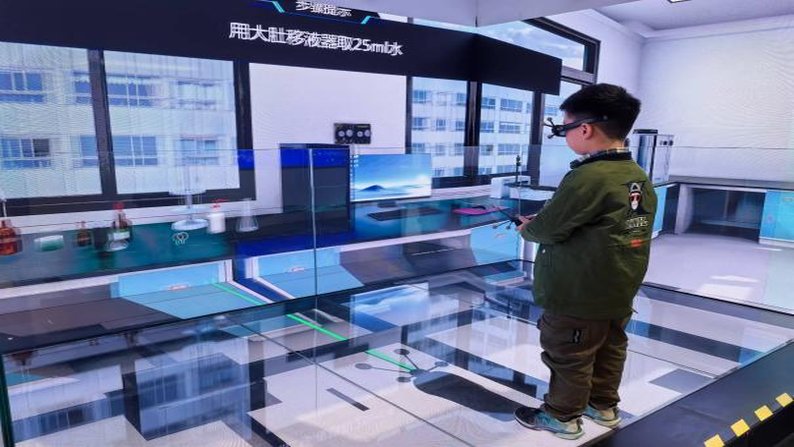
不择知行细流,蕴蓄蓝绿成深:雄安新区生态环境共享中心科普宣传空间营造雄安新区生态环境共享中心VR虚拟实验室(数字化仿真替代实体化学实验,实现科普零危废、低能耗)
6天前 · 来源:雄安新区生态环境监控中心 · 作者:雄安新区生态环境监控中心
